This article is part of our Ayurvedic Diet by Dosha Type: The Classical Guide to Eating for Your Constitution guide series.
The information in this article is provided for educational purposes and reflects traditional Ayurvedic knowledge. It is not intended as medical advice and should not replace consultation with a qualified healthcare professional.
In brief: Classical Ayurveda holds that a genuinely balanced meal contains all six tastes - sweet, sour, salty, pungent, bitter, and astringent. Miss one or more consistently, and the Charaka Samhita describes specific consequences: increased cravings, weakened Agni, and progressive dosha imbalance. This guide explains how to build six-taste meals in a European kitchen, which spices carry which tastes, and why this approach produces a fundamentally different relationship with food than calorie-counting or macro-tracking.
Ayurvedic Cooking: The Six Tastes That Should Be in Every Meal You Make
Modern nutritional frameworks organise food primarily by macronutrients (protein, fat, carbohydrate), micronutrients (vitamins, minerals), and caloric density. These are measurable, scientifically tractable categories that have produced significant public health insights. What they miss - and what the Charaka Samhita's Ahara framework captures - is the body's experience of eating: why a meal that looks nutritionally complete on paper can still leave you unsatisfied, craving something specific, or bloated and heavy within an hour.
The classical Ayurvedic answer is that nutritional completeness as modern science measures it and nutritional completeness as the body experiences it are different things. A meal is complete, in classical terms, when it contains all six tastes (Rasa) in proportions appropriate to the eater's constitution and the current season. A meal missing one or more tastes creates specific gaps that the body signals through cravings - and attempting to satisfy those cravings with more food of the tastes already present only deepens the imbalance.
This is why the six-taste framework is not simply a flavour principle. It is a practical tool for building meals that genuinely satisfy the body's full range of nutritional intelligence, reduce cravings, support Agni, and provide the dosha-balancing properties that classical Ayurveda places at the centre of dietary medicine.
The Six Tastes and Their Properties
The Charaka Samhita's classification of the six tastes assigns each a specific set of qualities (Gunas) and dosha effects that form the practical basis for both cooking and clinical dietary guidance. Understanding these properties is the foundation of classical Ayurvedic cooking.
Sweet (Madhura) is the dominant taste in most whole foods - grains, root vegetables, most fruits, dairy, legumes, and quality fats. It is nourishing, building, and stabilising. In the right quantity it builds all seven body tissues, supports Ojas, and pacifies both Vata and Pitta. In excess it increases Kapha - producing heaviness, mucus, and sluggish Agni. Sweet is the taste the body craves most strongly when depleted, which is the classical explanation for carbohydrate cravings under stress. In a European kitchen: rice, oats, wheat, potatoes, sweet root vegetables, ghee, most fruits, almonds, most legumes.
Sour (Amla) stimulates Agni and salivation, promotes appetite, and enhances the absorption of the other tastes. The Charaka Samhita describes sour as the taste that makes the other five more effective - it is the taste that opens the digestive system. It increases Pitta and Kapha and decreases Vata. In a European kitchen: lemon and lime, fermented foods (yoghurt, sauerkraut, apple cider vinegar), tamarind, tomatoes, sour cream.
Salty (Lavana) enhances all other tastes, promotes lubrication of the channels, and stimulates digestive secretions. It decreases Vata and increases Pitta and Kapha. Classical texts favour rock salt (Saindhava) over processed salt for its more balanced mineral profile. In a European kitchen: rock salt, sea salt in moderation, naturally salty preparations like miso or tamari used sparingly.
Pungent (Katu) is the most strongly Agni-stimulating taste - warming, penetrating, and channel-clearing. It is the primary taste for reducing Kapha and burning Ama. It increases Vata and Pitta. In a European kitchen: fresh and dried ginger, black pepper, chilli, mustard seeds, horseradish, garlic, onion, radish, rocket (arugula). Trikatu - dry ginger, black pepper, and long pepper together - is the classical pungent formula for maximum Agni stimulation.
Bitter (Tikta) is the most Kapha- and Pitta-reducing taste, and the most Ama-clearing. It is cooling, drying, and lightening. It increases Vata. Classical texts describe bitter as the taste most directly associated with the liver, blood purification, and the reduction of excess heat and inflammation. Consistently absent from most modern Western diets, which may explain some of the widespread digestive and inflammatory patterns in European populations. In a European kitchen: bitter greens (dandelion, radicchio, chicory, rocket), turmeric, coffee in moderate quantity, dark chocolate, bitter melon, fenugreek, neem preparations.
Astringent (Kashaya) is drying, toning, and absorptive. It reduces Pitta and Kapha and increases Vata. It is the taste of raw legumes, pomegranate, unripe fruits, and many classical herbs. In a European kitchen: lentils and chickpeas (mild astringency), pomegranate, green tea, raw apple, green banana, most classical herb preparations. See our guide to Ayurvedic diet principles for the full dosha-taste framework.
The Role of Spices: Why Classical Ayurvedic Cooking Is Spice-Centred
One of the most practical consequences of the six-taste framework is the central role of spices in classical Ayurvedic cooking. Most meals naturally contain sweet (grains, vegetables), some sour and salty (from preparation), and some astringency (legumes). The tastes consistently missing from simple unspiced preparations are pungent and bitter - and it is precisely these two tastes, along with the sour Agni-stimulating function, that spice-based cooking provides.
This explains why classical Ayurvedic cooking traditions developed rich, complex spice use not as a flavour preference but as a nutritional strategy. A dal cooked with plain water and salt lacks the pungent Agni-stimulation that ginger, black pepper, cumin, and mustard seeds provide; adding a classical Tadka (spice tempering) transforms the preparation from something that may produce gas and heaviness into something that digests easily and nourishes all three doshas appropriately.
The classical spice toolkit for Ayurvedic cooking centres on: cumin (warming, Agni-stimulating, Vata-reducing, universally applicable); coriander seed (cooling, Pitta-pacifying, supports all three doshas); turmeric (bitter, Kapha-reducing, anti-Ama, universally applicable in small quantities); ginger (pungent when fresh, sweet-pungent when dry, primary Agni-stimulant for Vata and Kapha); black pepper (pungent, Kapha-reducing, enhances bioavailability of other herbs); cinnamon (warming, sweet, Vata-calming); and cardamom (warming yet cooling in excess, Vata- and Kapha-balancing, gentle enough for daily use including in dairy preparations).
Building a Six-Taste Meal in Practice
The classical principle is that all six tastes should be present at every meal, but in proportions calibrated to constitution, season, and the meal's primary purpose. For a Vata-predominant person in autumn, the proportions shift toward more sweet and sour with moderate salty, less pungent, and minimal bitter and astringent. For a Kapha-predominant person in spring, the proportions shift dramatically toward pungent and bitter, with less sweet and minimal salty.
A practical European example of a six-taste meal: warm rice (sweet base) with a dal cooked with ginger, cumin, coriander, turmeric, and a squeeze of lemon (pungent, bitter, sour), seasoned with rock salt (salty), served with steamed bitter greens dressed with lemon (bitter, sour), and finished with pomegranate seeds scattered through the grain (astringent, sweet). Every taste is present; the Agni-stimulating spices are built in; the bitter greens provide the taste most absent from Western diets.
The Charaka Samhita's guidance on meal construction also addresses quantity and timing: the stomach should be filled to two thirds of its capacity (leaving one third for liquid and for the movement of the doshas), and the main meal should be at midday when Agni is naturally strongest. See our complete guide to Dinacharya and Agni for the full context.
Frequently Asked Questions
What are the six tastes in Ayurvedic cooking?
Sweet (Madhura), sour (Amla), salty (Lavana), pungent (Katu), bitter (Tikta), and astringent (Kashaya). Each has specific dosha effects and Agni impact. The Charaka Samhita describes a complete meal as containing all six in proportions appropriate to constitution and season. Missing one or more consistently creates cravings, weakened Agni, and progressive dosha imbalance.
Which taste is most missing from modern Western diets?
Bitter (Tikta) - the Charaka Samhita's most Kapha- and Pitta-reducing taste, directly associated with the liver, blood purification, and Ama clearance. Classical traditions provided it through bitter herbs, turmeric, and bitter greens. Modern Western diets replaced nearly all naturally bitter preparations with sweet alternatives - consistent with the classical prediction of widespread Kapha and Pitta-related conditions in such a population.
What spices are essential for Ayurvedic cooking?
Cumin (universal Agni-stimulant); coriander (cooling, Pitta-pacifying); turmeric (bitter, Ama-clearing); ginger (primary Agni-stimulant for Vata and Kapha); black pepper (pungent, Kapha-reducing, enhances herb bioavailability); cinnamon (warming, Vata-calming); cardamom (balancing, gentle enough for daily dairy use). Together they provide the pungent and bitter qualities most absent from simple Western meal preparation.
How do I adapt Ayurvedic cooking to a European kitchen?
Sweet: grains, root vegetables, quality fats, fruits. Sour: lemon, fermented foods (yoghurt, sauerkraut). Salty: rock salt or sea salt in moderation. Pungent: ginger, black pepper, mustard, horseradish, rocket. Bitter: dandelion, radicchio, chicory, turmeric, dark chocolate. Astringent: lentils, chickpeas, pomegranate, green tea. The key addition for most European cooks is building a consistent spice habit - specifically the pungent and bitter elements that modern European cuisine has largely removed.
Explore Ayurvedic Cooking at Art of Vedas
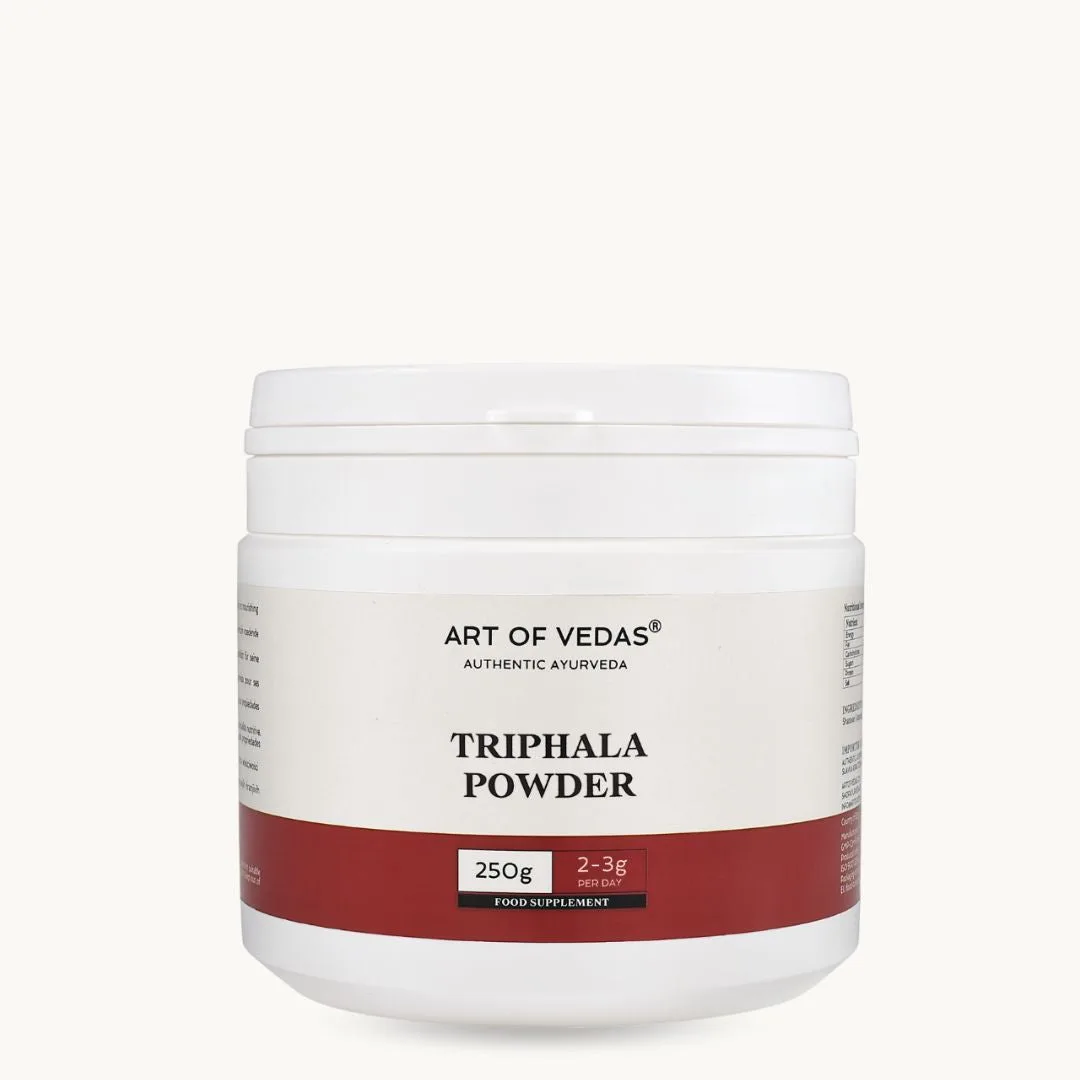
Related reading: Ayurvedic diet principles, Agni complete guide, seasonal routines, and Chyawanprash - classical food medicine. Browse our supplements collection for Triphala and classical digestive preparations.
This product is a food supplement and not intended to diagnose, treat, cure or prevent any disease.