Turmeric is Curcuma longa, and it belongs to the Zingiberaceae, the ginger family. The resemblance is easy to see in a kitchen: both are knobbly underground stems with a strong colour and smell.
The family
The Zingiberaceae include ginger, Zingiber officinale, and cardamom, Elettaria cardamomum, as well as the genus Curcuma. Many of its members hold their character in an underground stem.
The genus
Curcuma has many species, and several are used locally as turmeric substitutes or as dyes. Curcuma longa is the species meant by Haridra in the Ayurvedic tradition and by turmeric in trade.
Relation is not substitution
Sharing a family does not make plants interchangeable. Ginger and turmeric are both rhizomes of the Zingiberaceae and quite different materials, which is why a careful label names the species.
On the label
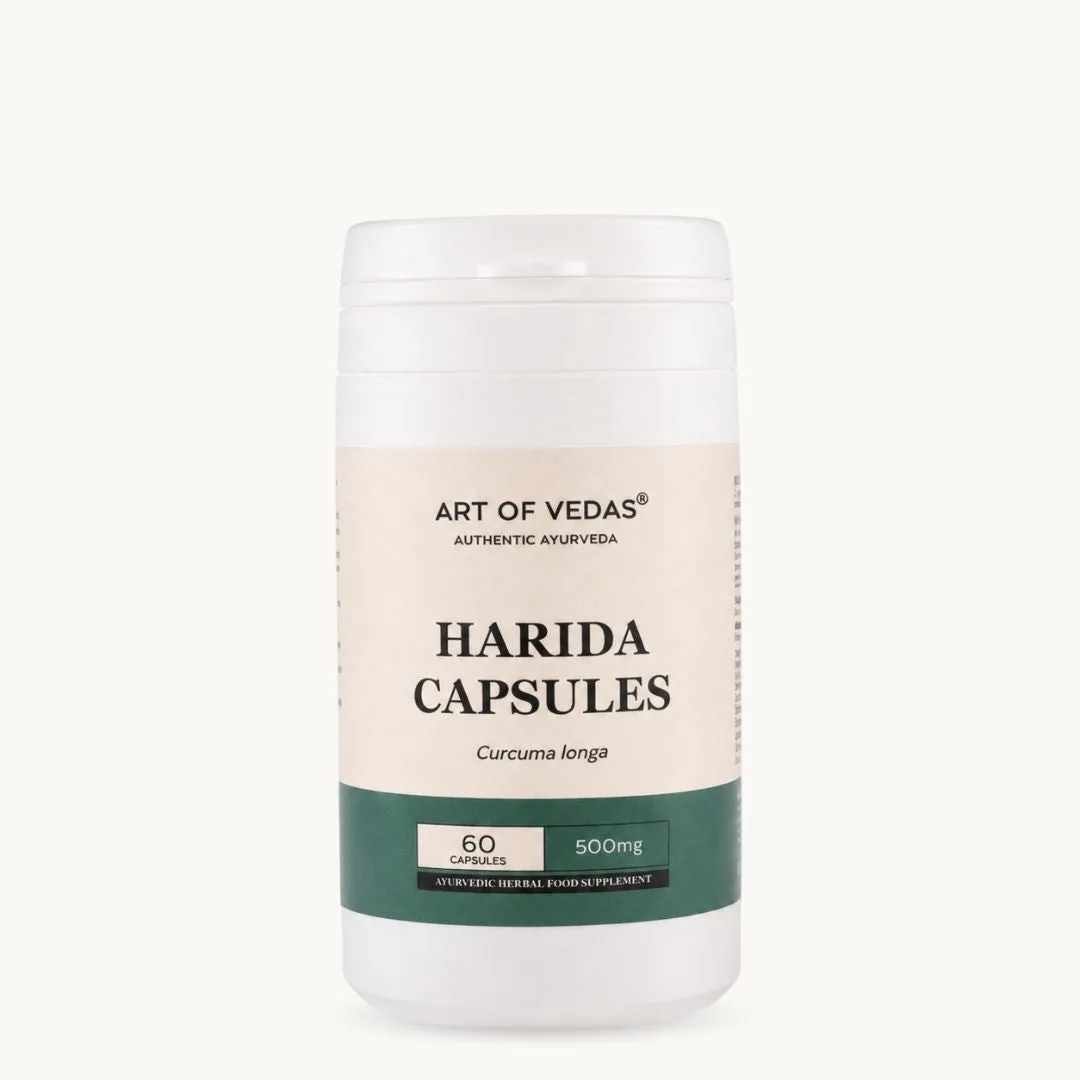
Harida Capsules name Curcuma longa and the rhizome.
Frequently Asked Questions
Is turmeric related to ginger?
Yes. Both belong to the Zingiberaceae.
Are all Curcuma species turmeric?
No. Turmeric is Curcuma longa; other species are different materials.
Why name the species?
Because the family, and even the genus, contain many different plants.
This article is for educational purposes and describes the classical Ayurvedic record. The products mentioned are food supplements, not a substitute for a varied, balanced diet, and are not intended to diagnose, treat, cure or prevent any disease. Take them under the guidance of a qualified Ayurvedic practitioner.