Gokshura has a second life inside a classical group. It is one of the ten roots of Dashamula.
Which half it belongs to
Dashamula is counted as two sets of five. The five greater roots come from trees; the five lesser come from herbs and small shrubs. Gokshura sits among the Laghu Panchamula, the five lesser roots, alongside Shalaparni, Prishniparni, Brihati and Kantakari.
A different part
Inside Dashamula the material is the root, because that is what the group is: dasha, ten, and mula, root. As a single herb Gokshura is more often met as the fruit. Same plant, different part, and the texts are specific about which.
Where you meet the group
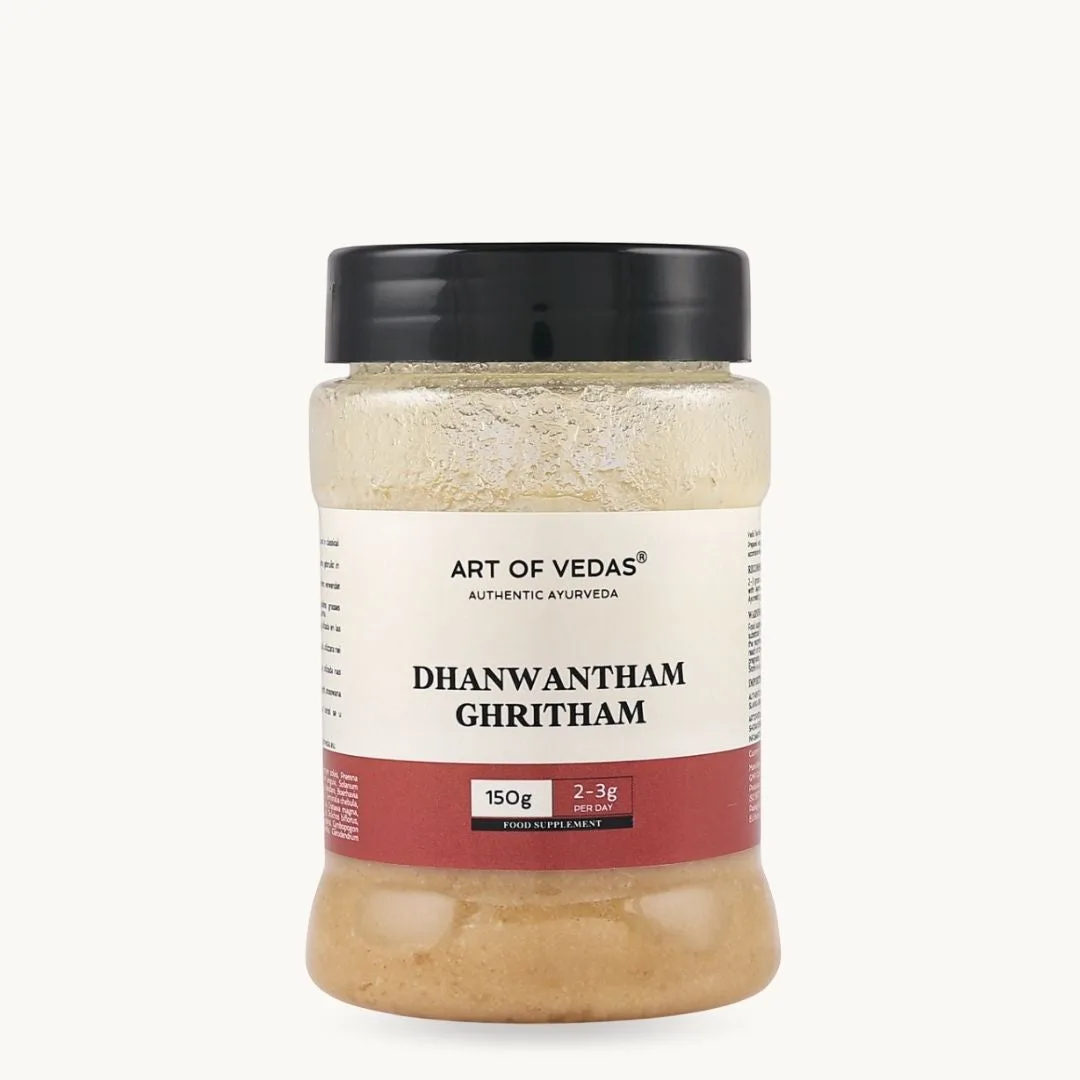
Dashamula runs through the classical preparations, and its full list with botanical names is set out in the Dashamula guide. Dhanwantharam Ghritham carries the whole set on its ingredient list.
As a single herb
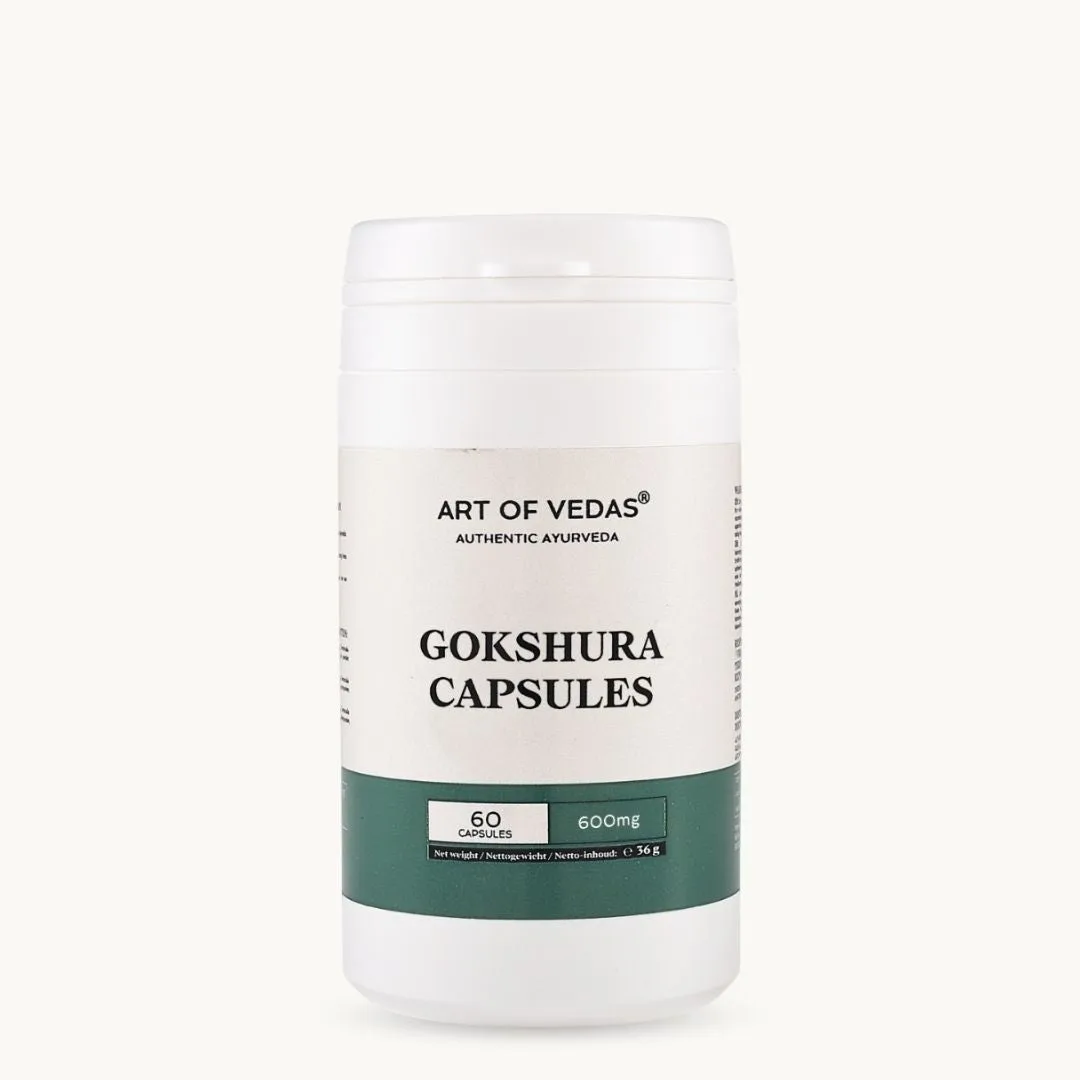
Gokshura Capsules offer Tribulus terrestris on its own rather than inside the group.
Frequently Asked Questions
Is Gokshura part of Dashamula?
Yes, among the five lesser roots, the Laghu Panchamula.
Which part goes into Dashamula?
The root, as the name of the group states.
Are the ten roots interchangeable?
No. A group is a documented list, not a set of substitutes.
This article is for educational purposes and describes the classical Ayurvedic record. The products mentioned are food supplements, not a substitute for a varied, balanced diet, and are not intended to diagnose, treat, cure or prevent any disease. Take them under the guidance of a qualified Ayurvedic practitioner.