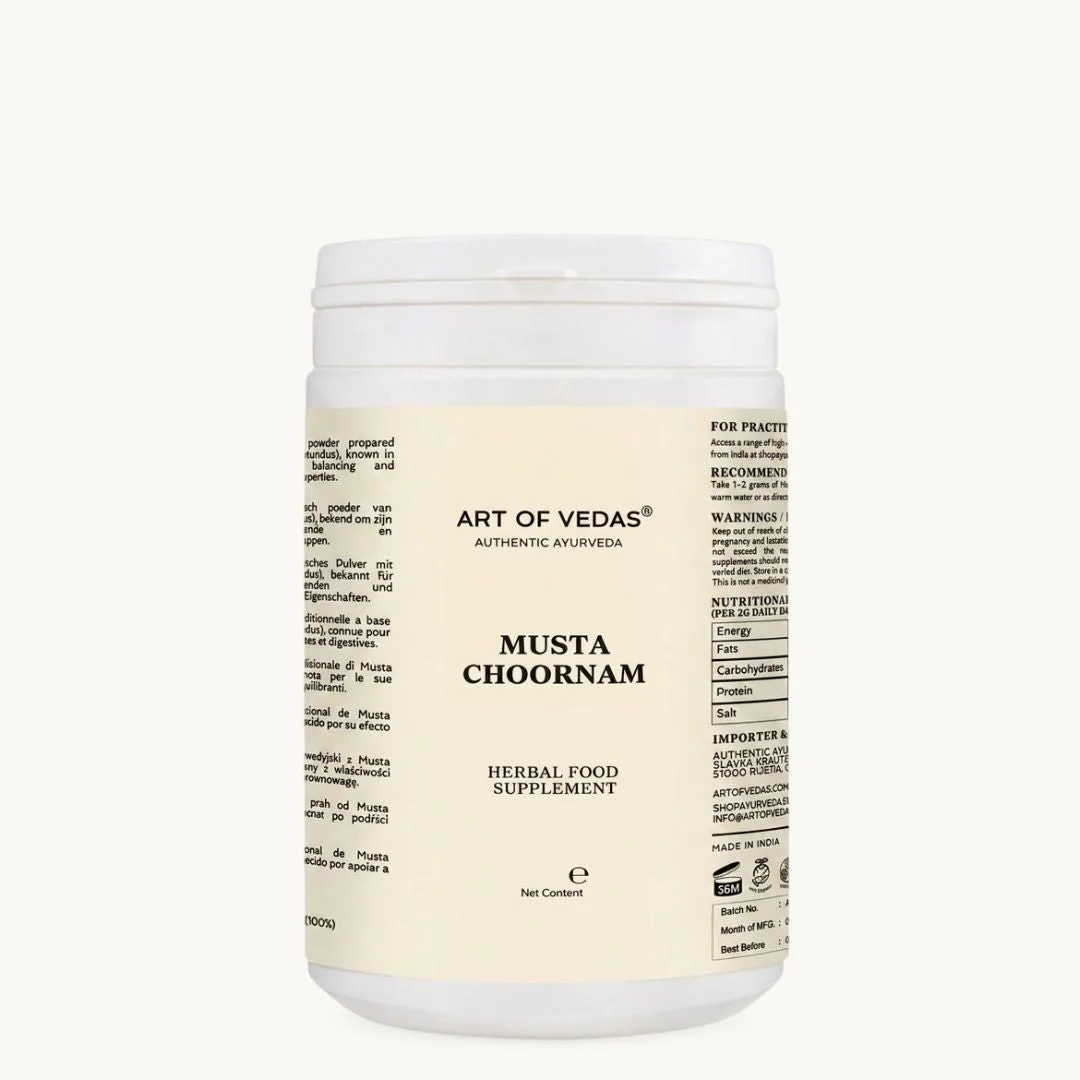
Behind the everyday powder called Musta Churna stands a modest and surprisingly interesting plant. Musta, also known as Nagarmotha, is a common sedge whose knotty underground tubers have been gathered for the classical Ayurvedic dispensary for centuries. This monograph from Art of Vedas is a study note on the plant itself, setting out its botanical identity, the part used and the way tradition describes it.
Botanical name and family
The botanical name of Musta is Cyperus rotundus, a member of the family Cyperaceae, the sedge family. It is not a true grass, though it is often called nut grass in English, because sedges form their own distinct family of grass-like plants. Cyperus rotundus grows across warm regions worldwide and is famous among gardeners as a persistent plant, spreading through a network of underground tubers. It is precisely those aromatic tubers that Ayurveda values.
Classical names
The plant carries several traditional names, each pointing to a feature or a region. In Sanskrit it is Musta or Mustaka. In Hindi and across northern India it is Nagarmotha, and the classical texts also record names such as Bhadramusta for a prized variety. Grouping these names together helps the student recognise the same plant across recipes, trade lists and older texts.
Part used and classical profile
The part used is the rhizome, the knotty underground tuber, cleaned, dried and usually powdered. This is the material that becomes Musta Churna. In the classical framework the tuber is described as follows:
- Rasa (taste): Tikta (bitter), Katu (pungent) and Kashaya (astringent)
- Guna (qualities): Laghu (light) and Ruksha (dry)
- Virya (potency): Sheeta (cooling)
- Vipaka (post-digestive effect): Katu (pungent)
- Part used: the dried rhizome or tuber
This profile, bitter and pungent with a light, dry, cooling nature, is the reason Musta is grouped in tradition among the Deepana and Pachana herbs, the classical botanicals associated with kindling the digestive fire and supporting the comfortable processing of food.
Where Musta appears in practice
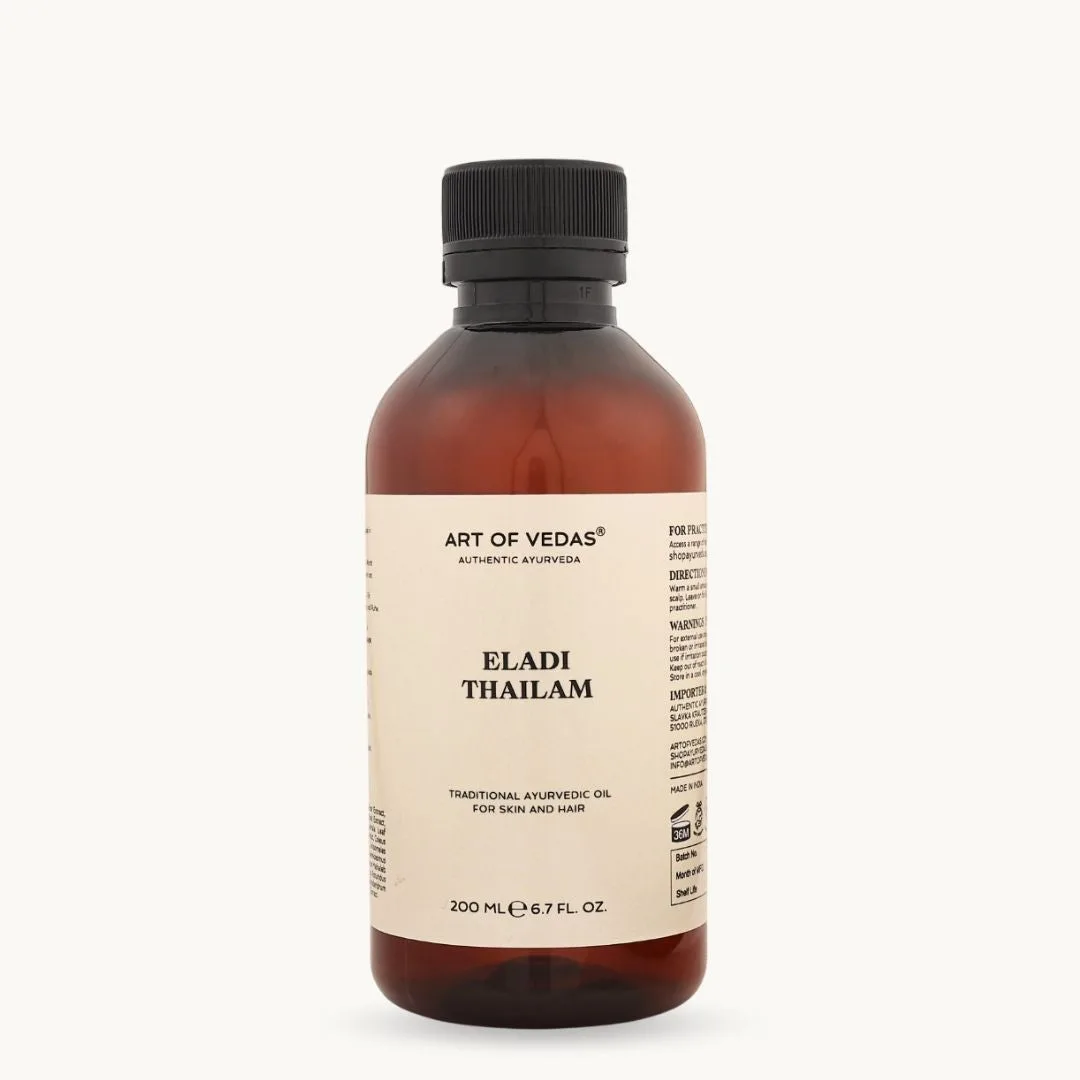
Musta is best known as a single-herb powder, and our Musta Churna follows that classical preparation. The same aromatic, bitter character also earns it a place in wider classical blends, including some of the many-herbed oils of the skin tradition such as Eladi Thailam. For the practical traditions of taking the powder, see our Musta Churna guide. To understand the powder format across the whole materia medica, read the guide to classical Churnam, and to explore the cardamom-led herb group that names Eladi, see Eladi, the cardamom group of herbs.
Who studies Musta
This entry is written for the student and the curious reader rather than for self-treatment. People come to Musta through interest in the classical materia medica and through a liking for aromatic, bitter botanicals. Individual constitution, or Prakriti, shapes how any herb suits a routine, and a qualified Ayurvedic practitioner is the right guide for personal use.
Frequently Asked Questions
What is the botanical name of Musta?
The botanical name is Cyperus rotundus, a member of the sedge family, Cyperaceae.
Is Musta the same as Nagarmotha?
Yes. Nagarmotha is the common North Indian name for Musta, the plant Cyperus rotundus.
Which part of Musta is used?
The dried rhizome or underground tuber is the part used, most often powdered into Musta Churna.
Is Musta a grass?
It is often called nut grass, but botanically it is a sedge, a distinct family of grass-like plants rather than a true grass.
What is the classical taste and potency of Musta?
The texts describe it as bitter, pungent and astringent in taste, light and dry in quality, and cooling in potency.
"This product is a food supplement and not intended to diagnose, treat, cure or prevent any disease."