The information in this article is provided for educational purposes and reflects traditional Ayurvedic knowledge. It is not intended as medical advice and should not replace consultation with a qualified healthcare professional.
In brief: Nasya is one of the five classical Panchakarma therapies and involves the administration of medicated oil through the nasal passages. The Charaka Samhita describes the nose as the gateway to the head and states that Nasya is the primary therapy for all conditions of the head and neck. This guide covers the classical framework, the different types of Nasya, the correct home practice method, and which oil to use.
Nasya: The Ayurvedic Nasal Oil Practice That No One in Europe Is Talking About
Among the five classical Panchakarma therapies, Nasya is perhaps the least known outside traditional Ayurvedic circles. Vamana (therapeutic emesis), Virechana (therapeutic purgation), Basti (medicated enema), and Raktamokshana (bloodletting) have at least some parallel in modern medical or naturopathic practice. Nasya - the administration of medicated oil or other preparations through the nasal passages - has almost no equivalent in contemporary European wellness or medicine.
This makes the classical description of its importance all the more striking. The Charaka Samhita's Sutrasthana contains the statement: "Nasam hi shiraso dwaram" - "The nose is the gateway to the head." The text goes on to describe Nasya as the primary therapy for conditions of the head and all structures of the head and neck, including the sinuses, ears, throat, and the neurological and psychological functions that classical Ayurveda associates with the organs of the head. The Ashtanga Hridayam elaborates extensively on Nasya's therapeutic applications, its types, the oils and preparations used, and the classical indications and contraindications.
That this practice is largely absent from the European wellness conversation is primarily a matter of cultural unfamiliarity rather than evidence of limited relevance.
The Classical Rationale: The Nose as Gateway to the Head
The classical Ayurvedic understanding of the nose's role in the body's physiology goes well beyond its function as the primary passage for respiration. The Charaka Samhita describes the nasal passages as directly connected to the channels (Srotas) that supply Prana (vital energy), nourishment, and therapeutic substances to the brain, sense organs, and the entire head region. In classical terms, applying medicated preparations through the nasal passages allows those preparations to be carried by Prana Vata (the subtype of Vata that governs the movement of vital energy in the head and upper body) directly to the organs and channels of the head.
This is the classical basis for Nasya's claimed therapeutic reach far beyond what a topical nasal application would suggest to modern understanding. The classical texts describe Nasya as affecting not only the nasal passages and sinuses but the quality of the sense organs (eyes, ears, tongue), the lubrication and function of the cervical and cranial joints, the condition of the scalp and hair, and - in the case of specific Nasya preparations with Medhya properties - the clarity and stability of mental function.
The Ashtanga Hridayam's classification of Nasya types reflects the breadth of classical applications. Snehana Nasya (oleating Nasya using medicated oils) is the most relevant for home practice and the most widely described for daily preventive use. Shodhana Nasya (purifying Nasya using more pungent preparations) is the therapeutic Panchakarma application conducted under professional supervision. Shamana Nasya (palliative Nasya) uses milder preparations for maintenance and support. The daily home practice of Pratimarsha Nasya - applying a small amount of oil to each nostril as a routine - falls within the Snehana category and is described in classical texts as appropriate for daily practice without professional supervision.
Pratimarsha Nasya: The Daily Home Practice
The Ashtanga Hridayam's Dinacharya (daily routine) chapter describes Pratimarsha Nasya as a regular practice for maintaining the health of the head and sense organs, preventing excess Vata in the head region, and supporting the clarity of the sense organs. It is described as suitable for daily practice throughout the year - unlike the more intensive Marsha Nasya, which is a clinical procedure.
The method described in classical texts for Pratimarsha Nasya is straightforward: lie down with the head tilted slightly back, apply two drops of the appropriate oil to each nostril, gently inhale to allow the oil to reach the upper nasal passages, and rest briefly in the reclined position to allow the oil to spread. The classical timing is described as most appropriate in the morning after the main hygiene practices (tongue cleaning, tooth cleaning, face washing) and before eating.
The Ashtanga Hridayam's description of Pratimarsha Nasya's benefits includes lubrication and nourishment of the nasal passages and sinuses, support for the sense organs, reduction of excess Vata in the head region, support for clear respiration, and - through its action on Prana Vata - general support for mental clarity and the nervous system of the head. In the context of the Dinacharya as a complete daily routine, Nasya follows Abhyanga and precedes the main meal.
Anu Thailam: The Classical Nasya Oil
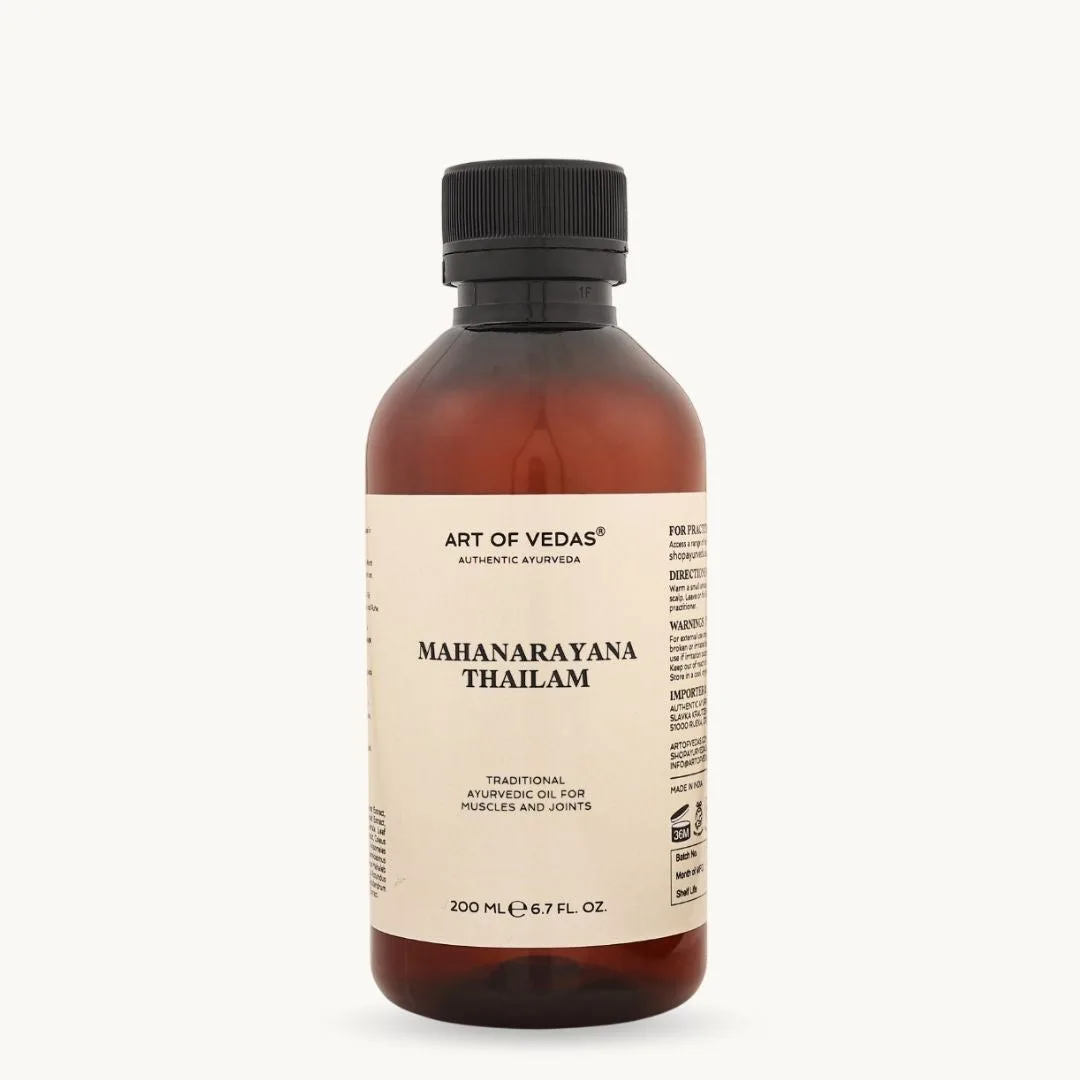
Among the classical oils described for Nasya in the Sahasrayogam and Ashtanga Hridayam, Anu Thailam holds the most prominent position for daily Pratimarsha Nasya practice. The formula is a complex sesame oil preparation processed with a large number of herbs in a milk decoction base - the Ksheerapaka method that is also used in Mahanarayana Thailam, providing the oil with deep tissue penetrating and nourishing properties.
The Sahasrayogam's description of Anu Thailam's properties and indications includes all the benefits attributed to Nasya generally - sense organ support, Vata reduction in the head, sinus nourishment, vocal quality support - plus specific classical indications including support for the condition and health of the scalp and hair, the eyes, the ears, and the throat. Its formula includes herbs with Medhya properties alongside the primary Vata-balancing and channel-opening herbs, making it suitable for both the preventive daily practice and for conditions involving the head region.
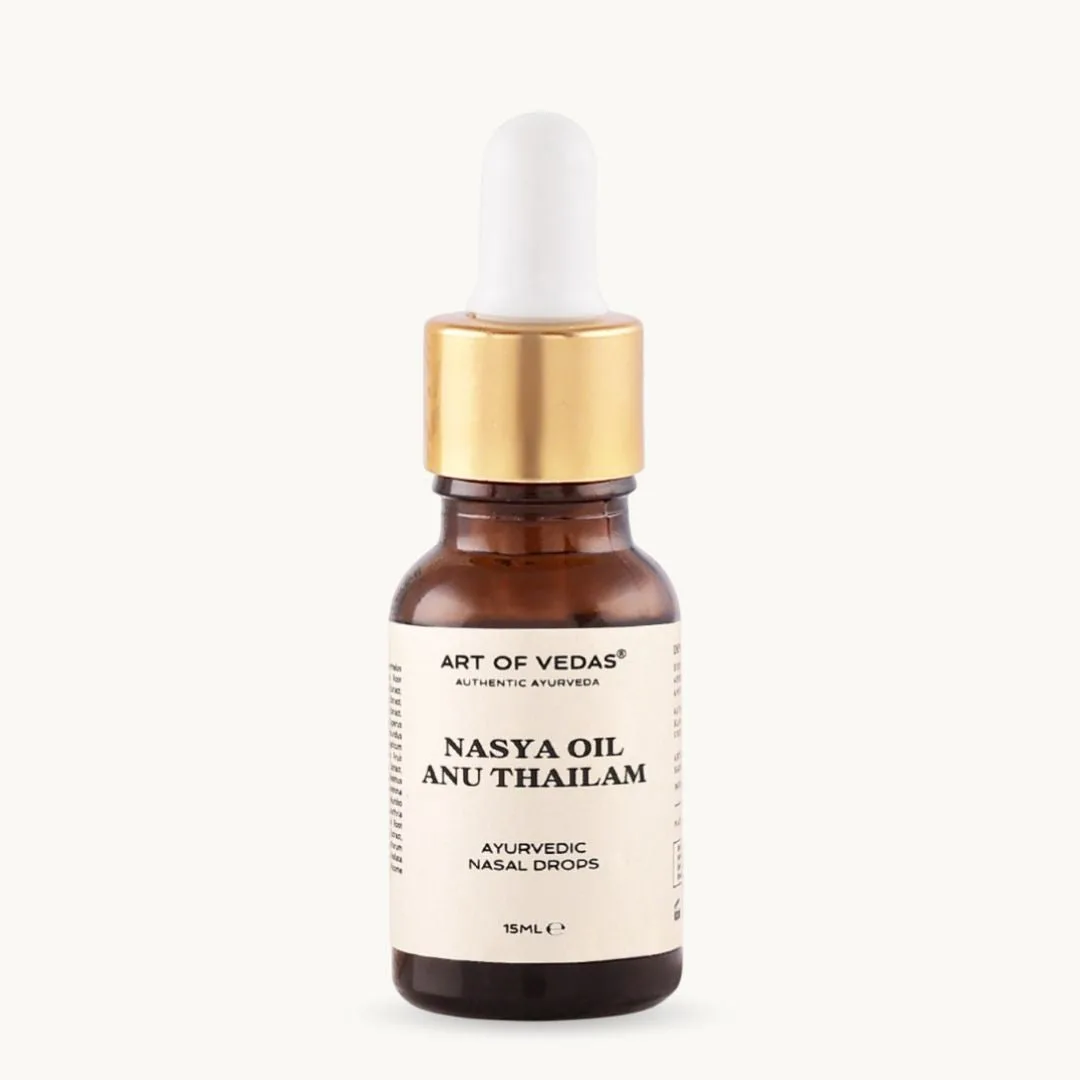
Anu Thailam's particular combination of warming potency (from the sesame base), nourishing properties (from the Ksheerapaka method with milk), and the specific herbs in its formula - which include Devadaru, Bala, Bilva, and a range of aromatic and Vata-balancing herbs - creates the specific classical profile for Nasya application. The light, penetrating quality of the preparation is appropriate for the nasal passages in a way that heavier oils would not be. See the Art of Vedas Nasya collection for Anu Thailam.
Seasonal Considerations
Classical texts describe Nasya as particularly important during the Vata seasons - autumn and early winter - when excess Vata in the channels of the head is more likely to accumulate and when the drying effect of cold, dry air on the nasal passages is most pronounced. The Ashtanga Hridayam's seasonal guidance (Ritucharya) specifically emphasises Nasya as a component of the autumn routine alongside Abhyanga and internal Vata-management practices.
Spring is also described as an appropriate season for the more intensive Shodhana Nasya to clear accumulated Kapha from the head region - this is a clinical application conducted under professional supervision, distinct from the daily home practice. The daily Pratimarsha Nasya is described as appropriate throughout the year.
Frequently Asked Questions
What is Nasya in Ayurveda?
Nasya is one of the five classical Panchakarma therapies, involving medicated oil or preparations administered through the nasal passages. The Charaka Samhita describes the nose as the gateway to the head and Nasya as the primary therapy for head and neck conditions. Pratimarsha Nasya - the daily home practice of two drops per nostril - is described in the Ashtanga Hridayam's Dinacharya as appropriate for daily practice throughout the year.
How do you do Nasya at home?
The classical Pratimarsha Nasya method: lie with the head tilted slightly back; warm the oil; apply two drops of Anu Thailam to each nostril; gently inhale; rest briefly in the reclined position. The classical timing is morning, after tongue cleaning and face washing, before the first meal.
Which oil is used for Nasya?
Anu Thailam is the classical oil most specifically referenced in the Sahasrayogam and Ashtanga Hridayam for Nasya. A complex sesame oil processed through the Ksheerapaka (milk decoction) method with herbs specifically relevant to the head and sense organs - light and penetrating enough for nasal application, yet deeply nourishing through its preparation method.
When should Nasya not be done?
Avoid immediately after meals; directly after bathing when the body is still wet; during acute nasal infections or fever; and in the immediate postpartum period. The more intensive clinical Nasya forms have more extensive contraindications and require professional supervision. These are the main classical cautions for the daily home practice.
Explore Nasya at Art of Vedas
Find Anu Thailam and classical Nasya preparations in our Nasya collection. Related reading: Panchakarma at home guide, Ayurvedic morning routine, Vata imbalance guide, and Abhyanga at home.
For external use only. Not a substitute for professional medical advice.