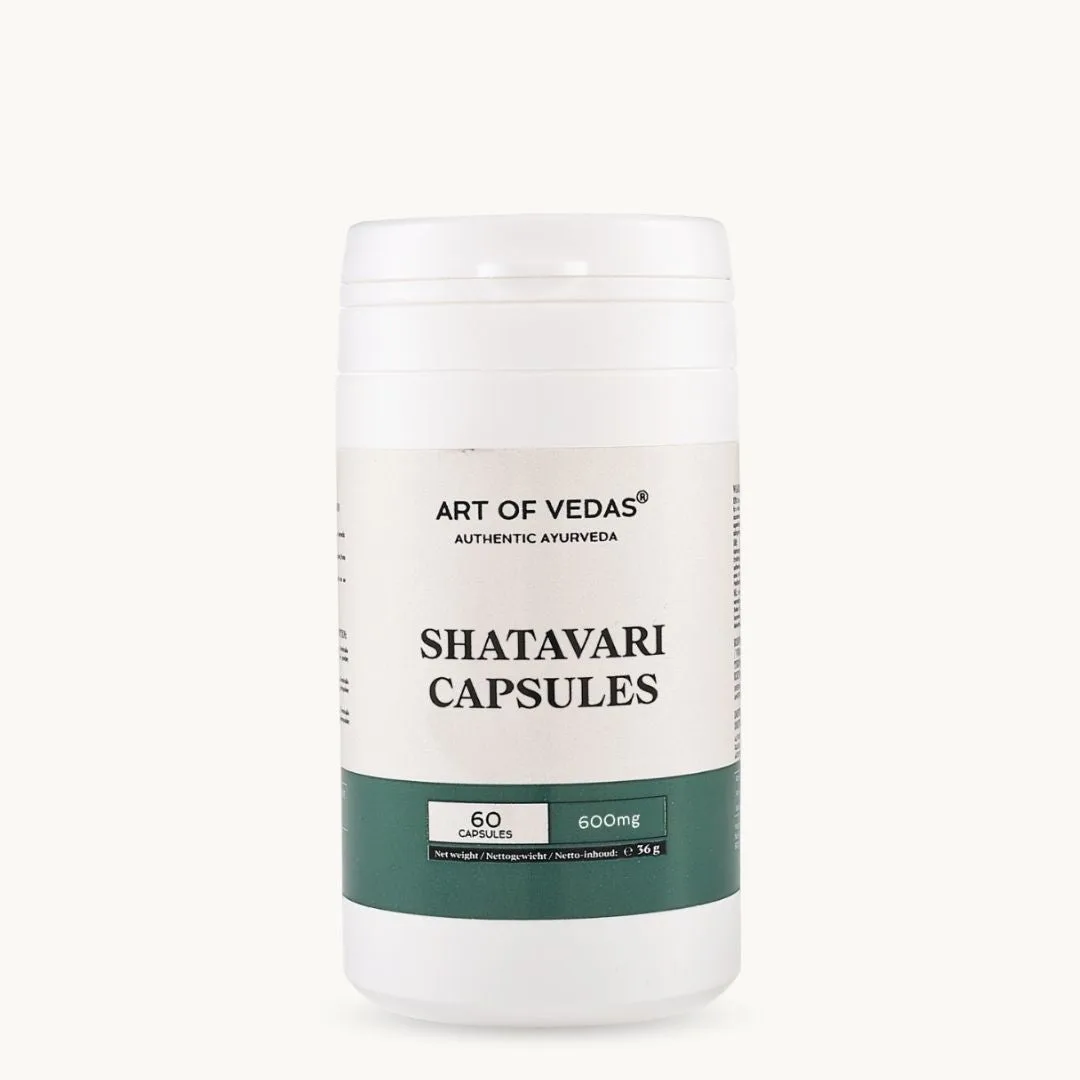
Ayurveda describes materials by taste, Rasa. Shatavari is described with Madhura, sweet, and Tikta, bitter.
The six tastes
Sweet, sour, salty, pungent, bitter and astringent. Each classical material is placed by one or more of them, as the Amalaki five tastes guide shows for a fruit described with five.
Sweet in the classical sense
Madhura in the classical scheme is a category, not a note on sugar content. A root can be described as sweet in this sense without tasting like anything a European would call sweet.
A descriptive system
Rasa records how the texts place a material within their own framework. It is not a statement about what the material does in the body, and Art of Vedas uses it in that descriptive sense only.
On the label
Shatavari Capsules present the root powder in a capsule, so the taste is not experienced at all.
Frequently Asked Questions
Which tastes do the texts give Shatavari?
Madhura, sweet, and Tikta, bitter.
Does sweet mean sugary?
No. Madhura is a classical category, not a measure of sugar.
Does the capsule change the material?
No. It only avoids tasting it.
This article is for educational purposes and describes the classical Ayurvedic record. The products mentioned are food supplements, not a substitute for a varied, balanced diet, and are not intended to diagnose, treat, cure or prevent any disease. Take them under the guidance of a qualified Ayurvedic practitioner.