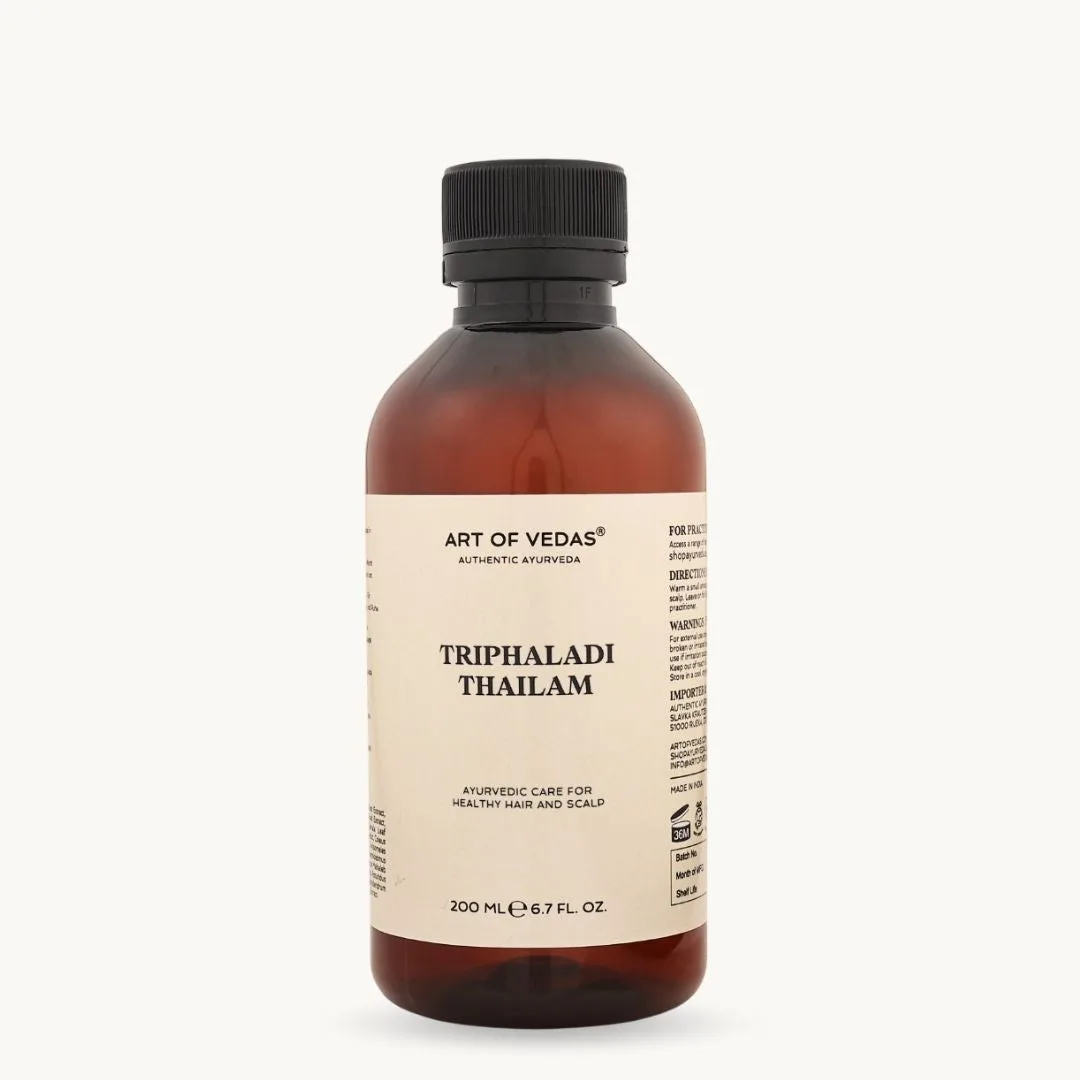
Triphaladi Thailam is the oil form of one of Ayurveda's most familiar formulas, Triphala. Built around the three fruits that give Triphala its name, it is traditionally used in Ayurveda as a cooling oil for the head and hair. This guide sets out what Triphaladi Thailam is, how it is traditionally used, the herbs it contains, and how it relates to the wider family of Triphala preparations you may already know as powders and tablets.
What Triphala Brings to an Oil
Triphala means three fruits: Haritaki, Bibhitaki and Amalaki. As a group they are among the most valued botanicals in Ayurveda, described as balancing for all three Doshas and gently cleansing in nature. When these fruits are prepared into an oil, the result is Triphaladi Thailam, a preparation that carries their cooling, settling character onto the scalp and skin. Rather than the internal use Triphala is famous for, the oil is a topical, external member of the family.
How Triphaladi Thailam Is Traditionally Used
The oil is most associated with the head. It is warmed slightly and massaged into the scalp and hair, then left in for a while before washing out, in the same way as other classical head oils. Many people find it a calming part of an evening routine. It is traditionally used in Ayurveda to support a cool, settled head and a well-conditioned scalp. You can find it in our range as Triphaladi Thailam. A coconut-based variant is covered in our Triphaladi Kera Thailam guide.
What the Oil Is Traditionally Used For
- A cooling scalp and hair oil for regular head massage
- Support for a settled, comfortable feeling at the head
- Conditioning slip that helps with combing and detangling
- An evening oil that suits winding down
- Part of a traditional Triphala-based routine in topical form
The Ingredients
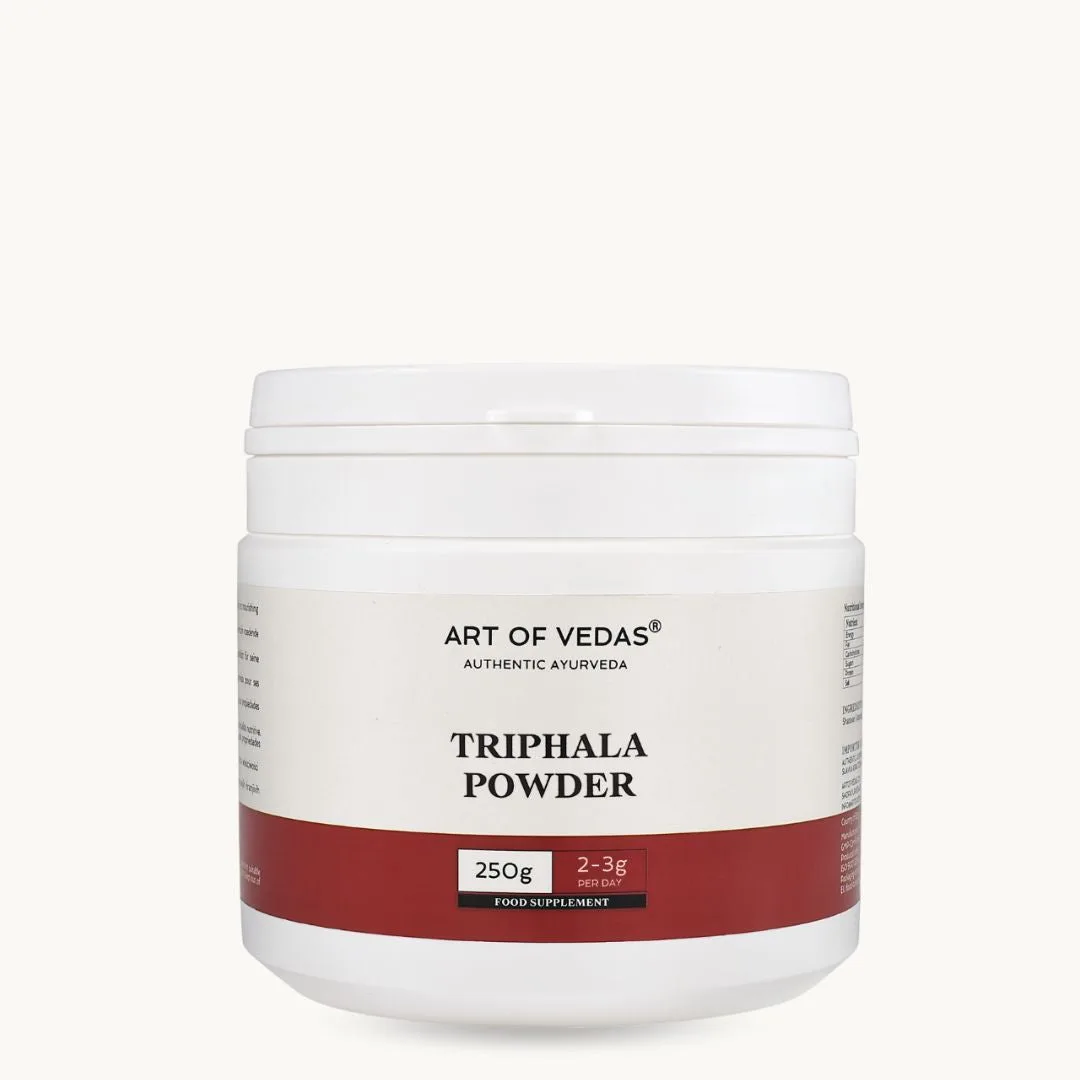
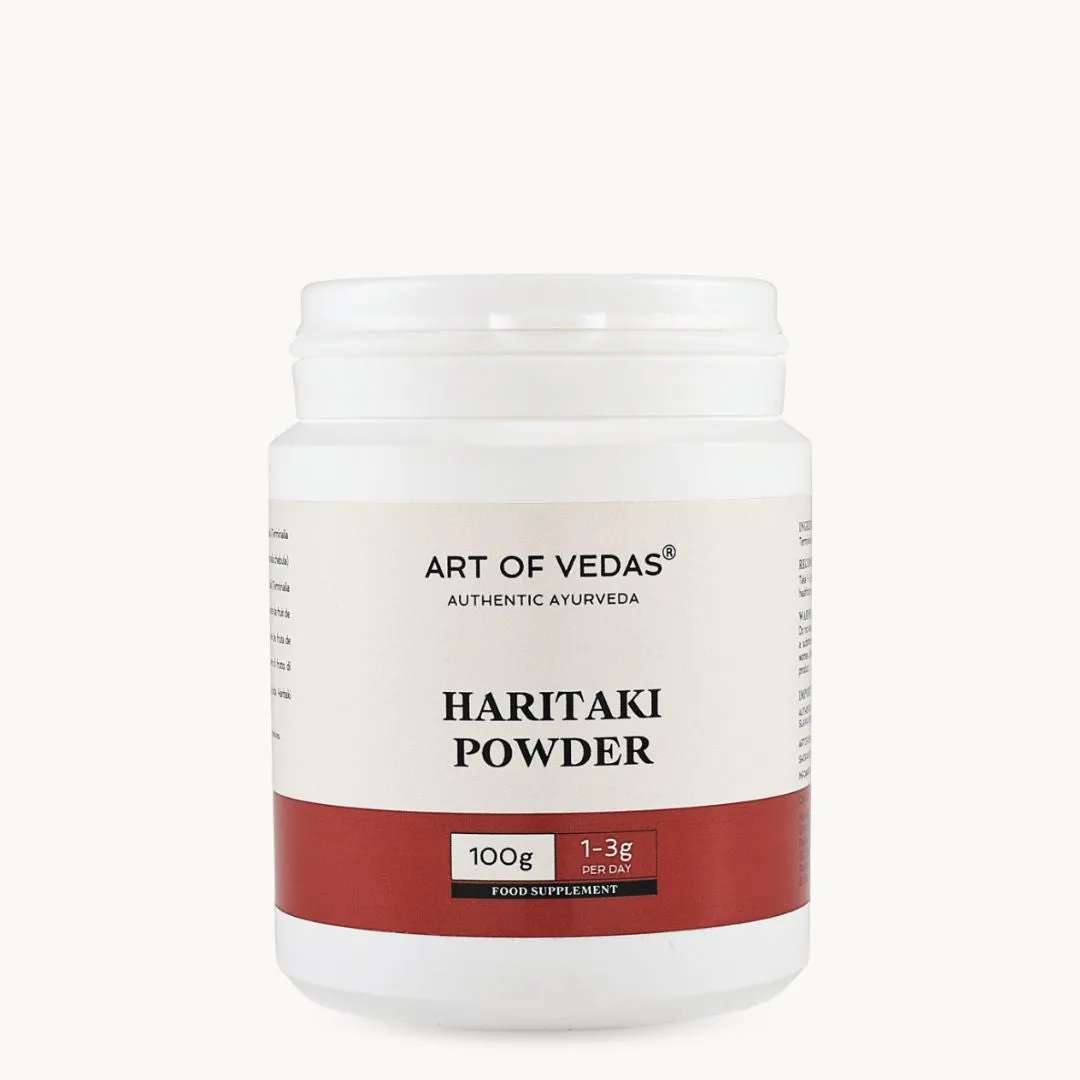
The formula centres on the three Triphala fruits: Haritaki (Terminalia chebula, the cleansing fruit often called the king of herbs), Bibhitaki (Terminalia bellirica) and Amalaki (Emblica officinalis, cooling and nourishing). These are prepared with a herbal decoction into a sesame or coconut oil base in the traditional way. Haritaki, the lead fruit, is explored in our guide to Harad, the king of herbs, and the three fruits together are available as Triphala powder. Additional Haritaki powder is available on its own.
Triphaladi and the Wider Triphala Family
Triphala appears in Ayurveda in several forms, and it helps to see where the oil sits among them. The powder (Churnam) and the tablet (Vati) are the internal forms, taken as part of a daily routine, while Triphaladi Thailam is the external oil for the head and skin. If you are curious about the tablet form, our Triphala Vati guide explains it, and the powder is the most traditional format of all. The oil lets you bring the same three-fruit tradition into a topical hair and scalp ritual.
Frequently Asked Questions
What is Triphaladi Thailam used for?
It is a classical oil most associated with the head and hair. Warmed and massaged into the scalp, it is traditionally used in Ayurveda to support a cool, settled head and a well-conditioned scalp, and it makes a calming part of an evening routine. It is an external oil, distinct from the internal Triphala powders and tablets, though it draws on the same three fruits.
What does Triphaladi mean?
Triphaladi means based on Triphala, the classical formula of three fruits: Haritaki, Bibhitaki and Amalaki. The suffix adi indicates that the formula begins with Triphala and adds further ingredients. So Triphaladi Thailam is the medicated oil built on the three Triphala fruits, prepared in a sesame or coconut base with a herbal decoction.
Can Triphaladi Thailam be used on the skin as well as the hair?
It is best known as a head and hair oil, but the same cooling, conditioning character means many people also apply it to the skin. Use a small amount, warmed between the palms, and massage gently. As with any new oil, patch test on the inner forearm first, and keep it away from the eyes. Season and skin type guide how much to use.
How often should I use it?
Two or three times a week suits most people for a scalp and hair routine. Warm a little oil, massage it in, leave it for a while, then wash out with a gentle shampoo. There is no need to use it daily, and a lighter, consistent rhythm tends to suit the hair and scalp better than heavy, frequent application.
How is it different from taking Triphala powder?
Triphala powder and tablets are internal forms taken as part of a daily routine, while Triphaladi Thailam is an external oil for the head and skin. They share the three fruits but are used in completely different ways. The oil is for topical massage, whereas the powder and Vati belong to the internal Triphala tradition described in our related guides.
For external use only. Not a substitute for professional medical advice.