In brief: Vishagarbha Thailam (also written Vishagarbha Taila or Vishagarbha Thailam) is a strong classical Ayurvedic Vata oil described in the Bhaishajya Ratnavali, in three versions: Laghu Vishagarbha Taila, the short recipe, Vishagarbha Taila, and Maha Vishagarbha Taila, the expanded one. Its name comes from Visha, a potent plant material, because the recipe includes Vatsanabha, so the tradition reserves it for external use by practitioners. Art of Vedas does not currently offer Vishagarbha Thailam; the closest oils in our range are Mahanarayana Thailam and Mahamasha Thailam. This guide covers the oil, its three versions, the classical description, and our oils for Abhyanga at home.
What Vishagarbha Thailam is and where the name comes from
Visha is the classical Sanskrit word for a potent, poisonous plant material, and Garbha means womb or core. Vishagarbha is therefore "the oil whose core is Visha": a medicated oil built around Vatsanabha, the processed root of an Aconitum species that the tradition counts among its Visha drugs. Vishagarbha Thailam is a practitioner's oil: the texts describe it as strong, and the Visha in its name is why it stays in the dispensary rather than on the home shelf.
Laghu, Vishagarbha and Maha: the three versions
The names tell the three apart. Laghu Vishagarbha Taila, the "light" or small version, is the shortest recipe. Vishagarbha Taila is the standard one. Maha Vishagarbha Taila, often written Mahavishagarbha Taila, is the "great" version with the longest list of plants. All three share the Vatsanabha that gives the family its name; they differ in how many further plants are cooked in and in strength.
The classical description
The classical recipe names, among others, Vatsanabha, prepared with a decoction and a paste of further plants and cooked into a sesame oil base by the Sneha Paka method. The oil is set out in the Bhaishajya Ratnavali in its chapters on Vata, among the oils the tradition reserves for strong external application. This guide does not give the full list, because the three versions differ and because several plants in the family are themselves Visha materials.
Character in Ayurvedic terms
The tradition describes Vishagarbha Thailam as strongly warming, Ushna, and penetrating, and places it with Vata: it belongs with the heaviest of the sesame-based Vata oils. Its strength is why it is described as an oil for one region, applied by someone trained in it, and not for daily Abhyanga.
External use by practitioners, and nothing else
Vishagarbha Thailam is for external use only, and in the tradition it is a practitioner's oil. Art of Vedas does not sell it and gives no instruction for applying it. A practitioner applies it to the skin of one region, keeps it away from the eyes, the mouth, broken skin and children; it is never taken by mouth and never used for Nasya or Gandusha.
How the Vata oils in our range are used in practice
Our Vata oils for Abhyanga at home need no such precautions. Warm the oil by standing the closed bottle in a bowl of warm water; do not use a microwave. Apply it with long strokes along the limbs and circular strokes around the joints, leave it on the skin for 15 to 20 minutes, then take a warm shower. The full method is in our Abhyanga guide.
Who should ask first
All oils in the Art of Vedas range are for external use only. Do a small skin test on the inner forearm before the first full application and keep the oil away from the eyes and broken skin. In pregnancy, and before using any oil on a child, ask your doctor or a qualified Ayurvedic practitioner first. A qualified Ayurvedic practitioner is the right person to ask which Vata oil suits you, and the only person to consult about Vishagarbha Thailam itself.
Art of Vedas and Vishagarbha Thailam
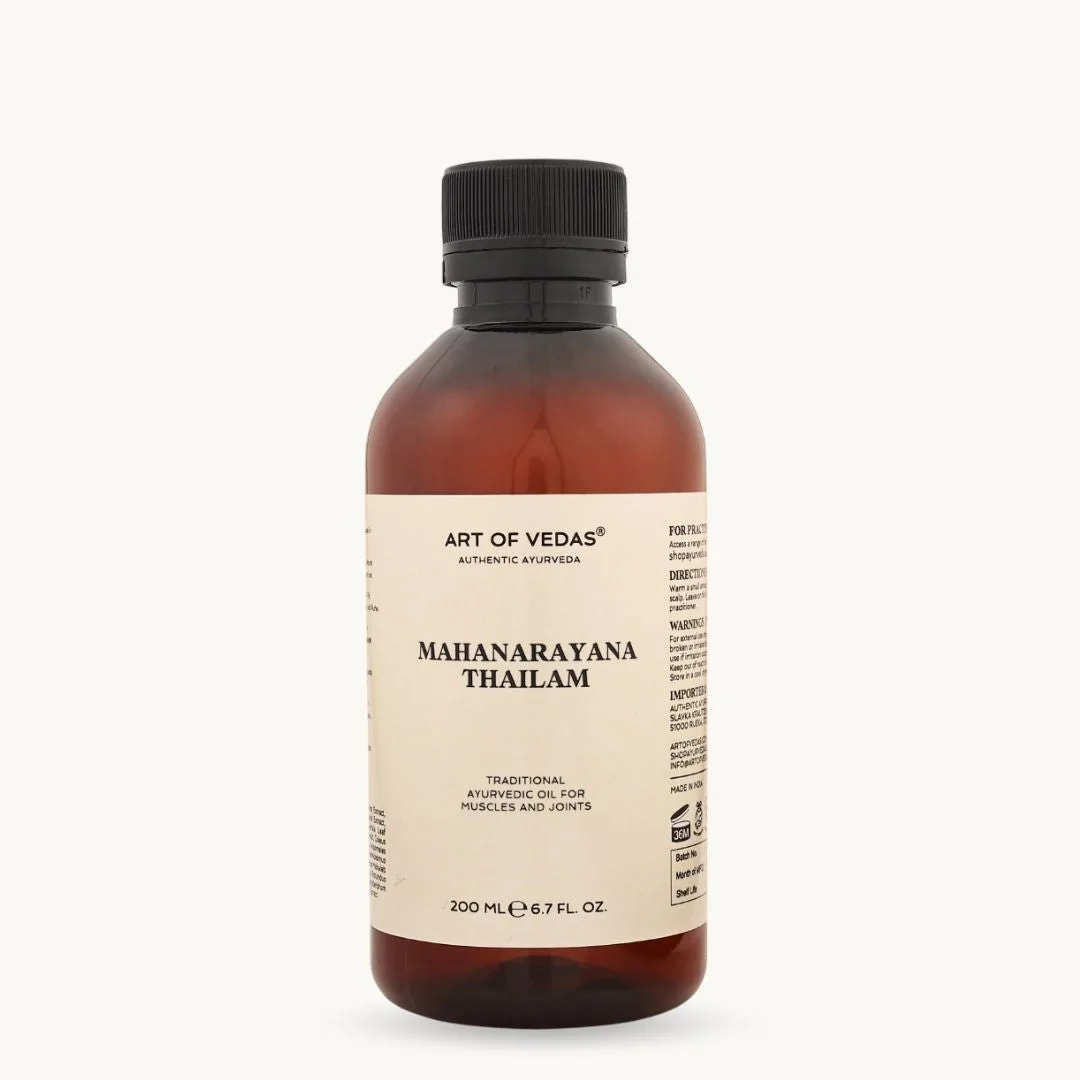
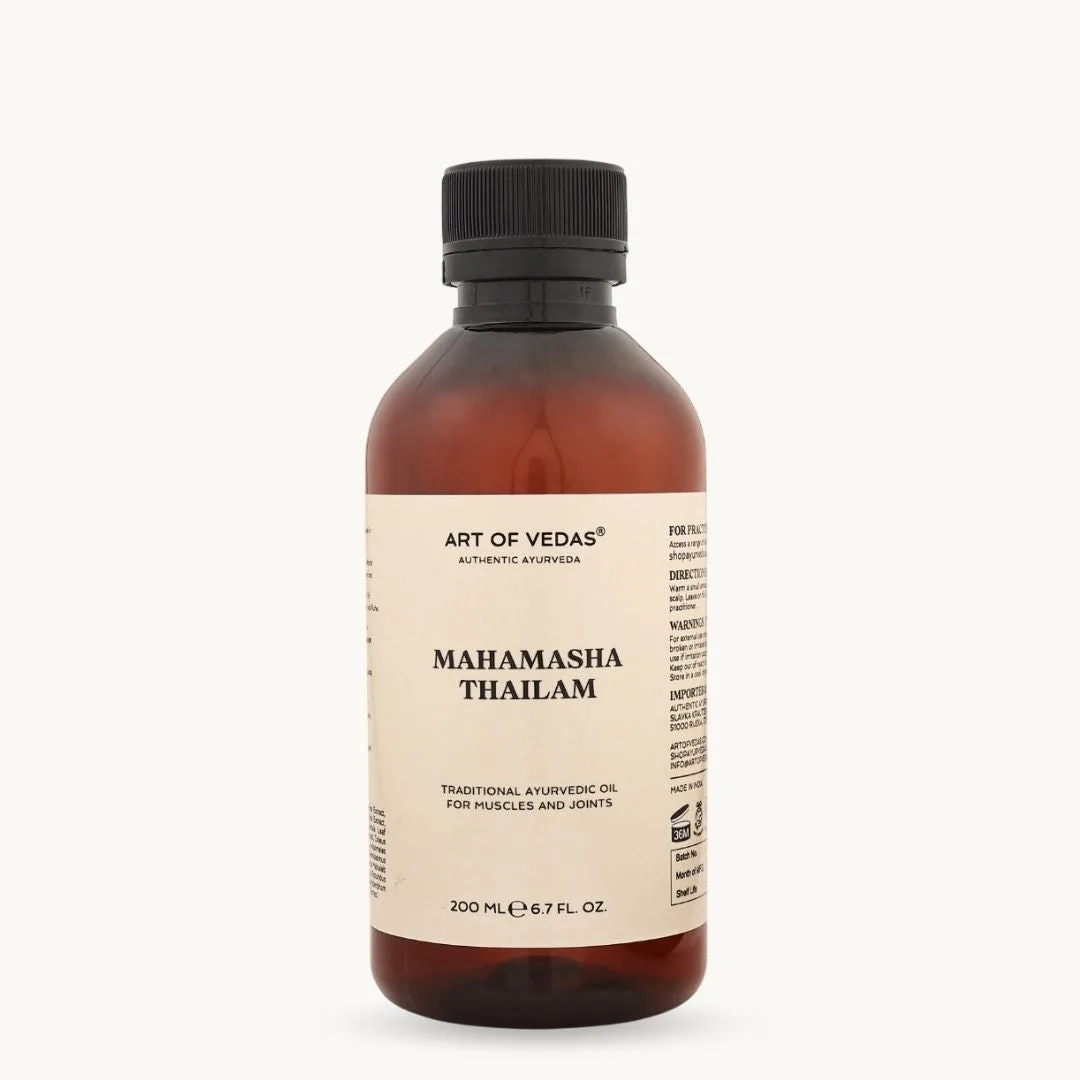
Art of Vedas does not currently offer Vishagarbha Thailam, in any of its Laghu, standard or Maha versions. The closest oils in our range are Mahanarayana Thailam and Mahamasha Thailam: both classical sesame-based Vata oils built on the Dashamoola roots and traditionally used for Abhyanga of the muscles and joints. Mahanarayana Thailam, of the Bhaishajya Ratnavali and the Sahasrayogam, adds Ashwagandha, Bala and Shatavari; Mahamasha Thailam is built on Masha, the black gram, and is the heavier of the two. Neither contains Vatsanabha or any Visha material. See also our complete guide to traditional Ayurvedic Thailams.