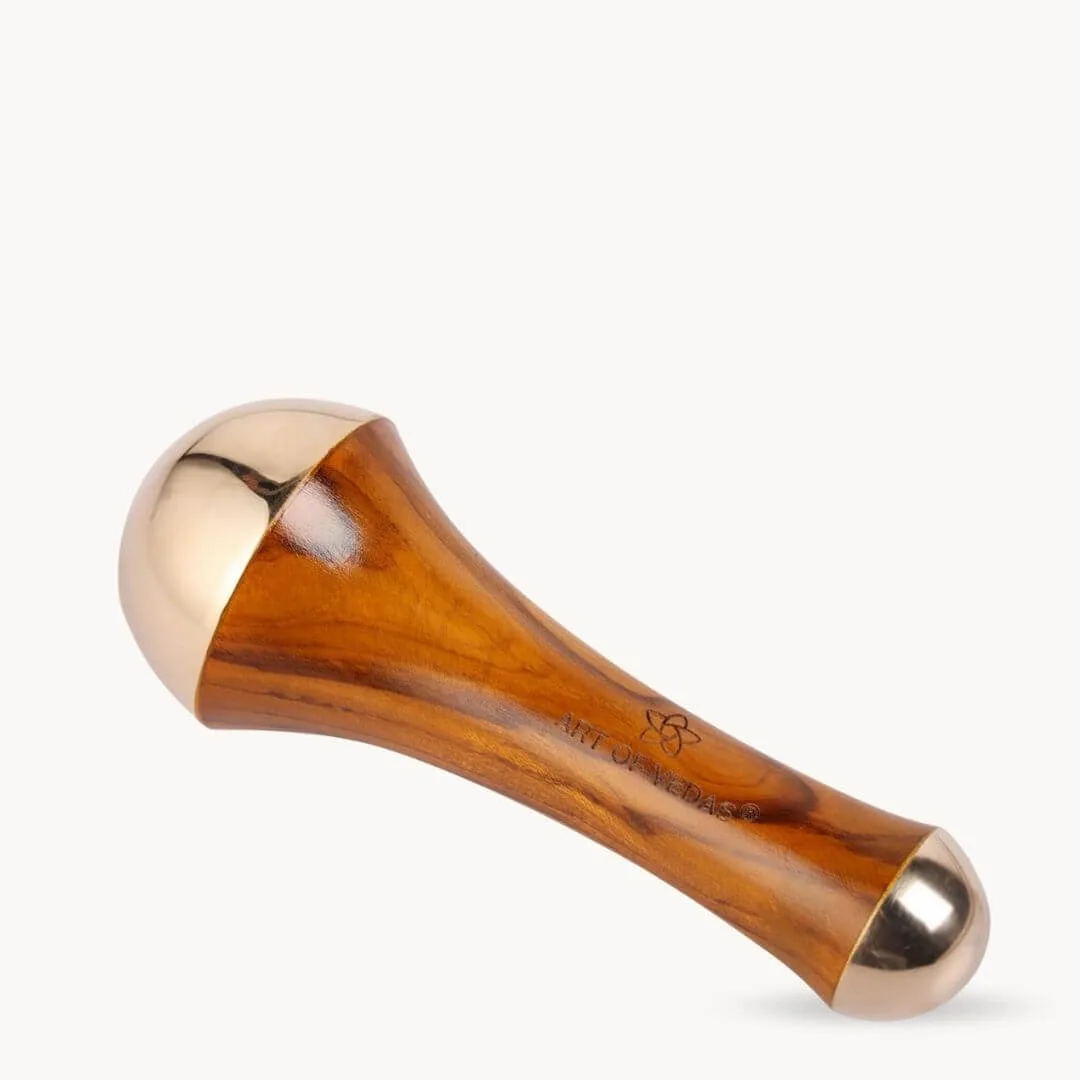
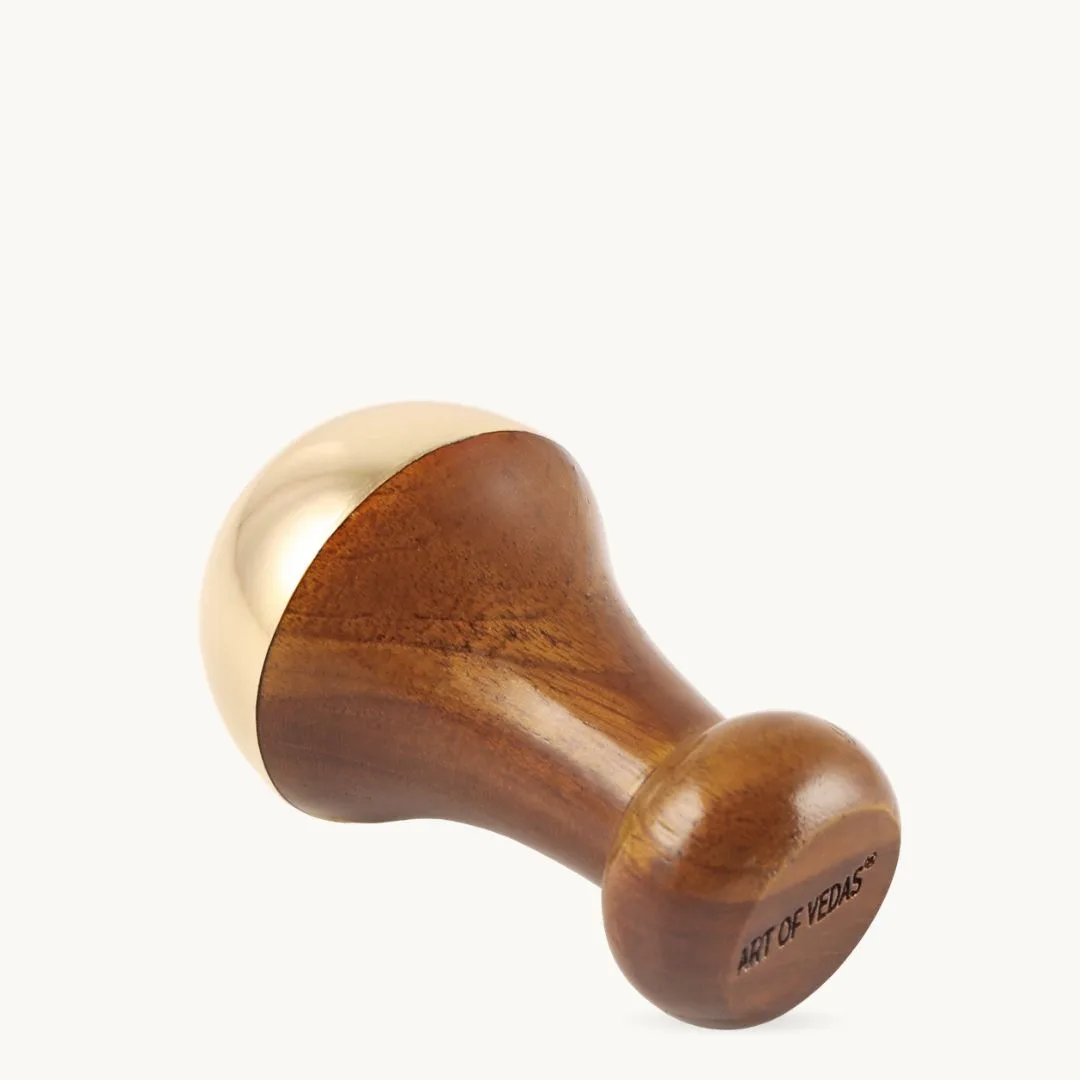
In brief: A Kansa wand is a hand-held massage tool with a smooth dome of Kansa, the bronze of copper and tin. To use it, warm a few drops of face oil on the skin, then move the dome in slow, light circles from the centre of the face outwards and from the chin up to the forehead, for five to ten minutes. This page explains Kansa wand massage step by step, how often to do it and how to care for the wand.
A Kansa wand is a traditional Ayurvedic massage tool: a rounded dome of Kansa metal, the alloy of copper and tin known in English as bell metal, shaped to glide over oiled skin. What the wand is and why the alloy matters is explained in our guide to the Kansa wand. This page is about the practice itself: how to use a Kansa wand, step by step.
Kansa wand massage: how to use the wand step by step
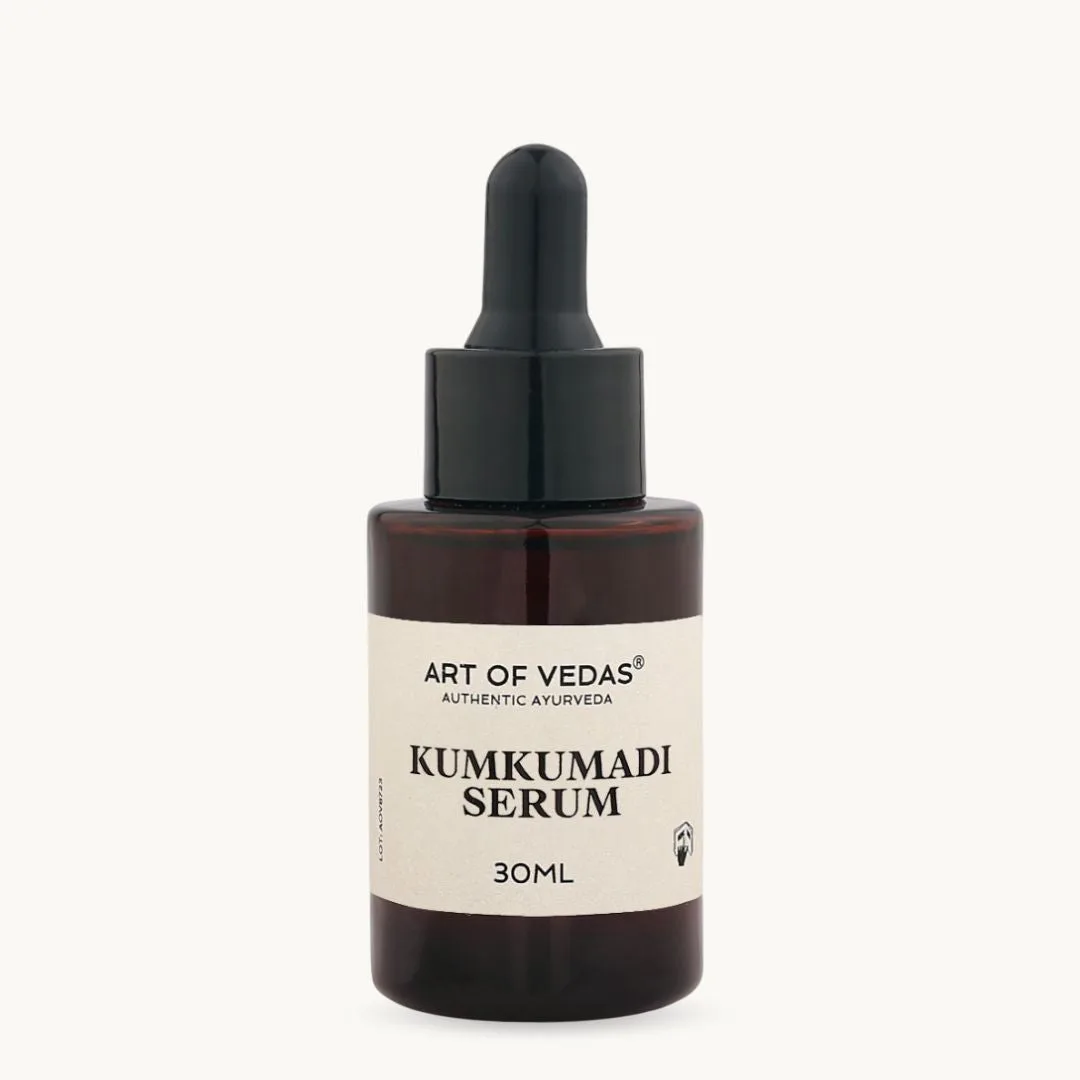
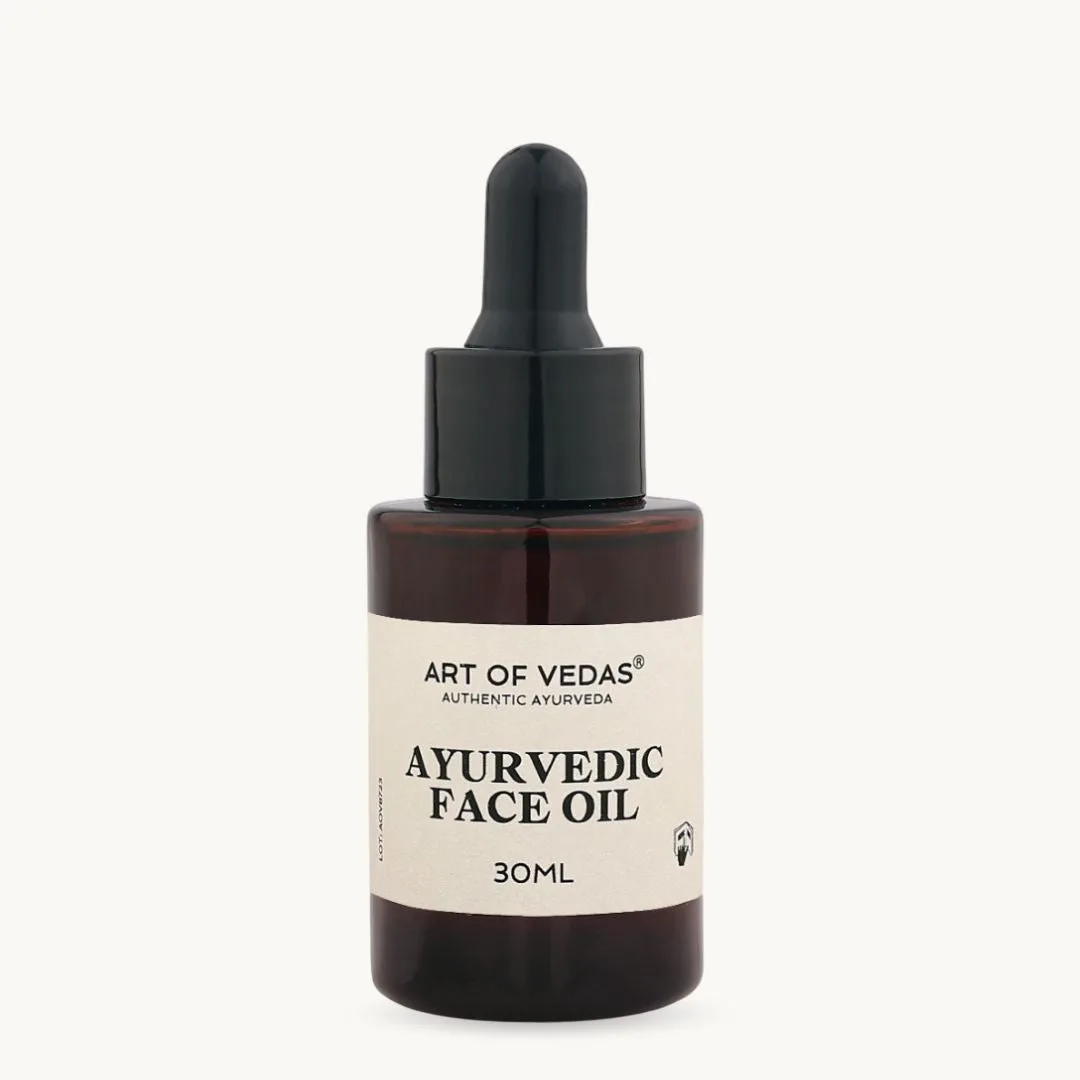
- Prepare the skin. Cleanse the face and pat it dry. Warm three to four drops of face oil between your fingertips, for example Kumkumadi Serum or the Ayurvedic Face Oil, and press it lightly onto the face and neck. The wand is never used on dry skin.
- Hold the wand lightly. Hold it like a pen, with the dome flat against the skin. The weight of the bronze is enough; there is no need to press.
- Begin at the neck. Glide the dome in long, slow strokes along the sides of the neck and across the collarbones.
- Jaw and cheeks. Make small circles along the jawline from the chin towards the ears, then over the cheeks from the nose outwards.
- Forehead. Work across the forehead from the centre to the temples in slow circles or figure-eight movements.
- Around the eyes. Use the smaller dome, if your wand has one, and very light pressure along the brow bone and towards the outer corner of the eye. Never press on the eyelids.
- Finish. Rest the dome on the centre of the forehead for a few breaths, then wipe the face gently with a soft cloth.
The whole Kansa wand massage takes five to ten minutes. Move slowly and evenly: the tradition values a calm, unhurried pace more than strong pressure.
Using the Kansa wand on the face, feet and body
The same principles apply wherever the wand is used: warm oil first, light pressure, slow circles. For the full facial sequence with the Marma points, see the Kansa wand facial massage guide. For the soles, see how to use a Kansa wand on the feet; for longer strokes over arms, legs and back, the Kansa Abhyanga wand guide. Where the practice comes from is described in what Kansa massage is.
How often and at what time of day
Three to five times a week is a common rhythm. Many people use the wand in the evening as part of their skin care, others in the morning after cleansing. Regularity matters more than length: a few calm minutes on most days is the classical idea of Dinacharya, the daily routine.
After the massage: cleaning and care
Wipe the dome with a soft, damp cloth after each use and dry it well. Store the wand in a dry place; a darker patina over time is normal for bronze. A faint grey trace on the skin is also normal with Kansa and wipes away; why it appears and when to pause are explained under Kansa wand side effects.
Which Kansa wand to choose
The double-sided Kansa wand has a larger dome for the cheeks and forehead and a smaller one for the eye area. Smaller wands suit travel, larger ones the body. All Art of Vedas Kansa tools are in the Kansa wand collection.
Before starting a new routine, especially in pregnancy, while breastfeeding, if your skin is sensitive or if you take medication, ask a qualified Ayurvedic practitioner or your doctor.
Frequently asked questions
How do you use a Kansa wand? Warm a few drops of face oil on the skin, then glide the dome in slow, light circles from the centre of the face outwards and from the chin up to the forehead, five to ten minutes in all.
Can a Kansa wand be used every day? Many people use it daily with light pressure; three to five times a week is a common rhythm. Pause if the skin feels uncomfortable and ask a qualified practitioner.
Which oil goes with a Kansa wand? A face oil, warmed between the fingertips, on the face; a warm massage oil on the body. Use enough oil for the dome to glide without pulling the skin.
Why does the skin look grey after a Kansa wand massage? The copper in the alloy reacts with the oil and the surface of the skin. The trace is normal and wipes off; the details are on the page about Kansa wand side effects.
Is a Kansa wand the same as a Kansa stick or Kansa tool? Yes. Kansa wand, Kansa stick and Kansa tool are names for the same bronze massage tool; the shape of the dome and handle varies by model.