In brief: Ayurveda and yoga were written for the same student, one tending the daily conditions of the body while the other works with breath and attention. A practice that draws on both is steadier than one built on either alone.
The yoga manuals read like Ayurvedic ones
Anyone opening a classical Hatha text expecting postures finds instead long passages on when to eat, how to live, and how much to practise before stopping. The Ayurvedic compendia return the favour. Ashtanga Hridayam, setting out Dinacharya (the ordered daily routine), places Vyayama, physical exertion, directly after Abhyanga (oil massage), so that the body is oiled before it is asked to work.
They share more than good manners. Both inherit the same vocabulary: Dosha (the three functional principles of Vata, Pitta and Kapha), Prakriti (the constitution a person is born with), Agni (digestive and metabolic fire), Ojas (the refined end product of good digestion, held to be the basis of stamina and steadiness) and Srotas (the channels through which everything in the body moves). A yoga teacher who calls a student ungrounded and an Ayurvedic physician who says Vata is high are describing one observation with different emphasis.
What each one is actually for
Ayurveda is the discipline of conditions. It concerns itself with food, oil, sleep, season and the hour of the day, and asks how this particular body should be kept. Its starting point is Prakriti, which does not change, and its work is to notice where the present state has drifted.
Yoga is the discipline of attention, and the body enters as the seat of that attention: a body that aches or races is a poor place from which to watch the breath. Its starting point is the state of mind today.
Used together, the division of labour is plain. Ayurveda sets the conditions, yoga is practised within them. When a practice goes badly for weeks, Ayurveda is where to look for something to change before the next session rather than something to push through during it.
Oil comes before movement
In Dinacharya, Abhyanga precedes exertion. The reasoning is that oil gives the tissues Snigdha, an unctuous and steady quality, before they are asked to move.
In practice this means ten quiet minutes with warm oil: long strokes along the limbs, circular strokes at the joints, then the soles of the feet, the ears and the crown of the head. Let it settle, practise, and bathe warm afterwards rather than before.
A practitioner who would rather not weigh constitution every morning can use Tri Dosha Massage Oil, a balanced preparation for all three constitutions. The classical herbs used in oils for people who move a great deal are described in our guide to Bala.
Practising with your Prakriti
Vata predominant
Light, mobile and quick to both tire and cool. The practice that suits this constitution is slower than the one such a person is drawn to: fewer transitions, longer holds with props, a warm room, and an unhurried rest at the end. Oil generously beforehand with a warming preparation such as Vata Massage Oil, following the classical preference for warmth where Vata predominates.
Pitta predominant
Sharp, capable and inclined to make the mat a measurable performance. Classical counsel here is temperance: leave capacity in reserve, avoid the hottest hours, and keep the effort out of the face and jaw. A cooling preparation such as Pitta Massage Oil follows the same reasoning.
Kapha predominant
Strong and enduring, but slow to begin, and the difficulty is rarely the practice itself so much as arriving at it. The Kapha hours of the morning, roughly six to ten, are classically the time to move. More standing work and repetition, less sitting, and a lighter hand with oil than the other two constitutions require.
Breath, and the channels above the collarbone
Pranayama belongs to yoga, but the passages it works through belong to Ayurveda's description of the body, and Dinacharya attends to them daily. Nasya, the instillation of a few drops of oil into each nostril, sits in the classical morning sequence after the teeth are cleaned and before food, on the principle that the nose is the doorway to the head. A traditional preparation such as Nasya Oil is used in this way.
Keep Nasya at its classical hour rather than folding it into the practice. It is not done immediately after vigorous work, on a full stomach, or when a person is chilled. Those who practise seated concentration will find the Medhya herbs, the group traditionally associated in Ayurveda with the mind, described in our guide to Brahmi.
Half strength, and what follows
The tradition gives a measure for exertion: work to half of one's capacity, read on the body itself as sweat appears at the forehead and the nose and the breath begins to move to the mouth. Beyond that point the classical view is that exertion costs more than it returns, and the cost is paid in Ojas.
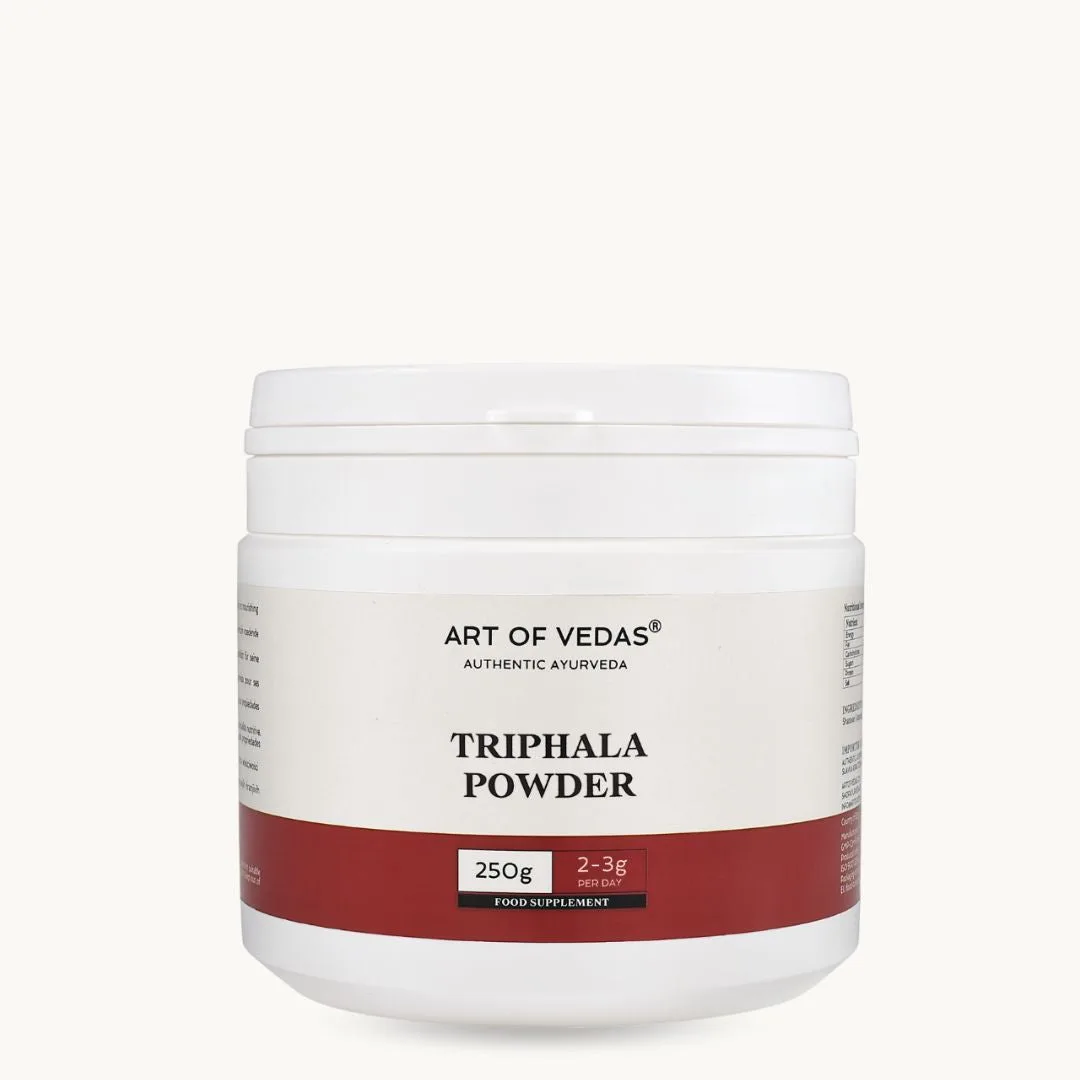
What follows matters as much. Rest before eating, and take warm, cooked food rather than something cold, since Agni is considered low immediately after exertion and slow to recover if chilled. An iced drink straight after practice works against that. Evening care of Agni and of elimination, the other half of Dinacharya, is covered in our guide to Triphala.
Across the week and the season
Ritucharya, the seasonal regimen, adjusts what Dinacharya holds steady. The same student practises differently in the cold, dry months, when the tradition directs towards more oil and gentler pacing, than in high summer, when it advises less heat in the practice and a cooler hour for it. A practice identical in February and in July ignores half of what Ayurveda has to say about the body.
A week has its own shape. The strongest sessions belong to the mornings after a full night of sleep and an evening meal that digested well. After a broken night, oil, slow movement and breath serve better than the same session pushed through on less: half strength read across the week rather than within a single hour.
Common questions
Should I oil my body before or after yoga?
Before. Dinacharya places Abhyanga ahead of Vyayama, with the warm bath afterwards. Oil applied after a session is pleasant, but it stands as a practice of its own.
How long before practice should I apply the oil?
Ten to fifteen minutes is the usual interval, enough for the oil to be absorbed rather than merely spread. If you have five minutes, oil the feet, the ears and the crown of the head, the three places the tradition singles out for daily attention, and leave the rest for another morning.
Can I practise on an empty stomach, and how long after eating?
An empty stomach is the classical assumption for morning practice. After a full meal, wait until it has digested, which in practice means a few hours, and rather less after something light. Seated breathing practice is also done before food.
Which oil suits a practitioner who does not know their Prakriti?
Begin with a balanced preparation and let the pattern decide the rest: consistently cold and restless after practice points one way, consistently overheated the other. Keeping two oils, a warming one for winter mornings and a cooling one for summer, is a reasonable arrangement.
Does Ayurveda object to vigorous or heated styles of yoga?
It does not object, but it qualifies. The half strength rule applies to any style, and heated rooms are classically unsuitable for those of Pitta constitution, and in the hot season for everyone. A Kapha predominant student in winter is the case the tradition itself directs towards strong, warming work.
What if I practise in the evening rather than in the morning?
The order holds at any hour: oil, then movement, then warm water. Two things change. An evening session sits closer to the day's meals, so keep the last one light and leave a gap, and keep the session quieter than a morning one so that it settles the body towards sleep. Nasya keeps its morning place, and anything specific to your own constitution is a question for an experienced Ayurvedic practitioner.