Are Amla and Amalaki the same thing? Yes. They are two names for a single fruit, the small, sour green Indian gooseberry that classical Ayurveda places among its most treasured substances. Amalaki is the Sanskrit name used in the classical texts, while Amla is the everyday Hindi name most people know it by. There is no difference in the fruit itself. This guide answers the naming question first, then sets out the classical context and the forms in which the fruit is traditionally used.
One fruit, two names
The botanical name is Emblica officinalis, also written Phyllanthus emblica. In Sanskrit it is Amalaki, a word that scholars connect to the idea of the sustainer or the nurse. In common speech across northern India it became Amla, meaning sour, which is its most immediate quality. English calls it the Indian gooseberry. All four names, Amalaki, Amla, Emblica officinalis and Indian gooseberry, point to exactly the same fruit. When a classical formula lists Amalaki and a modern label says Amla, they mean the same thing.
Its place in classical Ayurveda
Amalaki is described in the classical Rasayana literature as a foremost single substance in that category, valued for its balancing character across all three Doshas. Part of what makes it unusual is its Rasa profile: the texts describe it as carrying five of the six tastes, lacking only the salty, with the sour and astringent most apparent. Its Virya is classically read as cooling. This breadth of taste is one reason the tradition treats Amalaki as broadly suitable rather than narrowly directed. It sits at the heart of two of the best known classical preparations, the three-fruit Triphala and the Rasayana confection Chyawanprash, in both of which Amalaki is a central ingredient.
The forms in which Amla is used
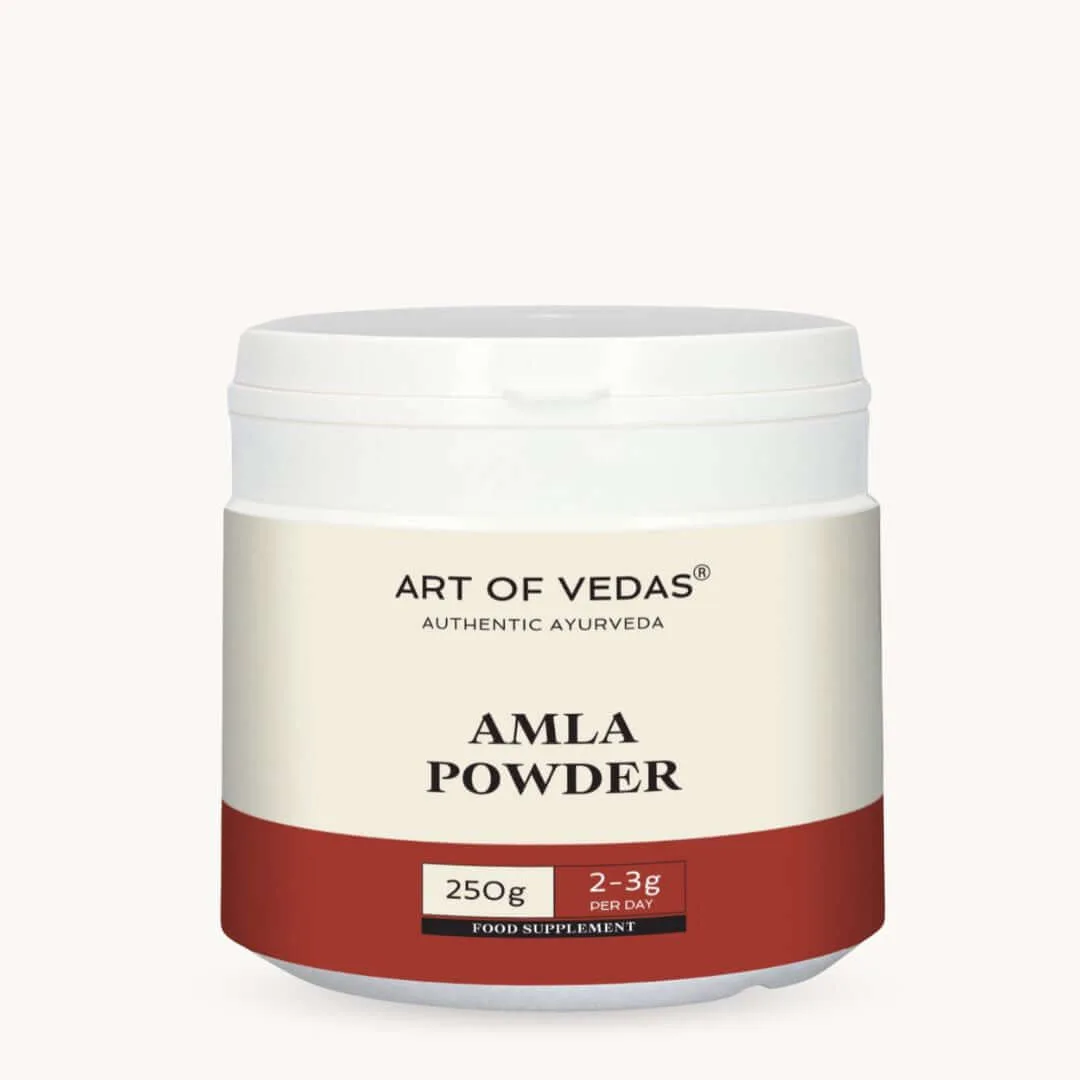
- As a dried Churnam powder, the most traditional format, taken with a suitable Anupana such as warm water.
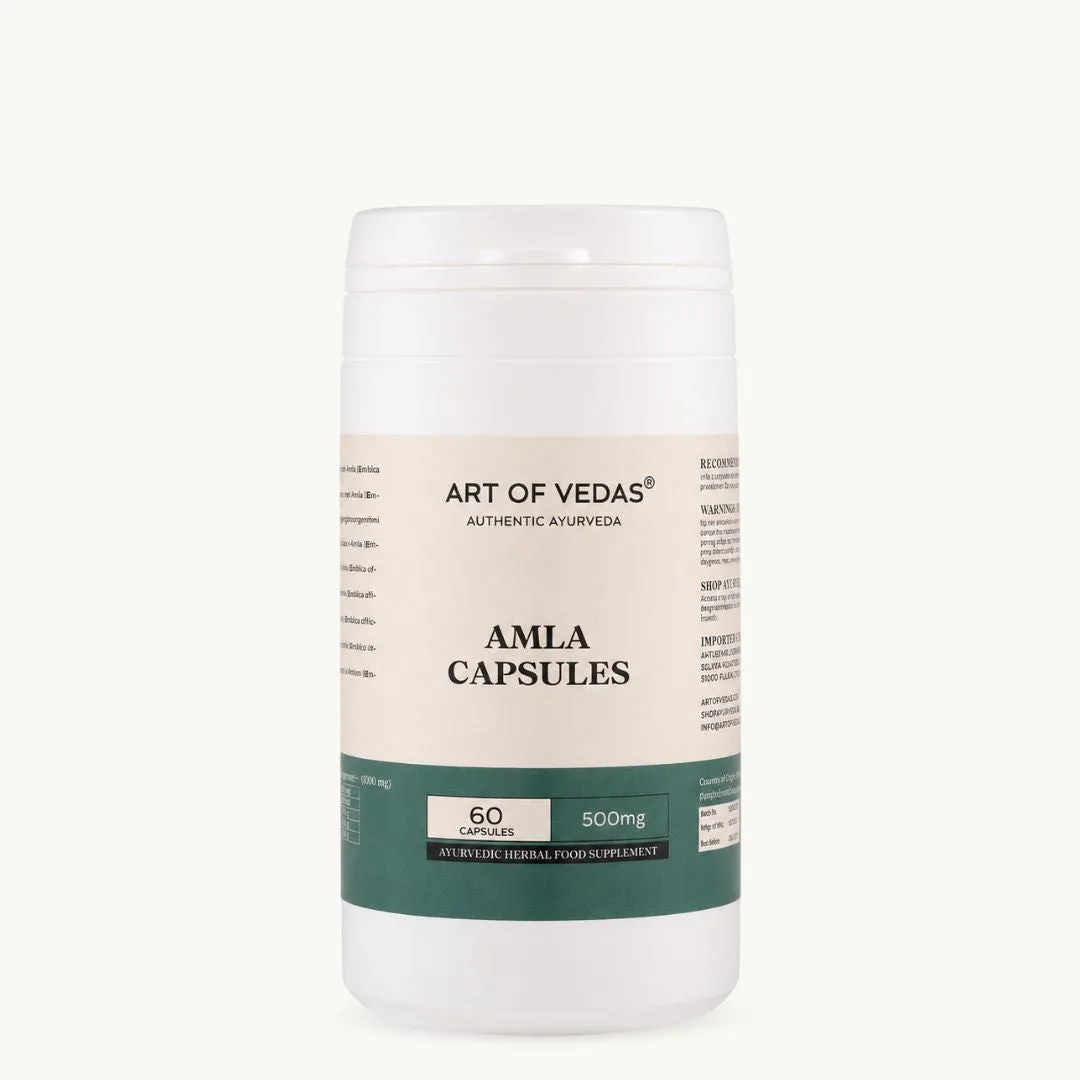
- As capsules, which carry the powdered fruit in a convenient, neutral daily form.
- Within Triphala, where Amalaki joins Haritaki and Bibhitaki in the classic three-fruit blend.
- Within Chyawanprash, the herbal jam in which Amalaki is the principal fruit.
- In traditional cosmetic and hair-care use, where the powder has long been prepared as a rinse.
Ingredients, forms and traditional cosmetic use
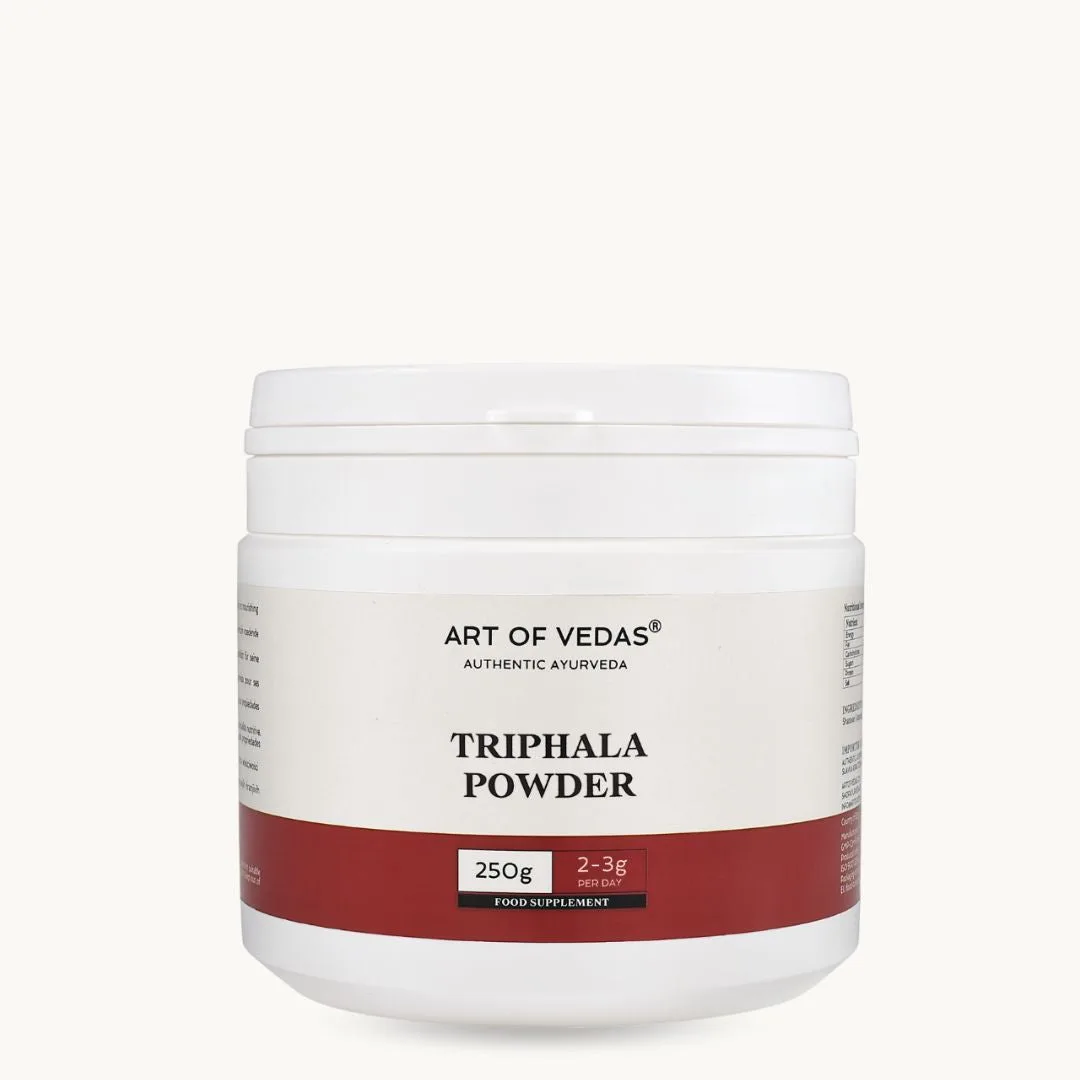
In prose, Amla reaches daily practice most simply as a single-fruit powder and as capsules, and more elaborately as a named component of compound classics. The powder form keeps the full sour and astringent character of the fresh fruit and allows the quantity and vehicle to be adjusted, while capsules offer a settled, taste-neutral portion for busy days. Beyond internal use, Amla powder has a long standing place in traditional Indian hair and scalp care, where it is mixed into a paste or rinse as part of a grooming ritual, a use framed here purely in cosmetic terms. You can view Amla powder, Amalaki capsules and a further Amla capsule option, as well as the three-fruit Triphala powder in which Amalaki sits. For the wider context, see the Triphala Churna guide, the Churnam powder formulation guide, and the monograph on Guduchi, another classical Rasayana herb.
Choosing between powder and capsule
The choice is a matter of habit rather than hierarchy. The powder is the more traditional route and keeps the sensory character the classics valued, which some people welcome and others find sharp. Capsules remove the taste and give a consistent daily portion, which suits travel and simplicity. Many people keep both, using the powder in an unhurried morning routine and capsules when time is short. Where Amalaki appears within Triphala or Chyawanprash, it is already prepared for you as part of a considered classical formula.
Frequently Asked Questions
Is Amla the same as Amalaki?
Yes. Amalaki is the Sanskrit name and Amla the common Hindi name for the same fruit, the Indian gooseberry, Emblica officinalis. There is no difference between them.
What is the botanical name of Amla?
Amla is Emblica officinalis, also written Phyllanthus emblica, and known in English as the Indian gooseberry. Classical Ayurveda calls it Amalaki.
Why is Amalaki so valued in Ayurveda?
The classical texts count it among the foremost Rasayana substances and note that it carries five of the six tastes with a cooling Virya, which is why the tradition regards it as broadly suitable across the three Doshas.
Is Amla powder or capsule better?
Neither is better in principle. The powder is more traditional and keeps the fruit's sour character; capsules are taste-neutral and convenient. The right choice depends on your routine and preference.
Can Amla powder be used on hair?
Yes. Amla powder has a long traditional place in Indian hair and scalp care, where it is prepared as a paste or rinse as part of a grooming ritual. This is a purely cosmetic use.
Is Amalaki in Triphala and Chyawanprash?
Yes. Amalaki is one of the three fruits in Triphala, alongside Haritaki and Bibhitaki, and it is the principal fruit in the Rasayana confection Chyawanprash.
This product is a food supplement and not intended to diagnose, treat, cure or prevent any disease.