This article is part of our Ayurveda and Stress: Classical Approaches to Mental Balance guide series.
The information in this article is provided for educational purposes and reflects traditional Ayurvedic knowledge. It is not intended as medical advice and should not replace consultation with a qualified healthcare professional.
In brief: The supplement industry has built a large category around "stress support," but most products in it ignore the most important question: what kind of stress, and what does the nervous system and body actually need to recover from it? Classical Ayurveda addresses this question with considerable precision. This guide explains the Ayurvedic framework for understanding stress-related depletion and which classical herbs are most relevant to each pattern.
Stress and Food Supplements: What Ayurveda Says About Nervous System Support
Stress is a billion-euro supplement category. Walk into any pharmacy in France or Germany and you will find dozens of products claiming to reduce cortisol, calm the nervous system, or restore balance. Most of them contain some combination of magnesium, B vitamins, and one or two adaptogens, often without any clear explanation of why those specific ingredients were chosen or for which type of stress they are most relevant.
Classical Ayurveda takes a fundamentally different approach. Rather than treating stress as a single phenomenon requiring a single solution, the classical framework distinguishes between different types of imbalance that produce what we today call stress symptoms, and prescribes different herbs and interventions accordingly. Understanding this distinction is the starting point for using Ayurvedic supplements for nervous system support more intelligently.
How Classical Ayurveda Understands Stress-Related Imbalance
The word "stress" does not appear as such in classical Ayurvedic texts - the tradition predates the modern neurological and endocrinological framework. What the texts describe instead are patterns of imbalance that produce symptoms overlapping significantly with what modern medicine calls stress responses.
The most relevant pattern from a classical standpoint is Vata aggravation. In the Charaka Samhita and the Ashtanga Hridayam, Vata dosha governs the nervous system, movement, and communication within the body. When Vata is elevated - whether by irregular schedule, insufficient rest, excessive mental activity, sensory overload, or nutritional inadequacy - the result is a pattern characterised by scattered attention, difficulty sleeping, physical tension, fatigue despite tiredness, and a general feeling of being depleted and ungrounded.
This Vata-dominant stress pattern is what most people in modern urban life are experiencing. It is a state of depletion and overstimulation combined, in which the nervous system is simultaneously exhausted and unable to settle. The classical texts are clear that the primary intervention for this pattern is not stimulation or further activation but nourishment, grounding, and the restoration of the body's resources over time.
A secondary pattern involves Pitta aggravation combined with stress. Here, the presentation is different: irritability, heat in the body, inflammation responses, difficulty tolerating frustration, and a tendency toward perfectionism and overwork. The Pitta-dominant stress pattern requires cooling and calming herbs rather than warming and nourishing ones, and the two patterns are sometimes confused in supplement recommendations.
Ashwagandha: The Classical Herb for Vata-Related Depletion
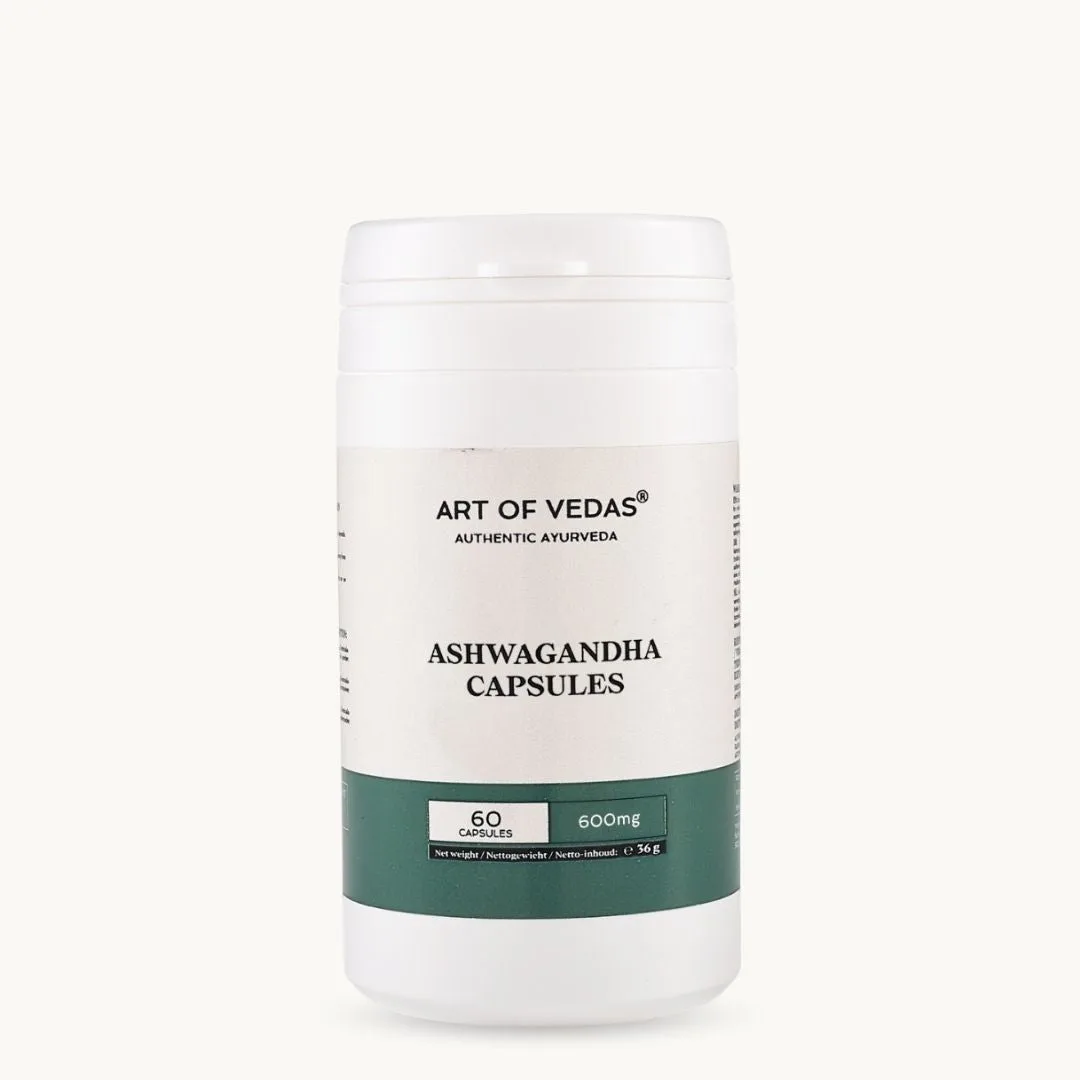
If there is one herb that the classical texts most consistently reference in the context of nervous system depletion and the rebuilding of vitality, it is Ashwagandha (Withania somnifera). The Charaka Samhita classifies it as both Balya and Rasayana, and the Ashtanga Hridayam describes its particular relevance to Vata-related weakness and depletion of the body's resources.
The modern research on Ashwagandha for stress is among the most developed of any Ayurvedic herb. Multiple randomised controlled trials have examined its effects on self-reported stress, cortisol levels, and sleep quality in adults under moderate stress. The results are generally consistent: supplementation with standardised Ashwagandha root extract over eight to twelve weeks produces meaningful reductions in perceived stress and cortisol compared to placebo in most studies. Effect sizes vary, but the direction of effect is reliable across a number of independent research groups.
Importantly, Ashwagandha's mechanism is not sedative - it does not produce drowsiness or suppress the nervous system's activity in the way that pharmaceutical anxiolytics do. The classical characterisation of it as Rasayana and Balya - rebuilding and strengthening rather than suppressing - aligns with the observed pattern in modern research, where the benefit tends to be a gradual restoration of resilience over weeks rather than an immediate calming effect.
The classical anupana (carrier) for Ashwagandha in contexts of Vata depletion is which tempers the herb's drying qualities and supports its nourishing Rasayana properties. Modern capsule preparations are convenient; taking them with warm liquid is more consistent with the classical approach than cold water. See our detailed guide to Ashwagandha benefits and use for the full classical and research context.
Brahmi: For Mental Clarity Under Cognitive Load
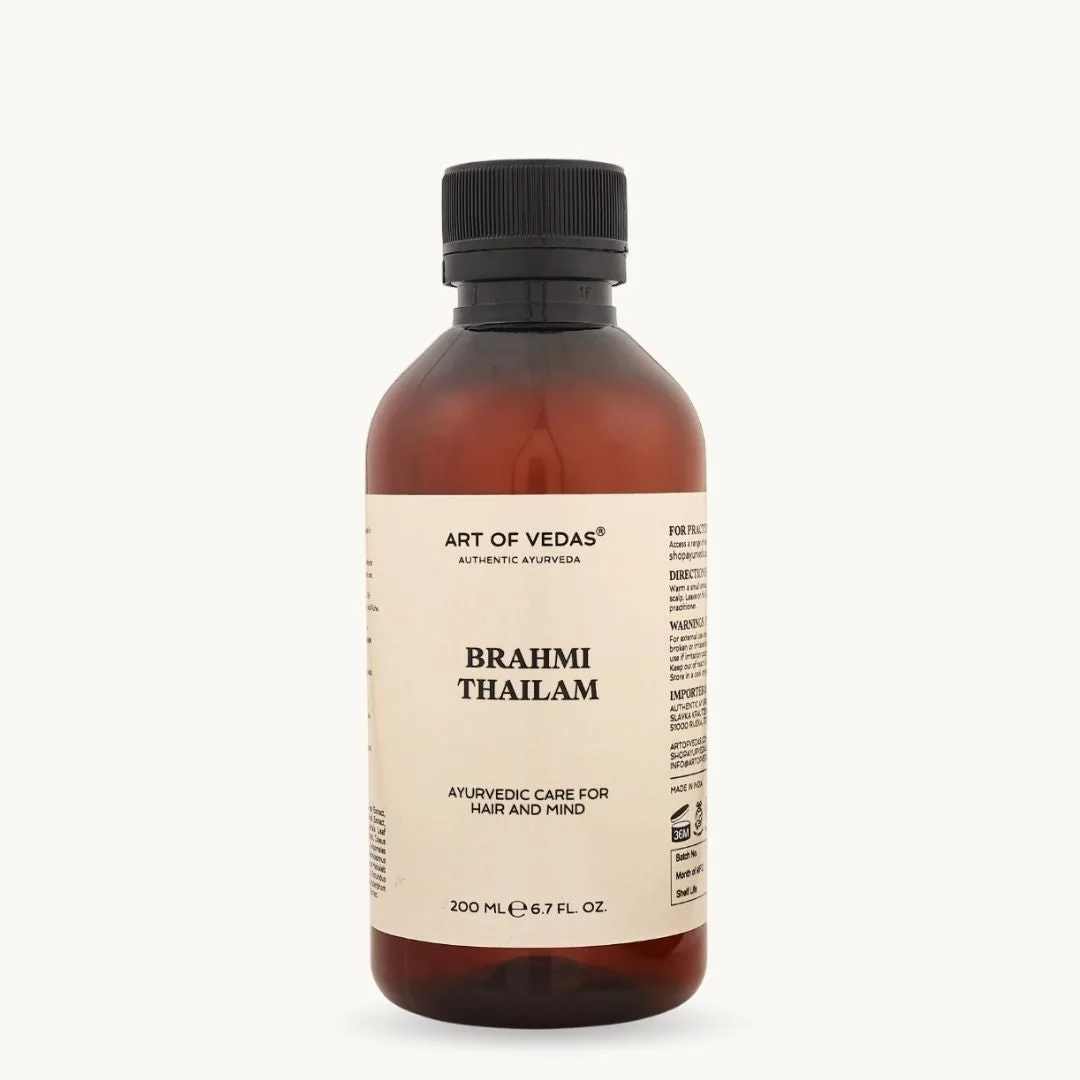
Brahmi (Bacopa monnieri) occupies a distinct position in classical Ayurveda from Ashwagandha. Where Ashwagandha targets primarily physical depletion and the body's overall resilience, Brahmi addresses the cognitive and mental dimensions of stress-related imbalance more directly.
The Charaka Samhita references Brahmi among the Medhya Rasayanas - herbs specifically described as supporting the quality of Medha, a term referring to intelligence, retention, and the clarity of the mind. The Bhaishajya Ratnavali describes Brahmi in the context of supporting memory and reducing the scattered quality of Vata-affected cognition.
Modern research on Bacopa monnieri is well-developed relative to many Ayurvedic herbs. A number of randomised trials have examined its effect on cognitive performance, memory consolidation, and anxiety in both healthy adults and older populations. The findings suggest that Brahmi's effects develop gradually over six to twelve weeks, consistent with its classical characterisation as a Rasayana - a herb that works through sustained use rather than immediate effect.
For those whose primary stress experience involves cognitive overload, difficulty concentrating, mental fatigue, or the inability to retain information, Brahmi is more directly relevant than Ashwagandha. In classical Ayurvedic practice, the two herbs are sometimes combined in compound preparations targeting both the mental and physical dimensions of Vata-related depletion.
Oils and Topical Applications: Kshirabala Thailam and Nervous System Support
Classical Ayurveda's approach to nervous system support is not limited to internal herbs. The Ashtanga Hridayam and Sahasrayogam both describe external oil applications as direct interventions for Vata in the nervous system - a reflection of the classical understanding that the skin, as the sensory organ most directly connected to Vata, is both a route of access to the nervous system and a site of Vata imbalance in its own right.
Kshirabala Thailam is among the classical oils most consistently referenced for Vata-related nervous system conditions. Prepared with Bala (Sida cordifolia) processed in milk and sesame oil, it is described in classical texts as having particular affinity for the nervous system and musculoskeletal tissues innervated by Vata. It is traditionally used as a body oil for Abhyanga (oil massage), applied warm before bathing.
The Abhyanga practice itself - regular warm oil massage performed as part of a daily routine - is described in the Charaka Samhita's Dinacharya chapter as one of the most important interventions for Vata balance. The Charaka Samhita states in the Sutrasthana that daily Abhyanga supports the body's resilience to physical stress, improves sleep quality, and nourishes the skin and nervous system. This is a practice, not just a product recommendation, and its benefits accrue with consistent daily use over time.
For those experiencing Vata-dominant stress patterns, combining internal Ashwagandha supplementation with a regular Abhyanga practice using a classical Vata-balancing oil is closer to the full classical intervention than either approach in isolation. See our guide to Abhyanga at home for practical guidance.
Frequently Asked Questions
What Ayurvedic supplements support the nervous system?
The most directly relevant classical herbs for nervous system support are Ashwagandha (Withania somnifera), classified in the Charaka Samhita as Balya and Rasayana for Vata-related depletion, and Brahmi (Bacopa monnieri), classified as Medhya Rasayana for cognitive clarity and mental resilience. Which is more appropriate depends on the nature of the imbalance: Ashwagandha is most relevant for physical depletion, fatigue, and difficulty sleeping; Brahmi is more relevant for cognitive overload, difficulty concentrating, and mental fatigue. Classical texts also reference external oil applications as part of a comprehensive approach.
Does Ashwagandha actually reduce stress?
Multiple randomised controlled trials have examined Ashwagandha root extract in adults under moderate stress, with most finding reductions in self-reported stress scores and cortisol levels compared to placebo over eight to twelve weeks. The effect is gradual rather than immediate, consistent with the classical characterisation of Ashwagandha as a Rasayana herb that rebuilds resources over time. It does not produce sedation or suppress nervous system activity in the way that pharmaceutical interventions do. It is a food supplement and not a treatment for anxiety disorders or any medical condition.
What is the difference between Ashwagandha and Brahmi for stress?
Ashwagandha targets primarily the physical and whole-body dimensions of Vata-related depletion: fatigue, reduced physical resilience, poor sleep, and general depletion of vitality. Brahmi targets the cognitive and mental dimensions more specifically: memory, concentration, and cognitive performance under load. In classical Ayurveda, they are sometimes used together in compound preparations. For someone primarily experiencing mental fatigue and difficulty concentrating, Brahmi is more directly relevant. For someone primarily experiencing physical depletion and sleep disruption, Ashwagandha is more directly relevant.
Can Ayurvedic oils help with stress?
Classical Ayurveda considers external oil application to be a direct intervention for Vata in the nervous system, not merely a relaxation practice. The Charaka Samhita describes daily Abhyanga (warm oil massage) as one of the most important practices for supporting resilience, sleep quality, and Vata stability. Oils such as Kshirabala Thailam are specifically referenced for Vata-related nervous system support. Regular Abhyanga combined with relevant internal supplementation reflects the classical approach more fully than either practice in isolation.
Explore Ayurvedic Stress Support Supplements at Art of Vedas
Browse our supplements collection including Ashwagandha and Brahmi supplements carefully selected. For topical Vata-balancing support, see our Thailams collection including Kshirabala Thailam. Related reading: Ashwagandha complete guide, Vata imbalance guide, and Abhyanga at home.
This product is a food supplement and not intended to diagnose, treat, cure or prevent any disease.