, the weeks that follow childbirth have long been marked by a period of rest and traditional care. Warm oil massage is part of this custom, and alongside liquid Thailams the region's semi-solid Kuzhambu preparations have a place in it. This article describes that cultural tradition. It makes no health claims and is not guidance for recovery. Anyone considering any form of self-care during or after pregnancy should first speak with a qualified healthcare professional and an experienced Ayurvedic practitioner.
Postnatal Care in the Tradition
Across, the period after birth has customarily been treated as a time for warmth, rest and gentle routine. Families and traditional attendants have passed down practices built around warm preparations, simple food and quiet days. Massage with warm medicated preparations is one of the best known of these customs. The tradition is cultural and regional in character, and it is described here as heritage rather than as instruction. The companion custom using a liquid oil is set out in our article on Dhanwantharam oil in traditional postnatal care.
Where a Kuzhambu Fits
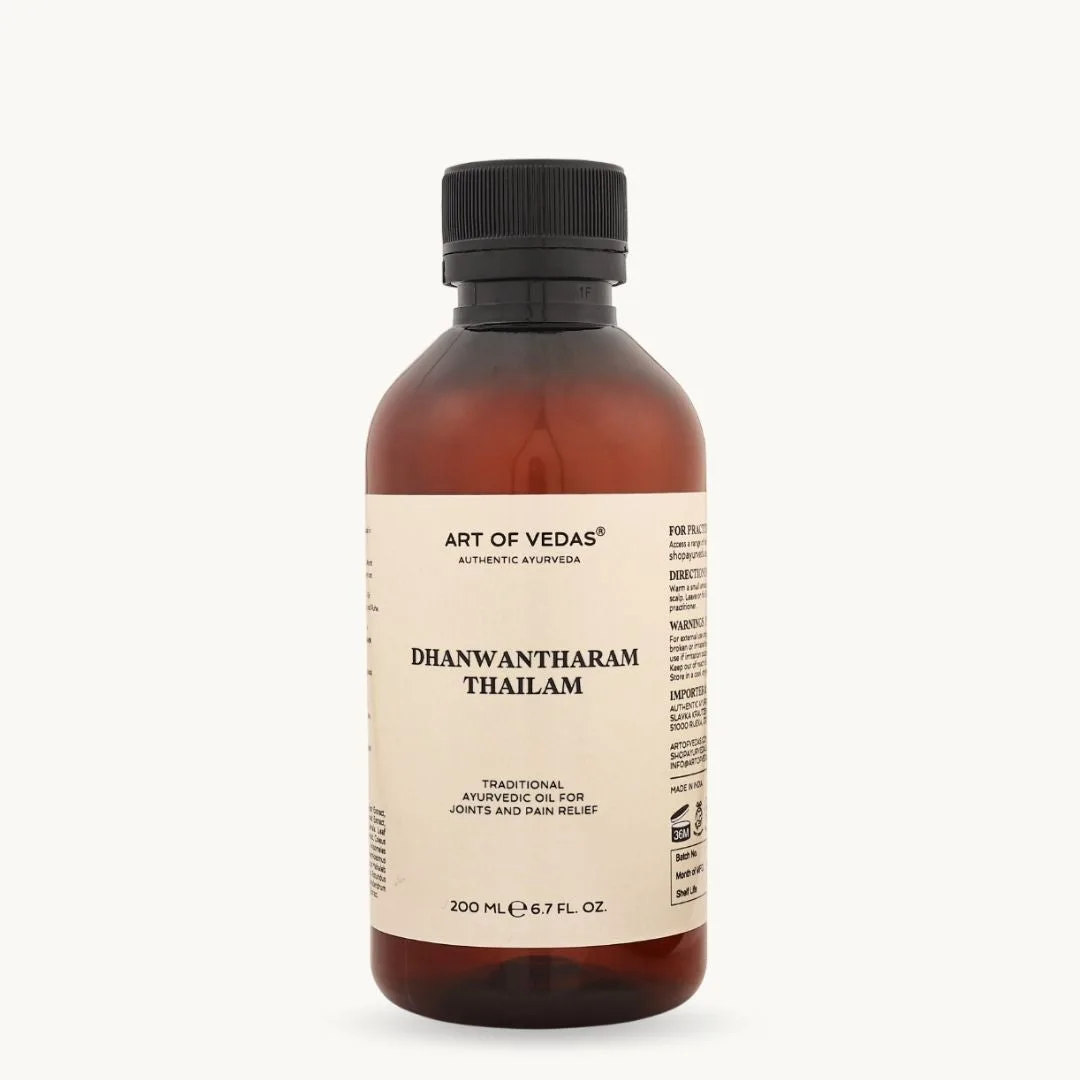
Within this tradition, the Dhanwantharam family is the name most often associated with postnatal massage. It appears in several forms, and the choice between them is a matter of texture and routine rather than strength. A Dhanwantharam Thailam is the flowing oil used for broad application, while a Dhanwantharam Kuzhambu is the semi-solid form worked into specific regions such as the lower back and hips. The wider formula is described in our Dhanwantharam Kuzhambu complete guide.
How the Tradition Describes Application
Traditionally, a Kuzhambu is warmed gently until it softens and then worked into a chosen region with slow, steady strokes, in the same unhurried manner as any focused Kuzhambu application. Because it is semi-solid, it stays where it is placed and is used only on specific areas rather than across the whole body. Practical notes on warming and quantity are set out in our guide to how to warm and apply a Kuzhambu. In the traditional setting this was often carried out by an experienced attendant rather than alone.
A Note on Professional Guidance
The period during and after pregnancy is one in which individual circumstances matter a great deal. For this reason, the sensible course is always to seek professional guidance before beginning any new routine. A qualified healthcare professional can advise on what is appropriate for a given person, and an experienced Ayurvedic practitioner can advise on how a tradition of this kind is best approached. Nothing in this cultural description should be taken as a substitute for that advice.
In this tradition, the emphasis falls on:
- Warmth, rest and a quiet, regular routine.
- Gentle, unhurried application rather than vigorous massage.
- Focused attention to specific regions when a Kuzhambu is used.
- The involvement of an experienced attendant or practitioner.
- Following professional guidance appropriate to the individual.
In terms of ingredients, the Dhanwantharam preparations share a common formula. A herbal decoction built on the Dashamula and related Vata herbs is cooked into a base of sesame, coconut and castor. The Thailam is stopped while liquid, and the Kuzhambu is reduced further to a semi-solid. The herbal recipe is the same across the family; only the texture, and therefore the way each is applied, differs.
Frequently Asked Questions
Is this article medical advice for after childbirth?
No. It describes a cultural tradition and makes no health claims. Anyone considering self-care during or after pregnancy should first consult a qualified healthcare professional.
Why is Dhanwantharam associated with postnatal tradition?
Within custom, the Dhanwantharam family is the name most often linked to this period. It is chosen by tradition, and it is available as both a flowing Thailam and a semi-solid Kuzhambu.
What is the difference between the Thailam and the Kuzhambu here?
The difference is texture. The Thailam is a liquid oil for broad application, while the Kuzhambu is a semi-solid worked into specific regions. The herbal formula is the same.
Should this be done alone?
In the traditional setting it was often carried out by an experienced attendant. Seeking the guidance of a qualified practitioner is the sensible approach rather than beginning unaided.
Who should I speak to before considering this?
A qualified healthcare professional first, and then an experienced Ayurvedic practitioner. Individual circumstances vary, and professional guidance is important.
For external use only. Not a substitute for professional medical advice.