Most herbs enter a Ghritham as a ground paste. Guggulu cannot: it is a resin, and a resin dropped into hot ghee sinks, sticks and scorches. The classical answer is a piece of equipment with a name of its own, the Dola Yantra, and it is the reason a Guggulu ghee is made differently from every other preparation in the family.
What a Dola Yantra is
Dola means swing. The apparatus is exactly that: the substance is tied in a cloth and suspended from a rod so that it hangs in the cooking vessel without touching the bottom. The classical texts describe it for substances that would otherwise burn, and for those whose soluble part is wanted while the insoluble part is not.
Why it suits a resin
- The resin never meets the hot metal, so it cannot scorch.
- What dissolves passes into the liquid; what does not stays in the cloth and is discarded with it.
- The cook can lift the bundle out at any point, which a loose paste does not allow.
Where it sits in the sequence
The Dola Yantra belongs to the liquid stage. The Guggulu hangs while the decoction is prepared and while the ghee is cooked with it, and the bitter herbs of the Panchatikta group are handled in the ordinary way, as paste. The completion tests of Sneha Paka are unchanged: the wick that burns cleanly, the froth settling, the sound of water leaving the pan.
The preparation on the shelf
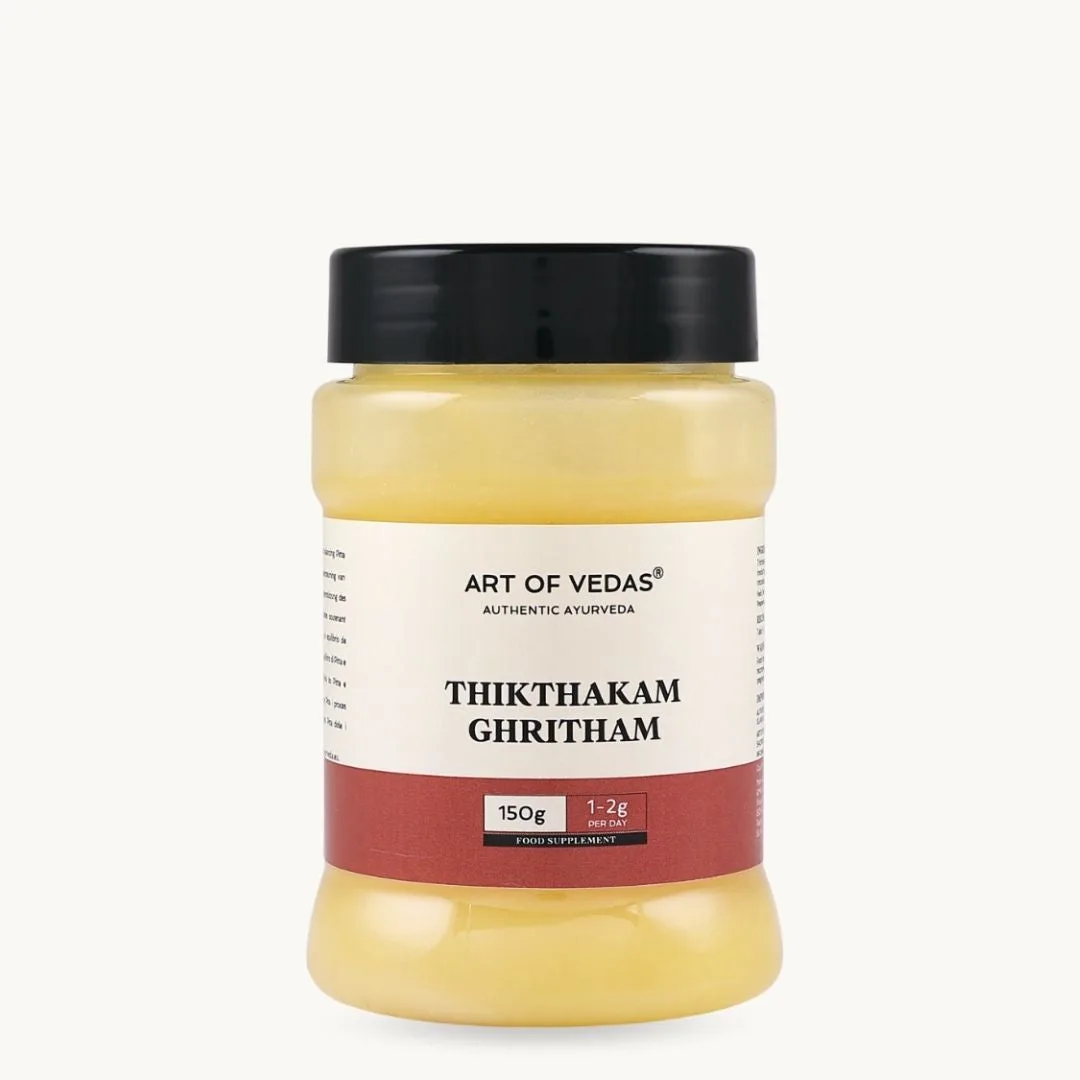
Gulgulu Thikthakam Ghritham from Art of Vedas is a simple ghee in this tradition, carrying Guggulu with turmeric and warming spices. The method in general is described in the Ghritham overview, and the formula's classical record in the formula guide.
Frequently Asked Questions
What does Dola Yantra mean?
Swing apparatus. The substance is tied in a cloth and suspended in the vessel rather than placed in it.
Why not simply grind the resin into the paste?
Because a resin in direct contact with the hot vessel scorches, and its insoluble part would remain in the finished preparation.
Does this change how the ghee is finished?
No. The completion tests of Sneha Paka are the same; only the handling of the resin differs.
This article is for educational purposes and describes the classical Ayurvedic record. The products mentioned are food supplements, not a substitute for a varied, balanced diet, and are not intended to diagnose, treat, cure or prevent any disease. Take classical ghee preparations under the guidance of a qualified Ayurvedic practitioner.