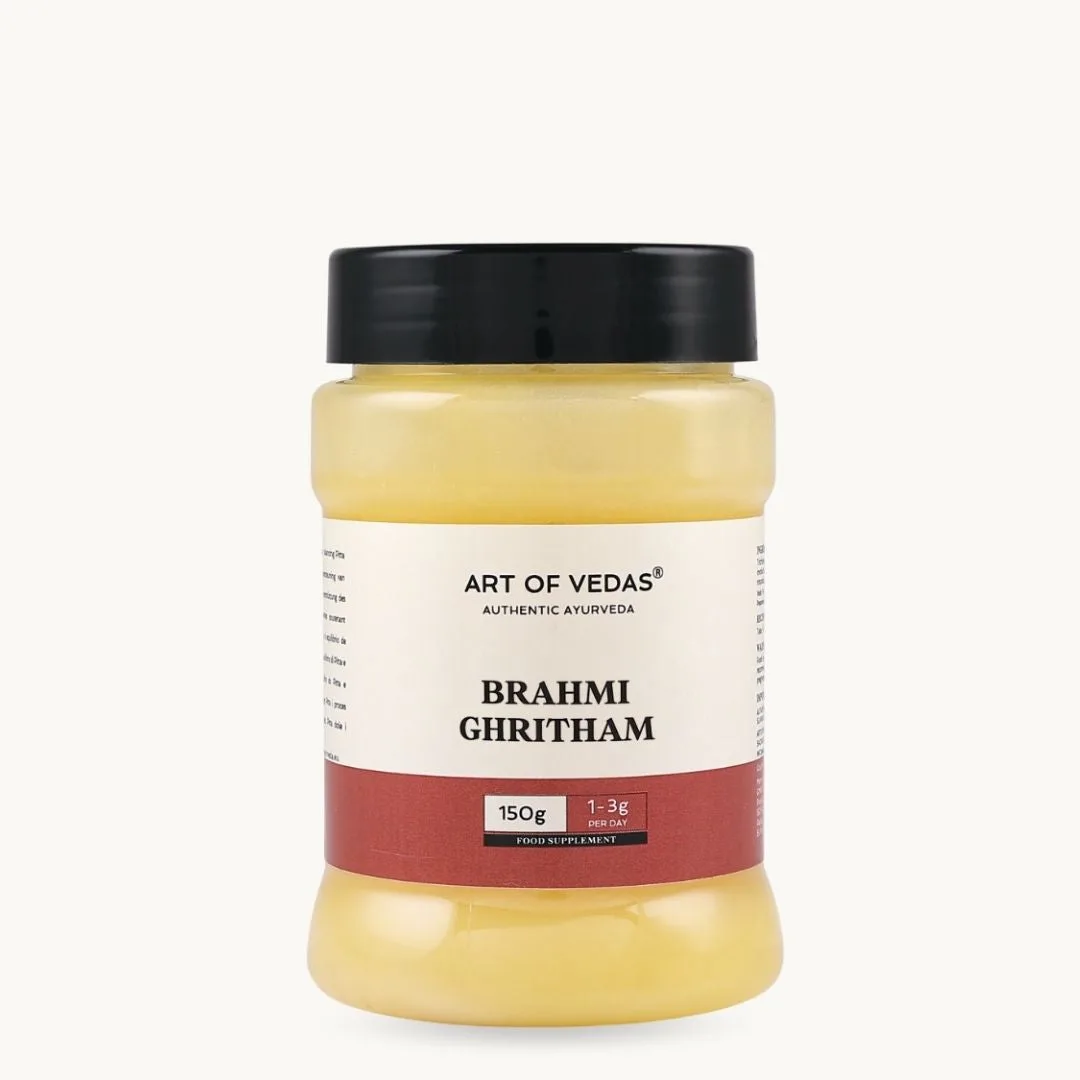
Ghritham (Sanskrit: Ghrita; plural: Ghrithams) - medicated ghee - occupies a unique place in classical Ayurveda. Among the four classical fat-based preparations (Sneha Kalpanas) described in the Ashtanga Hridayam, ghee is described as the supreme: "Of all fatty substances, ghee is the best (Sarva Snehottama Ghritam)." Medicated ghee prepared by cooking base ghee with herb decoctions through the classical Ghrita Paka method is among the most sophisticated and deeply penetrating preparations in the entire Ayurvedic pharmacopoeia. If you are searching for Ayurveda Ghee or Ghee in Europe, classical Ghrithams such as Brahmi Ghritham represent the peak of classical Ayurvedic compound formulation.
Why ghee is considered superior in classical Ayurveda
Classical texts describe ghee through the Rasa-Virya-Vipaka framework:
- Rasa: Madhura (sweet)
- Virya: Sheeta (cooling) - making ghee the preferred Rasayana vehicle for Pitta types and for any preparation where cooling penetration is required
- Vipaka: Madhura (nourishing, building)
- Key qualities: Guru (heavy), Snigdha (unctuous), Mridu (soft)
Classical texts describe ghee as having the unique property of adopting the qualities of whatever herbs are cooked into it - described in Ayurvedic pharmacology as Yogavahi. This is the classical basis for medicated Ghrithams: the ghee base carries the herb properties deep into the tissues, including the subtlest tissue layers and the channels of the mind (Manovaha Srotas). The Charaka Samhita specifically describes ghee as the finest vehicle for Rasayana herbs with Medhya properties - making medicated Ghrithams the classical premium format for preparations targeting the nervous system and mind.
The Ghrita Paka process: how Ghrithams are made
Classical Ghrita Paka (ghee-cooking process) follows a specific method described in the Ashtanga Hridayam and Sharangadhara Samhita:
- The herb material is first prepared as a water decoction (Kashayam) by slow-cooking in four parts water until reduced to one part
- The fresh herb paste (Kalka) is prepared separately
- (Dugdha) is added for milk-processed Ghrithams
- The Kashayam, Kalka, and milk are combined with base ghee and cooked at low heat until all moisture is eliminated - tested by the classical Varti (wick test)
- The prepared Ghritham is strained and stored in a cool, dark place
This slow, labour-intensive process - typically requiring 6, 8 hours of careful cooking - is what distinguishes a classical Ghritham from simply mixing herb powder into ghee. The prolonged Ghrita Paka is described as essential for the herb properties to fully transfer into the ghee base.
Brahmi Ghritham: the classical Medhya Rasayana ghee
The most famous and widely used classical Ghritham for cognitive and nervous system support. Our Brahmi Ghritham follows the classical formula described in the Ashtanga Hridayam and Charaka Samhita - prepared with Brahmi (Bacopa monnieri) as the primary herb alongside other classical Medhya herbs.
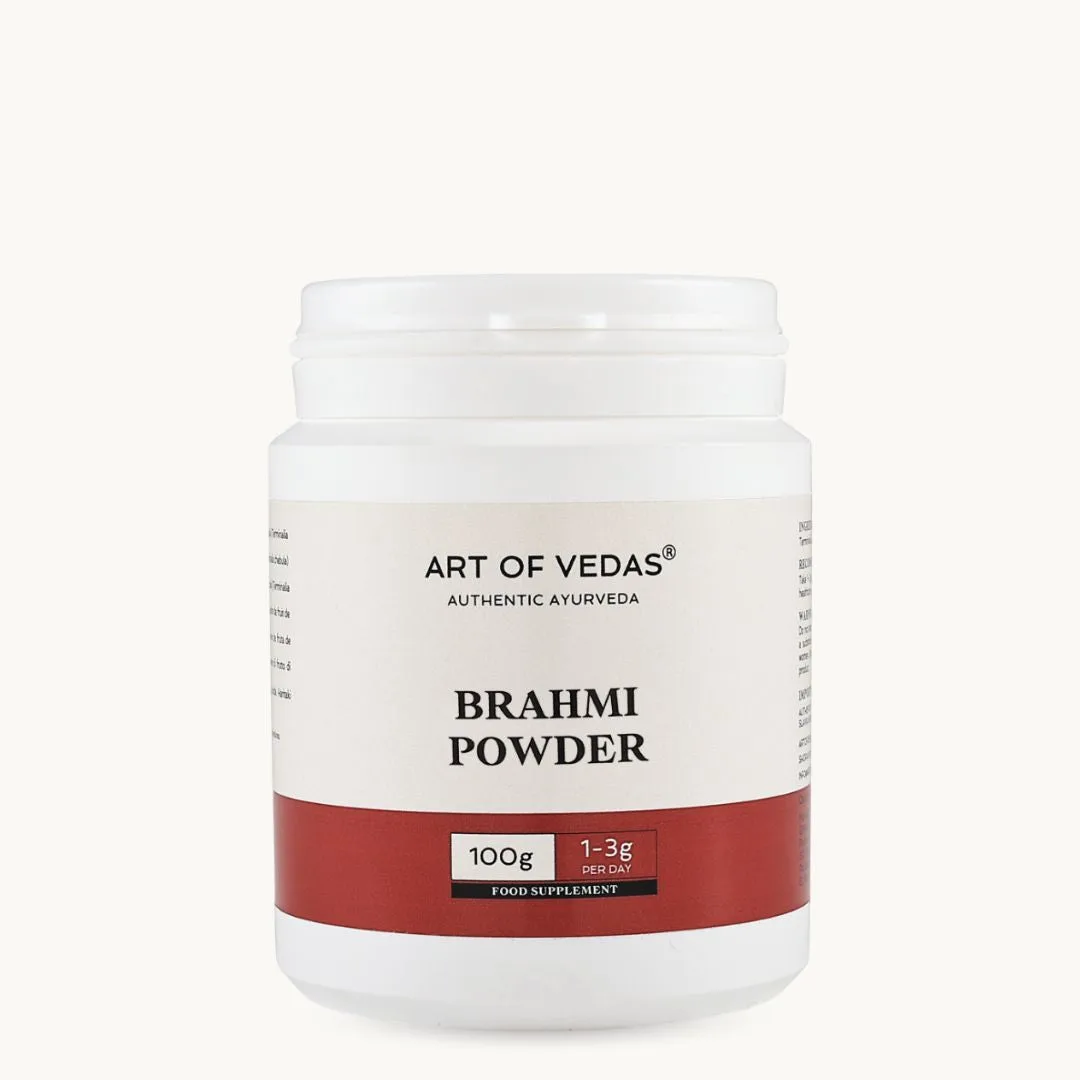
Classical texts describe Brahmi Ghritham as the preferred vehicle for extended Medhya Rasayana practice - superior to Brahmi powder in capsule form for the deepest tissue penetration and nervous system action. The ghee base carries Brahmi's Medhya action specifically to Majja Dhatu (nervous tissue) and the subtle channels of the mind.
Classical usage: starting with approximately 1 tsp (5ml) on an empty stomach in the morning, warming the ghee slightly to liquid before taking. Warm water can be taken after. See the product label for specific guidance.
For the complete overview of Brahmi as a classical herb, see our Brahmi guide.
How to use Ghritham: general guidelines
- Temperature: Always warm the Ghritham gently (place the jar in warm water) until liquid before taking - do not microwave
- Timing: Classically taken on an empty stomach in the morning, or as instructed by your practitioner
- Anupana: Warm water after taking is the standard classical recommendation
- Storage: Store in a cool, dry place away from direct light. Ghritham does not require refrigeration but should be kept below 25°C in warm climates
- Duration: Classical Rasayana protocols with Ghritham typically run for 7, 30 days. Extended use is described as most beneficial but should ideally be guided by a practitioner
Who is Ghritham suited for?
Medicated Ghritham is most appropriate for Vata and Pitta types, and for those with dry, depleted, or heated conditions. Its cooling, nourishing, and deeply penetrating properties make it particularly appropriate for those seeking deep cognitive and nervous system Rasayana and those in extended Rasayana programmes alongside diet and lifestyle adjustment. For Kapha types or those with active digestive weakness (Mandagni), Ghritham should be used conservatively and ideally with practitioner guidance.
For guidance on your Dosha type, take our Dosha test. See also our complete guide to Brahmi and our broader Ayurvedic herbs guide. The full Ghritham range is available in our Supplements collection.
Art of Vedas Ghrithams are food supplements, not medicines. They do not replace consultation with a physician or qualified Ayurvedic practitioner. Do not exceed the recommended daily intake on the product label.