The information in this article is provided for educational purposes and reflects traditional Ayurvedic knowledge. It is not intended as medical advice and should not replace consultation with a qualified healthcare professional.
In brief: Guggul (Commiphora mukul resin, known as Guggulu in Sanskrit) occupies a unique place Ayurveda as a substance considered to penetrate and cleanse the body's deepest channels. This guide covers the classical framework for understanding Guggulu, the compound formulas that use it as a primary ingredient, what modern research shows, and how to approach it as a supplement.
Guggul: Effects and Classical Use of the Sacred Resin in Ayurveda
Guggul is not an herb. It is a resinous substance - a gum exuded from the Commiphora mukul tree native to arid regions of India and the Middle East. In Sanskrit it is called Guggulu, and its position Ayurveda is unusual: it is described not simply as having Vata- or Pitta-balancing properties in the way that most herbs are categorised, but as having a quality that classical texts describe as Yogavahi - meaning it potentiates and carries the actions of the other substances with which it is combined, amplifying their effects and directing them to deeper tissue layers.
This Yogavahi property is the reason Guggulu appears as the primary ingredient in a large number of classical Ayurvedic compound formulas - not as a standalone preparation but as the vehicle through which other herbs are delivered to the Srotas (channels) and dhatus (tissues) where they are needed. Understanding this framework is essential to understanding how Guggul is traditionally approached and why standalone Guggul supplements represent only part of the classical picture.
Guggulu in the Classical Texts: Properties and Category
The Charaka Samhita describes Guggulu within a category of substances characterised by their Lekhana (scraping) property - traditionally associated with removing accumulated deposits and Ama (metabolic waste) from the body's channels. This scraping quality, combined with the Yogavahi property of potentiating other herbs, makes Guggulu particularly relevant contexts involving the accumulation of Kapha and Ama in the Meda dhatu (fat tissue) and Asthi dhatu (bone and joint tissue).
The Ashtanga Hridayam classifies Guggulu as having katu (pungent) and tikta (bitter) rasa, with an ushna (warming) virya and a pungent vipaka (post-digestive effect). These properties align it primarily with Kapha and Vata reduction. The warming potency and scraping quality are described as supporting the mobility of Kapha deposits and the clearance of accumulated material from the joints and channels, while the Yogavahi property ensures that accompanying herbs are directed to the relevant tissue layers.
The Sahasrayogam provides detailed descriptions of several classical Guggulu compound formulas, with specific guidance on their composition, preparation, and appropriate use. These formulas form the practical core of how Guggulu has been used in classical Ayurvedic practice for centuries, and they are substantially different from the simplified standalone Guggul extracts available in the modern supplement market.
The Classical Guggulu Formulas
Guggulu's most important classical expressions are as compound preparations, not as a standalone supplement. Several of these formulas have been used in Ayurvedic tradition for centuries and are still produced by traditional Ayurvedic pharmacies today.
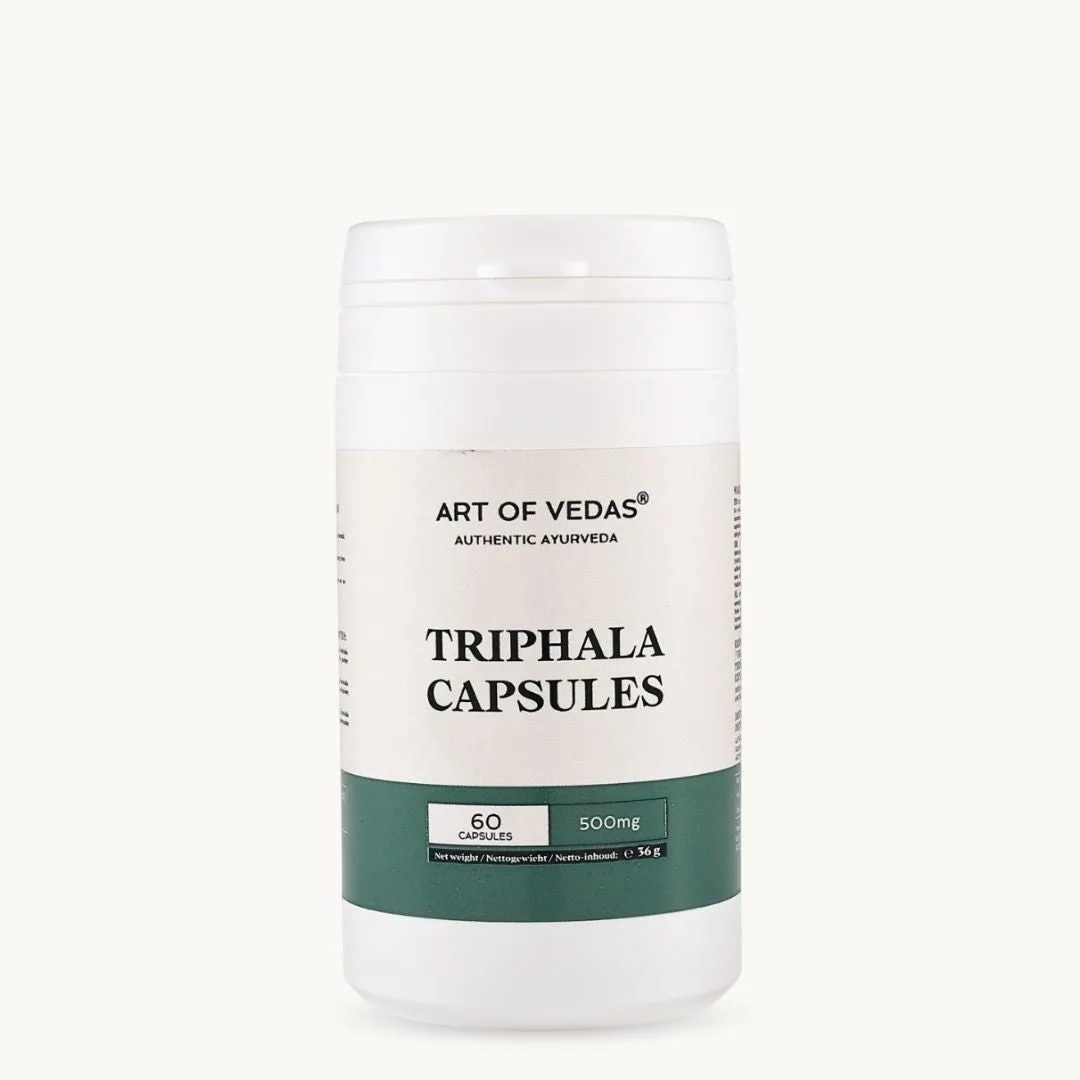
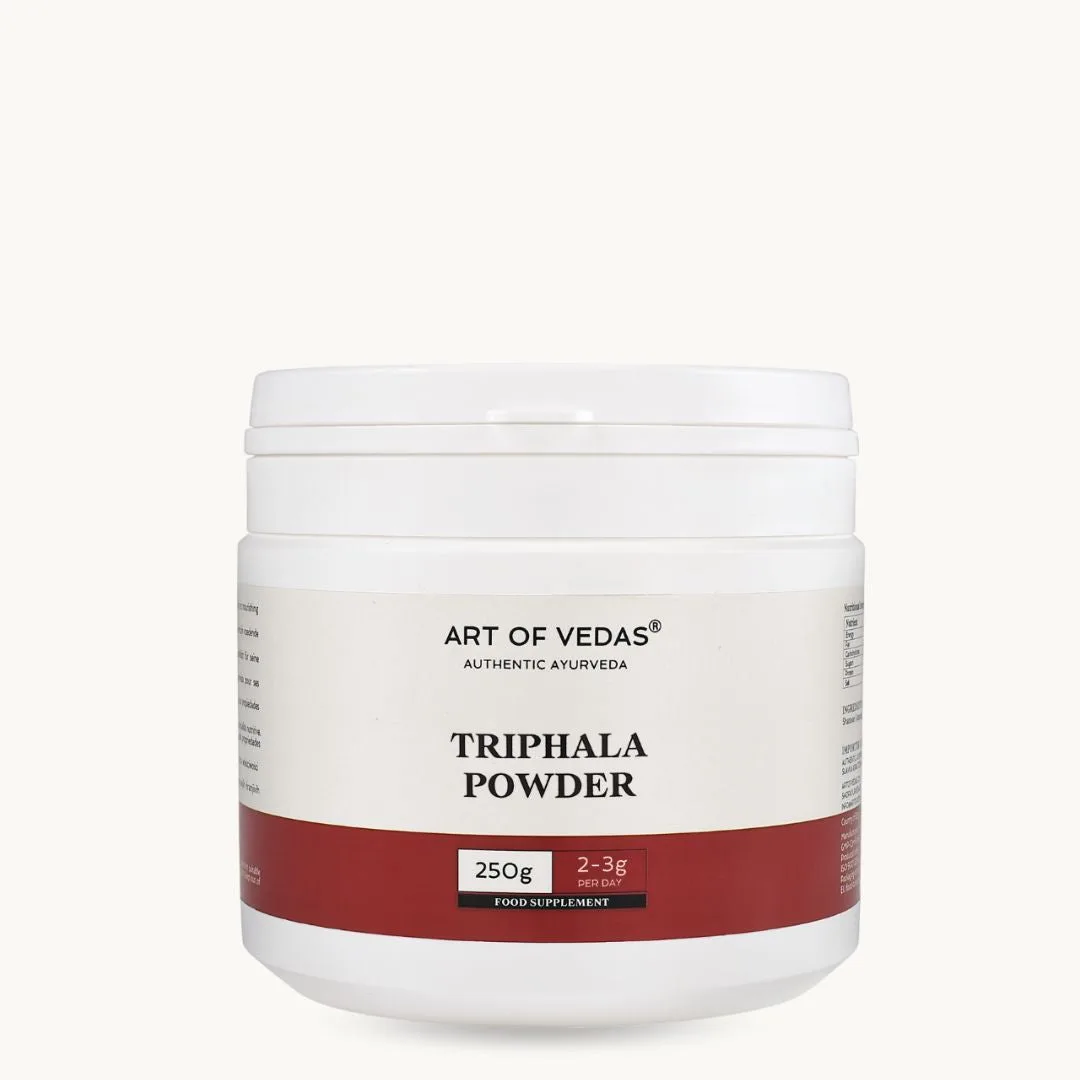
Triphala Guggulu combines Guggulu with Triphala (the three-fruit compound described in our Triphala guide) and long pepper. The Ashtanga Hridayam describes this formula as having particular relevance to the accumulation of Kapha and Ama in the channels, and it is one of the most widely used classical Guggulu preparations in traditional practice.
Yogaraj Guggulu is one of the most complex classical Guggulu formulas, containing Guggulu alongside twenty-eight supporting herbs. The Sahasrayogam and Bhaishajya Ratnavali describe it in the context of supporting joint mobility, the musculoskeletal system, and the clearance of Vata-related accumulations in the channels. It is the classical formula most directly associated with supporting everyday joint comfort and mobility in traditional use.
Kanchanar Guggulu is described texts in the context of Kapha-dominant patterns involving the lymphatic system and glandular tissues. The formula combines Guggulu with Kanchanar (Bauhinia variegata), Triphala, and several warming herbs.
These compound formulas reflect the classical understanding that Guggulu's value lies in its Yogavahi property - amplifying and directing the actions of accompanying herbs - rather than in its standalone properties alone. When evaluating Guggul supplements, whether the product is a purified standalone extract or one of these classical compound formulas is a meaningful distinction.
What Modern Research Shows About Guggul
Modern research on Guggul has focused primarily on two areas: cholesterol metabolism and traditional markers of comfort. The research is genuinely interesting in places, though the picture is more complex than early enthusiasm suggested.
Initial studies in the 1980s and 1990s explored Guggul's interaction with cholesterol metabolism, and the active compounds - guggulsterones - were identified as interacting with specific nuclear receptors involved in cholesterol regulation. These findings generated significant academic and commercial interest. However, subsequent larger and more rigorously controlled trials produced less consistent results, with several not replicating the earlier observations. The current evidence base does not support strong claims about Guggul in the form of standalone supplements in European populations with typical modern diets.
The second research area is more nuanced. Several laboratory and animal studies have examined how guggulsterones interact with the body's own pathways, and this has generated interest in relation to joint comfort. The clinical human evidence in this area is early-stage and involves small populations. It is consistent with the classical description of Guggulu's Lekhana (scraping) and Ama-clearing properties in a way that is interesting but not yet established with the same confidence as the stress research on Ashwagandha or the cognitive research on Brahmi.
The research gap between standalone Guggul extract and the classical compound formulas has not been adequately addressed in the literature. Most research has examined purified guggulsterone extract rather than classical preparations like Yogaraj Guggulu. The classical rationale that Guggulu's actions are enhanced and directed by combination with other herbs has not been rigorously tested in modern research settings.
Purified Guggul vs Classical Compound Formulas: Which to Choose
From the classical Ayurvedic standpoint, standalone purified Guggul extract is less consistent with traditional use than one of the classical compound formulas. The Yogavahi property that classical texts identify as Guggulu's most distinctive characteristic is specifically about its combination with other herbs, not its isolated action. Choosing a classical formula such as Yogaraj Guggulu or Triphala Guggulu, prepared according to traditional methods, is closer to the intended preparation than a standardised Guggul extract.
That said, quality Ayurvedic compound preparations varies considerably. The number of herbs included, the ratio of Guggulu to supporting herbs, the purity of the Guggulu used (classical texts reference a purification process - Shodhana - that is considered essential before Guggulu is incorporated into preparations), and the geographic origin of the raw material all affect the final product.
For general daily use relevant to joint mobility and musculoskeletal comfort, Yogaraj Guggulu is the classical formula with the most direct applicability. For those whose primary interest is in the Lekhana and Ama-clearing properties in combination with digestive support, Triphala Guggulu is the more relevant preparation.
Browse the Art of Vedas supplements collection for classical Guggulu preparations. For context on the joint and musculoskeletal application, see our guide to Ayurvedic joint and muscle care.
Frequently Asked Questions
What is Guggul (Guggulu) in Ayurveda?
Guggulu is a resinous substance exuded from the Commiphora mukul tree, used Ayurveda for over two thousand years. The Charaka Samhita and Ashtanga Hridayam describe it as having Lekhana (scraping) properties traditionally associated with the clearance of accumulated Ama from the body's channels, and Yogavahi properties - meaning it potentiates and directs the actions of other herbs. It is primarily used Ayurveda as the base in compound formulas such as Yogaraj Guggulu and Triphala Guggulu rather than as a standalone preparation.
What is Guggulu used for Ayurveda?
Classical texts describe Guggulu as particularly relevant to patterns involving the accumulation of Kapha and Ama in the fat tissue and joint tissue. Its warming potency and Lekhana property are described as supporting the clearance of accumulated deposits from the joints and channels. Yogaraj Guggulu is the classical formula most directly referenced for joint mobility and musculoskeletal support.
What is the difference between Guggul and Yogaraj Guggulu?
Guggul extract is the standalone resin as a single-ingredient supplement. Yogaraj Guggulu is a classical compound formula containing Guggulu alongside twenty-eight supporting herbs. The classical framework considers Guggulu's most important property to be Yogavahi - potentiating and directing the effects of other herbs - which means compound formulas are more consistent with classical use than standalone Guggul extract.
Does modern research support Guggul?
The research picture is mixed. Initial studies exploring its interaction with cholesterol metabolism were not consistently replicated in larger trials. Laboratory research is interesting but clinical human evidence remains early-stage. The most significant gap is that most studies used purified guggulsterone extract rather than the classical compound formulas. The classical rationale that Guggulu works through its Yogavahi combination with other herbs has not been adequately tested in modern research.
Explore Guggulu Preparations at Art of Vedas
Browse our supplements collection for classical Guggulu preparations. Related reading: Ayurvedic joint and muscle care guide, Triphala guide, classical Rasayana, and Ayurvedic immunity guide.
This product is a food supplement and not intended to diagnose, treat, cure or prevent any disease.