This article is for educational purposes. Rasayana herbs and formulations are food supplements and not intended to diagnose, treat, cure or prevent any disease.
What Is Rasayana?
Rasayana is one of the eight classical branches (Ashtanga) of Ayurveda, sitting alongside surgery (Shalya Tantra), internal medicine (Kaya Chikitsa), paediatrics (Kaumara Bhritya) and five other specialised disciplines. It is the branch devoted entirely to the question of longevity - not in the superficial sense of living longer, but in the classical sense of maintaining the quality, vitality and functional integrity of every tissue in the body throughout a full lifespan.
The word itself reveals the mechanism: Rasa (the first and most essential tissue layer in Ayurvedic anatomy, roughly equivalent to plasma and lymph) + Ayana (the path or channel). Rasayana literally means "the path of Rasa" - the practice of optimising the quality and flow of the primary nutritive tissue from which all other tissues are sequentially built. When Rasa Dhatu is pure, abundant and flowing freely, every subsequent tissue layer - blood, muscle, fat, bone, marrow, reproductive tissue - receives optimal nourishment. When Rasa is compromised, the entire chain of tissue formation degrades.
The Charaka Samhita dedicates an entire section of the Chikitsasthana (treatment section) to Rasayana - the Rasayana Adhyaya - making it one of the most extensively documented subjects in classical Ayurvedic literature. This is not folk wisdom. It is a systematised, detailed medical science of healthy ageing.
The Three Classical Approaches to Rasayana
The Charaka Samhita describes three distinct approaches to Rasayana practice, ranging from intensive clinical protocols to daily lifestyle practices that anyone can adopt.
Kutipraveshika Rasayana
The most intensive form. The individual enters a specially constructed Kuti (cottage/chamber) for an extended period - classical texts describe durations of weeks to months. Inside this controlled environment, they undergo Panchakarma purification followed by systematic administration of specific Rasayana herbs and formulations. Diet, light, sleep, activity and social interaction are all precisely regulated. This is the ultimate expression of Rasayana therapy and is described in the Charaka Samhita as producing the most profound results. It is rarely practised today outside specialised Ayurvedic centres in India.
Vatatapika Rasayana
A more accessible version where Rasayana herbs and regimens are followed while the individual continues normal daily life - exposed to wind (Vata) and sun (Atapa), hence the name. This is the practical form of Rasayana that most people can actually implement. It involves daily use of Rasayana herbs, adherence to seasonal dietary adjustments, appropriate daily routines (Dinacharya) and regular Abhyanga self-massage with classical Thailams.
Dravya Rasayana
The use of specific Rasayana herbs and formulations as part of daily supplementation. This is the most widely practised form in modern Ayurvedic care and forms the foundation of what Art of Vedas offers through its supplement range.
The Major Rasayana Herbs and Formulations
Chyavanprash
Chyavanprash is the king of Rasayana formulations. A jam-like preparation containing 40+ ingredients with Amalaki (Indian gooseberry) as the primary ingredient, it is described in the Charaka Samhita as the foremost Rasayana for general vitality, respiratory health, digestive strength and immunity. The origin story - attributed to the sage Chyavana, who used this preparation to restore his youth - is one of the most famous narratives in Ayurvedic literature. One to two teaspoons daily with warm water is the classical dosage for adults.
Ashwagandha
Ashwagandha (Withania somnifera) is the primary Vata Rasayana and the classical male rejuvenative. It is Balya, Vrishya and Medhya. Its warming energy makes it particularly suited to those with cold, depleted, Vata-dominant constitutions. For practical guidance on capsule form, see our Ashwagandha capsules guide.
Shatavari
Shatavari (Asparagus racemosus) is the primary Pitta Rasayana and the classical female rejuvenative. Its cooling, nourishing qualities make it the complement to Ashwagandha - where he warms and strengthens, she cools and nourishes. Together they represent the two poles of Rasayana: building heat-driven vitality and building coolth-driven nourishment.
Brahmi
Brahmi (Bacopa monnieri) is the primary Medhya Rasayana - the Rasayana that specifically targets the mind and nervous system. The Charaka Samhita lists four Medhya Rasayanas (Shankhapushpi, Brahmi, Yashtimadhu and Guduchi), with Brahmi being the most widely used. It supports memory, cognitive clarity, concentration and emotional stability. Art of Vedas offers Brahmi in capsule form and as Brahmi Thailam for head massage.
Guduchi
Guduchi (Tinospora cordifolia) is called Amrita in Sanskrit - "the divine nectar" - because of its reputation as one of the most broadly beneficial herbs in the pharmacopoeia. It is one of the rare Tridoshic Rasayanas, meaning it balances all three Doshas simultaneously. The Charaka Samhita classifies it as Vayasthapana and Medhya.
Amalaki
Amalaki (Emblica officinalis) appears in virtually every Rasayana formulation. It is the richest natural source of bioavailable Vitamin C, the primary ingredient in Chyavanprash, and one-third of Triphala. The Charaka Samhita calls it Shreshtha among all Rasayana fruits. Used alone as a daily supplement, it is a gentle, universally suitable starting point for anyone new to Ayurvedic Rasayana.
Achara Rasayana: Behavioural Rejuvenation
One of the most remarkable aspects of Rasayana in the Charaka Samhita is the concept of Achara Rasayana - rejuvenation through conduct and behaviour. The text describes specific behavioural qualities that function as Rasayana without any herbal supplementation: truthfulness, freedom from anger, regular daily routine, early rising, compassion, cleanliness, balanced diet, regular spiritual practice, respect for elders and teachers, and maintaining a calm disposition.
This is not moralistic prescription. Classical Ayurvedic authors understood that chronic negative emotional states produce physiological stress responses that deplete Ojas (vital essence) and accelerate tissue degradation. Positive behavioural patterns do the opposite - they conserve and build Ojas. Modern stress physiology has confirmed what these physicians observed three thousand years ago: chronic anger, resentment, fear and dishonesty are measurably damaging to biological systems.
Dietary Rasayana
The Charaka Samhita also describes specific foods as Rasayana when consumed regularly and appropriately. These include milk (particularly, warm, with ghee), ghee itself (especially aged ghee, which the texts consider increasingly with age), honey (raw, never heated - the texts are emphatic about this), Amalaki fruit, dates and almonds. These foods nourish Ojas directly and support the tissue-building processes that Rasayana aims to optimise.
This dietary approach pairs naturally with the Dosha-specific dietary guidelines - the Rasayana foods provide the building blocks, while Dosha-appropriate eating ensures those building blocks are properly digested and assimilated.
Rasayana Through External Practices
Rasayana is not only internal. The classical texts describe several external practices as having Rasayana effects:
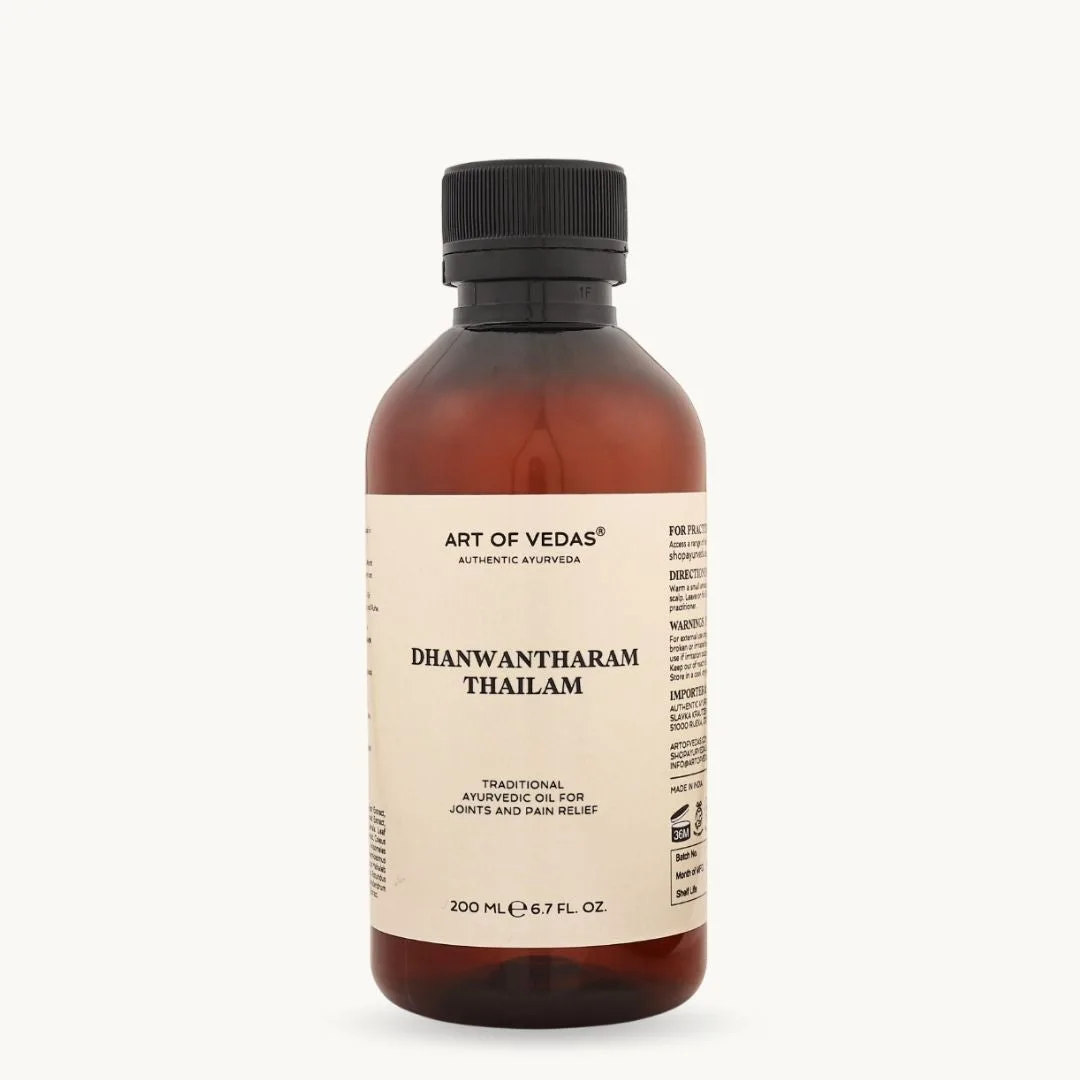
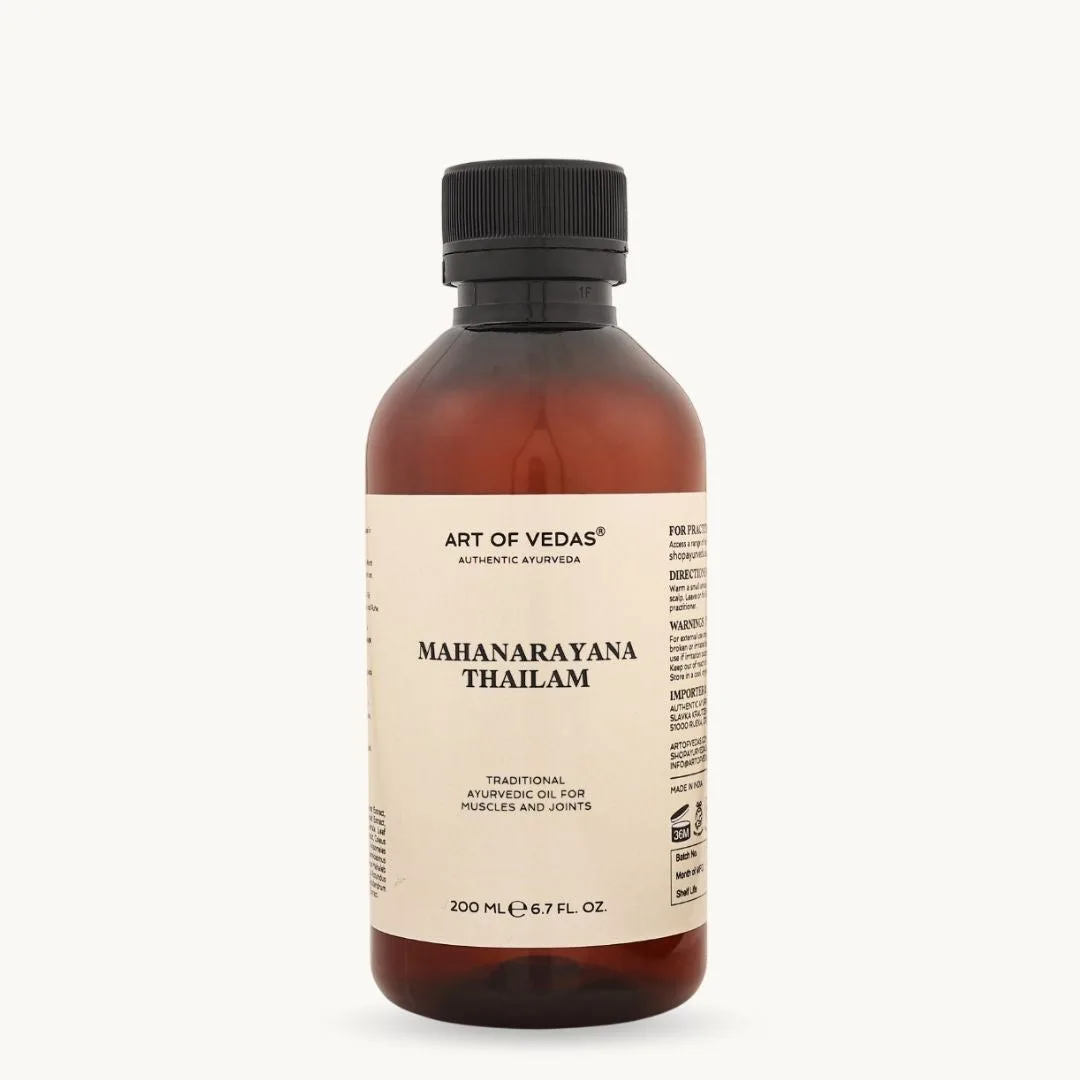
Abhyanga with Rasayana Thailams: Daily self-massage with classical Thailams like Dhanwantharam Thailam or Mahanarayana Thailam nourishes the skin (the largest organ), calms the nervous system and supports tissue health. The Art of Vedas Thailam collection includes oils specifically formulated according to classical Rasayana principles.
Shiro Abhyanga: Head massage with Brahmi Thailam specifically targets the nervous system and sensory organs - key Rasayana objectives. Classical texts describe regular head oiling as one of the most important daily practices for maintaining mental clarity into old age.
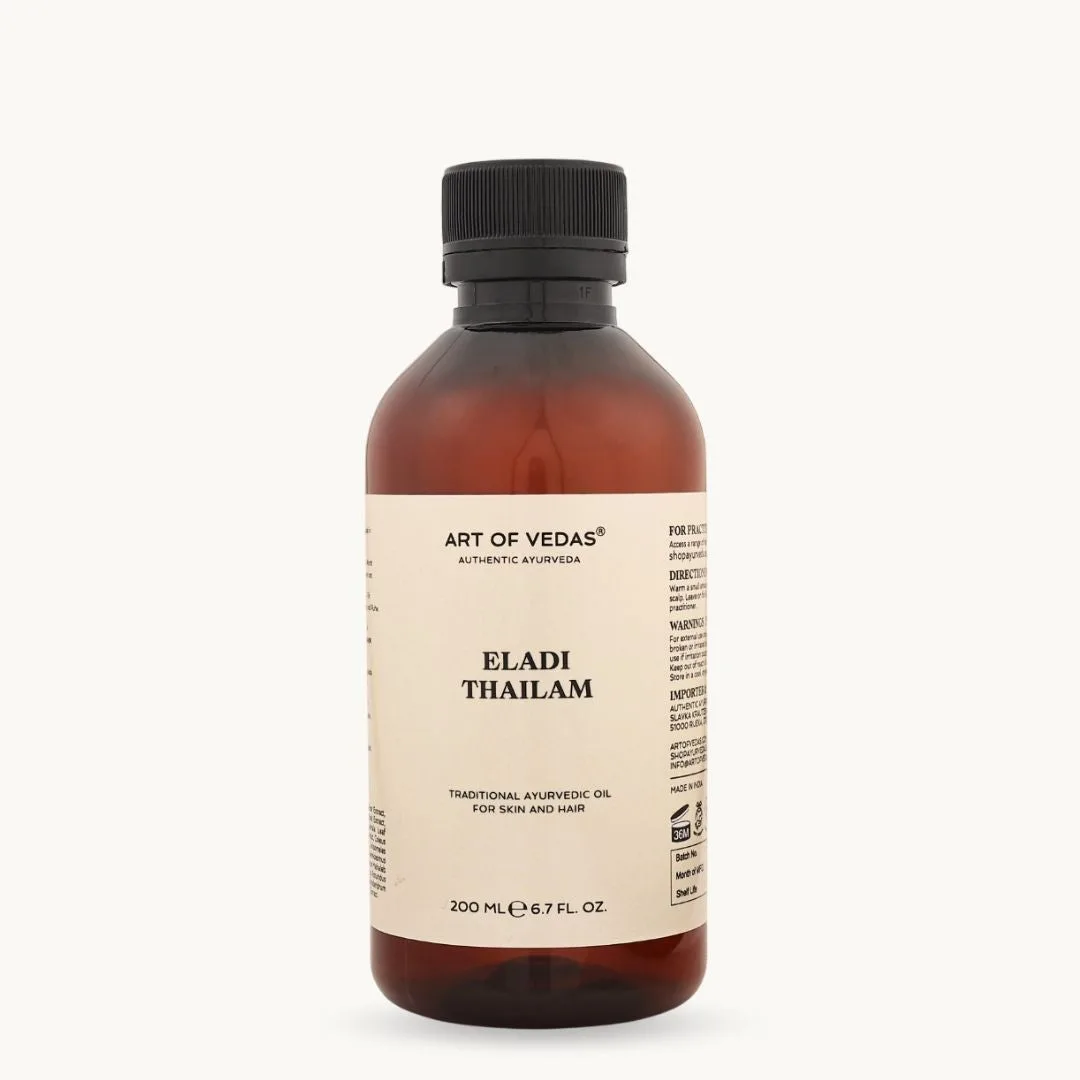
Mukhabhyanga: Facial massage with Eladi Thailam or Kumkumadi Oil supports skin tissue quality and maintains the vitality of the facial marma points. This is the Rasayana approach to skin care - from the tissue level up, not from the surface down.
Rasayana vs Modern Anti-Aging
The modern anti-aging industry focuses on surfaces: wrinkle reduction, skin tightening, pigmentation correction. Rasayana operates at a fundamentally different level. It aims to maintain the quality of the tissues that produce the surface appearance. When Rasa Dhatu is pure, the skin is naturally lustrous. When Mamsa Dhatu is well-nourished, the muscles maintain tone. When Asthi Dhatu is strong, the bones and teeth remain solid.
This inside-out approach explains why Rasayana practices include dietary changes, herbal supplementation, oil massage, behavioural modifications and sleep hygiene alongside any topical applications. The surface reflects the internal state. Treat the internal state, and the surface follows. See our Ayurvedic anti-aging skincare guide for how this principle applies specifically to facial care.
How to Start a Rasayana Practice
For someone new to Ayurvedic Rasayana, here is a practical starting framework:
Step 1: Assess your constitution. Take the free Dosha assessment to understand your Prakriti. This determines which Rasayana herbs and practices are most appropriate for you.
Step 2: Begin with Triphala. Triphala Churna before bed clears the channels and prepares the body to receive Rasayana herbs effectively. Use for 2 weeks before adding other supplements.
Step 3: Add your primary Rasayana herb. Ashwagandha for Vata-dominant types. Shatavari for Pitta-dominant types. Amalaki or Chyavanprash for Kapha-dominant types or as a universal choice.
Step 4: Establish daily Abhyanga. Even 10 minutes of warm oil self-massage supports the external dimension of Rasayana. Choose your oil based on your Dosha type from the Art of Vedas Thailam range.
Step 5: For deeper guidance book an Ayurvedic consultation with one of our BAMS-qualified practitioners who can design a personalised Rasayana protocol.
Frequently Asked Questions
At what age should I start Rasayana?
The Charaka Samhita describes Rasayana as appropriate from youth onwards - it is preventive and preservative, not merely restorative. In practice, most people begin Rasayana supplementation in their 30s and 40s, but there is no lower age limit for gentle Rasayanas like Chyavanprash and Triphala. The classical view is that prevention is always preferable to restoration.
Is Rasayana the same as anti-aging?
Not in the way the modern beauty industry uses the term. Rasayana is a comprehensive medical science of maintaining tissue vitality throughout life. It includes herbal medicine, dietary therapy, behavioural practices, oil therapies and more. Reducing it to "anti-aging" misses the breadth and depth of the classical system. The goal is not to look younger, but to maintain functional vitality in every tissue.
Can I take multiple Rasayana herbs at the same time?
Yes, and this is in fact the classical norm. Chyavanprash itself contains 40+ ingredients. Practitioners commonly prescribe Ashwagandha with Shatavari, Brahmi with Guduchi, or Triphala with any of the above. The key is that the combination should be appropriate for your constitution - which is why practitioner guidance is valuable for complex protocols.
How long does Rasayana take to show results?
Rasayana works through tissue-level nourishment, which is inherently gradual. The Charaka Samhita describes Rasayana as a sustained practice, not a quick intervention. Expect subtle improvements in energy, sleep and resilience within 3-4 weeks, with deeper changes in tissue quality, immunity and vitality developing over 3-6 months of consistent practice.