A Ghritham is not ghee with herbs stirred into it. It is the product of Sneha Paka, a cooking process the classical texts describe step by step, with tests to decide when it is finished. This article follows that method as it applies to a pungent ghee such as Indukantham Ghritham.
Murchana: preparing the ghee first
Before the herbs enter, the classical method treats the ghee itself. Murchana is the preliminary processing in which ghee is cooked with the three myrobalans and other aromatics, then strained. The texts describe it as removing the raw smell of the fat and readying it to carry what comes next. Not every workshop performs it, and the formulation literature notes it where it is expected.
The three components
- Kalka, the fresh herbal paste, ground fine so its surface meets the fat.
- Drava, the liquid, usually a decoction of the same or supporting herbs, sometimes milk.
- Sneha, the fat itself, which in a Ghritham is ghee rather than oil.
The classical proportion is a quarter part paste to one part fat to four parts liquid, and the whole is simmered until the liquid has gone.
Knowing when it is done
The texts do not give a clock. They give signs. The paste, rolled between the fingers, forms a wick that burns cleanly; the froth settles; the sound of water leaving the pan stops. These are the completion tests of Sneha Paka, and they are the reason the method survives as craft knowledge rather than a recipe with timings. A pungent ghee is generally taken to the middle degree of cooking, Madhyama Paka, the state the texts associate with preparations intended to be taken by mouth.
What this means for the jar
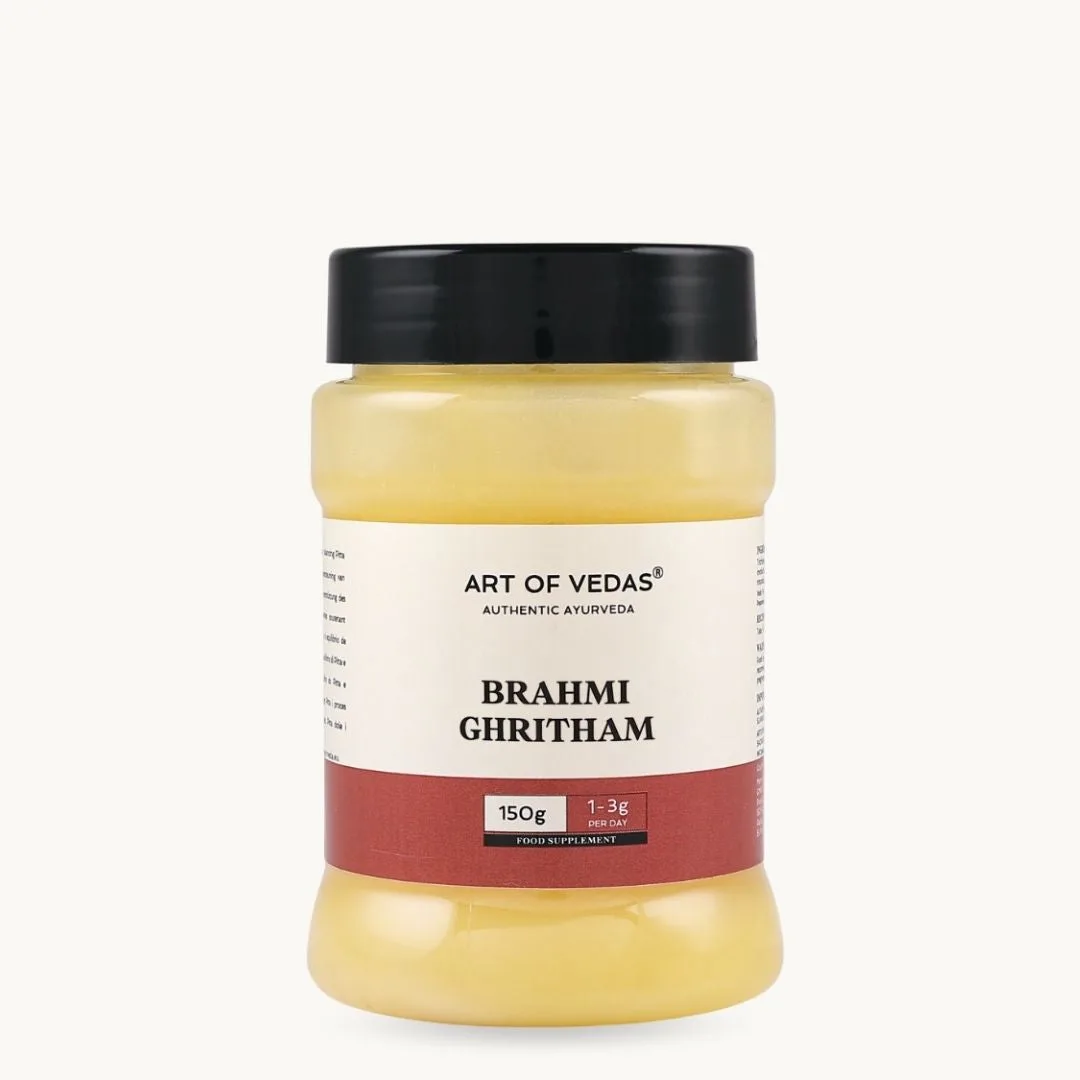
A finished Ghritham is fat that carries the character of the herbs cooked into it, which is why the classical pharmacy treats ghee as Yogavahi, a carrier. Indukantham Ghritham is prepared in this tradition with Shunthi, Pippali and rock salt. How such a preparation is traditionally taken is covered in how Ghritham is traditionally taken, and the wider method in the Ghritham overview.
Frequently Asked Questions
What is Sneha Paka?
The classical process of cooking a fat with a herbal paste and a liquid until the liquid has evaporated and only the fat remains, carrying the character of the herbs.
What is Murchana?
A preliminary treatment of the ghee itself, cooked with the three myrobalans and aromatics and then strained, described in the texts as readying the fat before the formula proper begins.
How do the texts decide when cooking is finished?
By signs rather than time: the paste forms a wick that burns cleanly, the froth settles and the sound of escaping water stops.
This article is for educational purposes and describes the classical Ayurvedic record. The products mentioned are food supplements, not a substitute for a varied, balanced diet, and are not intended to diagnose, treat, cure or prevent any disease. Take classical ghee preparations under the guidance of a qualified Ayurvedic practitioner.