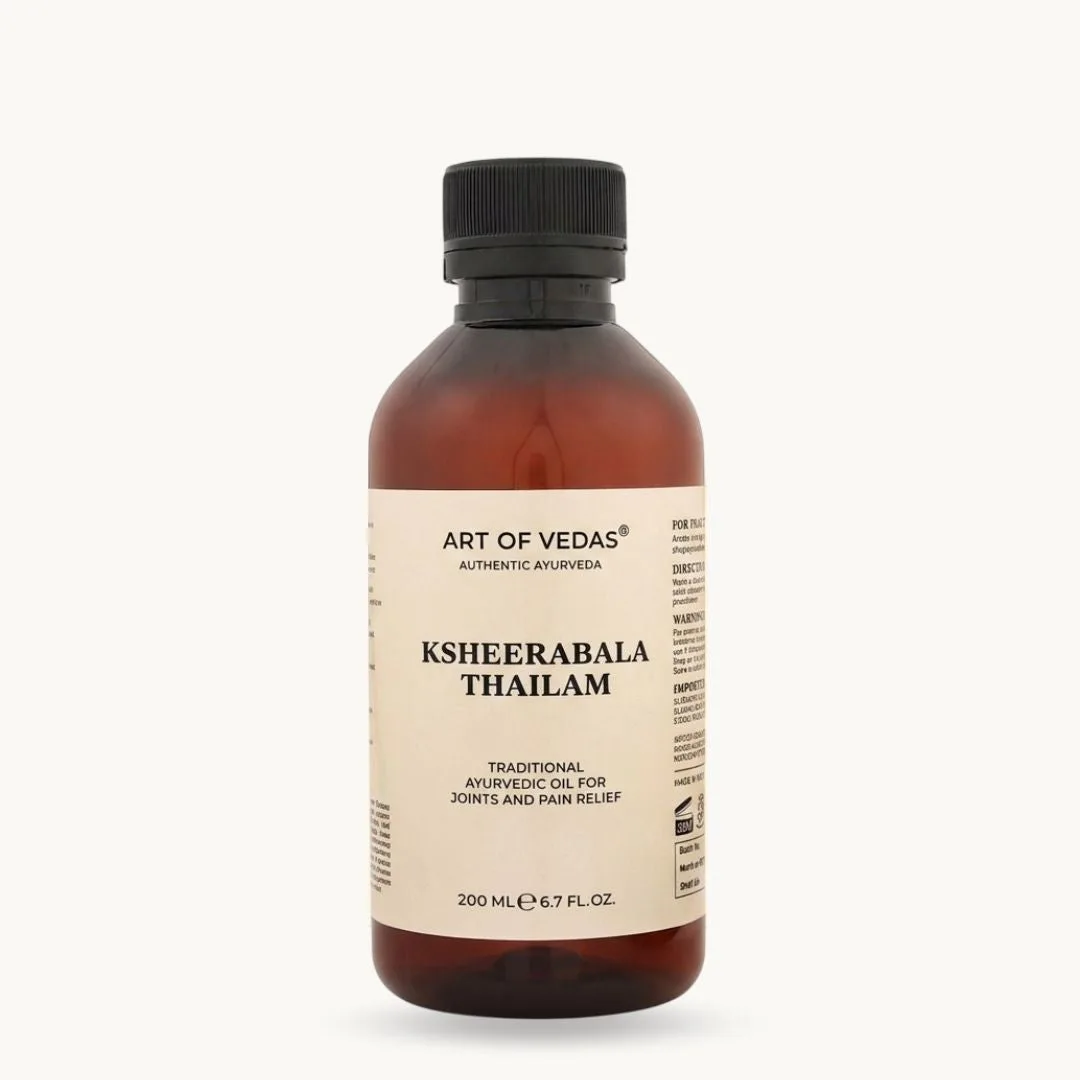
How to use Ksheerabala Thailam is a simpler question than most oils invite, because this mild classic is welcome almost everywhere. Prepared from Bala, sesame oil and a milk decoction, it is traditionally used in Ayurveda to support calm and comfort at the head, ease across the body, and softness at the feet. This guide walks through the three classical seats of application and the warm-oil basics that serve them all.
The Head: The Classical Seat
If Ksheerabala has a home, it is the crown of the head. In the evening, warm a small bowl of Ksheerabala Thailam, apply it first to the crown, then work it over the scalp with the finger pads in slow, light circles: hairline, temples, behind the ears, the base of the skull. The tradition treats this as a settling ritual rather than a vigorous massage, so let the pace be unhurried and the pressure kind. Leave the oil for half an hour or overnight before a mild wash. The full evening sequence, including combing and washing, is described in our guide to Ksheerabala for hair and head.
The Body: Abhyanga with a Gentle Oil
For full-body Abhyanga, Ksheerabala is the mild member of the classical family, chosen for delicate, easily warmed skin and for seasons when richer oils feel heavy. Warm two to three tablespoons, then follow the familiar order: long strokes along the limbs, circles at the joints, gentle clockwise work over the abdomen, and unhurried attention to the lower back. Allow the oil twenty to thirty minutes before a warm bath. Those comparing this oil with its stronger relatives will find the wider picture in the complete Ksheerabala Thailam guide.
The Feet: The Evening Ritual
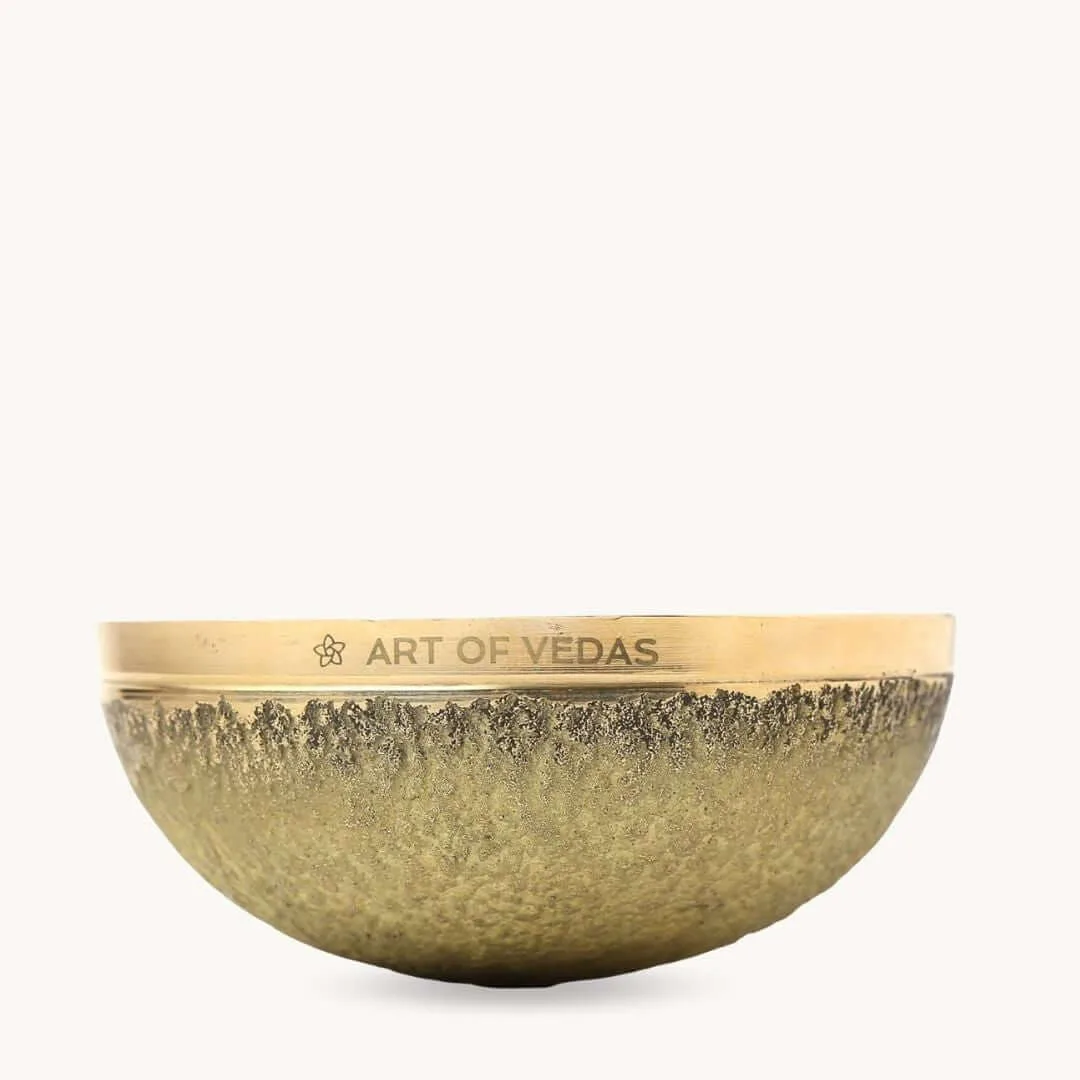
The soles of the feet are Ayurveda's favourite address for the end of the day, and Ksheerabala serves them beautifully. Sitting comfortably, work a teaspoon of warm oil over each foot: the sole with slow thumb strokes, each toe in turn, the heel and the ankle. Tradition then reaches for the kansa bowl: the smooth bronze of an Ayurveda kansa vatki, or the vatki with handle for an easier grip, is glided over the oiled soles in steady circles and figures of eight. Ten minutes for both feet, socks or a towel afterwards, and the day is properly closed. The complete method is set out in our kansa vatki foot massage ritual.
Wherever it is applied, the same rewards follow:
- A settled, quiet feeling at the head after a demanding day
- Skin across the body left soft, calm and comfortably nourished
- Feet that feel light, warm and ready for sleep
- A modest evening ritual that asks minutes and returns rest
Warm-Oil Basics: Temperature, Quantity, Timing
Three habits carry every application. First, warmth: stand the bottle in hot water or warm a portion in a bowl, and test a drop on the inner wrist; pleasantly warm, never hot. Second, modest quantity: a teaspoon per foot, two or three tablespoons for the body, a small bowl for the head; the skin should glisten, not drip. Third, time: give the oil at least twenty minutes wherever the schedule allows, since the tradition values the resting period as much as the application itself. A patch test before first use, and older linens where oil may rest overnight, complete the sensible household rules.
Frequently Asked Questions
Where is Ksheerabala Thailam traditionally applied?
Its three classical seats are the head, the whole body in gentle Abhyanga, and the soles of the feet in the evening. Clinics also use it for Shirodhara, the stream of warm oil over the forehead. Its mildness is the common thread: it goes where stronger oils would be too much.
How much oil is needed for the feet?
A teaspoon per foot is ample. The point is not abundance but attention: slow thumb strokes over the sole, each toe in turn, and a few minutes of bowl work if you keep a kansa vatki. More oil mainly finds its way to the towel.
Can the foot ritual be done nightly?
Yes; it is among the most repeatable of all Ayurvedic habits. Many keep it as a nightly appointment in autumn and winter and a few evenings a week in summer. Let comfort and your own sleep tell you the right rhythm.
Should the oil be washed off afterwards?
After body Abhyanga, a warm bath follows the resting period. At the feet, most simply wear socks and let the small quantity absorb overnight. On the head, a mild wash the next morning is usual. In every case, lukewarm water and gentle cleansers keep the ritual's softness intact.
Is Ksheerabala suitable for older family members?
Its gentleness makes it a natural choice for elders, whose skin often prefers mild oils, and the seated foot ritual in particular asks little and gives much. As ever, individual situations vary, so a word with a qualified professional is wise before beginning any new routine on another's behalf.
For external use only. This article describes traditional Ayurvedic practice for educational purposes and does not constitute medical advice. Always consult a qualified professional before beginning a new routine, especially during pregnancy, while nursing, or if you have specific concerns.