For external use only. Oil pulling is an oral care practice and the oil must not be swallowed. If you have oral health conditions, dental work, or concerns about your teeth and gums, consult a dentist before beginning this practice.
Oil Pulling in Ayurveda: The Classical Gandusha and Kavala Practices for Oral Health
Oil pulling is one of those classical practices that has been rediscovered repeatedly in recent decades, each time presented as a new discovery, while the tradition it comes from has described it in precise detail for more than two thousand years. The Charaka Samhita Sutrasthana Chapter 5 - the Dinacharya (daily routine) chapter - lists two forms of oral oil practice as part of the classical morning regimen: Gandusha and Kavala. Both involve holding medicated oil or plain oil in the mouth. They are distinct practices with different techniques, durations, and purposes.
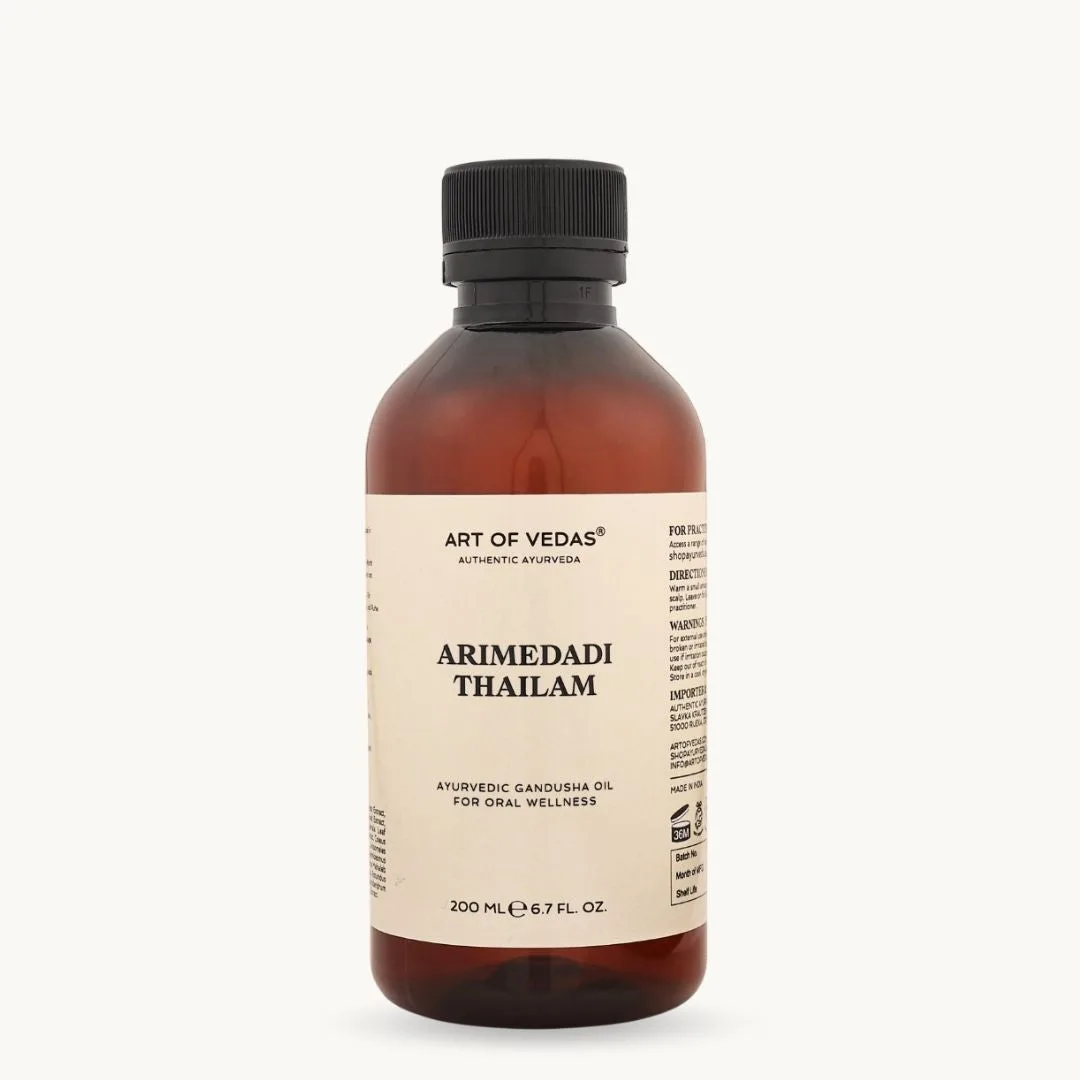
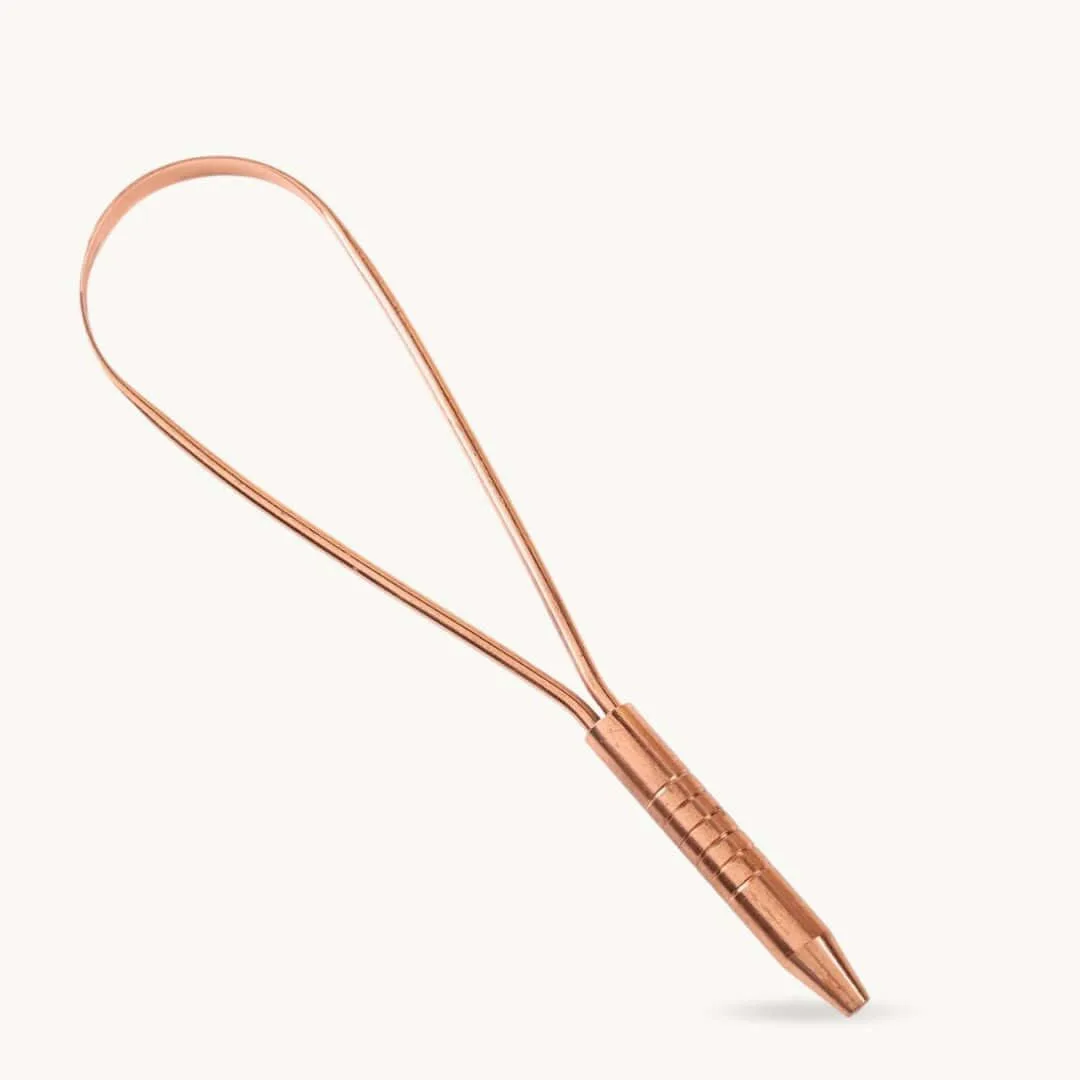
This guide describes both practices as documented in the classical texts, provides the practical protocol used in Art of Vedas' approach to Dinacharya, and explains which oil or preparation is most appropriate for different presentations. Art of Vedas provides the classical Arimedadi Thailam - the primary classical medicated oil described for oral Kavala - along with copper tongue scrapers that are used immediately before the oil practice in classical sequence.
Gandusha and Kavala: The Classical Distinction
The Ashtanga Hridayam Sutrasthana Chapter 22 (Dinacharya chapter) is the most detailed classical source for the oil oral practices. It describes both Gandusha and Kavala with specific technical differences.
Gandusha involves filling the mouth completely with oil - so completely that it is impossible to swish or gargle. The oil is held still in the mouth for a defined period, typically until the eyes begin to water and the mouth salivates around the oil (described in the text as signs that the Kapha has been drawn out). It is then spat out. Gandusha is the deeper of the two practices, used for conditions involving significant Kapha excess in the head region - congestion, jaw tension, sinus fullness.
Kavala involves a comfortable amount of oil in the mouth - enough to swish and move around - which is actively swirled and pulled between the teeth and around the gums for a sustained period before being spat out. This is the practice most commonly referred to as oil pulling in contemporary usage. The Charaka Samhita lists Kavala as the standard daily Dinacharya practice, while Gandusha is described as a more specific therapeutic application.
What the Classical Texts Describe as the Benefits
Charaka Samhita Sutrasthana Chapter 5 lists the benefits of daily Kavala Graha (oil pulling) as follows: strengthening of the jaw, teeth, and gums; prevention of dryness of the lips and throat; prevention of the conditions the classical texts associate with oral Kapha imbalance; and maintenance of the voice. The text describes the practice as producing Bala (strength) in the face and jaw and as preventing the decay of teeth.
Ashtanga Hridayam Sutrasthana adds that Kavala specifically benefits the "clarity of the sense organs in the head" through its action on Tarpaka Kapha - the sub-dosha governing the moisture and function of the head's sense organs. This is the classical mechanism by which regular oral oil practice is described as benefiting not just oral health but the overall quality of the head-region sense organs, including clarity of vision and hearing.
Arimedadi Thailam: The Classical Medicated Oral Oil
Arimedadi Thailam is the classical medicated oil described in Sahasrayogam specifically for Kavala Graha (oil pulling) and related oral care practices. It is prepared with sesame oil as the base, processed with a decoction of Arimedam (Acacia suma), Ela (cardamom), Clove, and a range of additional herbs whose combined properties address the oral environment. The classical preparation of Arimedadi is distinct from simply mixing essential oils into sesame oil: the Sneha Paka Vidhi process processes the oil with the herbal decoction at specific temperatures and for a specific duration, fundamentally altering the properties of the oil and infusing it with the herbal compounds.
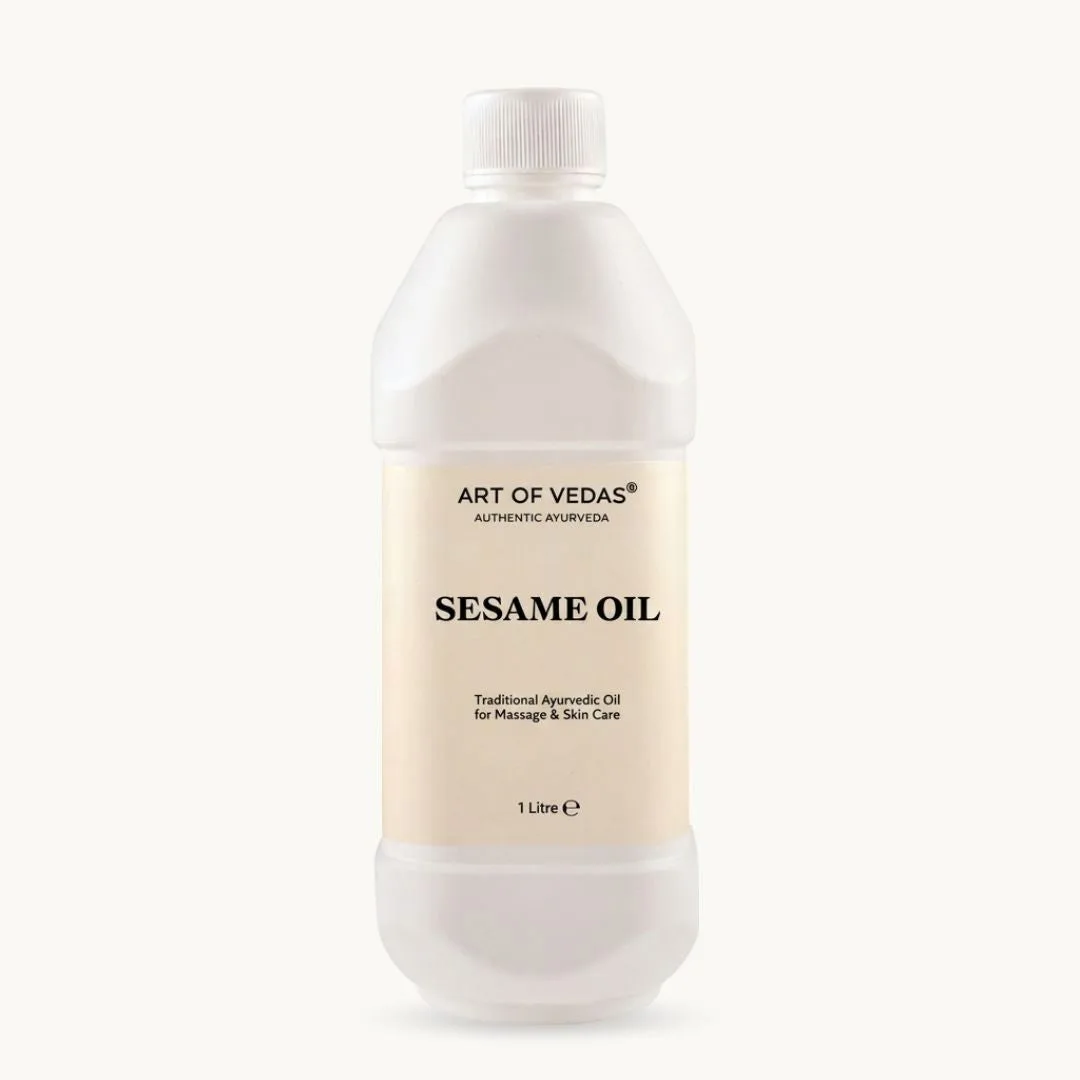
Sahasrayogam describes Arimedadi Thailam as beneficial for gum health, tooth sensitivity, and the maintenance of oral hygiene according to the classical Ayurvedic understanding. It is the standard clinical Kavala preparation 's Ayurvedic tradition. Plain sesame oil is an alternative for those starting the practice - it is Vata-pacifying, warming, and has been used for oral practices in Ayurvedic tradition since the classical period. Arimedadi provides a more specifically targeted preparation for oral care.
The Complete Classical Morning Oral Care Sequence
The Charaka Samhita and Ashtanga Hridayam both describe oral care as a sequence, not as isolated individual practices. The complete classical sequence, as described in the Dinacharya chapter, is:
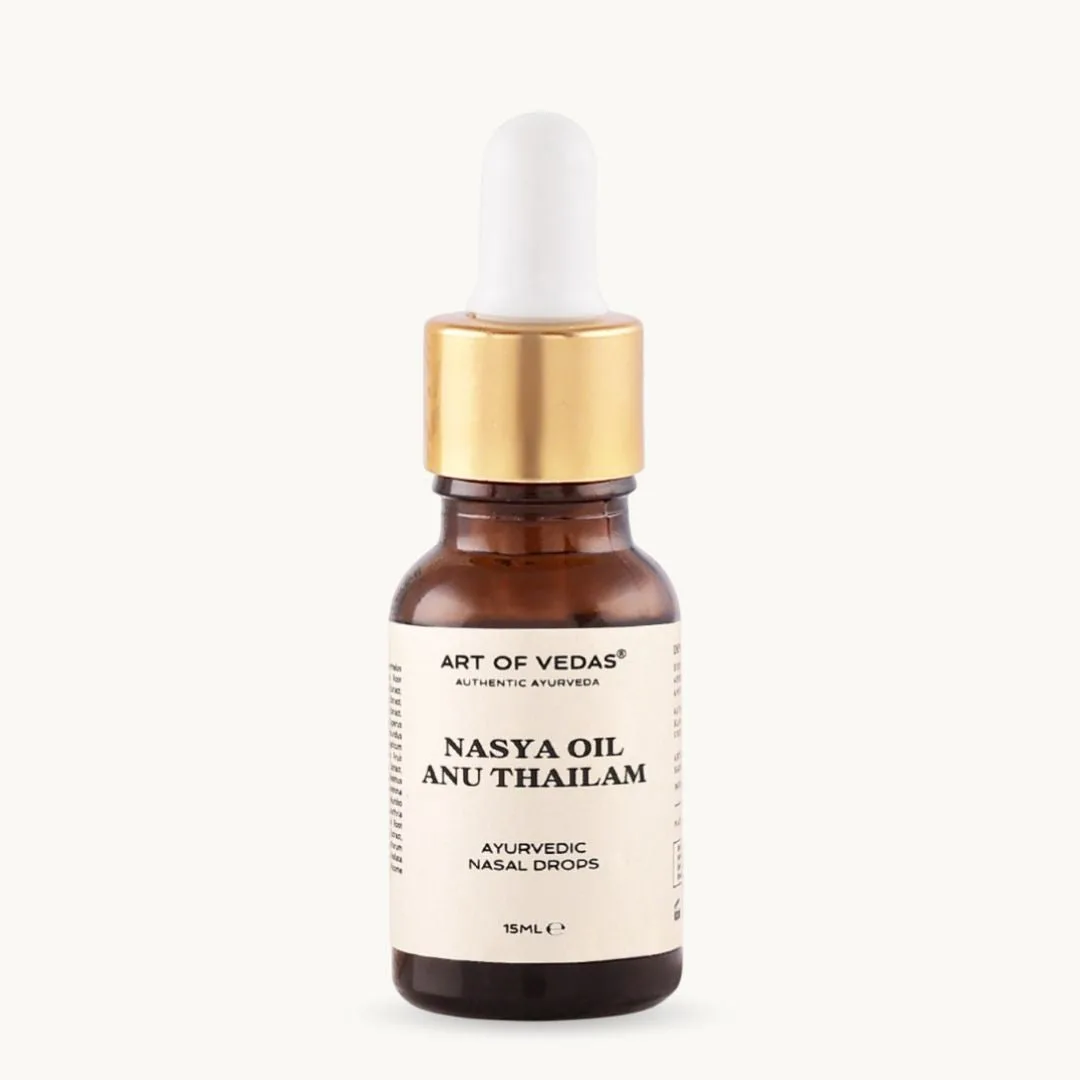
First: Danta Dhavana - cleaning the teeth with a traditional tooth-cleaning stick (historically from specific tree branches; in modern practice, a soft toothbrush with an appropriate paste). Second: Jihva Nirlekhana - tongue scraping with a curved metal scraper. The Ashtanga Hridayam specifically recommends gold, silver, or copper for the scraper. Copper tongue scrapers are the most accessible classical material and the form provided in the Art of Vedas oral care collection. The tongue is scraped from back to front six to seven times with gentle pressure. Third: Kavala Graha - the oil pulling practice. This follows tongue scraping in the classical sequence because the scraping clears the surface accumulation that would otherwise contaminate and reduce the effectiveness of the oil practice. Fourth: Nasya - nasal oil application. After the oral care sequence, the nasal passages are prepared with Nasya oil as the next step in the classical morning head-care sequence.
The Practical Protocol: How to Do Kavala Correctly
The practical protocol for daily Kavala is straightforward. Begin on an empty stomach in the morning, before eating or drinking anything other than water. Place one to two tablespoons of warm Arimedadi Thailam or plain sesame oil in the mouth. The oil should be warm - not hot and not cold. Cold oil is described as Kapha-increasing rather than Kapha-clearing. Swish and pull the oil between the teeth, around the gums, and through the gaps between the molars. Move continuously. Do not swallow. The Ashtanga Hridayam recommends continuing until the oil becomes thin, milky-white, and foamy - which typically occurs after 10 to 20 minutes. This change in consistency indicates that the Kapha and oral secretions have been pulled into the oil. Spit into a bin (not the sink, as oil can block drains over time). Rinse the mouth with warm water. Proceed with the remainder of the morning routine.
The 20-minute duration is the classical recommendation for the full Kavala practice. If this is not practical initially, 5 to 10 minutes is still beneficial and a useful starting point. Consistency is more important than duration: a daily 5-minute practice produces more cumulative benefit than an occasional 20-minute session. See the Ayurvedic morning routine guide for how to fit the full Dinacharya sequence into a modern schedule.
Frequently Asked Questions
Can I use coconut oil instead of sesame for oil pulling?
Coconut oil is widely used for oil pulling in contemporary practice and is not contraindicated in classical terms, though it is not the oil specified in the primary classical texts for this practice. Sesame oil is the standard classical choice for Kavala in Charaka Samhita and Ashtanga Hridayam, valued for its penetrating quality and Vata-pacifying, warming properties. Arimedadi Thailam uses sesame as its base for the same reason. Coconut oil, being cooling, is more appropriate for summer or Pitta constitutions if sesame is too warming. For general use, sesame or Arimedadi Thailam follows the classical recommendation most closely.
Is oil pulling safe with dental restorations, bridges, or implants?
The swishing motion of Kavala is gentle - the oil is moved by the lips, cheeks, and tongue rather than being forced under pressure. Most dental professionals consider this gentle swishing motion safe with restorations, bridges, and implants, though the specific design of any restoration is something your dentist can advise on. If you have temporary restorations or recent extractions, avoid oil pulling until healing is complete.
What does the oil becoming white and milky mean?
The classical texts describe this emulsification as the indication that the Kavala process has been completed effectively - the oil has combined with oral secretions and Kapha. In physical terms, the oil emulsifies with saliva over the 15-20 minute period. The classical description attributes the drawn-out substance to Kapha toxins and oral impurities. From either perspective, the change in consistency is the practical indicator that the practice has been performed for sufficient duration.
Should the jaw feel tired after oil pulling?
Some mild jaw fatigue is normal when beginning Kavala, as the jaw muscles are being used in a sustained, controlled way that most people's daily habits do not replicate. The Charaka Samhita describes this fatigue as one of the signs that the jaw is being exercised and strengthened by the practice. It typically reduces after the first week or two as the jaw muscles adapt. If there is significant jaw discomfort or if you have TMJ issues, begin with shorter sessions and lighter swishing pressure.