Vata is the Dosha of movement. In the classical Ayurvedic framework described in the Charaka Samhita, Sushruta Samhita, and Ashtanga Hridayam, Vata governs every form of motion in the body and mind - the beating of the heart, the expansion and contraction of the lungs, the transmission of nerve impulses, the movement of food through the digestive tract, the flow of thought, the blinking of the eyes, the creative impulse that generates new ideas and the motor function that allows you to act on them. Without Vata, the other two Doshas - Pitta and Kapha - cannot move. Classical texts describe Pitta and Kapha as "lame" (Pangu) without Vata's motive force.
This primacy gives Vata a unique status in Ayurvedic clinical practice. The Charaka Samhita states that of all imbalances, Vata imbalance is the most common, the most varied in its presentation, and the most important to address. In the modern context - with its irregular schedules, constant stimulation, travel, screen exposure, disrupted sleep, and relentless pace - Vata imbalance has arguably become the defining constitutional challenge of contemporary life.
The Nature of Vata: Elements and Qualities
Vata is composed of Air (Vayu) and Ether (Akasha) - the two lightest, most mobile, and most subtle of the five classical elements. These elements express themselves through Vata's classical qualities (Gunas):
Ruksha (dry) - Vata's dryness manifests as dry skin, dry hair, dry mucous membranes, cracking joints, and a tendency toward constipation. Internally, it manifests as the dryness of depleted tissue and insufficient lubrication.
Laghu (light) - Vata's lightness produces a naturally lean body frame, light sleep, quick movements, and a mind that moves rapidly from thought to thought. In excess, lightness becomes instability - weight loss, insomnia, groundlessness.
Sheeta (cold) - Vata's coldness manifests as cold hands and feet, sensitivity to cold weather and cold foods, preference for warmth, and a tendency for cold to aggravate existing symptoms.
Khara (rough) - Vata's roughness appears in rough or cracked skin, rough hair, and a quality of irregularity and friction in bodily functions.
Sukshma (subtle) - Vata's subtlety allows it to penetrate the finest channels of the body, which is why Vata imbalance can manifest in virtually any tissue or system. It also accounts for Vata's sensitivity - to environment, to emotion, to sensory input.
Chala (mobile) - Vata's mobility is its defining characteristic. In balance, mobility is responsiveness, creativity, adaptability. In excess, it becomes restlessness, anxiety, scattered attention, and the inability to sit still - physically or mentally.
The classical principle for managing Vata is direct: like increases like, and opposites balance. Vata's cold, dry, light, mobile qualities are balanced by warmth, moisture, heaviness, and stability. Every Vata-pacifying practice - from oil massage to warm food to regular routine - follows this single principle.
The Five Sub-Doshas of Vata
Prana Vayu - The Vital Breath
Seated in the head, chest, and throat. Governs inhalation, swallowing, sneezing, and the movement of sensory impressions into the mind. Prana Vayu is the most fundamental - it governs the life force itself. Disturbance of Prana Vayu manifests as anxiety, shallow breathing, inability to focus, and a scattered quality of attention. Nasya (nasal oiling) is described classically as the primary practice for supporting Prana Vayu.
Udana Vayu - The Upward-Moving Breath
Seated in the throat and chest. Governs speech, self-expression, exhalation, effort, and the upward movement of energy that produces enthusiasm and motivation. Disturbed Udana Vayu manifests as speech difficulties, loss of voice, low energy, difficulty initiating effort, and a loss of the "upward" quality in life - the inability to rise to challenges.
Samana Vayu - The Equalising Breath
Seated in the stomach and small intestine, alongside Agni. Governs the peristaltic movement of food through the digestive tract, the stoking of the digestive fire, and the assimilation of nutrients. Samana Vayu and Agni work as a pair - Samana Vayu fans and regulates the digestive fire, determining whether Agni burns evenly (producing Sama Agni) or erratically (producing Vishama Agni). The erratic digestion characteristic of Vata imbalance - variable appetite, bloating that comes and goes, alternating constipation and loose stools - is a direct expression of disturbed Samana Vayu.
Apana Vayu - The Downward-Moving Breath
Seated in the colon and pelvic region - Vata's primary home in the body. Governs all downward and outward movements: elimination, urination, menstruation, ejaculation, and the bearing-down effort of childbirth. Apana Vayu is the sub-Dosha most commonly disturbed in modern life, and its disturbance is the root of Vata's most characteristic symptom: constipation. When Apana Vayu is impaired, the downward-moving force that should produce regular, comfortable elimination is disrupted - producing irregular, incomplete, or uncomfortable bowel movements.
Vyana Vayu - The Pervasive Breath
Seated in the heart but pervading the entire body. Governs circulation, the rhythmic contraction and relaxation of the heart, and all voluntary and involuntary muscular movement. Vyana Vayu distributes the nourishment that Samana Vayu has helped digest - carrying it through the circulatory system to the tissues. Disturbed Vyana Vayu manifests as poor circulation, cold extremities, muscle cramps, and a sense of disconnection or numbness.
Recognising Vata Imbalance
Vata imbalance is the most protean of all Dosha disturbances - it can mimic, trigger, or accompany almost any condition. The Charaka Samhita lists 80 classical disorders attributed to Vata alone - more than Pitta and Kapha combined. However, recognisable patterns emerge:
Physical signs: Dry skin, cracking joints, constipation or irregular elimination, gas and bloating (especially unpredictable, coming and going without clear dietary cause), cold hands and feet, weight loss or difficulty maintaining weight, fatigue despite feeling "wired," disrupted sleep (difficulty falling asleep, waking at 2, 4 AM, light and unrefreshing sleep), muscular tension particularly in the neck, shoulders, and lower back.
Digestive signs: The classic Vata digestive pattern is Vishama Agni - irregular, erratic digestion. The same food that digests well one day produces discomfort the next. Appetite fluctuates between excessive and absent. Bloating and gas appear without predictable pattern. There may be alternating constipation and loose stools, or dry, hard stools that are difficult to pass.
Mental and emotional signs: Anxiety, worry, racing thoughts, difficulty concentrating, tendency to overwhelm, sensitivity to noise and stimulation, restlessness, difficulty completing tasks (starting many, finishing few), a feeling of being "scattered" or "ungrounded," fear and insecurity that may feel disproportionate to circumstances.
Seasonal pattern: Vata naturally increases during autumn and early winter - the dry, cold, windy, mobile season. Most Vata-prone individuals notice a worsening of their characteristic symptoms during October through December, particularly if they do not adjust their diet and routine to compensate.
The Vata-Pacifying Lifestyle
Daily Routine - The Single Most Important Practice
Vata is pacified by regularity above all else. The Dinacharya (daily routine) is not merely helpful for Vata constitutions - it is essential. The same practices, at the same times, every day, produce a cumulative calming effect on Vata that no single intervention can match. Waking at a consistent time, eating meals at consistent times, sleeping at a consistent time - this rhythmic structure directly counteracts Vata's inherent irregularity and mobility.
Abhyanga - Oil as the Primary Vata Remedy
If there is a single classical practice most specifically indicated for Vata, it is Abhyanga - warm oil self-massage. The Charaka Samhita states: "Abhyanga should be practised daily, especially by those prone to Vata conditions." Oil is the direct antidote to Vata's dry, rough, cold, light qualities - it is unctuous, smooth, warming (when heated), and heavy. Applied to the skin and allowed to penetrate, it nourishes the tissue layer most directly governed by Vata (the skin and nervous system), calms the nervous system through sustained touch, and provides a daily protective barrier against environmental dryness and cold.
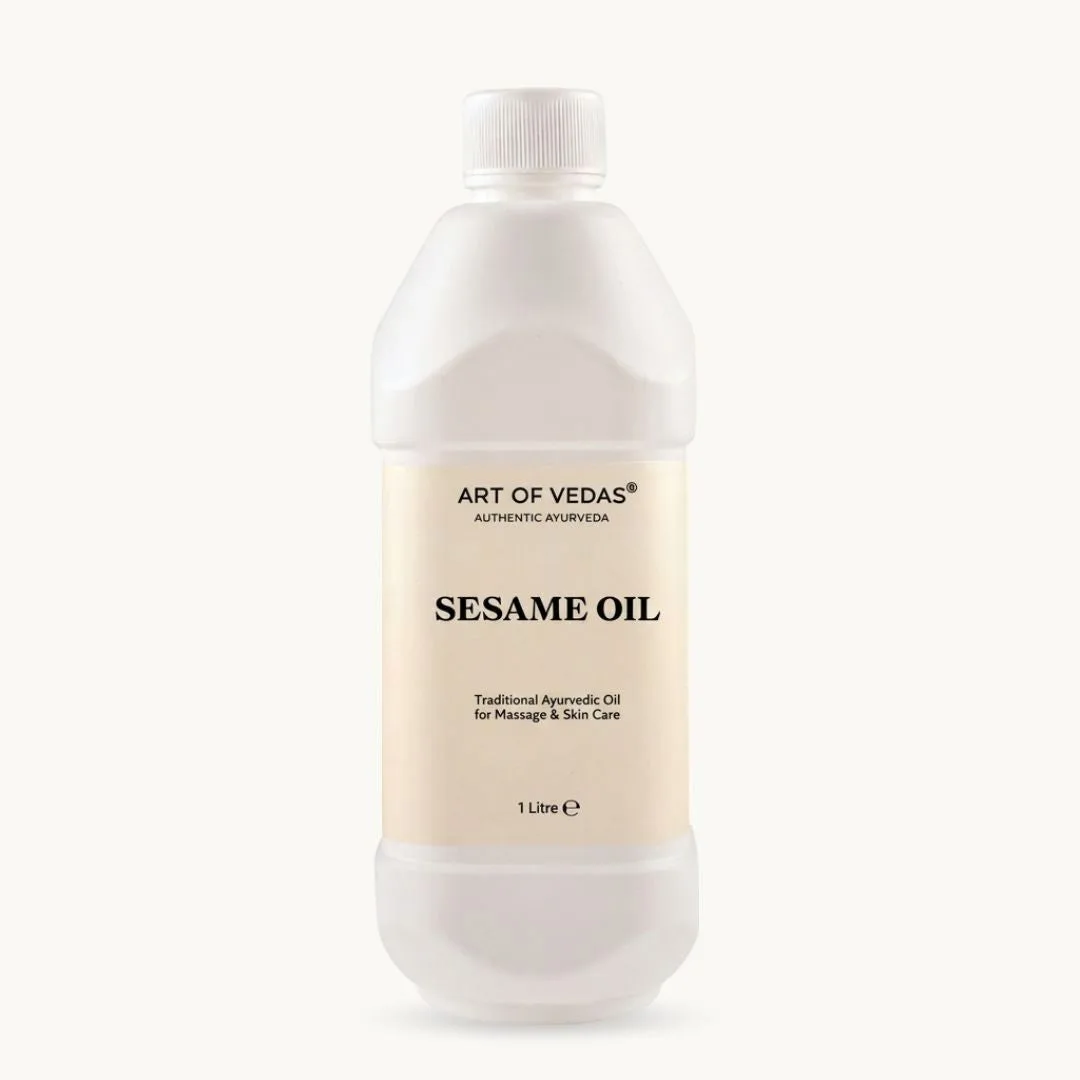
The classical oil for Vata is sesame oil (Tila Taila) - warming, penetrating, and deeply nourishing. Classical Thailam preparations such as those containing Ashwagandha, Bala, and Dashamula are specifically formulated for Vata pacification, adding herb-medicated warmth and nourishment to the sesame base. The Art of Vedas Thailam collection includes several classical Vata-supporting formulations.
Diet
The Ayurvedic diet guide covers Vata nutrition in detail. The essentials: warm, cooked, moderately oily foods with sweet, sour, and salty tastes predominating. Avoid cold, raw, dry, light foods. Eat at regular times. Do not skip meals. Warming spices - ginger, cumin, cinnamon, asafoetida, cardamom - support Vata's irregular digestion.
Herbal Support
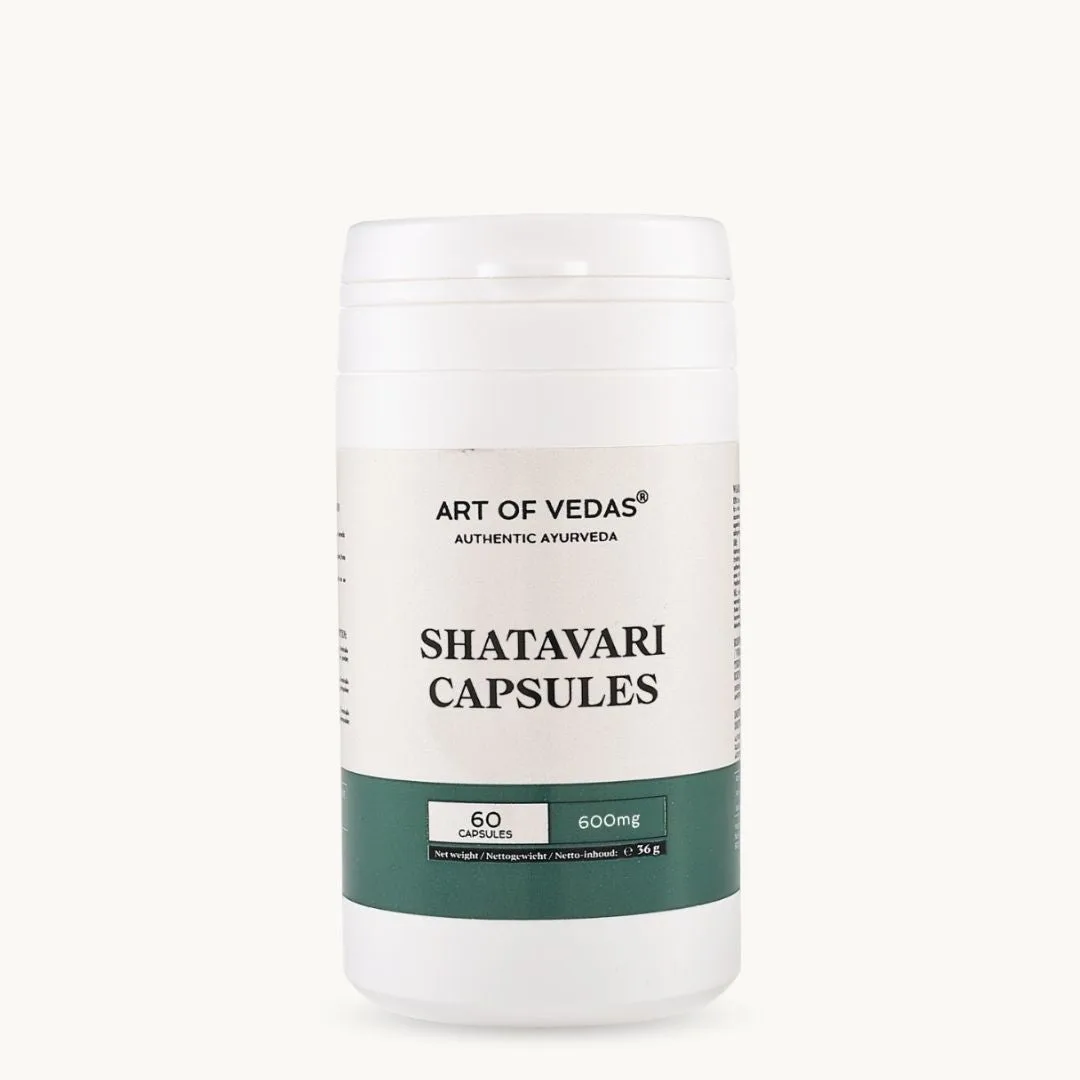
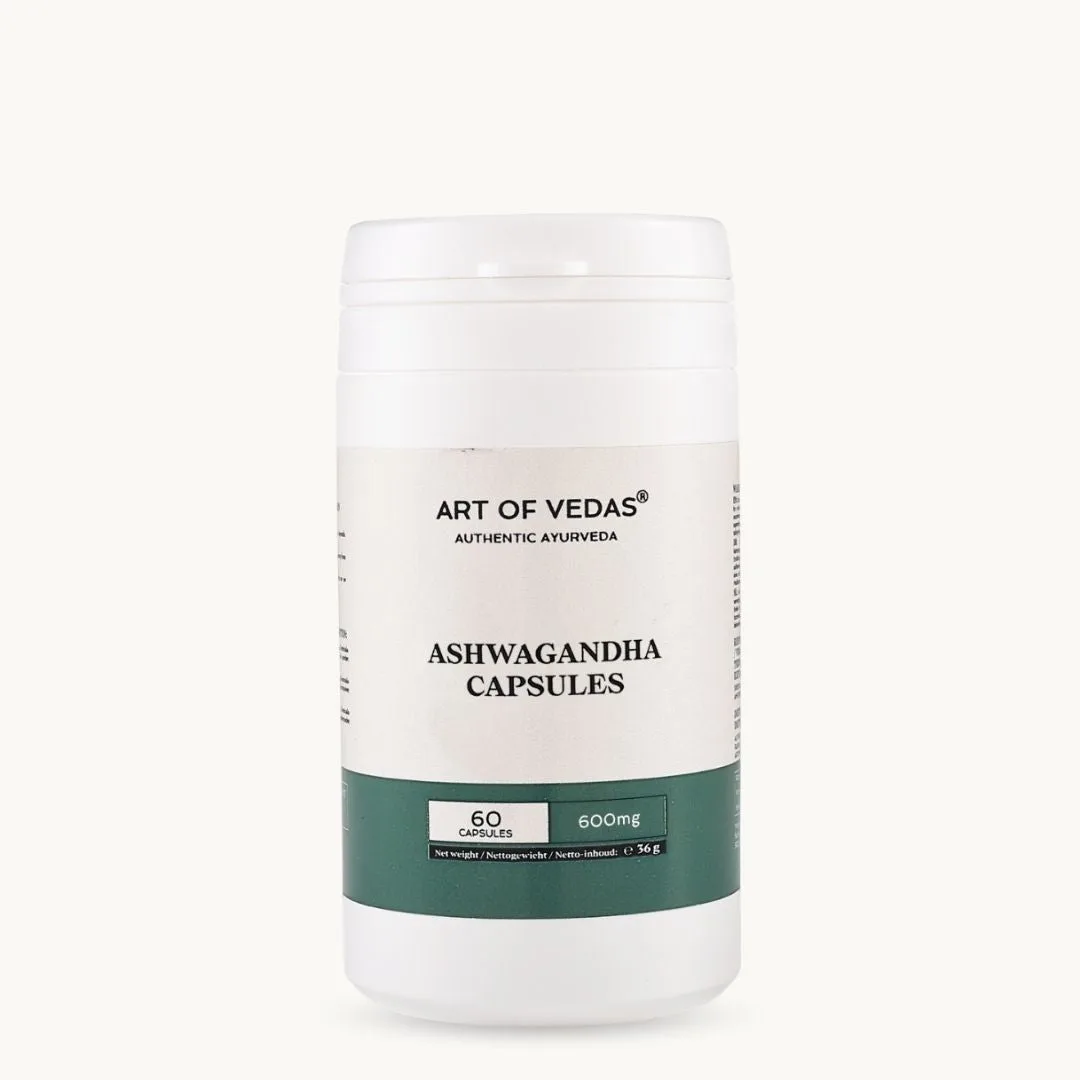
Ashwagandha is the premier Vata-pacifying herb - warming, nourishing, grounding, and specifically supportive of the nervous system. Classical formulations often combine Ashwagandha with Bala (Sida cordifolia) and Shatavari (Asparagus racemosus) for comprehensive Vata support.
Warmth
Vata's cold quality means that warmth - in every form - is therapeutic. Warm food, warm water, warm oil, warm baths, warm clothing, warm environments. Avoiding unnecessary cold exposure, particularly during Vata season, is a simple but powerful supportive measure.
Sensory Moderation
Vata's subtle, mobile nature makes it uniquely sensitive to sensory stimulation. Excessive screen time, loud environments, constant notifications, irregular and intense sensory input - all aggravate Vata directly. Periods of quiet, reduced stimulation, and sensory rest are specifically pacifying.
Vata and the Tissue System
Vata's influence extends through the entire classical Dhatu (tissue) system, but it has particular affinity with specific tissues:
Asthi Dhatu (bone tissue) - Vata's primary tissue seat. The Charaka Samhita describes an inverse relationship between Vata and bone tissue: when Vata increases, bone tissue quality decreases, and vice versa. This is the classical reasoning behind Vata's association with joint cracking, brittle nails, and bone-related concerns.
Majja Dhatu (nerve and marrow tissue) - the tissue that governs nervous system function, directly animated by Vata's motive force.
Shukra Dhatu (reproductive tissue) - the deepest tissue in the Dhatu chain, and one that requires complete, residue-free transformation at every preceding level to be adequately nourished. Vata's tendency to disrupt digestion and tissue transformation anywhere in the chain makes Shukra Dhatu particularly vulnerable to Vata imbalance.
The connection between Vata, the tissue system, and Ojas (the refined essence produced at the end of the Dhatu chain) explains why severe or chronic Vata imbalance has such wide-ranging effects on vitality, immunity, and resilience.
Understanding Your Vata
The purpose of understanding Vata is not to create anxiety about imbalance - it is to recognise the patterns that, once seen, become manageable. Vata's qualities are not pathological - they are the source of creativity, enthusiasm, spontaneity, sensitivity, and the quickness of mind that makes Vata-dominant individuals often the most interesting, intuitive, and adaptive people in any room. The goal is not to suppress Vata but to support it - to provide the warmth, nourishment, regularity, and grounding that allow Vata's extraordinary qualities to express without tipping into their excess.
Start with our free Dosha test to get an initial reading of your constitutional tendencies. For a clinical assessment that distinguishes your birth constitution (Prakriti) from your current state of imbalance (Vikriti), and provides personalised dietary, lifestyle, and herbal recommendations specific to your Vata pattern, an Ayurvedic consultation with one of our AYUSH-certified doctors provides the precision that self-assessment cannot.
This guide presents classical Ayurvedic knowledge about Vata Dosha for educational purposes. The information is not medical advice and is not intended to diagnose, treat, cure or prevent any disease. For personalised guidance, consult a qualified Ayurvedic practitioner or healthcare professional.