This article is part of our Amla (Amalaki): The Fruit Ayurveda Says Is the Closest Thing to a Universal Tonic guide series.
The information in this article is provided for educational purposes and reflects traditional Ayurvedic knowledge. It is not intended as medical advice and should not replace consultation with a qualified healthcare professional.
In brief: Amalaki (Indian gooseberry, Emblica officinalis) is the most celebrated single fruit in classical Ayurveda, described in the Charaka Samhita as the best Rasayana substance, relevant to all three doshas, and the primary ingredient in both Triphala and Chyawanprash. This guide covers the classical framework, what makes Amalaki nutritionally unusual, and how to use it effectively as a supplement.
Amla (Amalaki): The Superfruit That Ayurveda Places Above All Others
The word "superfruit" is a marketing term with no regulatory definition. Hundreds of fruits and berries have been given this label in the past two decades, usually by brands attempting to justify a premium price. The interesting thing about Indian gooseberry - known in Sanskrit as Amalaki and colloquially across Europe as Amla - is that it genuinely earns the distinction, not on the basis of modern marketing, but on the basis of a three-thousand-year textual record in which the Charaka Samhita describes it as the best Rasayana substance available, superior to all other single herbs and fruits in its range of action.
That is a specific and notable claim in the context of a tradition that documents hundreds of plants. Understanding why the classical texts make this assessment, and what modern nutritional research confirms about Amalaki's composition, provides the most accurate picture of what this fruit actually offers.
Amalaki in Classical Ayurveda: Why It Stands Alone
The Charaka Samhita's Rasayana chapter contains a statement that is almost unique in classical Ayurvedic literature: it describes Amalaki as the best among all Rasayana substances. The Charaka Samhita further notes that Amalaki is relevant to all three doshas - a distinction it shares only with Triphala (of which Amalaki is the primary ingredient) among widely used single preparations. Most herbs in the classical texts are described as primarily relevant to one or two doshas; the claim of tridoshic appropriateness is significant and reflects something unusual about the fruit's composition.
The classical explanation for this unusual breadth involves Amalaki's rasa (taste). Classical Ayurveda recognises six tastes, and the Charaka Samhita states that Amalaki contains five of them - sweet, sour, pungent, bitter, and astringent - with only salt absent. This breadth of taste is considered in classical pharmacology to be directly correlated with a broad range of physiological action, since different tastes are understood to act on different doshas and different tissue systems.
The sour taste is primary - the Sanskrit word "amla" means sour, and the fruit's name derives directly from this quality. But crucially, Amalaki has a cooling virya (potency) despite its sour taste. In classical Ayurveda, most sour substances are heating (ushna virya), which limits their use in Pitta conditions. Amalaki's combination of sour taste with cooling potency is described in the texts as genuinely unusual and is the specific property that makes it relevant to Pitta as well as Vata and Kapha.
The Ashtanga Hridayam describes Amalaki's specific action on the dhatus (body tissues) as being particularly pronounced in relation to Rakta dhatu (the blood tissue) and Pitta dosha generally. The Sahasrayogam references it extensively in formulations for supporting the eyes, the skin, and what classical texts describe as Ojas - the refined essence of all seven dhatus, which in classical theory underlies immunity, vitality, and mental clarity.
What Makes Amalaki Nutritionally Unusual
Amalaki's vitamin C content is among the highest of any known food source. This fact is widely cited in marketing, but the more significant aspect - frequently overlooked - is the form in which the vitamin C is bound. Amalaki contains ascorbic acid in combination with tannins and bioflavonoids that are thought to protect it from oxidation. This means that Amalaki's vitamin C is substantially more heat-stable than ascorbic acid in isolation, retaining meaningful potency through the drying and processing steps that would destroy most of the vitamin C in less complex fruit preparations.
This stability is the reason that Amalaki powder and Chyawanprash - which is prepared with heat - retain nutritional value that would be absent from most processed vitamin C products subjected to the same treatment. It also provides a plausible nutritional mechanism for some of the classical observations about Amalaki's tissue-renewing properties - vitamin C is essential for collagen synthesis, which is foundational to the maintenance of all connective tissues in the body.
Beyond vitamin C, Amalaki contains significant quantities of polyphenols, including ellagic acid, gallic acid, and a class of compounds called emblicanins that are specific to Emblica officinalis and have been the subject of considerable antioxidant research. Several studies have examined Amalaki's effect on oxidative stress markers in human populations, with findings suggesting meaningful antioxidant activity at relevant dietary doses. The relevance of this in the context of the classical Rasayana concept - which describes the gradual renewal of tissue quality over time - is an interesting area of correspondence between classical theory and modern measurement.
Amalaki as the Heart of Triphala and Chyawanprash
Understanding Amalaki's centrality to the two most important classical compound preparations in Ayurveda provides important context for its significance in the tradition. Triphala, described in the Charaka Samhita as appropriate for all three doshas and all body tissues, uses Amalaki as one of its three equal-part fruits - but within the compound, Amalaki's tridoshic and Rasayana properties are considered its foundational action, with Haritaki and Bibhitaki addressing more specific Vata and Kapha functions respectively.
Chyawanprash, the classical compound Rasayana preparation described in the Charaka Samhita's Chikitsa Sthana, lists Amalaki as its primary and most abundant ingredient. The classical formula contains over thirty supporting herbs, ghee, honey, and sesame oil, but Amalaki forms the base into which all other ingredients are incorporated. The Charaka Samhita describes Chyawanprash as supporting all seven dhatus, promoting longevity and resilience, and being appropriate for all ages and constitutions - properties that are attributed primarily to Amalaki's Rasayana action amplified by the supporting herbs and the ghee-honey base.
For those who find a compound preparation like Chyawanprash more practical than standalone Amalaki powder, the compound provides Amalaki's core benefits in a form that is pleasant to take and that incorporates the classical preparation method. See our guides to Triphala and to the Chyawanprash classical formula for more context on both preparations.
How to Use Amalaki: Powder, Capsules, and What the Classical Texts Say
The classical preparation for standalone Amalaki use is as churna (powder) mixed with warm water. The Charaka Samhita references doses in the range of three to six grams of Amalaki churna - somewhat more than the typical modern capsule dose. Taking it in the morning or with meals is consistent with its role as a general nutritive and digestive-supportive herb.
The anupana (carrier substance) modifies the effect in classical pharmacology. Warm water is neutral and appropriate for general use. warm water enhances the nourishing, tissue-building aspect of Amalaki's Rasayana action. A small amount of honey added to the warm water (not to hot water) is referenced in some classical contexts as enhancing absorption.
Capsule forms of Amalaki are widely available and convenient. The advantage of powder over capsules from the classical standpoint - the interaction of taste with the digestive system from the moment of consumption - is relevant here as with other Ayurvedic herbs, but consistency of daily practice is more important than the precise form. An Amalaki capsule taken reliably every day provides more cumulative benefit than powder taken irregularly.
Quality matters significantly. Amalaki grown in India, harvested at the correct stage of ripeness, and dried at low temperatures retains the nutritional profile that makes it significant. Vitamin C content in particular degrades with heat and oxidation, and Amalaki sourced through commodity process without attention to processing temperature may arrive at consumption with substantially reduced potency.
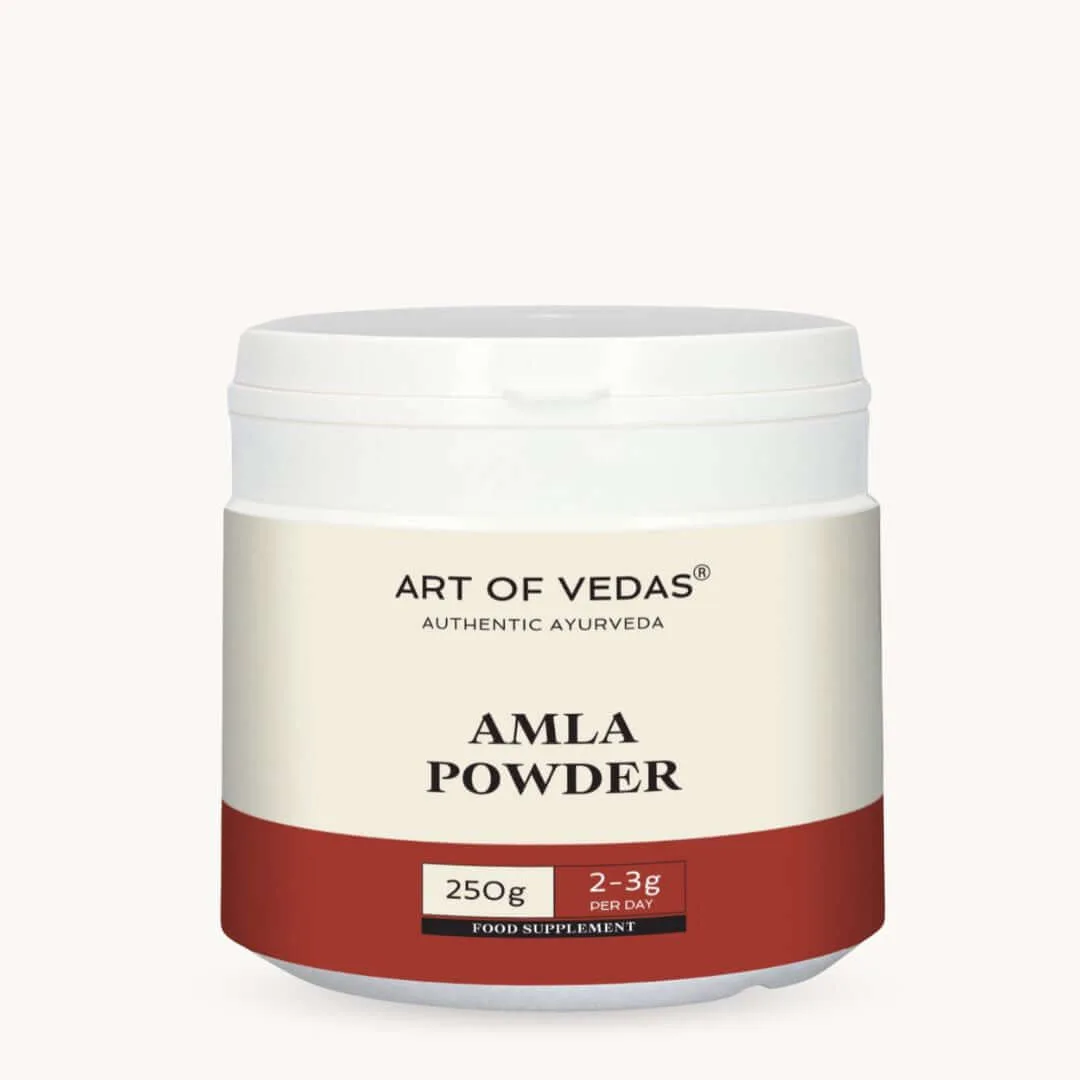
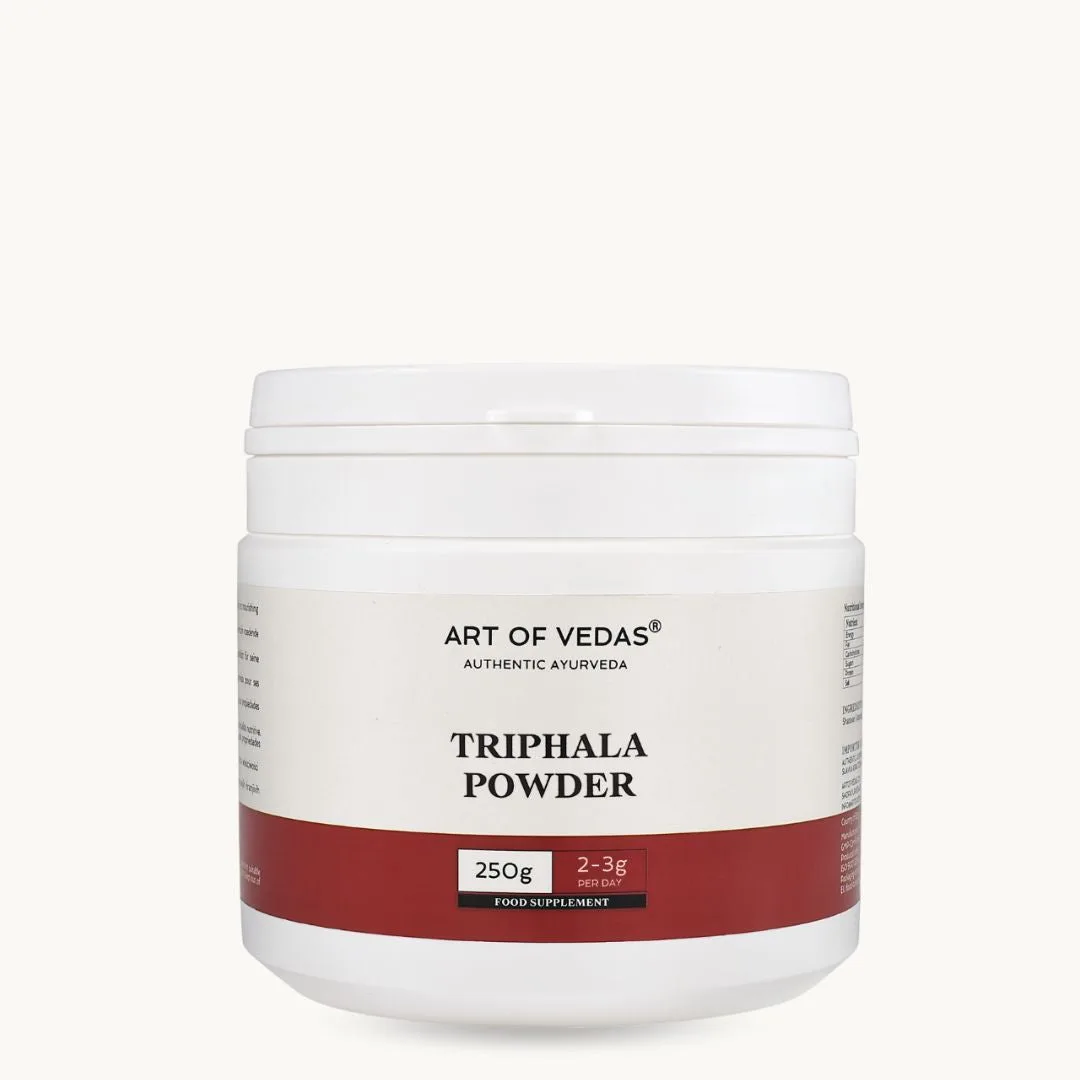
Browse the Art of Vedas supplements collection for Amalaki, Triphala, and Chyawanprash carefully selected. For the broader Rasayana context, see our guide to classical Rasayana in Ayurveda.
Frequently Asked Questions
What is Amla (Amalaki) good for according to Ayurveda?
The Charaka Samhita describes Amalaki as the best single Rasayana substance in the classical pharmacopoeia, relevant to all three doshas. Classical texts describe it as supporting the quality of all seven body tissues, the health of the eyes and skin, and Ojas - the refined essence of vitality and immunity. It is the primary ingredient in both Triphala and Chyawanprash. Its combination of sour taste with cooling potency is described as unique among sour substances and the primary explanation for its tridoshic appropriateness.
Why does Amla have so much vitamin C?
Amalaki contains vitamin C bound with tannins and bioflavonoids that protect it from oxidation to an unusual degree, making it substantially more heat-stable than ascorbic acid in isolation. The fruit also contains unique polyphenols including emblicanins and gallic acid that contribute to its antioxidant profile beyond the vitamin C content alone.
What is the difference between Amla powder and Triphala?
Amalaki powder is a single-herb preparation using only Indian gooseberry. Triphala is a compound of three fruits in equal parts - Amalaki, Haritaki, and Bibhitaki. Amalaki provides the core Rasayana and tridoshic action in Triphala; Haritaki addresses Vata and elimination specifically; Bibhitaki addresses Kapha and excess moisture. Standalone Amalaki provides a stronger concentration of Amalaki's specific Rasayana properties; Triphala provides the full tridoshic breadth described in classical texts.
How should I take Amla powder?
The classical preparation is three to six grams of Amalaki churna mixed in warm water, taken in the morning or with meals. Capsule forms are a practical alternative. Consistency over weeks and months is more important than the precise form - Amalaki's Rasayana effects develop gradually and require sustained use to become apparent.
Explore Amalaki and Ayurvedic Rasayana Supplements at Art of Vedas
Browse our supplements collection for Amalaki, Triphala, and Chyawanprash. Related reading: Triphala complete guide, classical Rasayana in Ayurveda, Ayurvedic immunity guide, and Ayurvedic food supplements guide.
This product is a food supplement and not intended to diagnose, treat, cure or prevent any disease.