Guggulu is a resin, and the tree that yields it is Commiphora wightii, a small, thorny tree of dry country. Many labels still print its older name, Commiphora mukul.
Two botanical names
Commiphora mukul and Commiphora wightii name the same species. Guggul, the Hindi word, and Guggulu, the Sanskrit, both refer to its resin.
The family of incense
Commiphora belongs to the Burseraceae, the family that also gives myrrh, from another Commiphora species, and frankincense, from Boswellia. The Burseraceae guide covers the family as a whole.
Not Salai guggul
Salai guggul is Boswellia serrata, the Shallaki of the classical texts, and a different resin from a different genus. The two resins guide sets them side by side.
On the label
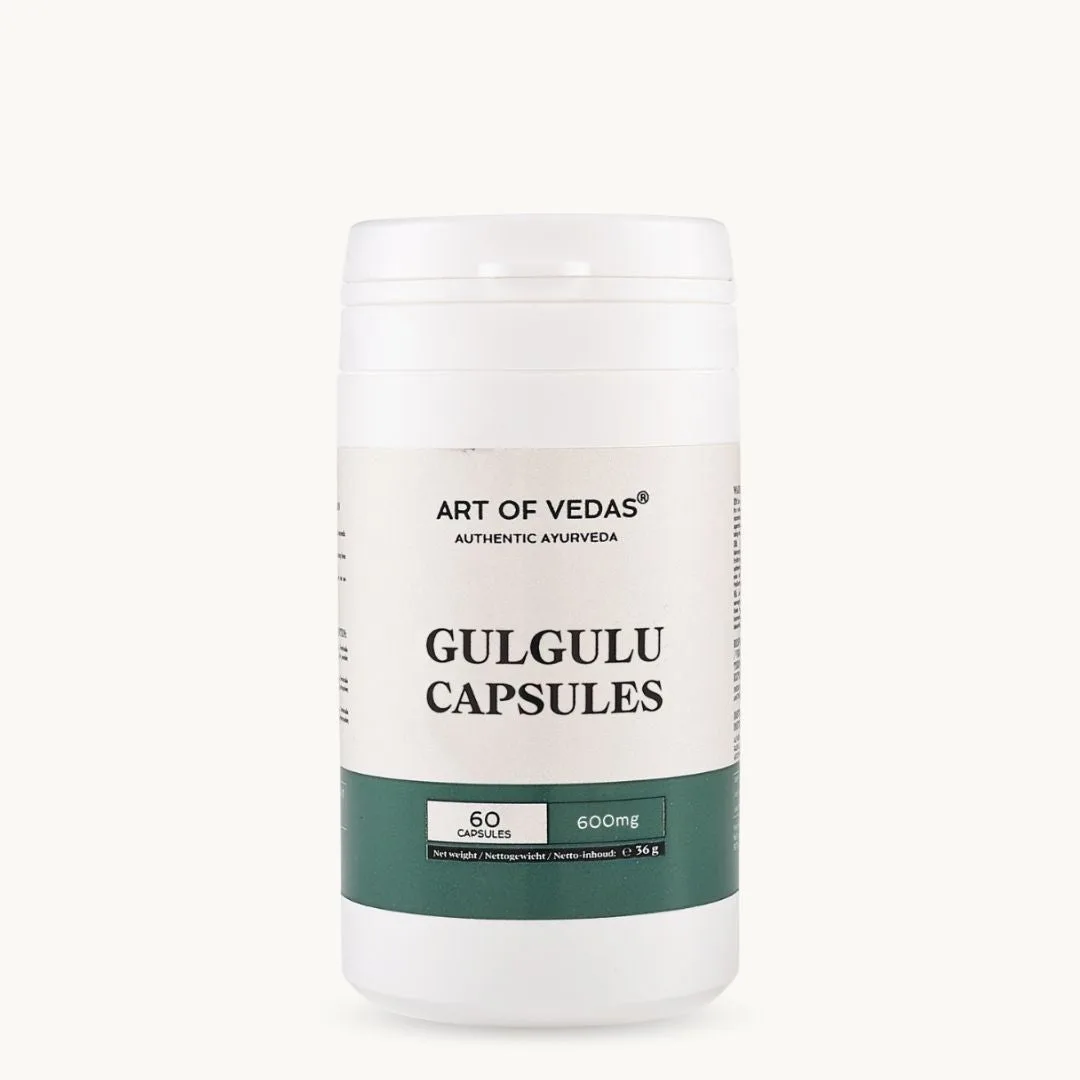
Gulgulu Capsules from Art of Vedas contain a standardised extract of Commiphora mukul.
Frequently Asked Questions
Are Commiphora mukul and Commiphora wightii the same?
Yes. They are two botanical names for one species.
Is Guggulu related to myrrh?
Yes. Myrrh comes from another species of the same genus.
Is Salai guggul the same resin?
No. Salai guggul is Boswellia serrata.
This article is for educational purposes and describes the classical Ayurvedic record. The products mentioned are food supplements, not a substitute for a varied, balanced diet, and are not intended to diagnose, treat, cure or prevent any disease. Take them under the guidance of a qualified Ayurvedic practitioner.