Raw Guggulu resin is not used as it comes from the tree. The classical tradition first subjects it to Shodhana, purification.
What Shodhana involves
The crude resin is boiled in a liquid, classically a decoction such as Triphala or another herbal Kashayam, until it softens and dissolves. The liquid is strained to remove bark, sand and other matter, and then reduced until the purified resin can be collected and dried.
Why the step matters in the texts
In the classical formulas it is the purified resin that is counted as Guggulu. The quality of that purification is one of the marks of a well-made classical preparation, as the Yogaraj Guggulu guide notes.
Purified resin and extract
A modern standardised extract is prepared differently, with a solvent and to a stated strength. It is a different material from purified resin, and a label should say which one it contains.
On the label
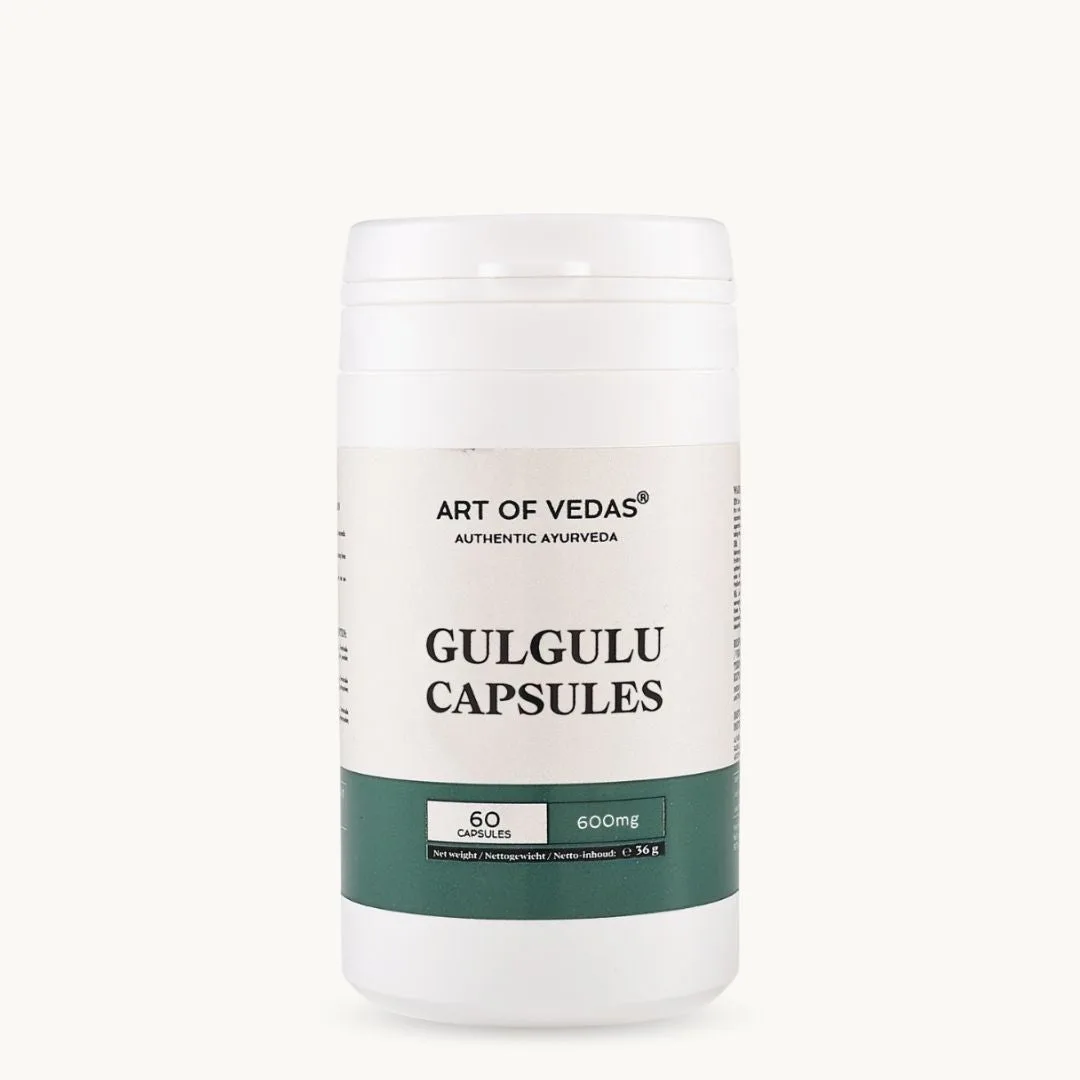
Gulgulu Capsules contain a standardised extract of Commiphora mukul, and the label says so.
Frequently Asked Questions
What does Shodhana mean?
Purification, a classical processing step applied to raw Guggulu before use.
Is purified Guggulu the same as an extract?
No. Purified resin and a standardised extract are prepared differently.
Which do the classical formulas use?
The purified resin.
This article is for educational purposes and describes the classical Ayurvedic record. The products mentioned are food supplements, not a substitute for a varied, balanced diet, and are not intended to diagnose, treat, cure or prevent any disease. Take them under the guidance of a qualified Ayurvedic practitioner.