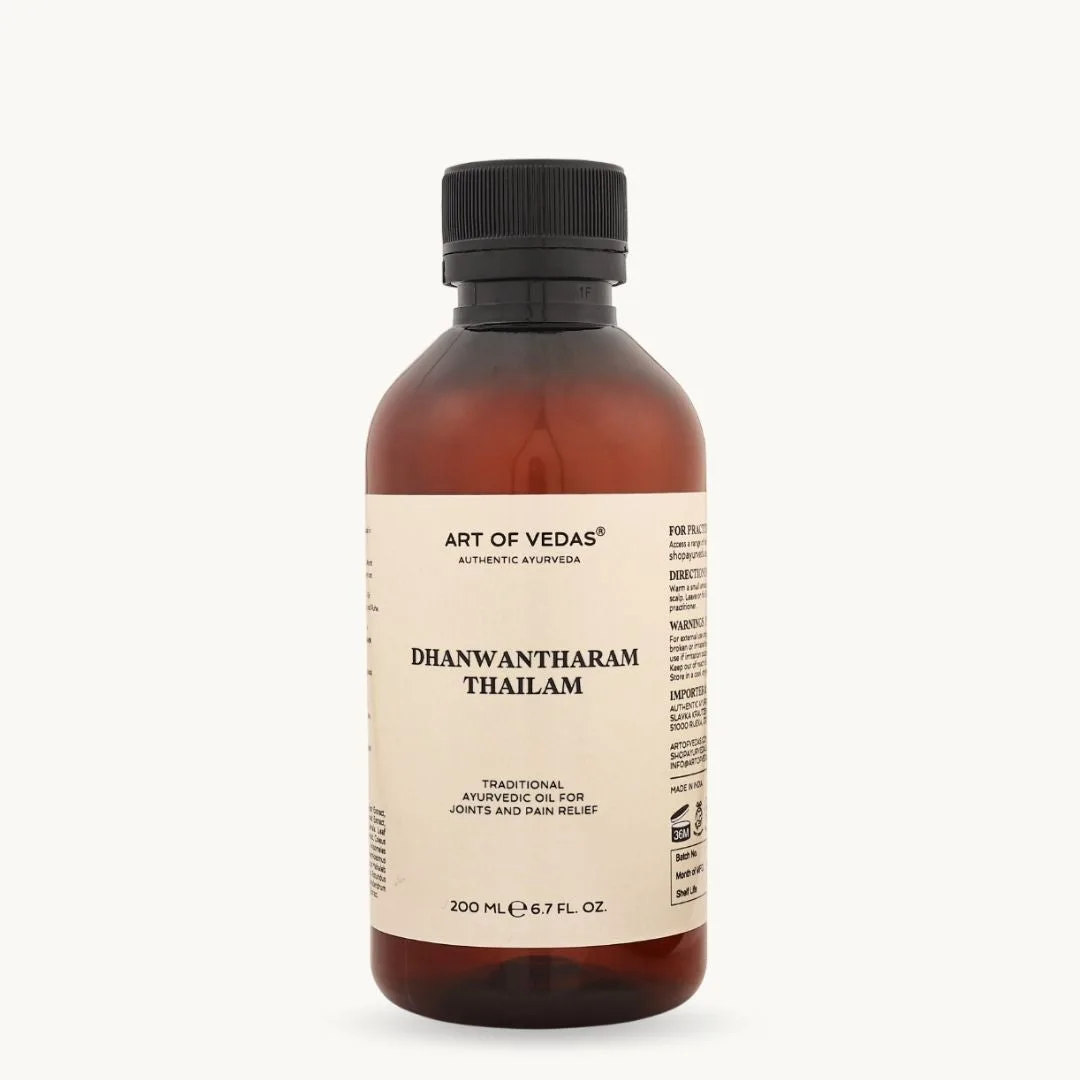
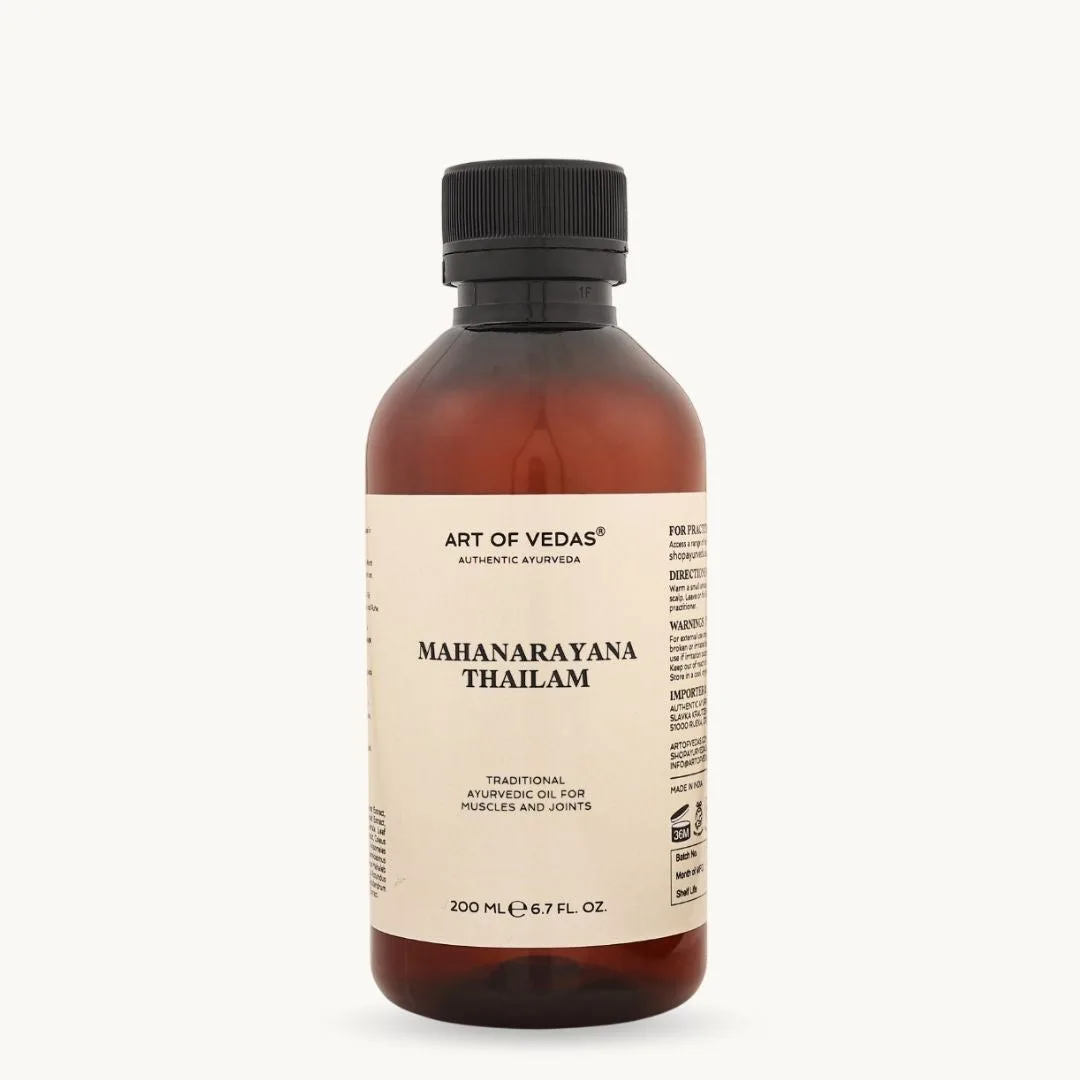
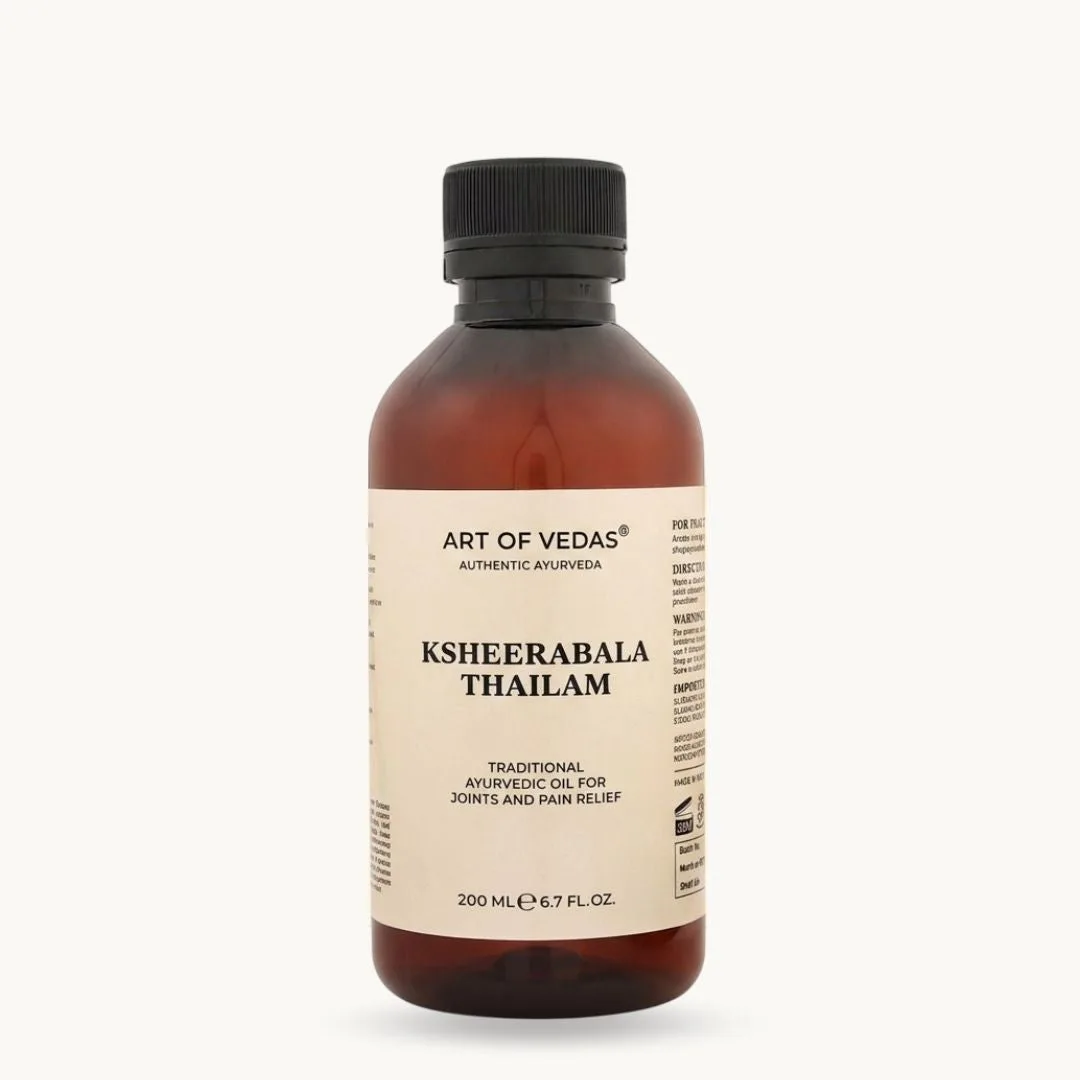
Mahanarayana, Dhanwantharam and Ksheerabala are the three classical Thailams most often weighed against one another, and with reason: together they cover most of what a household asks of Ayurvedic oil. All three are sesame-based, all three are prepared by the same patient classical method, yet each has a distinct temperament. This guide compares them by character, by tradition and by the routine each serves best.
Mahanarayana Thailam: the grand formula
Mahanarayana Thailam is the most elaborate of the three, a formula of dozens of herbs traditionally used in Ayurveda to support joint comfort and recovery after exertion. Its character is warming and substantial, and it rewards slow, firm massage over knees, shoulders, hips and the lower back. Practitioners tend to reserve it for focused work rather than everyday whole-body use. Our complete guide to Mahanarayana Thailam covers its history and applications in full.
Dhanwantharam Thailam: the everyday companion
Dhanwantharam Thailam is the mildest and most versatile of the trio. Built on Bala root, the ten Dashamoola roots and a milk decoction, it is the classical choice for daily Abhyanga, for older skin and for traditional postnatal care. Where Mahanarayana concentrates, Dhanwantharam accompanies: it is the oil you can reach for every morning without a second thought. Readers deciding between the two will find our focused comparison of Dhanwantharam and Mahanarayana useful.
Ksheerabala Thailam: the quiet evening oil
Ksheerabala Thailam is the simplest formula of the three: Bala root, sesame oil and a milk decoction, cooked together in the Ksheera Paka manner. That simplicity is its strength. It is the traditional oil for the end of the day, massaged into the soles of the feet, the temples and the scalp when Vata runs high and rest is slow to arrive. Its texture is lighter than the other two and its scent notably soft. The Ksheerabala Thailam guide describes its evening rituals in detail.
Which oil for which routine
Choose by the moment in your day rather than by reputation. For a steady morning Abhyanga through the working week, Dhanwantharam is the natural default. For the evening after sport, gardening or long travel, when the body asks for warmth and attention, Mahanarayana earns its place. For the last half hour before sleep, Ksheerabala applied to feet and head is the gentlest of habits. Many households keep two: one for the morning, one for the evening. If you keep only one, let it be the oil that matches the routine you will actually maintain.
Whichever of the three you choose, certain constants remain:
- • A cold-pressed sesame oil base, warming and substantial
- • Bala root at or near the heart of the formula
- • Preparation by the slow classical decoction method
- • A natural herbal scent, free of added fragrance
- • Suitability for warm-oil Abhyanga through the colder months
Ingredients at a glance
All three formulas rest on sesame oil (Tila Taila, the classical warming base) and Bala (Sida cordifolia, traditionally associated with strength and steadiness). Mahanarayana adds a long procession of herbs including Shatavari (Asparagus racemosus, deeply nourishing in tradition), Ashwagandha (Withania somnifera, the restorative root) and the Dashamoola (ten roots prepared as one grounding decoction). Dhanwantharam pairs Bala and Dashamoola with a milk decoction and grains such as Yava (barley, softening in character). Ksheerabala keeps only Bala, sesame and milk decoction, which is precisely why evenings suit it.
Frequently Asked Questions
Can I use more than one of these oils?
Yes, and many households do. A common arrangement is Dhanwantharam for morning Abhyanga, Mahanarayana for occasional focused massage after exertion, and Ksheerabala for the feet before sleep. They belong to one tradition and complement each other well; simply give each oil its own moment rather than layering them.
Which of the three suits a beginner best?
Dhanwantharam Thailam. It is mild, broadly suitable across ages and constitutions, and forgiving of imperfect technique. Begin with two or three mornings a week, warm the oil, and let the routine settle before adding anything else. The other two oils can join later, once you know what your body responds to.
Which oil is best in the cold season?
All three are sesame-based and therefore warming, but Vata season favours Mahanarayana for the joints and Ksheerabala for the evening wind-down. In practice the season's best oil is the one you will use consistently: daily Dhanwantharam does more good in November than a neglected bottle of anything grander.
Should these oils be warmed before use?
Yes. Stand the closed bottle in a bowl of hot water for a few minutes until the oil feels comfortably warm on the inner wrist. Warmth suits the character of all three formulas, helps the oil spread in long even strokes, and makes the ritual itself considerably more restful.
Can any of them be used on the face?
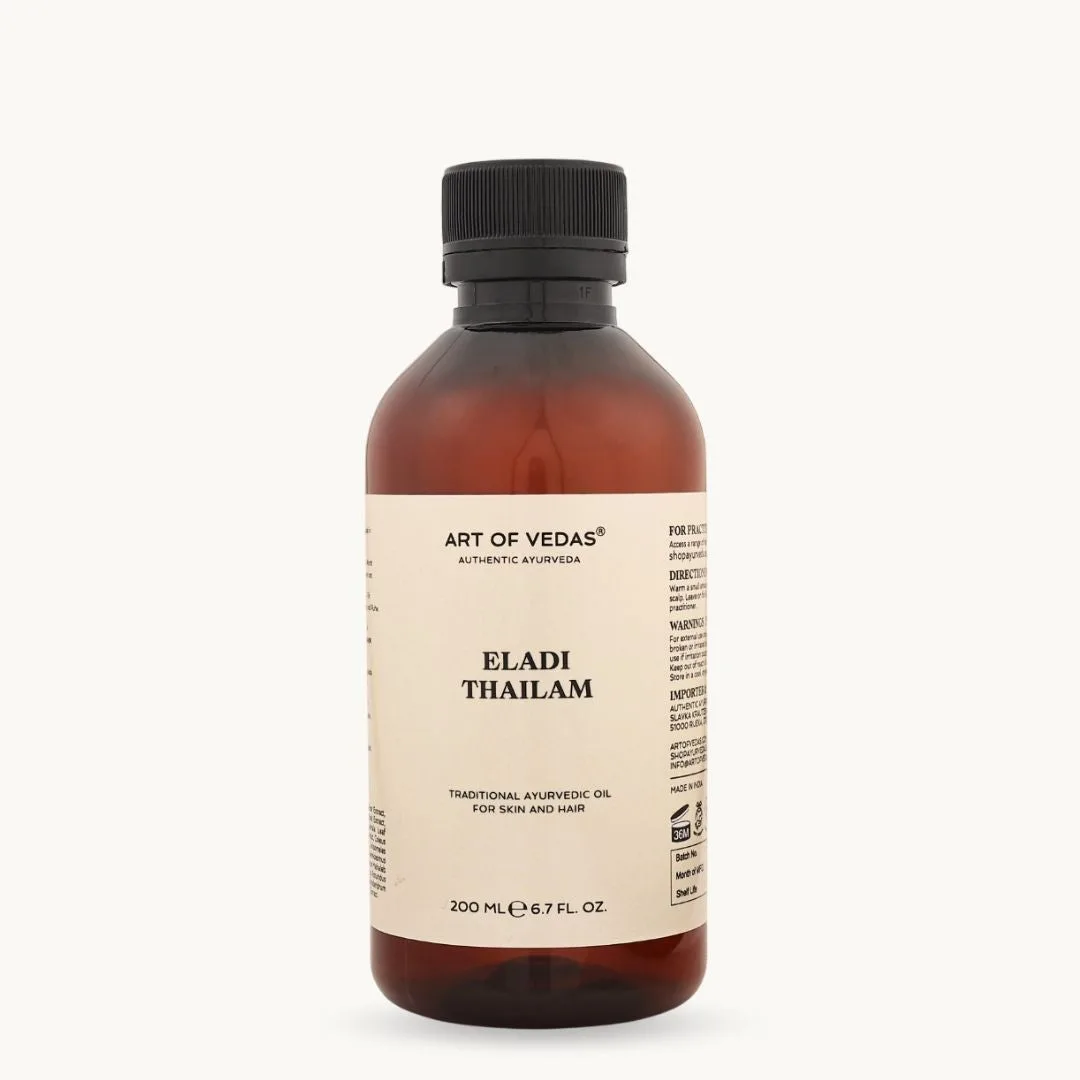
They are body oils first. Dhanwantharam is gentle enough for occasional facial use on dry skin, but the tradition prefers dedicated facial formulas such as Eladi Thailam, composed for delicate skin. Keep Mahanarayana and Ksheerabala for the body, scalp and feet, where their character is put to proper use.
For external use only. Not a substitute for professional medical advice.