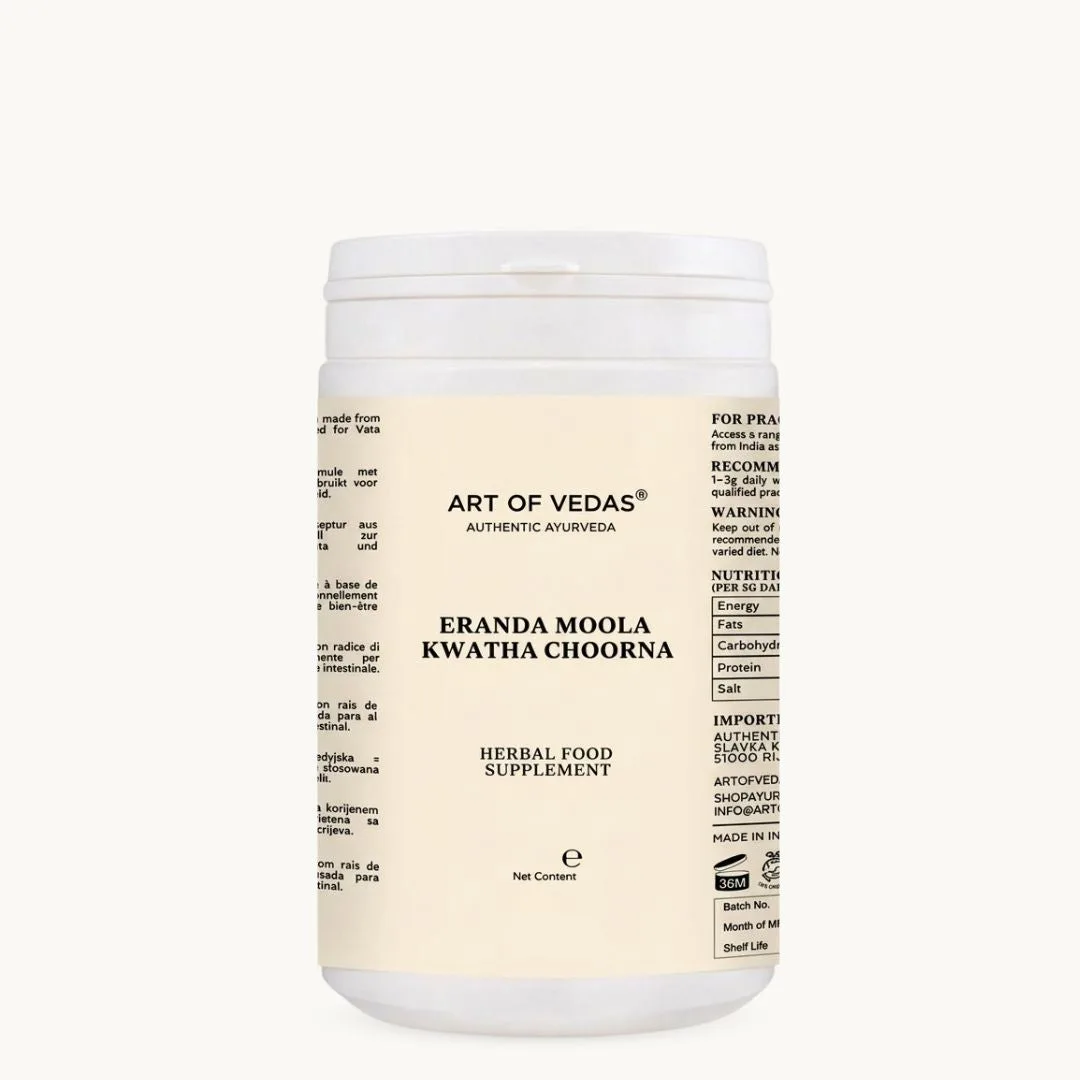
Eranda Moola is one of those classical materials whose name rewards a little unpacking. Eranda is the castor plant, and Moola means root, so Eranda Moola is castor root, a quite different material from the familiar castor seed and its oil. This distinction matters in traditional practice, and this guide from Art of Vedas explains the difference, describes the classical profile of the root, and sets out how it is prepared as a decoction from the kwath choornam.
The castor plant in the classical tradition
The castor plant, Ricinus communis, is called Eranda in Sanskrit and has a long presence in the classical materia medica. It is a fast-growing plant with large, distinctive leaves, and Ayurveda uses more than one part of it. The tradition draws a clear line between the seed, from which the well-known oil is pressed, and the root, which is prepared quite differently. Understanding that the plant gives two very different materials is the key to reading any recipe that calls for Eranda.
Castor root versus castor seed
This is the distinction that most often confuses newcomers. The castor seed yields Eranda Taila, the castor oil familiar around the world, an unctuous, warming oil used in its own right. Eranda Moola, the root, is a woody material that is not pressed for oil at all. Instead it is dried, cut and powdered, and then simmered into a decoction. So while both come from the same plant, one is a fatty oil and the other is a fibrous root used to make a herbal water. They are not interchangeable.
In the classical framework the root is described as warming and is traditionally grouped among the herbs valued for Vata balance and for comfort in movement. Its qualities are set out below:
- Rasa (taste): Madhura (sweet), Katu (pungent) and Kashaya (astringent)
- Virya (potency): Ushna (heating)
- Part used: the dried root, prepared as a powder for decoction
- Traditional grouping: among the classical Vata-balancing botanicals
How the kwath choornam is prepared
Kwath is the classical word for a decoction, a herbal water made by simmering a botanical in water until it reduces. A kwath choornam is simply the coarse powder prepared for that purpose. To make the decoction, a measure of the powder is added to water, gently simmered until it reduces in the classical manner, then strained and taken warm. Our Eranda Moola Kwath Choornam is prepared for exactly this use. It stands in contrast to the pressed oil, and readers who want the oil should look to our castor oil instead.
To follow the seed side of the plant, see our guide to castor oil in Ayurveda. To understand the decoction format in full, read the guide to classical Kashayam decoctions, and for the powder format across the materia medica see the guide to classical Churnam.
Who reaches for Eranda Moola
Eranda Moola appeals to those who enjoy the classical decoction tradition and who like a warming, Vata-balancing botanical in their routine. It is chosen by preference and by custom rather than by diagnosis. Individual constitution, or Prakriti, shapes how any preparation suits a person, and a qualified Ayurvedic practitioner is the right guide for personal use.
Frequently Asked Questions
What is Eranda Moola?
Eranda Moola is castor root, the root of the castor plant Ricinus communis, prepared as a powder for making a decoction.
Is Eranda Moola the same as castor oil?
No. Castor oil is pressed from the seed, while Eranda Moola is the root, a woody material used to make a decoction rather than an oil.
What is a kwath choornam?
A kwath choornam is a coarse powder prepared specifically for making a kwath, or decoction, by simmering it in water.
How is the decoction made?
A measure of the powder is simmered in water until it reduces in the classical manner, then strained and taken warm. The product label is the reference for amounts.
What is the classical potency of the root?
The texts describe Eranda Moola as heating in potency and place it among the Vata-balancing botanicals.
"This product is a food supplement and not intended to diagnose, treat, cure or prevent any disease."