This article is part of our Basti in Ayurveda: Classical Enema Therapy and Local Basti Procedures guide series.
Janu Basti applies the classical Basti principle - sustained warm oil retention within a dough dam - specifically to the knee joints. The knee is one of the most Vata-prone joints in the body: a large, complex, weight-bearing hinge joint with significant exposure to the drying, cold qualities that accumulate with Vata imbalance and age. Janu Basti addresses this directly, delivering the sustained warmth and deep oleation of warm medicated oil to all the structures of the knee - the joint capsule, cartilage, ligaments, bursa, and the periarticular soft tissues.
The Knee in Classical Ayurvedic Anatomy
Classical Ayurvedic anatomy describes the Janu (knee) as a Sandhi (joint) - a site of union between the structures of the lower limb - and as one of the major Marma points of the lower body. The Janu Marma is described in the Sushruta Samhita as a Sadyapranahara Marma - a major vital point whose injury has significant systemic consequences - reflecting the classical understanding of the knee's central importance to the structural and functional integrity of the lower body.
In the classical understanding of joint health, the health of a Sandhi depends on the quality of Sleshaka Kapha - the sub-dosha of Kapha that lubricates and cushions the joint spaces. When Sleshaka Kapha is diminished - through Vata excess, dryness, aging, or depletion - the lubrication of the joint is reduced, Vata fills the space with its dry, rough, mobile qualities, and the characteristic Vata-type joint presentation emerges: dryness and cracking sounds, instability, discomfort that improves with warmth and gentle movement, stiffness on rising.
Janu Basti addresses this pattern by directly restoring the oily, warm, nourishing quality that Sleshaka Kapha provides - through the external application of warm medicated oil sustained in contact with the joint over an extended period.
The Janu Basti Procedure
Positioning
The recipient lies supine (face up) with both legs extended. For bilateral treatment, two dough dams are constructed simultaneously over both knees. For unilateral treatment, the affected knee is treated with the leg in a slightly bent, supported position to allow the dough dam to sit securely over the joint.
The Dough Dam
Black gram (Masha) or wheat flour dough is formed into a ring over the knee, encircling the entire joint and patella. The dam must be seated firmly on the skin, leak-proof, and of sufficient height (approximately four to five centimetres) to hold an adequate volume of warm oil. Traditionally, sesame oil or the treatment oil itself is applied to the skin inside the dam first as a base layer.
Oil Selection
Classical oils for Janu Basti follow the same Vata-addressing principle as Kati Basti, with specific attention to the lower body and joint-focused preparations:
-
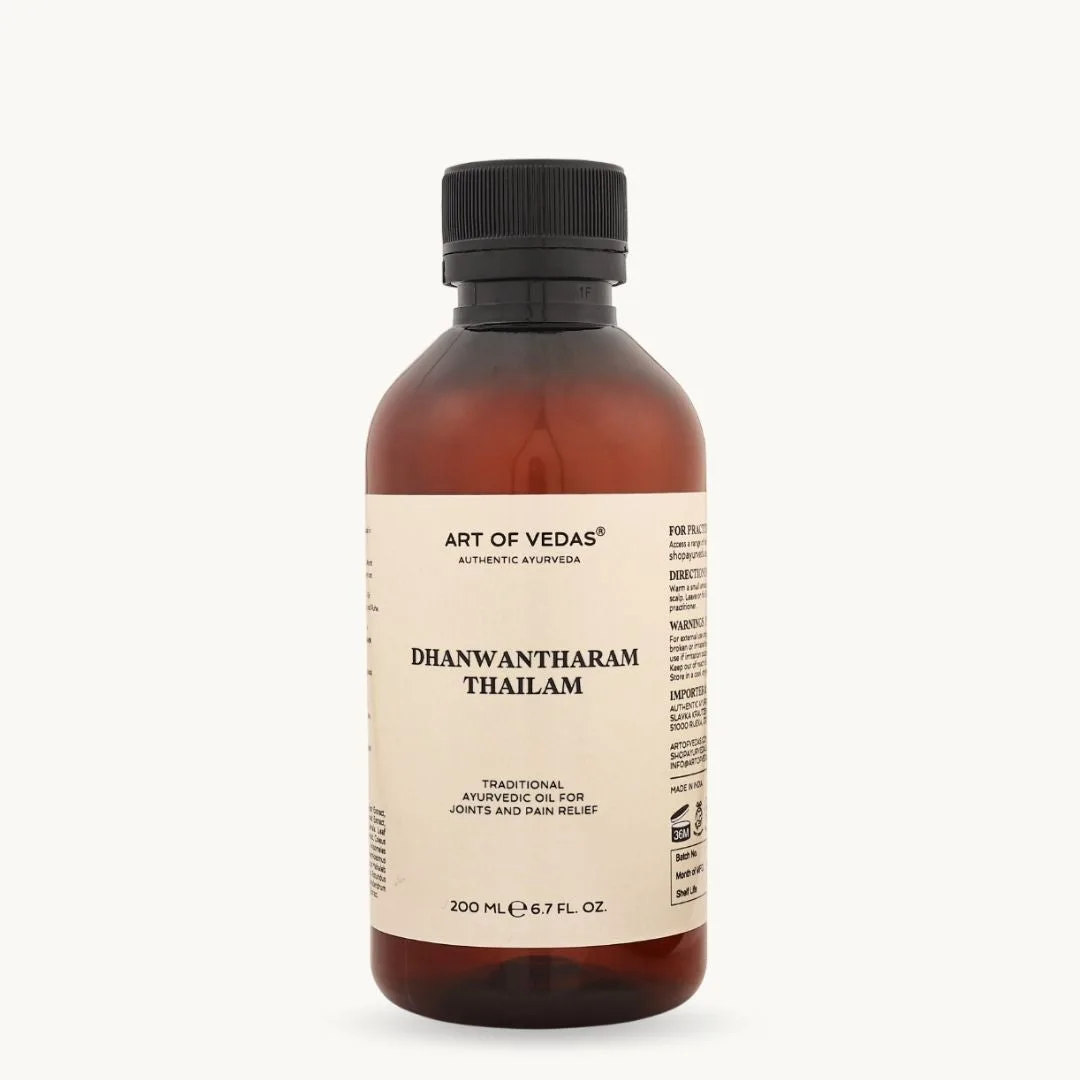
Dhanwantharam Thailam: The primary classical choice for joint Vata conditions - broad musculoskeletal Vata-addressing action. See our Dhanwantharam guide.
-
Sahacharadi Thailam: Classically described as particularly suited for the lower body, legs, and knee region - the herb Sahachara (Barleria prionitis) has classical affinity for the lower limb Vata. See our Sahacharadi guide.
-
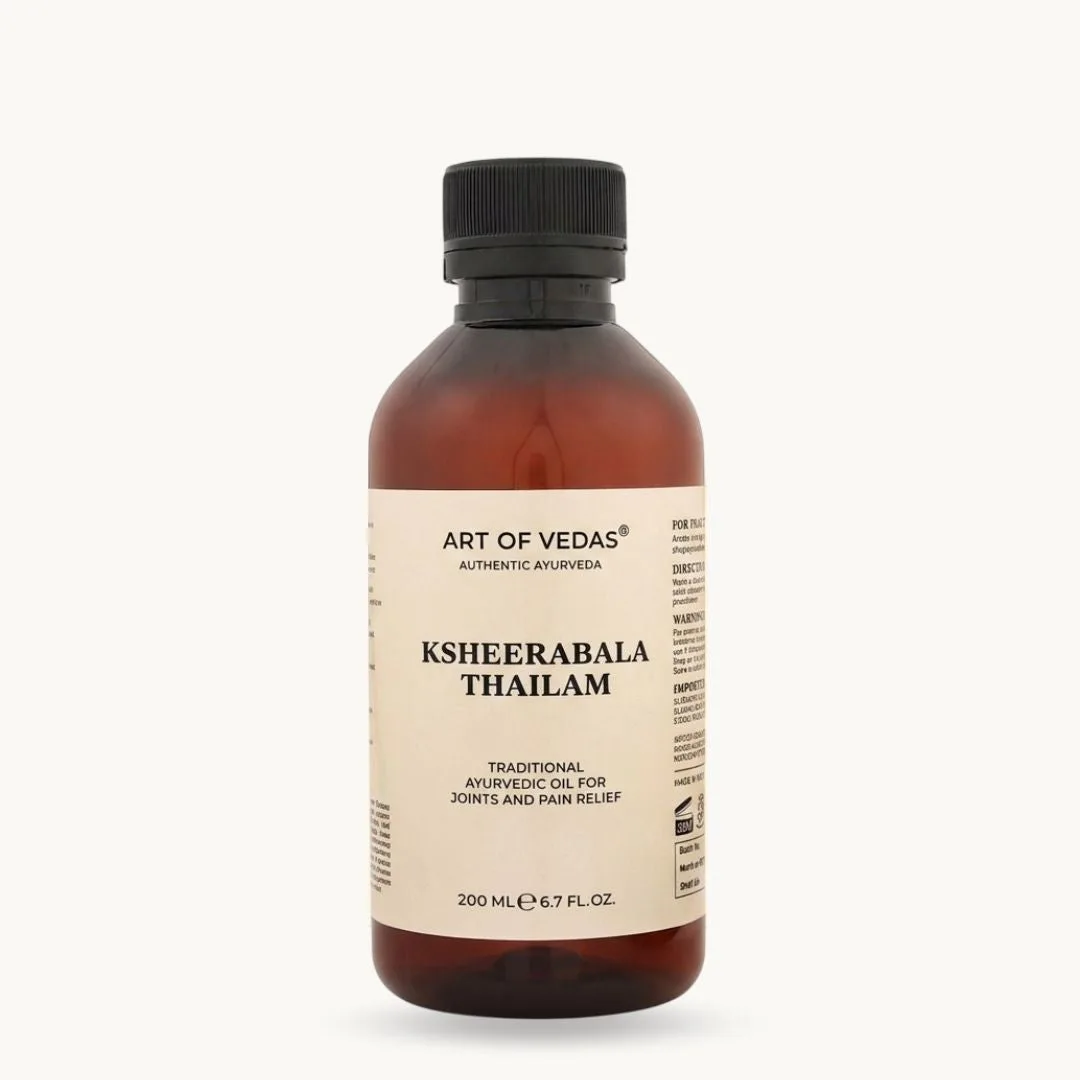
Ksheerabala Thailam: For joint conditions with nervous system involvement or when deeper nourishment of the Asthi-Majja Dhatus is the primary therapeutic intention. See our Ksheerabala guide.
-
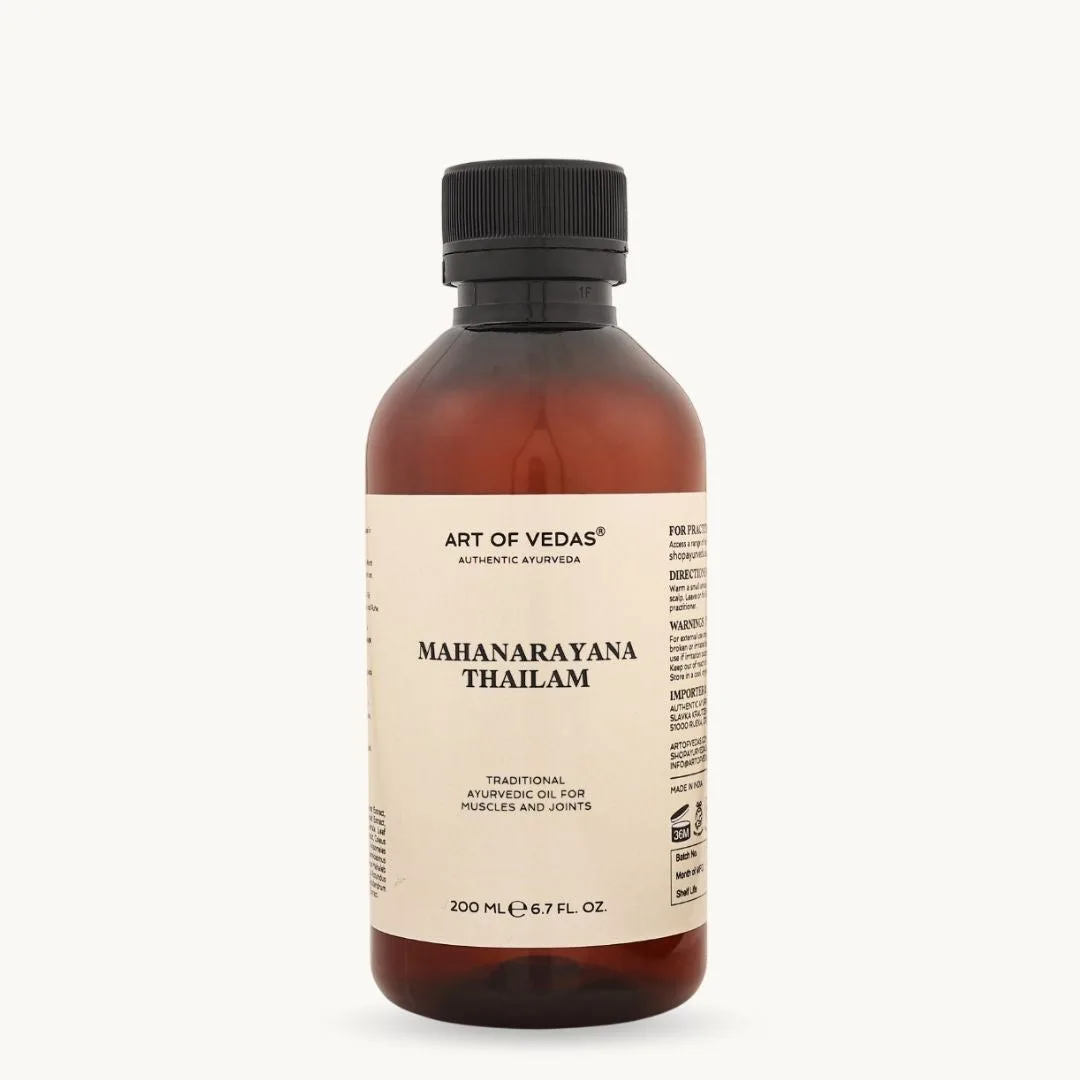
Mahanarayana Thailam: For comprehensive musculoskeletal Vata with broader systemic involvement. See our Narayana guide.
Duration
A single Janu Basti session lasts thirty to forty-five minutes. Oil is maintained warm throughout by replacing cooled oil with freshly warmed oil every five to seven minutes. The classical course is seven to fourteen consecutive daily sessions for significant Vata-type knee conditions.
Janu Basti and the Asthi-Majja Dhatu Connection
Classical Ayurvedic pathology describes a specific progression of Vata in the joints - from the initial superficial manifestation in the Rasa and Rakta Dhatus (reduced lubrication, early sensitivity) through deeper involvement of the Mamsa (muscle), Meda (fat/synovial tissue), and ultimately Asthi (bone tissue) Dhatus. Janu Basti, through its sustained warm oil retention, is understood to work progressively deeper through these tissue layers over a course of treatment - addressing not just the surface tissues but ultimately reaching the Asthi Dhatu of the joint itself.
The oil's nourishing, Brimhana properties at the Asthi Dhatu level are specifically relevant for conditions where cartilage and bone quality are involved in the classical understanding - the classical equivalent of the modern clinical interest in joint tissue integrity. This deeper Dhatu-level action is what distinguishes a course of Janu Basti from surface massage or topical applications - time, sustained contact, and appropriate oil are the classical conditions for this depth of penetration.
Home Practice: Warm Oil for the Knees
For those unable to access clinical Janu Basti, regular warm oil application to the knee is the most practical home equivalent of the classical principle. Using a Vata-addressing Thailam - Dhanwantharam, Sahacharadi, or Ksheerabala - warmed and massaged into the knee with circular strokes, followed by warm wrapping for twenty to thirty minutes, brings a portion of the Janu Basti benefit into a home practice. Consistency over weeks and months is the classical principle - the Dhatu-level benefit requires repeated sustained application, not a single application however thorough.
Frequently Asked Questions
What is Janu Basti?
Janu Basti is a classical Ayurvedic therapy in which warm medicated oil is pooled and retained directly over the knee joint within a dough dam. It is the primary classical therapy for Vata accumulation in the knee - addressing the dryness, instability, and reduced lubrication that characterise Vata-type knee conditions through the sustained warmth and deep oleation of the joint structures.
Which oil is best for Janu Basti?
Dhanwantharam Thailam and Sahacharadi Thailam are the most classically appropriate oils for Janu Basti - the former for general musculoskeletal Vata, the latter for lower body and knee-specific Vata conditions. Ksheerabala Thailam is used when deeper Asthi-Majja Dhatu nourishment is the primary therapeutic intention.
How many sessions of Janu Basti are needed?
Classical texts recommend a course of seven to fourteen consecutive daily sessions for significant Vata-type knee conditions. Single sessions provide immediate warmth and relief; the deeper Dhatu-level benefit of progressive oil penetration into the joint structures accumulates over the full course of treatment.
What is Sleshaka Kapha?
Sleshaka Kapha is the sub-dosha of Kapha that governs the lubrication and cushioning of the joints. Described in the Ashtanga Hridayam, it provides the oily, smooth, protective quality that allows joints to move freely and comfortably. When Sleshaka Kapha is diminished by Vata excess or aging, the joint loses this lubricating quality - the classical presentation that Janu Basti directly addresses through restoring the warm, oily character of the joint environment.
Related Therapies and Oils
See our Kati Basti guide for the lower back equivalent, and our Greeva Basti guide for the cervical spine. For Abhyanga as the foundational practice, see our complete Abhyanga guide. Browse our Ayurvedic Thailam collection for classical Vata-addressing oils.
This article is for informational and educational purposes only. Janu Basti is a classical Ayurvedic therapy that in a therapeutic context should be administered by a qualified Ayurvedic practitioner. The information provided here does not constitute medical advice and is not a substitute for professional guidance.