Mahathiktakam Ghritham - the "great bitter ghee" (Maha meaning great, Tikta meaning bitter, Ghritham meaning medicated ghee) - is the comprehensive classical Tikta Ghritham formula. Where Thikthakam Ghritham is a focused, targeted bitter preparation built on a smaller core herb group, Mahathiktakam Ghritham is the expanded form: a larger, more comprehensive herb assembly that addresses the full breadth of Pitta and Rakta Dhatu presentations across multiple body channels and Dhatu layers simultaneously.
The Ashtanga Hridayam, Chikitsa Sthana, describes Mahathiktakam Ghritham as one of the most important preparations in the Tikta Ghritham category - used across a wide range of classical Pitta-Rakta conditions from skin and blood channel presentations to deeper Asthi Dhatu (bone tissue) and Majja Dhatu (nervous tissue) presentations where Pitta has penetrated to the deeper tissue layers. This deeper tissue reach - enabled by the ghee carrier's Sukshma (penetrating) quality and amplified by the comprehensive herb group - distinguishes Mahathiktakam from both simpler bitter decoctions and from Thikthakam's more focused action.
The full Mahathiktakam Ghritham product is available in the Art of Vedas Ghritham collection. The foundational context for Ghritham preparations and the Tikta rasa pharmacology is in the Ghritham overview guide and the Thikthakam Ghritham guide.
Why "Maha" - What the Larger Formula Achieves
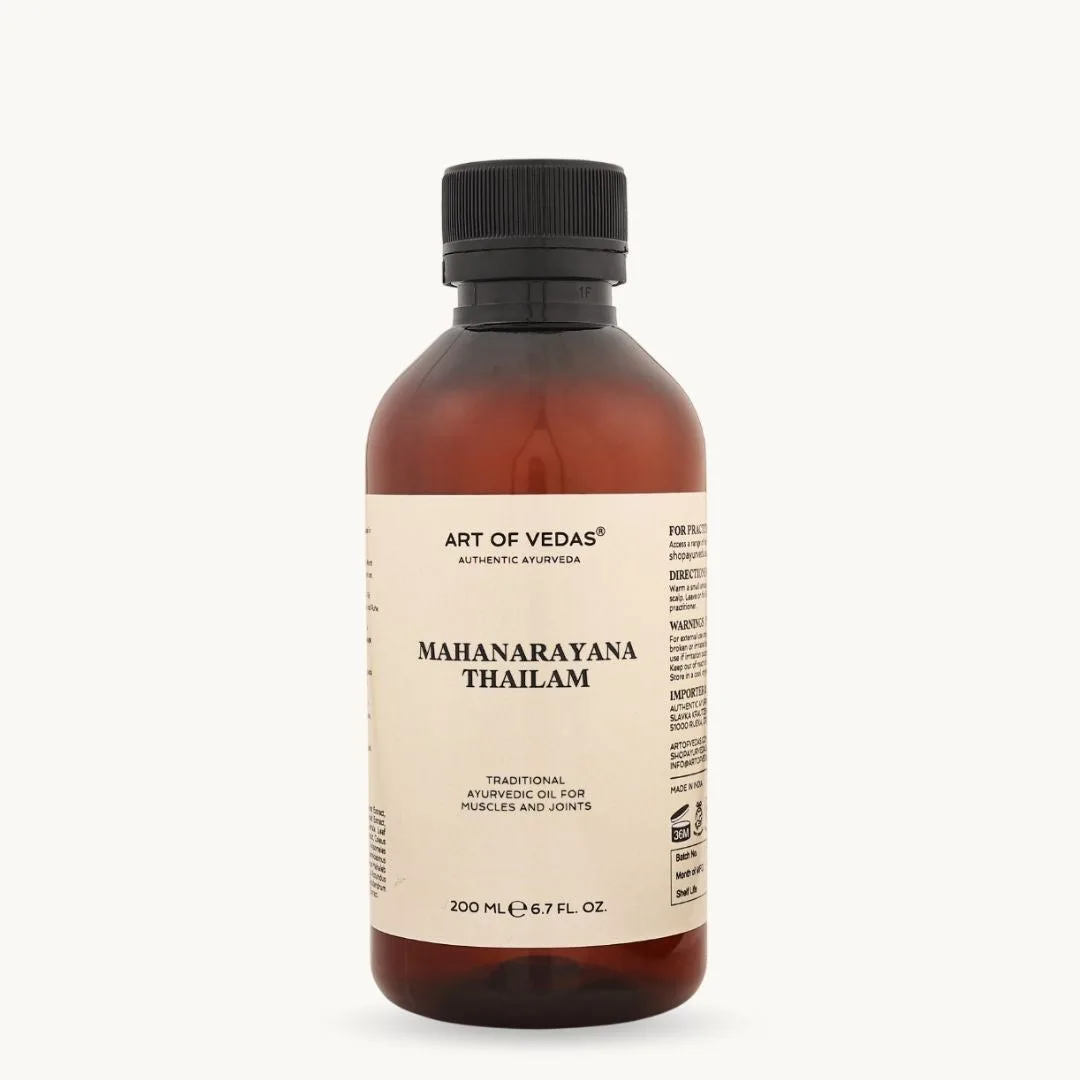
In classical Ayurvedic nomenclature, the prefix Maha (great) consistently signals a more comprehensive or more powerful version of a base formula. Mahanarayana Thailam is the expanded form of Narayana Thailam; Mahathiktakam Ghritham is the expanded form of Thikthakam Ghritham. The expansion is not arbitrary - it reflects a specific classical intent to extend the therapeutic reach of the base formula to a broader range of channels, deeper Dhatu layers, or more complex presentations.
In the case of Mahathiktakam Ghritham, the expanded herb group achieves several specific additions over the core Thikthakam formula:
Deeper Dhatu penetration: The addition of herbs with specific Asthi Dhatu (bone tissue) and Majja Dhatu (nervous tissue) affinity - including Rasna (Pluchea lanceolata) and supporting roots - extends the Tikta action to Pitta presentations that have reached the deeper tissue layers. Where Thikthakam primarily addresses Pitta in the Rasa Dhatu (plasma), Rakta Dhatu (blood) and Mamsa Dhatu (muscle tissue) channels, Mahathiktakam can reach Pitta that has penetrated to the Asthi and Majja levels.
Broader channel coverage: The larger herb group includes plants with affinity for the urinary channels, the liver and digestive channels, and the lymphatic channels - extending the Tikta Ghritham action beyond the primary skin-blood focus of the smaller formula.
More sustained Ama-clearing action: A larger group of Tikta and Kashaya herbs provides more sustained and comprehensive clearing of hot Ama from multiple channel systems - relevant when Pitta-Rakta presentations have been present for longer periods and have produced Ama accumulation across several channel systems simultaneously.
Classical Composition
Mahathiktakam Ghritham's comprehensive herb group is built on the same core Tikta herbs as Thikthakam - Nimba (Neem), Guduchi, Patola, Triphala - and extends to a larger assembly that covers the full Pitta-Rakta channel spectrum:
Nimba (Azadirachta indica, Neem): The lead Tikta herb across all classical bitter ghee formulas. Tikta-Kashaya rasa, Sheeta Virya, with the strongest classical affinity for the skin channels and Rakta Dhatu purification.
Guduchi (Tinospora cordifolia): The Tridoshahara Rasayana herb that provides nourishing counterbalance to the predominantly reducing Tikta herbs, while contributing its own Pitta-reducing and immune channel-supporting action. Guduchi's Rasayana quality is particularly important in Mahathiktakam - it prevents the excessive depletion that a purely reducing formula could produce in longer-term use.
Patola (Trichosanthes dioica): Primary Rakta Pitta herb with strong Raktavaha Srotas affinity. Tikta-Kashaya rasa, Laghu-Ruksha Guna.
Triphala (Amalaki, Bibhitaki, Haritaki): Contributing Kashaya rasa, Amalaki's Pitta-cooling Rakta nourishment, and Triphala's channel-clearing action across the digestive and lymphatic systems.
Rasna (Pluchea lanceolata): A classical Vata-Pitta herb with specific affinity for the joint channels (Asthivaha and Majjavaha Srotas). Its inclusion in Mahathiktakam extends the formula's reach to the deeper tissue layers where Pitta has combined with Vata to produce inflammatory joint channel presentations. This is the key addition that distinguishes Mahathiktakam from Thikthakam for deeper tissue and joint channel Pitta.
Musta (Cyperus rotundus), Haridra (Curcuma longa) and additional Tikta-Kashaya herbs: The larger formula includes multiple additional bitter and astringent herbs that extend coverage to the digestive-lymphatic channel complex, the skin and sweat channels, and the deeper metabolic channels where Pitta and Kapha have combined to produce Ama accumulation with inflammatory character.
Classical Indications
The Ashtanga Hridayam and Charaka Samhita describe Mahathiktakam Ghritham across the full range of Pitta-Rakta presentations - broader in scope than Thikthakam. These are described in classical Ayurvedic terms for educational purposes:
Kushtha (skin and lymphatic channel conditions): The classical Kushtha category encompasses conditions of the skin and underlying lymphatic channels arising from Pitta-Rakta imbalance. Mahathiktakam Ghritham's comprehensive bitter action works from within the blood and lymphatic channels to address the internal Pitta-Rakta dynamic at its root - providing the systemic internal dimension that external skin preparations cannot achieve alone.
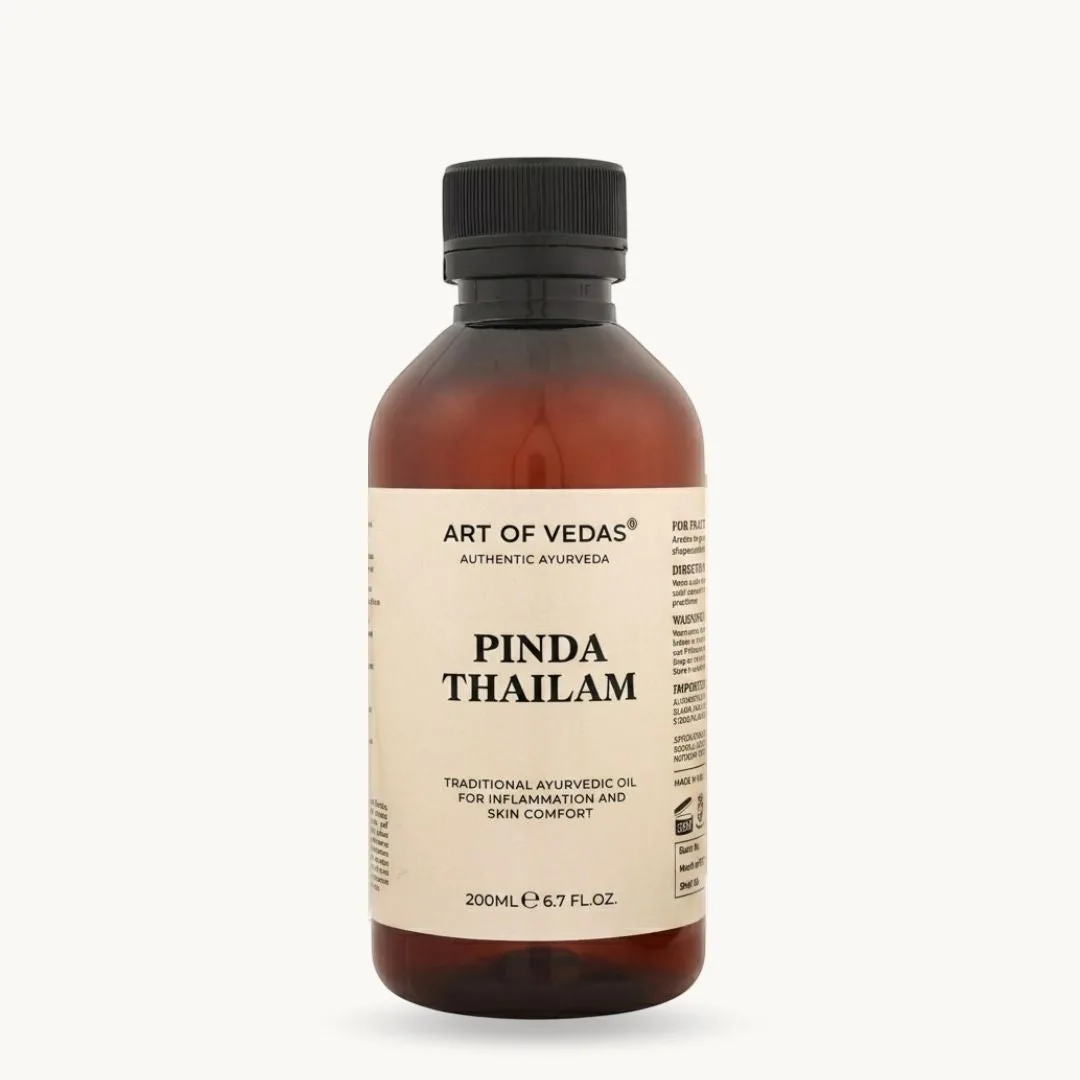
Vatarakta (Vata-Pitta joint channel condition): The classical joint condition arising from the combined disturbance of Vata and Pitta in the Asthivaha Srotas (bone channels) and blood channels. Mahathiktakam Ghritham's inclusion of Rasna and the deeper-tissue Tikta herbs makes it more specifically applicable to the Vatarakta presentation than Thikthakam. The external Pitta joint management through Pinda Thailam Abhyanga provides the complementary external route, as described in the Pitta imbalance guide.
Prameha and metabolic channel conditions: The classical texts describe Mahathiktakam for conditions involving the metabolic channels - Medovaha Srotas (fat tissue channels) and Mutravaha Srotas (urinary channels) - where Pitta and Kapha have combined to create Ama accumulation affecting the metabolic processes. The comprehensive Ama-clearing and channel-opening action of the larger formula is particularly relevant here.
Rakta Pitta with deeper tissue involvement: When Pitta has penetrated beyond the Rakta Dhatu surface level into the Mamsa, Asthi or Majja Dhatu - producing presentations that involve deep inflammatory patterns alongside the surface skin and blood channel signs - Mahathiktakam's deeper-tissue herb group provides the reach that the smaller formula lacks.
Netra Vikara (eye channel conditions): The classical texts consistently associate the eye channel network (Drishti Vaha Srotas) with Pitta - specifically Alochaka Pitta, the Pitta sub-type governing vision. Mahathiktakam Ghritham's comprehensive Pitta-cooling action through multiple channels includes a classical indication for eye channel presentations where excess Pitta has affected visual clarity or produced heat and inflammation in the eye channels.
Mahathiktakam and Thikthakam: Choosing Between Them
The practical framework for choosing between the two Tikta Ghritham preparations:
Choose Thikthakam Ghritham when: the Pitta-Rakta presentation is relatively focused and primarily involves the skin surface, blood channels or upper digestive-lymphatic channels; the overall constitution is relatively stable and the Pitta presentation is more acute and localised; a concentrated, targeted bitter action is more appropriate than a broad multi-system approach.
Choose Mahathiktakam Ghritham when: the Pitta-Rakta presentation is broader - involving multiple channel systems, deeper tissue layers, or joint channel involvement alongside skin-blood channel signs; the presentation has been present for longer and has produced Ama accumulation across multiple systems; the depth and breadth of the formula is needed to address a more complex Pitta-Rakta pattern.
If uncertain, a qualified Ayurvedic practitioner can assess the full presentation and advise which preparation is most appropriate. The full Pitta imbalance framework - including how to identify which channels and Dhatu levels are primarily affected - is in the Pitta imbalance guide.
How to Use
Take half a teaspoon of Mahathiktakam Ghritham on an empty stomach in the morning, warmed to liquid consistency, with warm water. The pronounced bitter taste is pharmacologically active - it should be experienced directly rather than masked where possible, as the Tikta rasa's Agni-stimulating and Ama-clearing action begins in the mouth. Begin with a small amount and build gradually.
Mahathiktakam Ghritham is most naturally aligned with a cooling, Pitta-managing external practice. The Pitta Dosha Massage Oil or Pinda Thailam for daily Abhyanga provides the external complement. The summer and early autumn are the most natural seasons for sustained Mahathiktakam use, corresponding to the Pitta accumulation and aggravation cycle described in the Ritucharya guide.
Frequently Asked Questions
Is Mahathiktakam Ghritham the strongest bitter ghee?
Among the classical Tikta Ghritham family, Mahathiktakam is the most comprehensive - the largest and broadest herb group, covering the most channel systems and the deepest tissue layers. However, "strongest" in the classical framework means most specifically matched to a presentation, not simply most intense. For focused skin-blood Pitta presentations, Thikthakam Ghritham may be more precisely appropriate precisely because it concentrates the action rather than distributing it across a broader formula.
Can Mahathiktakam Ghritham be used in skin care alongside topical preparations?
Yes - and this is the classical model. Mahathiktakam Ghritham addresses the internal Pitta-Rakta root of skin channel presentations from within; topical preparations address the external manifestation at the surface. Using the Ghritham internally alongside appropriate topical Art of Vedas skin preparations provides the complete internal-external approach. For specific topical skin channel recommendations, the Pitta imbalance guide describes the appropriate oil choices for external Pitta skin presentations.
How does Mahathiktakam relate to Panchakarma Virechana?
In the formal Panchakarma tradition, Virechana (therapeutic purgation) is the primary purification procedure for Pitta - and Tikta Ghritham preparations including Mahathiktakam are described in the classical texts as both a preparatory internal oleation and a post-Virechana Rasayana to support the Rakta Dhatu restoration after the purification. This reflects the broad classical role of Mahathiktakam as both a preparation for purification and a supporting Rasayana during the restoration phase that follows. For formal Panchakarma programmes, these preparations are used under qualified practitioner supervision.
This guide presents classical Ayurvedic concepts about Mahathiktakam Ghritham for educational purposes. Mahathiktakam Ghritham is a food supplement for daily Rasayana use and is not intended to diagnose, treat, cure or prevent any disease. Contains dairy (purified ghee). Consult a qualified Ayurvedic practitioner before use during pregnancy or if taking medications.