Pitta is fire and water combined - sharp, hot, penetrating and transformative. When in balance, Pitta gives clarity of mind, strong digestion, directness and the capacity for precise action. When excess, Pitta generates heat in the body and intensity in the mind: inflammation, irritability, excessive criticism, perfectionism pushed to exhaustion, and a digestive system that processes too fast rather than too slow.
The classical dietary principle for Pitta is straightforward: reduce heat, increase coolness and sweetness, and remove the foods that throw fuel onto an already burning fire. The challenge is that many foods considered "healthy" in modern nutritional thinking - spicy food, raw onion, vinegar, coffee, excess protein - directly increase Pitta. The classical Pitta constitution requires specific adjustments that counter modern dietary defaults.
This guide covers the complete classical Pitta diet: which tastes balance Pitta, which foods to eat, what to reduce, and how to use the classical approach alongside Pitta imbalance management and appropriate classical formulations. For dietary guidance specific to Vata and Kapha, see the Vata Diet guide and the Kapha Diet guide.
The Classical Framework: Tastes and Qualities That Affect Pitta
Pitta is hot, sharp, oily, light and spreading. The tastes and qualities that pacify Pitta are cooling, sweet, heavy and stabilising. Those that aggravate Pitta add heat, sharpness and stimulation.
Tastes that pacify Pitta (favour these):
- Sweet (Madhura): The most important taste for Pitta pacification. Sweet taste is cooling, heavy and builds Ojas. Whole grains, dairy, most legumes, sweet fruits and root vegetables all carry this quality. This is "sweet" in the Ayurvedic sense - not refined sugar, which ultimately destabilises Pitta.
- Bitter (Tikta): Bitter taste is cooling, anti-inflammatory and detoxifying - directly countering Pitta's heat and sharpness. Dark leafy greens, bitter melon, turmeric, neem and cooling bitter herbs belong here.
- Astringent (Kashaya): Astringent taste is cooling and drying, helping to reduce Pitta's tendency toward excess heat and inflammation. Pomegranate, legumes, most vegetables and astringent fruits are astringent in quality.
Tastes that aggravate Pitta (reduce these):
- Pungent (Katu): Hot spices, chillies, raw onion, garlic, mustard and strongly pungent foods directly add fire to Pitta. This is the most important taste to reduce in Pitta excess.
- Sour (Amla): Sour taste is heating. Fermented foods, vinegar, citrus excess, pickles, wine and sour dairy products increase Pitta when taken in excess.
- Salty (Lavana): Salty taste is heating and increases blood and water in the body. Excess salt - particularly processed salt and heavily salted foods - aggravates Pitta.
Grains: Cooling and Substantial for Pitta
Grains are generally well-suited to Pitta because they are sweet, heavy and grounding. The key for Pitta is to choose cooling grains and avoid the hot, quick-cooking preparations that stimulate rather than steady the system.
Best grains for Pitta:
- White basmati rice: Cooling, easy to digest and compatible with Pitta. The classical baseline grain. Cooked with cooling spices (coriander, fennel, cardamom) and served with ghee.
- Wheat and spelt: Cooling and heavy. Soft bread, cooked porridge, pasta in reasonable quantities all suit Pitta well.
- Barley: One of the most specifically Pitta-balancing grains in classical Ayurveda. Barley is cooling, diuretic and reduces Pitta heat effectively. Barley soups and porridges are classical Pitta preparations.
- Oats: Cooling and nourishing when cooked. A good Pitta breakfast option with cooling spices.
Grains to reduce: Corn, buckwheat, millet, brown rice (too heating), rye. Hot dry preparations - heavily toasted, overly spiced grain dishes - are heating for Pitta regardless of the grain used.
Vegetables: The Pitta Advantage
Pitta handles vegetables better than the other doshas. Sweet and bitter vegetables are directly cooling and anti-inflammatory. Pitta can tolerate more raw vegetables than Vata, though lightly cooked preparations are still preferable for digestive support.
Best vegetables for Pitta:
- Leafy greens: Spinach, kale, chard, lettuce, watercress. Bitter and cooling, excellent for Pitta. Lightly cooked with ghee and cooling spices, or in small amounts raw in salads.
- Courgette, cucumber and celery: Extremely cooling and hydrating. Pitta's best vegetables for summer eating.
- Broccoli, cauliflower and green beans: Cooling and bitter. Lightly steamed with ghee.
- Sweet potato and pumpkin: Sweet, heavy and cooling enough for Pitta when not spiced too intensely.
- Artichoke and asparagus: Cooling, bitter and particularly supportive for the liver, which is Pitta's primary organ.
- Bitter melon (Karela): The classical bitter vegetable for Pitta and liver health in Ayurveda.
Vegetables to reduce: Raw onion, garlic (fresh cooked garlic in small amounts is tolerated but should not be eaten daily in Pitta excess), beetroot in large quantities (heating), tomatoes, peppers, chilli peppers, aubergine. Nightshades generally tend to be heating and can aggravate Pitta, particularly in excess.
Legumes: Cooling Protein for Pitta
Legumes are well-suited to Pitta. They are sweet, astringent, cooling and substantial - providing the protein that Pitta constitutions often crave without the heating qualities of red meat or heavy proteins.
Best legumes for Pitta:
- Mung dal: The classical Pitta-pacifying legume. Cooling, easy to digest. Kitchari made with mung and basmati is a Pitta-balancing restoration meal.
- Chickpeas, lentils and kidney beans: All well-tolerated by Pitta when well-cooked. Heavier than mung, but appropriate for Pitta's stronger digestion.
- Tofu and tempeh: Cooling proteins that Pitta handles well.
- Black beans: Cooling and astringent, good for Pitta.
Pitta's stronger Agni generally handles legumes well without the elaborate preparation required for Vata. The main adjustment: do not spice excessively. Cooling spices (coriander, cumin, fennel) are appropriate; heavy garlic and chilli-based spicing is not.
Oils and Dairy: Moderation and Cooling Quality
Pitta requires less internal oleation than Vata, and requires specifically cooling oils rather than the heavy heating oils best for Vata.
Best oils for Pitta:
- Ghee (clarified butter): Despite being derived from heating dairy, ghee has a cooling effect in the body according to classical Ayurveda. It is the most important fat for Pitta - cooling, anti-inflammatory and nourishing without being heating. One to two teaspoons of organic ghee per meal is the classical recommendation.
- Coconut oil: Cooling, sweet and light. Excellent for Pitta, particularly in cooking for summer months or in tropical climates. Suitable for light cooking.
- Sunflower oil: Light, cooling and neutral. A useful cooking oil for Pitta.
Oils to reduce: Sesame oil (heating), mustard oil (very heating and pungent), corn oil, almond oil in large quantities. These are appropriate for Vata but not suited to regular Pitta use.
Dairy for Pitta: Cool dairy is among Pitta's best foods. Milk, butter, ghee, fresh cheese and yogurt are all indicated in classical texts for Pitta pacification. The important distinction: cold or room-temperature dairy suits Pitta, whereas very hot dairy preparations are less appropriate. Cold milk with a little natural sweetener is a classical Pitta cooling preparation.
Proteins: Quality and Coolness
Eggs: Well-tolerated by Pitta in moderation. Eggs are heating, so should not be eaten in large daily quantities during Pitta excess. One to two eggs is generally fine; scrambled or poached rather than fried.
Chicken: White chicken meat is neutral to mildly cooling in Ayurveda and the most suitable meat for Pitta. Prepared lightly - poached, steamed or with cooling herbs - rather than grilled or spiced heavily.
Fish: White fish and freshwater fish are cooler in quality than oily sea fish. Suitable for Pitta in moderation.
Red meat: Generally to be reduced in Pitta excess. Red meat is heating and heavy, increases heat in the liver and blood, and amplifies Pitta's intensity. If eating red meat, small amounts of lamb or venison in slow-cooked, well-spiced preparations is better than beef eaten frequently.
Legumes and dairy proteins: For Pitta, plant proteins (mung dal, lentils, chickpeas) and dairy are the most appropriate daily protein sources, with animal proteins used more occasionally.
Fruits: Sweet, Ripe and Cooling
Best fruits for Pitta: Sweet grapes, melons, mangoes (ripe and sweet, not sour), sweet cherries, coconut, figs, plums, pears, sweet apples. All are cooling, sweet and directly Pitta-pacifying. Pomegranate in moderation - astringent and cooling - is particularly good for Pitta-type digestive heat.
Fruits to reduce: Grapefruit, sour oranges, very sour citrus in large quantities, cranberries, unripe sour fruit. Tropical fruits that are very sweet (in large amounts) can increase Pitta over time. The key is sourness: avoid sour fruits in Pitta excess.
Room temperature or slightly cooled fruit is ideal for Pitta, particularly in summer. Avoid very cold fruit from the freezer, which impairs digestion.
Spices: Cooling and Aromatic, Not Hot
Pitta's most important spice adjustment: replace hot with aromatic. The spice that "heats up" a dish for Vata (chilli, ginger, black pepper) can significantly aggravate Pitta. The spices that work for Pitta add flavour and support digestion without adding heat.
Best spices for Pitta:
- Coriander (seeds and fresh leaves): The primary Pitta spice. Cooling, aromatic and supportive for Pitta-type digestive sensitivity. Fresh coriander chutney is a classical Pitta condiment.
- Fennel: Cooling, sweet and supportive for the digestive system. Fennel tea after meals is excellent for Pitta.
- Cardamom: Cooling, aromatic and appropriate in small amounts for Pitta.
- Mint: Very cooling. Fresh mint in water, cooling drinks or chutneys.
- Turmeric: Anti-inflammatory and cooling in effect despite its earthy heat. One of the most important spices for Pitta - supports the liver, reduces systemic inflammation.
- Cumin: Neutral to mildly warming, appropriate in moderate quantities for Pitta cooking.
Spices to reduce: Chilli and cayenne pepper, raw garlic, mustard seeds (in excess), black pepper (in excess), fenugreek (very heating). The classical guidance is that Pitta can use a wide range of spices - but not the intensely pungent or hot ones that are fine for Kapha and Vata.
How to Eat: Cooling the Pitta Eating Pattern
How Pitta eats matters as much as what it eats. Pitta constitutions tend toward intensity, competitiveness and task-focus - these qualities often extend to eating: rushed meals between tasks, skipping meals when deadline-focused, eating while working, or using food as a reward after intense effort. Each of these patterns directly aggravates Pitta.
Key Pitta eating principles:
- Do not skip meals, particularly lunch. Pitta's Agni is strongest at midday, and missing the main meal creates a sharp, irritable quality (the "hangry" response is a classic Pitta symptom). Lunch should be the largest meal.
- Eat in a relaxed environment. Pitta eating should not be competitive, rushed or task-focused. The digestive fire is already strong; adding speed and stress to meals creates excess Pitta in the digestive channel.
- Avoid eating when angry, frustrated or under acute stress. Pitta's emotional states directly affect digestive quality. Pitta Agni in an emotionally activated state produces too much heat in digestion - leading to the acidity and inflammation that Pitta-type digestive problems are characterised by.
- Do not overeat. Pitta's strong digestion can create the illusion of capacity without the reality. Eating to 75% capacity, like all doshas, maintains digestive health.
- Eat at regular times. Pitta, unlike Vata, generally maintains regular meal habits - but irregular or extended fasting periods sharpen Pitta considerably.
Seasonal Adjustment: Managing Pitta Through the Year
Pitta season is Greeshma (summer) and early Varsha (early monsoon). The heat of summer directly amplifies Pitta, making the diet in these months particularly important. The Ayurvedic summer guide covers this in full.
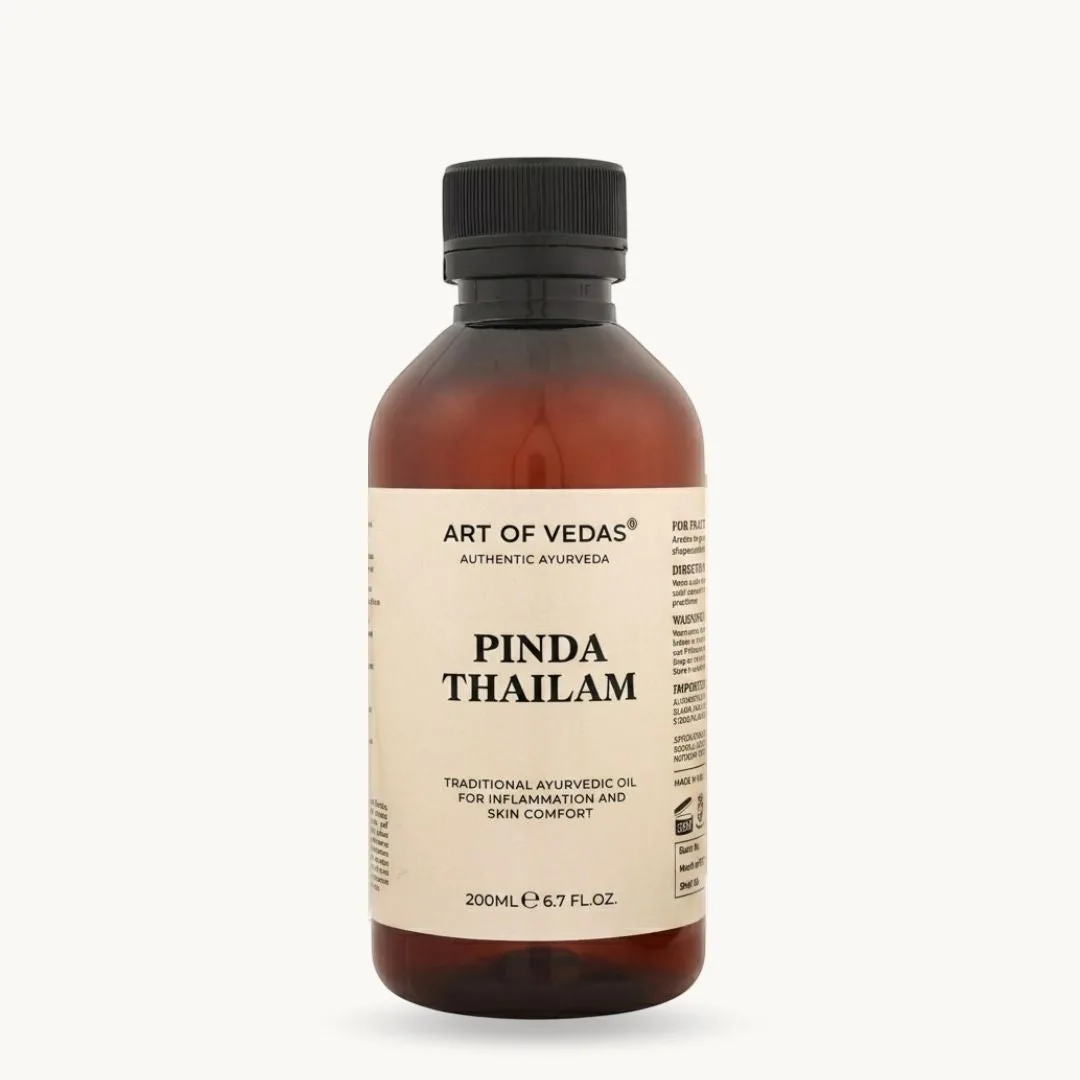
In summer: emphasise cooling foods - cucumber, coconut, sweet fruits, cooling dairy; reduce spices significantly; drink plenty of room-temperature water with fresh mint or coriander; avoid alcohol and very hot foods. Cooling oil applications - Pinda Thailam is the classical cooling Pitta oil - can be used as a supportive external practice during peak summer heat.
In winter and autumn, Pitta naturally decreases and more warming foods become appropriate. The complete year-round seasonal adjustment framework is covered in the seasonal dosha balancing guide.
Classical Formulations That Support the Pitta Diet
For deeper Pitta conditions - particularly where there is internal inflammation, liver heat or Pitta-type skin conditions - the external application of cooling Ayurvedic oils supports the dietary approach. Pinda Thailam, the classical anti-inflammatory Pitta oil from Art of Vedas, is specifically formulated for Pitta conditions affecting the joints and skin.
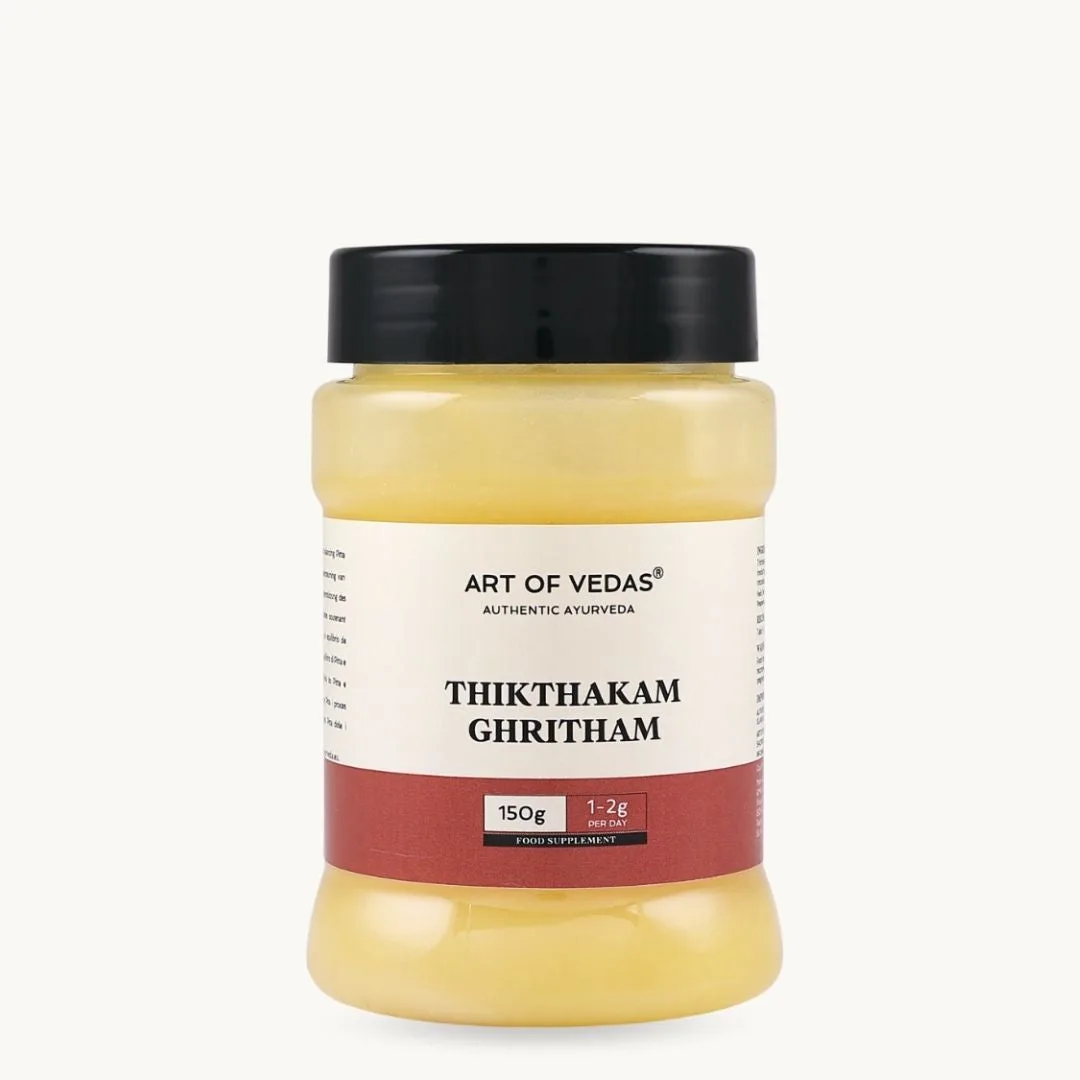
The Ghritham range offers classical medicated ghees for internal use. Thikthakam Ghritham - the bitter ghee formulation - is the classical preparation specifically indicated for Pitta conditions in the classical texts, particularly those involving chronic inflammation and Pitta-type skin presentations.
For general Pitta management through classical supplements, see the full range in the Supplements collection.
Sample Pitta Day: Meals and Rhythm
On waking: Cool or room-temperature water. For Pitta, very hot water first thing is less appropriate - room temperature is preferable.
Breakfast (cooling, moderate): Cooked oats or wheat porridge with ghee, cardamom, coconut flakes and sweet fruit. Or light cooked eggs with fresh coriander and mild spices on soft flatbread.
Midday (main meal - the most important meal for Pitta): Kitchari with mung dal and basmati, seasoned with ghee, coriander and fennel. A generous portion of lightly cooked greens alongside. This is the peak of Pitta's Agni - the full, satisfying meal belongs here.
Evening (lighter, cooling): A cooling soup with vegetables, lightly spiced with coriander and cumin. Basmati with a small amount of dal. Fresh mint tea after the meal.
Cooling drinks through the day: Room-temperature or lightly chilled water with fresh mint or a slice of cucumber. Avoid very cold drinks (they impair digestion), carbonated drinks and alcohol in Pitta excess.
Frequently Asked Questions: Pitta Diet
Can Pitta eat spicy food?
Pitta constitutions are often drawn to spicy food because Pitta's sharp, intense quality finds resonance in spicy flavours. However, hot spices directly increase Pitta's heat. The classical solution is aromatic spices - coriander, fennel, cardamom, cumin - rather than hot ones. These add flavour and support digestion without aggravating Pitta's burning tendency. If you regularly crave very spicy food, this can itself be a sign of Pitta excess: the heat seeking more heat.
Is alcohol compatible with Pitta?
Alcohol is one of the most direct Pitta-aggravators. It is hot, sour and fermented - all qualities that increase Pitta. It directly affects the liver, which is Pitta's primary organ, and intensifies the emotional heat and irritability associated with Pitta excess. Classical Ayurveda does not recommend alcohol in Pitta conditions. If alcohol is consumed, small amounts of cooling wine (rather than spirits or beer) with food is less aggravating than drinking on an empty stomach.
What is the best diet for Pitta-type skin conditions?
Pitta skin presentations - redness, heat, rash, sensitivity - respond directly to dietary change. The most important adjustments: eliminate chilli, vinegar, fermented foods, alcohol and sour citrus; increase bitter greens, cooling dairy, coconut and sweet fruits; add Thikthakam Ghritham (classical bitter medicated ghee for Pitta skin conditions) as directed by an Ayurvedic practitioner; and use cooling oils externally. Dietary change alone can produce significant results in Pitta skin conditions within four to six weeks.
Should Pitta eat raw food?
Pitta handles raw food considerably better than Vata. Pitta's strong Agni can digest raw vegetables and salads that Vata cannot manage. However, raw food eaten excessively - particularly in large quantities at the main meal - can still impair Agni over time. The classical approach: use raw food as a component of meals (a side salad, fresh herbs, cooling cucumber) rather than as the primary meal format. In summer, raw cooling foods are particularly appropriate for Pitta.
How does caffeine affect Pitta?
Coffee is pungent, bitter and intensely stimulating - it sharpens the mind in the short term but adds to Pitta's heat and exhausts the nervous system over time. Green tea is somewhat cooling and more suitable for Pitta than coffee. Herbal teas - particularly mint, fennel and coriander - are the classical alternatives. If you are experiencing Pitta-excess symptoms (irritability, inflammation, sleep disruption, skin heat), reducing coffee is among the most effective early interventions.
Does Pitta need to eat meat?
Pitta constitutions do not require meat to maintain strength. Their typically strong digestion handles plant proteins (legumes, dairy) very well, and these are cooler in quality than most animal proteins. A well-designed plant-based diet - with generous mung dal, lentils, cooling dairy, ghee and appropriate supplementation - is fully compatible with Pitta management. If eating animal protein, white chicken and freshwater fish are the most appropriate choices. Red meat and oily fish should be reduced in active Pitta excess.
What is the best drink for Pitta?
Room-temperature water is the safest and most consistently appropriate Pitta drink. Fresh mint water, coriander seed water (soak a teaspoon of coriander seeds overnight in water), coconut water and barley water are classical Pitta-cooling drinks. Cold milk with a small amount of natural sweetener is the classical Pitta evening tonic. Avoid very cold iced drinks (they impair digestion despite their superficial cooling), alcohol, excess coffee, and very hot drinks throughout the day.
Conclusion
The Pitta diet works by reducing heat, sourness and sharpness from the daily intake and replacing them with cooling, sweet and bitter foods that directly counterbalance Pitta's inherent qualities. The adjustments are not extreme, but they require overriding Pitta's natural inclination toward intensity - in food choices as in everything else.
Combined with cooling practices - appropriate Abhyanga with cooling oils, moderate exercise rather than intense exertion, and management of Pitta's characteristic emotional patterns - dietary adjustment is the most immediate and sustainable foundation for Pitta balance. For individual assessment, consultation with a qualified Ayurvedic practitioner provides the most precisely tailored guidance.
For the complete framework of Pitta management, see the Pitta Dosha guide and the Pitta Imbalance guide. For the full year-round approach, see the Ritucharya seasonal guide and the Ayurvedic Diet by Dosha guide.
Disclaimer: This article is for educational purposes only and represents traditional Ayurvedic dietary principles. It is not medical nutrition advice and does not substitute for consultation with a qualified healthcare practitioner or registered dietitian. If you have any health condition, please seek qualified professional guidance before making significant dietary changes.