Of all the adjustments available to someone managing Vata excess, diet is the most continuous, most immediate and - when applied correctly - one of the most effective. You cannot do Abhyanga every hour. You cannot always rest in a warm environment. But you eat every day, several times a day, and each meal either increases Vata or helps to contain it. This cumulative effect, over weeks and months, determines whether Vata remains manageable or whether it slowly overwhelms the system.
The classical understanding of Vata diet is not complicated. Vata is cold, dry, light, mobile and rough. The qualities that pacify Vata are their opposites: warm, oily, heavy, stable and smooth. Foods that carry these qualities consistently - and eaten in a regular, grounding daily rhythm - are the foundation of classical Vata management. Everything else in the Vata diet follows from this principle.
This guide covers the classical framework directly: which foods the texts indicate for Vata balance, which to reduce, how to adjust by season, and how dietary practice integrates with the broader Vata-calming approach that includes Abhyanga, rest and classical formulations. For the full picture of Vata imbalance signs and causes, see the Vata Imbalance guide.
The Classical Framework: Taste, Quality and Vata
Ayurvedic dietetics operates through Rasa (taste), Guna (quality) and Vipaka (post-digestive effect). For Vata, the classical guidance is consistent across the Charaka Samhita, Ashtanga Hridayam and Sushruta Samhita: favour the tastes that pacify Vata and reduce those that aggravate it.
Tastes that pacify Vata (favour these):
- Sweet (Madhura): The most important taste for Vata. Sweet foods are heavy, nourishing and grounding. They build Ojas - the essence of vitality - and directly counter the depleting tendency of Vata excess. Whole grains, root vegetables, dairy, most legumes and ripe fruit are sweet in the Ayurvedic sense.
- Sour (Amla): Sour taste is warming and stimulates Agni (digestive fire) without depleting moisture. Fermented foods, citrus (in moderation), tamarind and sour dairy products belong here.
- Salty (Lavana): Salt is grounding and retains moisture in the tissues. Used with restraint, it counters the dryness and dispersiveness of Vata. Natural mineral salts are useful in modest quantities.
Tastes that aggravate Vata (reduce these):
- Pungent (Katu): Hot spices and very pungent foods increase the mobile, drying qualities of Vata. Mild warming spices (ginger, cumin, cinnamon) are different - they support digestion without aggravating Vata's roughness.
- Bitter (Tikta): Bitter taste is cooling, drying and light - precisely the qualities Vata does not need more of. Raw greens, most bitter vegetables and bitter herbs should be reduced in Vata excess.
- Astringent (Kashaya): Astringency contracts, dries and disperses. Raw legumes, most raw vegetables, green tea and astringent fruits increase Vata's tendency toward depletion and dryness.
Grains: The Foundation of the Vata Diet
Grains are central to Vata-pacifying diet because they are inherently sweet, heavy and stabilising - three qualities Vata requires above all others. The classical texts consistently place whole, cooked grains at the base of the Vata-balancing meal.
Best grains for Vata:
- White basmati rice: The most Vata-friendly grain. Easy to digest, warming when cooked, and easily combined with warming spices and ghee. Kitchari (basmati rice cooked with mung dal) is the classical Vata restoration meal.
- Wheat: Heavier than rice and building in nature. Cooked wheat preparations - porridge, flatbreads with ghee - are strengthening for depleted Vata.
- Oats: Warming, heavy and nourishing when cooked. Cooked oat porridge with warming spices and ghee is one of the best Vata breakfasts.
- Quinoa: Lighter than wheat, but well-tolerated when well-cooked and eaten warm with oil.
Grains to reduce: Raw or puffed grains, corn, barley, millet, rye and cold grain preparations (cold cereals, overnight oats). These are too light, dry or cooling for Vata excess.
Vegetables: Cooked, Oiled and Warm
Raw vegetables are one of the most common Vata aggravators in the modern diet. They are cold, rough, dry and hard to digest - precisely the qualities that increase Vata. The classical solution is not to avoid vegetables but to transform them through cooking and the addition of ghee or oil.
Best vegetables for Vata:
- Root vegetables: Sweet potato, parsnip, carrot, beetroot, turnip, yam. Heavy, sweet and grounding. Roasted or steamed with ghee and warming spices, root vegetables are ideal Vata food.
- Winter squash and pumpkin: Sweet, nourishing and easy to digest when cooked well. Excellent in soups, stews and purees.
- Asparagus: One of the few vegetables the classical texts mention as specifically nourishing for Vata. Lightly cooked with ghee.
- Zucchini, courgette and fennel: Mild, soft and easy to cook with oil. Fennel is particularly useful for Vata-related digestive discomfort.
Vegetables to reduce: All raw salads and raw vegetables; brassicas (broccoli, cauliflower, cabbage, Brussels sprouts) even cooked, as these are gas-producing and Vata-aggravating; aubergine; most nightshades; dried peas and beans (unless well-soaked and thoroughly cooked with oil and spices).
The rule for all vegetables in a Vata diet: cook thoroughly, oil generously, season with warming spices and eat warm.
Legumes: Correct Preparation Is Everything
Most dried legumes are astringent and gas-forming, which means they directly increase Vata when poorly prepared. The classical texts do not exclude legumes from the Vata diet - they specify the correct preparation method.
Best legumes for Vata:
- Mung dal (split yellow or green): The most Vata-friendly legume. Easy to digest, warming when cooked with spices. Mung dal is the standard protein source in Kitchari - the classical digestive and Vata restoration formula.
- Red lentils: Easier to digest than whole legumes. Well-cooked with ghee and spices.
To reduce: All raw or undercooked beans, chickpeas (unless very well-cooked), black beans, kidney beans, large dried legumes. These consistently aggravate Vata's already sensitive digestive channel.
Always: soak dried legumes overnight, cook until completely soft, add warming spices (cumin, asafoetida, ginger) and finish with ghee. These steps together make legumes digestible for Vata.
Oils, Ghee and Dairy: The Most Important Category for Vata
For Vata, fat is medicine. The classical texts describe Sneha (oleation) - the systematic use of oils and ghee - as fundamental to Vata management, both internally through diet and externally through Abhyanga. A Vata diet without adequate fat simply does not work.
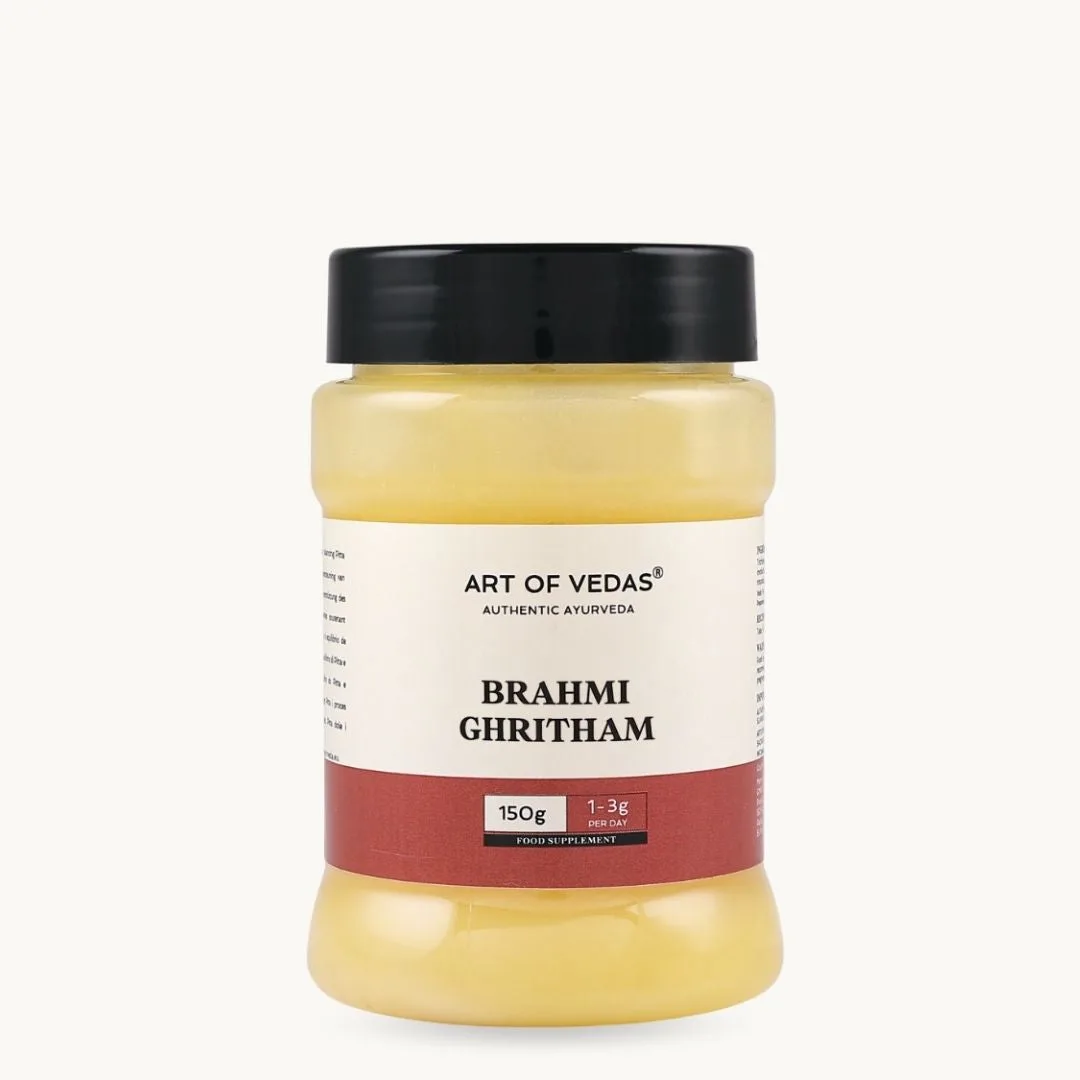
Ghee (Ghritha): The classical first choice for internal oleation. Ghee is heating, nourishing, easy to digest and carries the qualities of herbs directly into the tissues. Art of Vedas offers classical medicated Ghrithams - including Brahmi Ghritham for neural nourishment and Dhanwantharam Ghritham for structural Vata conditions. Plain organic ghee added to all cooked foods is the everyday recommendation.
Sesame oil: The classical base oil for Vata. In diet, cold-pressed sesame oil is warming, heavy and deeply nourishing. It is also the primary base for classical Vata Thailams used externally for Abhyanga.
Dairy: Warm, full-fat dairy is one of the most Vata-pacifying foods when well-tolerated. Warm spiced milk (with ginger, turmeric, cardamom) taken in the evening is a classical Vata tonic. Fresh cheese, and organic butter are all supportive.
Proteins: Warm, Nourishing and Well-Cooked
Eggs: Warming, nourishing and easy to digest. Cooked eggs with ghee are one of the best quick Vata proteins.
Chicken and turkey: White meat, slowly cooked in soups and stews, is nourishing and well-tolerated for Vata.
Oily fish: Salmon, sardines and mackerel provide the warming, unctuous quality Vata needs. Preferable to white fish.
For plant-based diets: Rely primarily on well-cooked mung dal, red lentils, tofu cooked warm with oil, and generous use of ghee and sesame oil to maintain adequate internal oleation.
Fruits: Ripe, Sweet and Warm
Best fruits for Vata: Ripe bananas, mangoes, avocados, peaches, plums, cherries, figs (fresh or soaked dried), dates, raisins. All sweet, heavy and nourishing. Cooked fruit - stewed apples with cinnamon and ghee, poached pears - is particularly good in cold weather.
Fruits to reduce: Unripe or sour fruits, dried fruit (unless soaked), cranberries, raw apples eaten cold, pomegranates. These are astringent or drying.
Spices That Support Vata Digestion
Vata has inherently variable, sometimes weak digestion. Warming spices support Agni without aggravating Vata's dryness. They also make otherwise hard-to-digest foods manageable.
The best Vata spices:
- Ginger - the primary Vata digestive herb. Fresh or dried, in food or as a tea before meals.
- Cumin - warming and carminative (reduces gas and bloating).
- Asafoetida (Hing) - particularly for gas-forming foods like legumes. A small amount of Hing cooked in ghee transforms Vata-aggravating beans.
- Cardamom - warming and sweet, excellent in milk preparations and desserts.
- Cinnamon - warming and grounding.
- Fennel seeds - calming for Vata digestive discomfort, particularly bloating after meals.
- Turmeric - anti-inflammatory, mild and compatible with Vata foods.
Spices to reduce: Excess chilli, very hot peppers, large amounts of raw garlic. These are too stimulating and drying for Vata excess.
How to Eat: Rhythm, Warmth and Regularity
In Ayurveda, how you eat is as important as what you eat. For Vata, this is especially true, because Vata's core qualities include irregularity, variability and dispersiveness. A regular, warm, calm eating rhythm directly counters these tendencies.
Key Vata eating principles:
- Eat at regular times every day. Vata is destabilised by irregular meal schedules. Three regular meals, with the main meal at midday when Agni is strongest, is the classical recommendation.
- Eat warm food. Cold food from the refrigerator, cold salads, cold drinks - these immediately increase Vata. All food should be eaten warm or at room temperature at minimum.
- Eat in a calm environment. Eating while distracted, rushed or standing scatters Prana and impairs Vata digestion. Sit down, eat slowly, focus on the meal.
- Do not skip meals. Vata constitutions tend to forget to eat when busy or anxious. This directly worsens Vata imbalance. Regular meals are non-negotiable.
- Do not overeat. Despite needing nourishment, Vata digestion is not strong. Eating to 75% capacity keeps Agni functioning well.
- Avoid fasting and extreme dietary restriction. Intermittent fasting and restrictive diets are contraindicated in Vata excess. Regular, adequate nourishment is the Vata prescription.
Seasonal Adjustment: Vata Diet in Autumn and Winter
Vata season in classical Ayurveda is Sharada (autumn) and the early part of Hemanta (winter). Cold, dry, windy weather directly amplifies Vata qualities in the body. The Ayurvedic autumn guide and winter guide cover this in detail.
In autumn and winter: increase warm soups, stews and cooked preparations; increase ghee significantly; reduce raw foods almost entirely; use warm spiced milk in the evenings; favour root vegetables, cooked grains and warming proteins. The warming, building quality of the diet in these months is the primary tool for keeping Vata contained.
In spring and summer, Vata naturally decreases and the diet can include somewhat lighter preparations - though the core principles of warm, oiled, cooked food remain appropriate for most Vata constitutions year-round. See the full seasonal dosha balancing guide for a complete year-round framework.
Supporting Vata Diet With Classical Oils and Formulations
Diet works best in combination with classical Vata-balancing practices. Abhyanga (daily self-massage with warm oil) is the most important complementary practice - applying warm classical oils directly nourishes the tissues that diet alone cannot reach quickly.
For Vata conditions affecting the nervous system, joints and musculature, Art of Vedas offers classical Vata oils in the Thailam range:
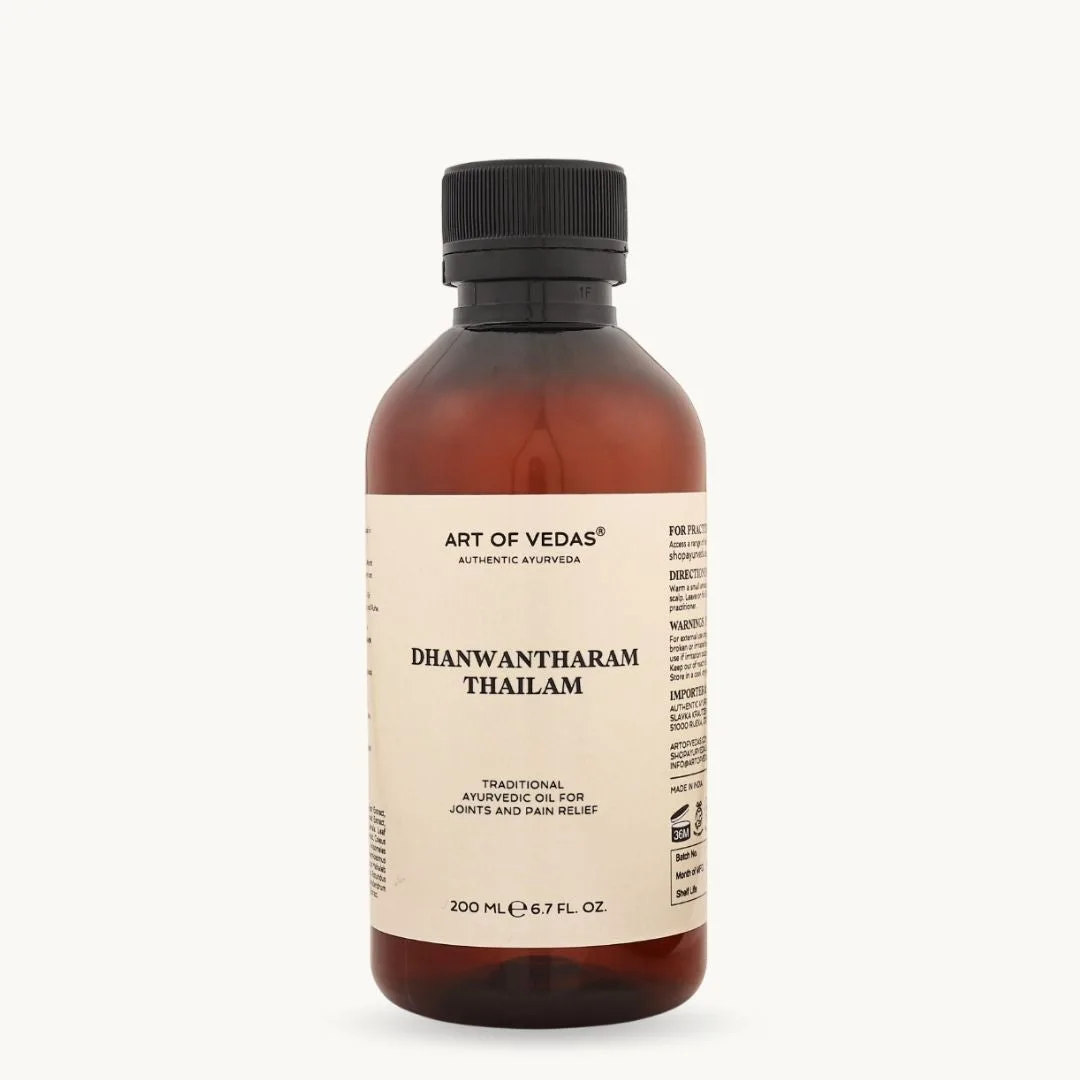
- Dhanwantharam Thailam - the classical Sarva Vata (all-Vata) oil, described in the Ashtanga Hridayam for the full range of Vata conditions.
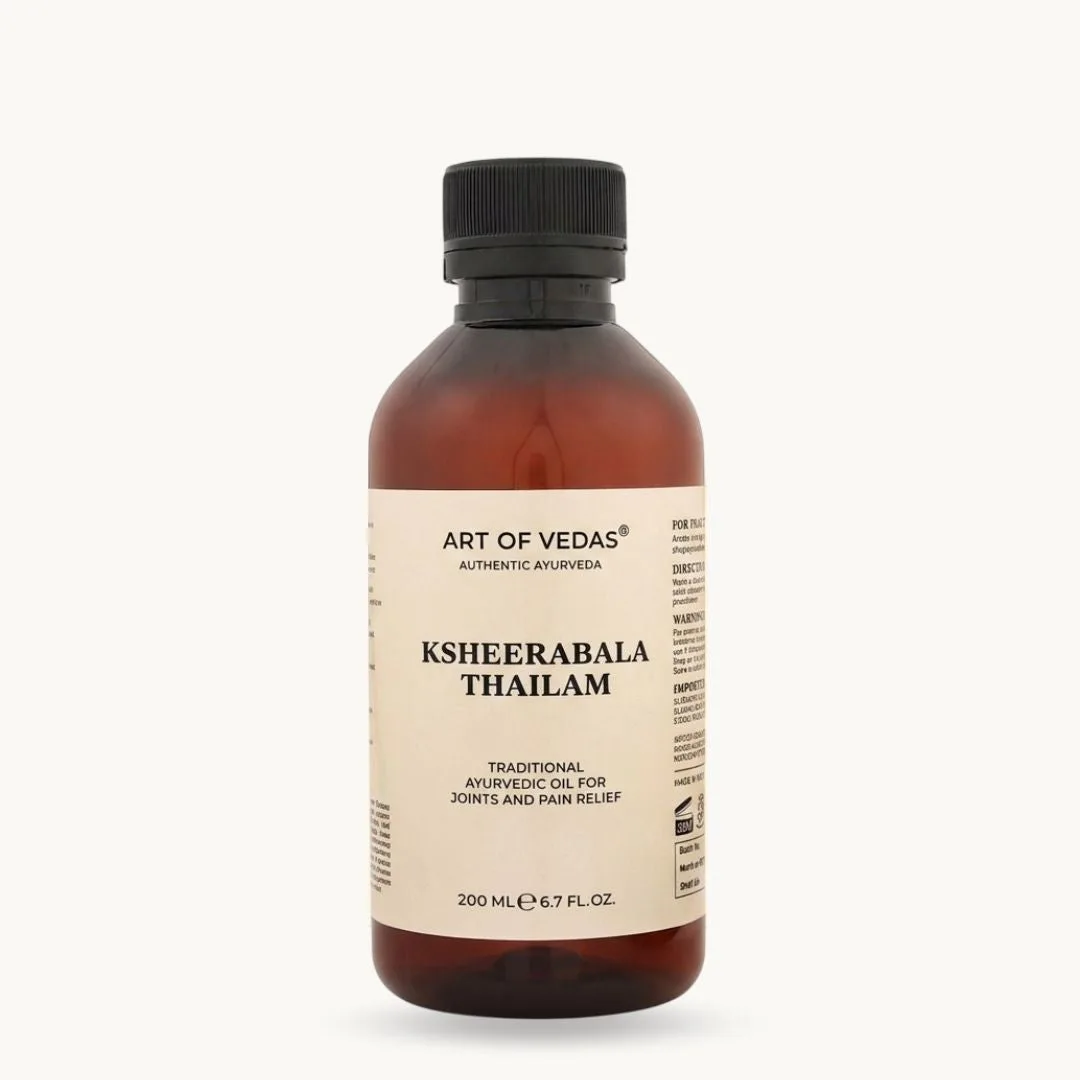
- Ksheerabala Thailam - the milk-processed oil specifically for Majja Dhatu (nervous tissue) nourishment.
- Mahamasha Thailam - for muscular depletion and deep structural Vata.
- Narayana Thailam - the classical formula for lower body and systemic Vata.
Classical Ayurvedic supplements that support the Vata-building diet include Ashwagandha - the primary Vata-building Rasayana - and Shatavari for nourishing and tonifying depleted Vata. The full range is available in the Supplements collection.
Sample Vata Day: Meals and Rhythm
On waking: Warm water with a slice of fresh ginger. Allow the digestive system to wake before eating.
Breakfast (warm, nourishing): Cooked oat porridge with ghee, cinnamon, cardamom and soaked dates. Or scrambled eggs with ghee and warming spices on warm flatbread.
Midday (main meal): Kitchari (basmati rice and mung dal cooked with ghee, cumin, ginger, asafoetida and turmeric), alongside a cooked root vegetable. This is the classical Vata restoration meal - easy to digest, deeply nourishing and balancing.
Evening (lighter, still warm): A warm soup with root vegetables and stock, well-spiced, with flatbread and ghee. Or warm dhal with rice.
Before bed: Warm spiced milk (full-fat, with cardamom, nutmeg and a pinch of turmeric). This directly supports sleep quality and provides evening nourishment that Vata constitutions benefit from.
Frequently Asked Questions: Vata Diet
Can I follow a plant-based diet with Vata constitution?
A plant-based diet is possible for Vata, but requires careful attention to ensure adequate nourishment and internal oleation. The most important adjustments: use generous amounts of ghee or sesame oil in all cooked foods; rely primarily on well-prepared mung dal and red lentils rather than raw beans; consume warm full-fat dairy if tolerated; include avocado, soaked nuts and seeds as fat sources; and supplement with classical Vata Rasayanas as advised by a qualified practitioner. A dry, raw or intermittent-fasting plant-based approach will consistently aggravate Vata.
Is intermittent fasting appropriate for Vata?
Classical Ayurveda does not recommend prolonged fasting for Vata constitutions or Vata excess. Fasting increases lightness, dryness and instability - the exact qualities that already characterise Vata imbalance. Regular meals at consistent times are the Vata prescription. If intermittent fasting is undertaken for other reasons, the eating window should be adequate to provide full nourishment, and should be discontinued if Vata symptoms (anxiety, insomnia, dryness, digestive irregularity) worsen.
Why does coffee affect Vata so strongly?
Coffee is pungent, bitter, drying, stimulating and dispersive - all Vata-aggravating qualities. It also disrupts sleep and destabilises the nervous system, both of which are areas where Vata is already vulnerable. The classical recommendation is to reduce or avoid coffee during Vata excess and replace it with warm spiced teas using ginger, cardamom or cinnamon. If coffee is not something you wish to give up entirely, one cup in the morning with warm water and a teaspoon of ghee reduces its Vata-aggravating impact somewhat.
How long does it take for dietary changes to affect Vata?
Dietary effects on Vata are cumulative. Individual meals affect digestion within hours. Tissue-level changes - in dryness, neural sensitivity, tissue quality - take longer, typically four to six weeks of consistent dietary adjustment before significant change is felt. The classical texts describe tissue rebuilding (Dhatu Poshan) as a cycle of approximately one month per tissue layer. Diet, Abhyanga and classical formulations work together to shorten this timeline.
Are nuts and seeds good for Vata?
Nuts and seeds are heavy, oily and nourishing - generally good for Vata. The most important preparation: soaking. Soaked and peeled almonds are among the best Vata foods; dry-roasted, salted or fried nuts are harder to digest. Best nuts for Vata: soaked almonds, cashews, sesame seeds, pumpkin seeds. Reduce peanuts and large quantities of raw, dry nuts.
What should Vata drink?
Warm water is the most important Vata drink. Cold water suppresses Agni and increases Vata. Herbal teas - particularly ginger tea, fennel tea and warm chai - are beneficial. Warm full-fat milk with spices is a classical Vata evening tonic. Reduce cold drinks, carbonated water and raw fruit juices taken cold. If you prefer fruit juices, dilute with warm water and drink at room temperature.
How does a Vata diet differ from mainstream healthy eating?
Much of the current healthy eating framework - salads, raw food, cold smoothies, intermittent fasting, high-fibre raw vegetables - is directly contraindicated for Vata. The Ayurvedic approach differs fundamentally: it prioritises warmth, oleation, regularity and digestibility over raw nutritional content alone. A cooked, warm, well-oiled meal eaten calmly at a regular time is classified as healthier for Vata than an identical cold raw meal with higher technical nutrient content. Digestibility, thermal quality and eating rhythm are primary factors in Ayurvedic dietary assessment.
Conclusion
The Vata diet is not restrictive - it is specific. It asks for warmth, regularity, oil and groundedness in food choices, and the same qualities in how you eat. These are not difficult adjustments, but they require consistent application. Vata is uniquely sensitive to variability: one week of cold food and irregular meals can undo several weeks of careful dietary practice.
Combined with daily Abhyanga, regular sleep and the use of appropriate classical Vata oils and Ayurvedic formulations, a consistent Vata-balancing diet is the most sustainable foundation for long-term Vata management. For individual assessment and personalised guidance, consultation with a qualified Ayurvedic practitioner is always recommended.
For the complete picture of Vata and how to balance it through all aspects of daily life, see the Vata Dosha guide, the Vata Imbalance guide, and the Dinacharya daily routine guide. For diet guidance for other constitutions, see the Pitta Diet guide and the Kapha Diet guide.
Disclaimer: This article is for educational purposes only and represents traditional Ayurvedic dietary principles. It is not medical nutrition advice and does not substitute for consultation with a qualified healthcare practitioner or registered dietitian. Individual dietary needs vary significantly. If you have any health condition, please seek qualified professional guidance before making significant dietary changes.