Shirodhara is one of the most distinctive and celebrated therapies in classical Ayurveda - a procedure in which a continuous, thin stream of warm medicated oil (or decoction, or buttermilk depending on the classical indication) is poured from a suspended brass vessel onto the forehead in a rhythmic, pendulum-like movement. The name comes from the Sanskrit Shiro (head) and Dhara (stream or flow). The Ashtanga Hridayam, Charaka Samhita, and the classical tradition all describe Shirodhara in detail as a primary procedure for conditions affecting the head, the sense organs, and the mind. Shirodhara Behandlung has become one of the most sought-after Ayurvedic treatments across Germany and Europe, both in professional Panchakarma centres and in Ayurvedic spas.
The classical basis of Shirodhara
In classical Ayurvedic anatomy, the head (Shiras) is the supreme organ - described in the Ashtanga Hridayam as the Uttamanga, the highest and most important part of the body, housing the brain (Mastishka), the seat of Prana (vital force), and the principal organs of sense. The subtle channels of the head - Prana Vaha Srotas, Mano Vaha Srotas (mental channels) - are described as particularly vulnerable to Vata aggravation.
Shirodhara acts primarily on these subtle channels. The continuous warm oil stream applied to the forehead (specifically to the Ajna Marma - the classical vital energy point between the eyebrows - and the surrounding frontal region) produces a profound settling effect on Vata in the head. The continuous rhythm of the stream, combined with the warmth and properties of the oil, creates an experience described in classical texts as deeply calming to Prana and to the Mano Vaha Srotas.
Classical indications for Shirodhara
Classical Ayurvedic texts describe Shirodhara's primary indications in the following areas (all framed as traditional Ayurvedic knowledge, not as medical claims for specific conditions):
-
Vata conditions of the head and nervous system: Shirodhara is the primary classical treatment for Vata aggravation affecting the Prana channels and the head region. Classical descriptions include conditions of mental restlessness, sleep disturbance, and sensitivity of the sense organs associated with elevated Vata.
-
Pitta conditions affecting the head and sense organs: With cooling preparations (milk-based Shirodhara, medicated buttermilk, or Chandanadi Thailam), Shirodhara is described for Pitta conditions affecting the eyes, scalp, and head - where excess heat manifests in the upper body.
-
Support for sleep quality: The Ashtanga Hridayam describes Shirodhara as promoting deep, restful sleep (Nidra) through its settling effect on Vata and on the subtle nervous channels of the head.
-
Psychosomatic conditions (Manas Rogas): Classical texts describe Shirodhara as part of comprehensive treatment programmes for mental and psychosomatic conditions, alongside other therapies, dietary management, and Rasayana preparations.
The Shirodhara preparations: which oil for which condition?
The choice of Shirodhara preparation is one of the most important clinical decisions in any Shirodhara programme. Classical texts describe several different fluid preparations for Shirodhara depending on the Dosha condition and therapeutic intention:
Taila Dhara: warm medicated oil
The most common Shirodhara format in European Ayurvedic practice. Medicated oil is the primary preparation for Vata conditions.
-
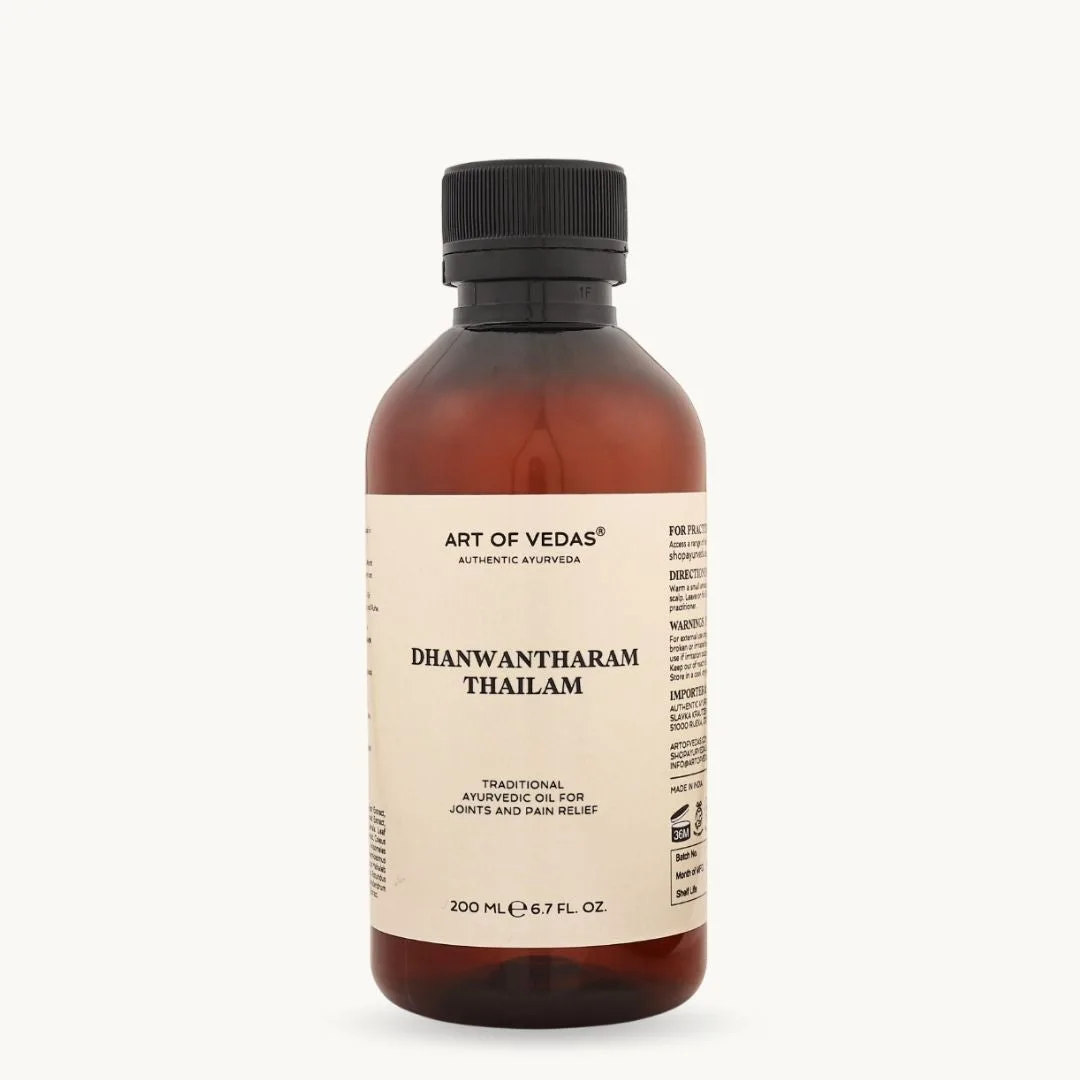
Dhanwantharam Thailam: The most versatile classical Shirodhara oil for general Vata conditions. The Ashtanga Hridayam describes Dhanwantharam as the foremost compound oil for Vata, suitable for the full range of Vata-dominant conditions. Recommended for general Shirodhara programmes for Vata and mixed Vata constitutions.
-
Brahmi Thailam: The primary classical Shirodhara oil where cognitive clarity, memory, and sleep support are the principal therapeutic intention. Brahmi's cooling Virya and Medhya properties, combined with the Shirodhara format, are described in classical texts as particularly effective for calming mental overactivity and supporting Dhi-Dhriti-Smriti (the three classical aspects of memory and cognition).
-
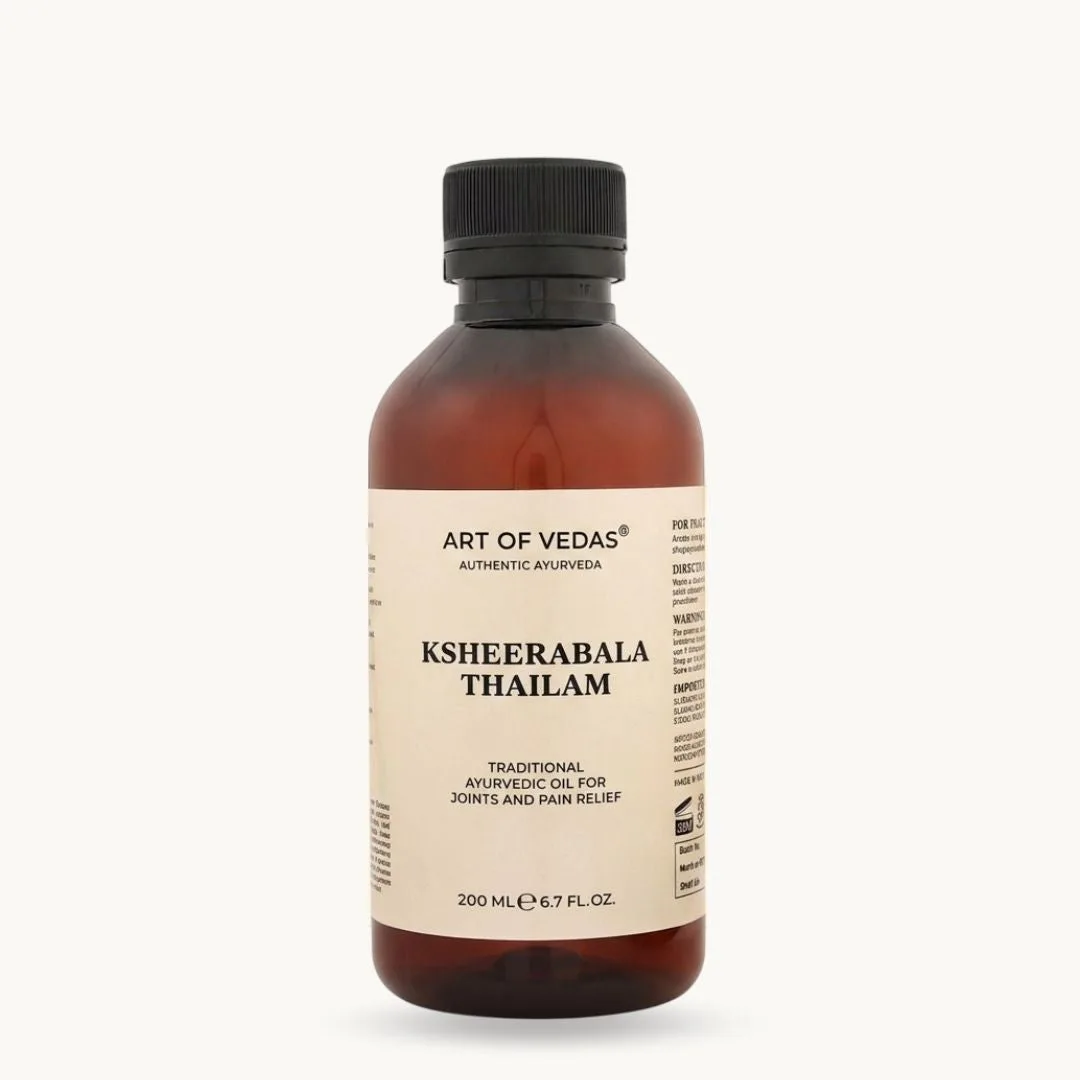
Ksheerabala Thailam: A triple-processed oil in sesame, Bala herb, and milk - cooling and moderating the warming sesame base. Particularly suitable for Vata-Pitta presentations and for patients with sensitive constitutions where Dhanwantharam's warming quality needs to be balanced.
Ksheeradhara: medicated milk stream
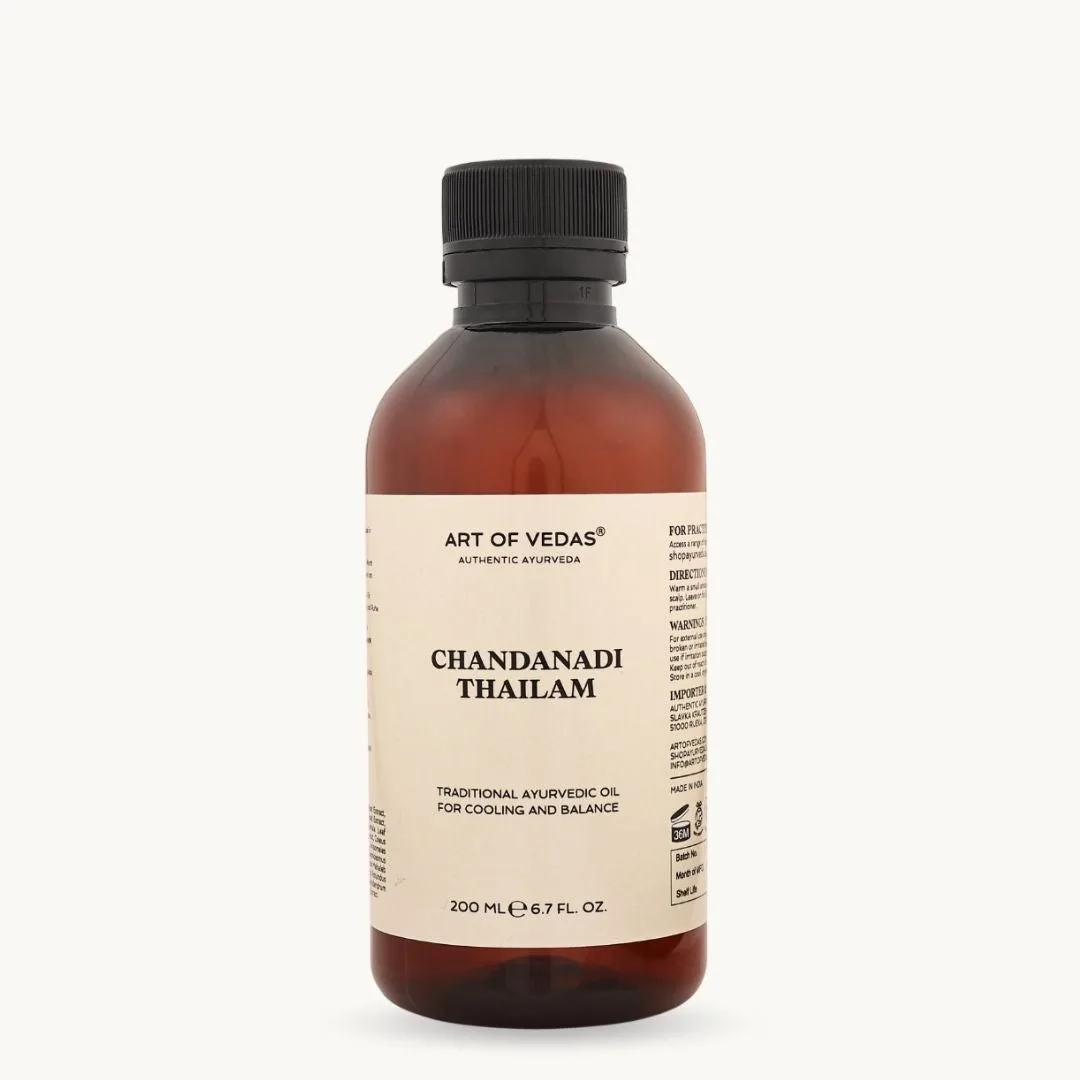
For Pitta-dominant conditions and for those with a heating constitution, Shirodhara with medicated milk (Ksheeradhara) is described in classical texts as the cooling alternative. Milk decoctions with Chandana (Sandalwood), Amalaki, and other cooling herbs are used. Our Chandanadi Thailam is the classical oil choice when a cooling Shirodhara is indicated.
Takradhara: medicated buttermilk stream
The most cooling Shirodhara format - classical medicated buttermilk prepared with Amalaki, Bhringaraj, and other cooling herbs. Described in classical texts specifically for intense Pitta aggravation with significant heat, inflammation, or scalp conditions. Less commonly performed in European practice due to the complexity of preparation.
Shirodhara equipment: the classical Dhara Patra
The classical Shirodhara vessel (Dhara Patra) is a brass or copper pot with a small hole in the base, suspended above the patient's head at a precise height (approximately 10 cm above the forehead, per classical description) and swung in a pendulum motion to create the characteristic rhythmic stream. The classical material is brass (Kansa alloy) - the same material described in Ayurvedic texts as having beneficial properties for therapeutic vessels, consistent with Ayurveda's broader use of copper and its alloys in therapeutic contexts.
Art of Vedas supplies professional brass Shirodhara vessels for clinical use. For enquiries about professional equipment and bulk Shirodhara oil supply, visit our B2B platform at shopayurveda.eu.
Shirodhara duration and programme structure
A single Shirodhara session typically runs for 40 to 60 minutes of active oil stream time, preceded by a short Abhyanga preparation of the head and neck. Classical Panchakarma programmes describe Shirodhara as part of a consecutive series - typically 7 to 14 consecutive days for a full therapeutic programme, or 3 to 5 sessions for a shorter wellness-focused series. A single Shirodhara session has a noticeable effect; the cumulative benefit described in classical texts builds across a consistent series.
Shirodhara is always preceded by Snehana (Abhyanga) and ideally followed by a brief rest period. The patient should be advised to avoid cold air, cold food, and mental exertion immediately after a session.
Shirodhara contraindications
Classical texts and contemporary clinical practice describe several contraindications that should be evaluated by the supervising Vaidya:
- Active fever or infection
- First trimester of pregnancy
- Severe acute mental health conditions requiring immediate medical intervention
- Very recent head injury
- Active sinusitis, severe nasal congestion, or open wounds on the scalp or forehead
Shirodhara in the broader Panchakarma context
Shirodhara most commonly forms part of a broader Panchakarma programme that may also include Abhyanga, Svedana (steam therapy), Nasya, and Basti. For the full classical Panchakarma framework, see our Panchakarma complete guide. For Nasya as the companion head treatment, see our Nasya guide. For the Basti procedures that complement Shirodhara in classical programmes, see our Basti guide.
The full range of classical Shirodhara oils is available in our Oils and Thailams collection. Professional enquiries: shopayurveda.eu.
Shirodhara is a classical Ayurvedic therapy that should be performed by a trained Ayurvedic practitioner. This guide is for educational and professional reference purposes. Art of Vedas products are personal care products and food supplements, not medicines.