Shirodhara Pot: Setting Up the Classical Ayurvedic Equipment
Shirodhara - the continuous pouring of warm oil onto the forehead - is among the most recognised and deeply effective practices in classical Ayurvedic therapy. Described in detail in the Ashtanga Hridayam and referenced across the Panchakarma tradition, Shirodhara is understood to work on the most subtle levels of the nervous system, the mind, and the sense organs simultaneously.
The key to Shirodhara - what distinguishes it from simply pouring oil - is the precision and continuity of the flow. The oil must fall in an unbroken stream, at a consistent temperature, onto a precise point of the forehead, and for a sustained duration. This is what the Shirodhara pot is designed to deliver. Understanding the equipment, how it is set up, and how it is used is the first step toward either receiving or administering this classical therapy correctly.
What Is the Shirodhara Pot?
The Shirodhara pot (also called Dhara pot, Shirodhara vessel, or Kindi in some regional traditions) is a vessel designed to hold warm medicated oil and release it in a continuous, controlled stream through a small hole or nozzle at its base. The vessel is suspended above the recipient's forehead - either from a stand, a frame attached to the treatment table, or a freestanding support - at a height calibrated to produce a steady, unbroken stream that lands precisely at the Sthapani marma point (between the eyebrows) or across the forehead depending on the intended movement.
Traditional Shirodhara pots are made from copper, clay, or other natural materials - the copper Shirodhara pot being the most widely used in classical Panchakarma centres. Copper has been used in Ayurvedic preparation vessels for thousands of years, attributed in the classical tradition with Pitta-addressing and purifying properties that complement the therapeutic intent of Shirodhara.
Explore the Art of Vedas Shirodhara Pot - made from traditional copper in the classical proportions used in Ayurvedic practice.
Shirodhara in Classical Ayurvedic Texts
Shirodhara belongs to a group of classical therapies involving the pouring of warm liquids collectively called Murdha Taila (oil treatments for the head). The Ashtanga Hridayam describes four classical Murdha Taila therapies: Shiroabhyanga (head massage), Shirobasti (oil retained on the head in a cap), Shirodhara (continuous pouring), and Shiropicchu (oil-soaked pad on the crown). Of these, Shirodhara is the most extensively described in the Panchakarma context and has the longest tradition of use Chikitsa.
Classical texts describe Shirodhara as particularly beneficial for conditions involving excess Vata and Pitta in the head region - the subtle agitation, heat, and instability that classically manifest as disturbed sleep, mental overstimulation, and excessive Pitta heat in the head and sense organs. The unbroken stream of warm oil landing on the forehead is understood to induce a profound settling of Prana Vata and Sadhaka Pitta - the sub-doshas governing sensory perception and mental processing respectively.
Classical Oils Used in Shirodhara
The selection of oil for Shirodhara follows the classical principle of matching the oil's properties to the patient's constitution and the specific therapeutic intention. The most commonly used preparations in classical Panchakarma Shirodhara practice:
-
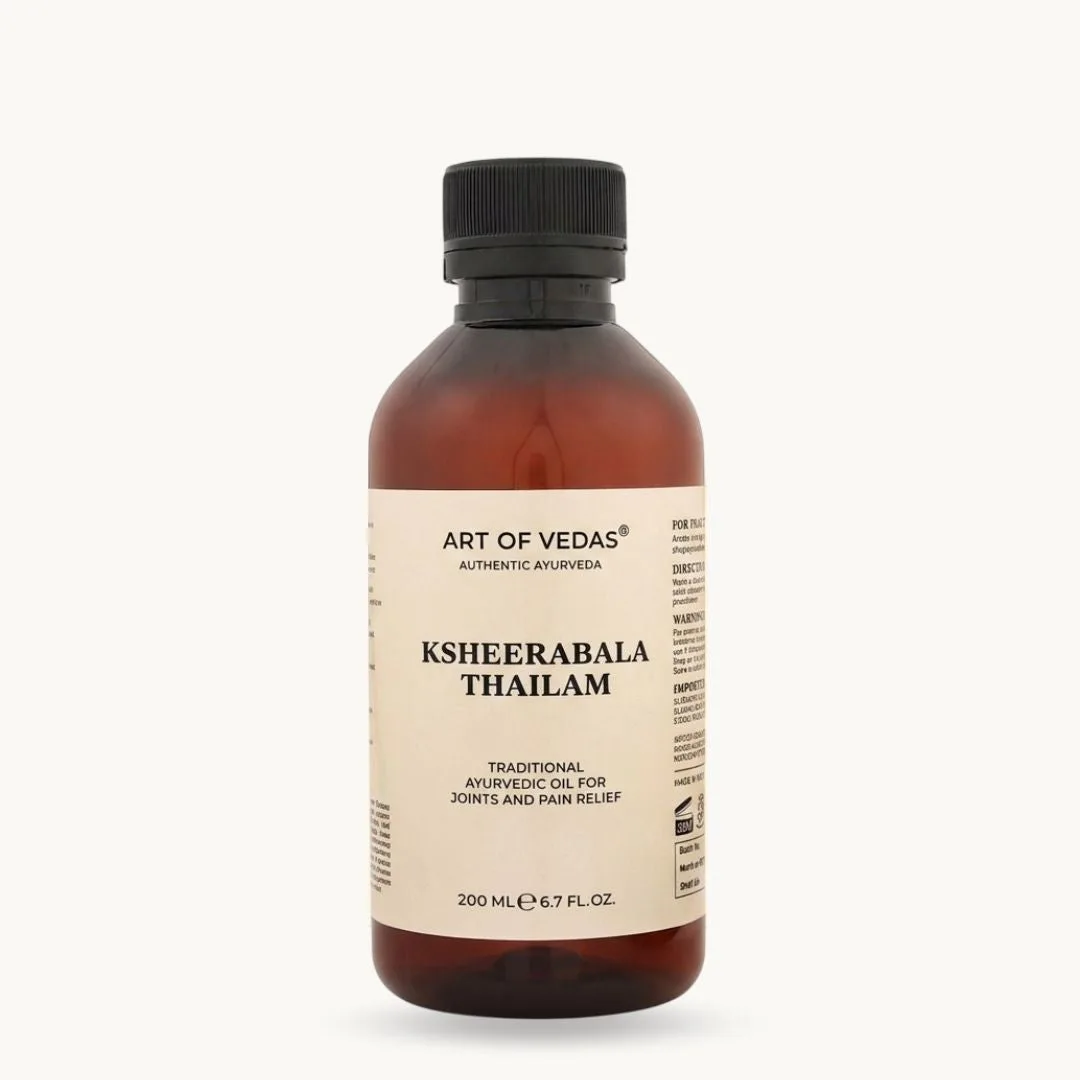
Ksheerabala Thailam: One of the most widely used classical Shirodhara oils - its milk processing gives it a deeply cooling and nourishing character, making it ideal for Vata-Pitta imbalances in the head region. See our Ksheerabala application guide.
-
Brahmi Thailam: The classical Medhya oil - used in Shirodhara where the intention is to support mental calm and clarity. See our Brahmi Thailam guide.
-
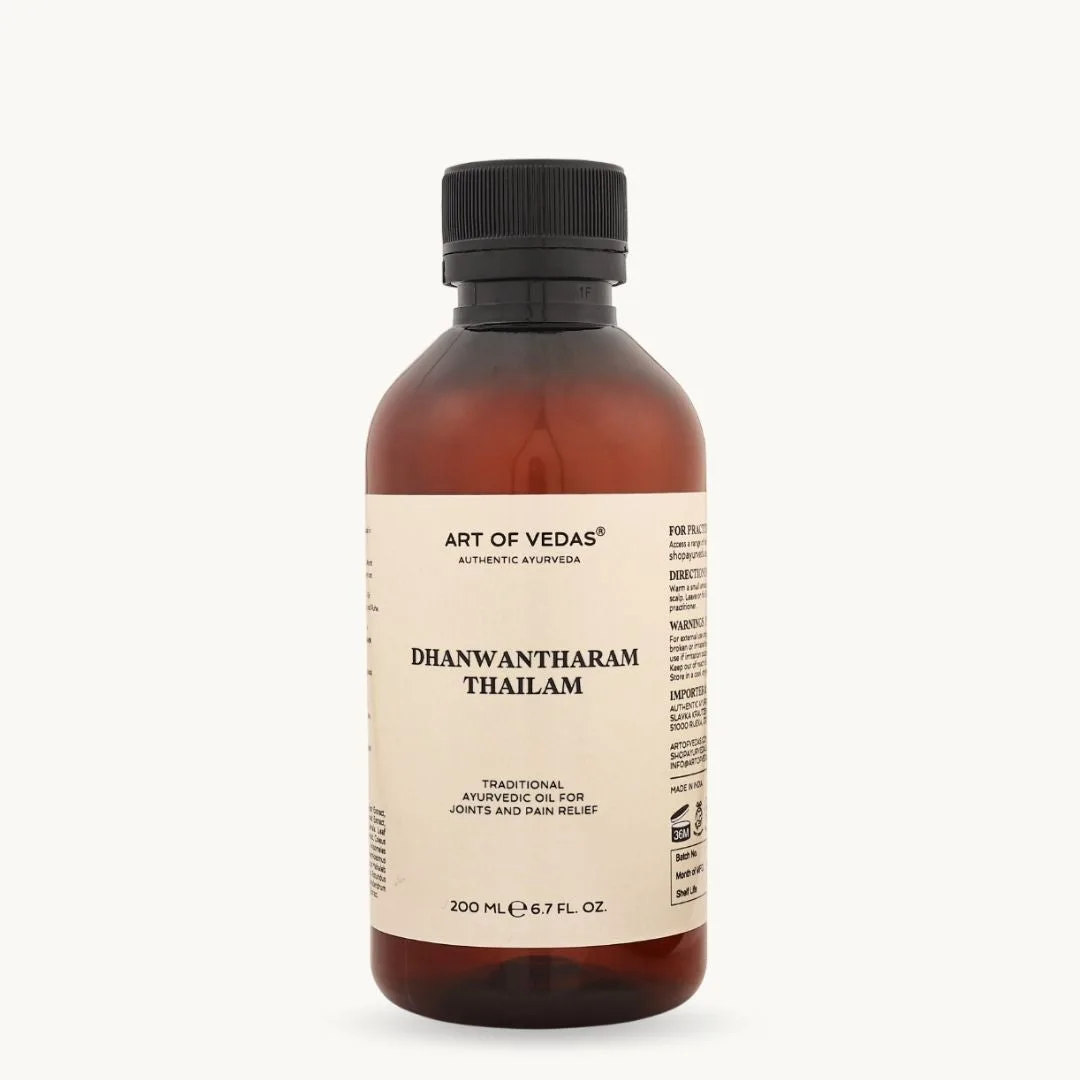
Dhanwantharam Thailam: For Vata-predominant presentations with additional musculoskeletal involvement. See our Dhanwantharam guide.
-
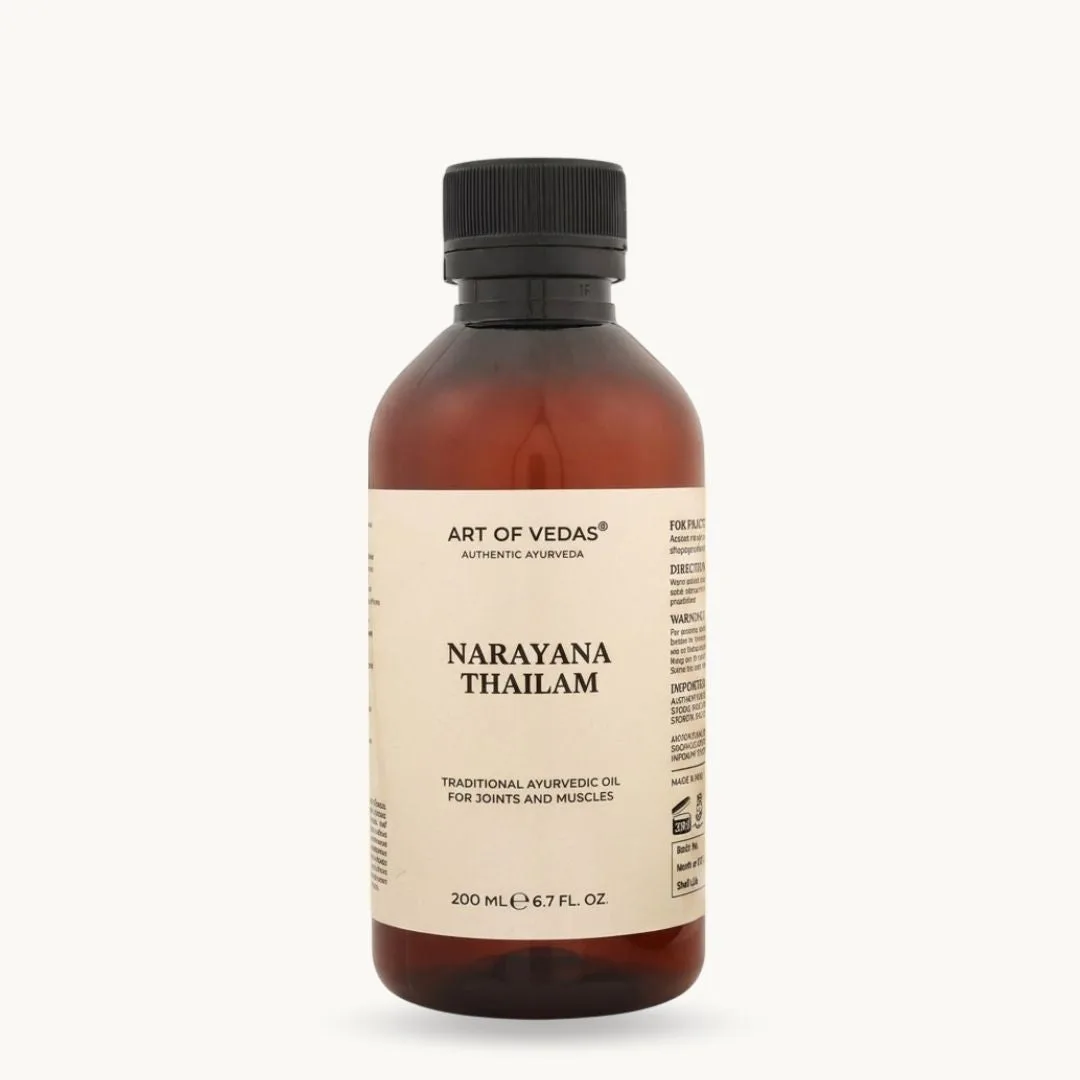
Narayana Thailam: For comprehensive Sarva Vata hara - where Vata is elevated broadly across the system. See our Narayana Thailam guide.
-
Takradhara (buttermilk) and Jaladhara (water/herbal decoction): Non-oil Shirodhara variants used in classical practice for specific Pitta-predominant conditions - not oil-based, but using the same pot and technique.
The oil is always warmed to a comfortable, consistent temperature - approximately body temperature or slightly above - before filling the pot. Maintaining this temperature throughout the session is one of the key practical requirements of authentic Shirodhara.
Setting Up the Shirodhara Pot: Step-by-Step
Equipment Required
- Shirodhara pot (copper, clay, or brass)
- Shirodhara stand or frame - positions the pot above the treatment table
- Treatment table with a head extension or hole for drainage
- Warm medicated oil - approximately 1.5 to 2 litres for a full session (the oil is typically recirculated during the session)
- Heating vessel to maintain oil temperature
- Collection vessel below the table to catch and recirculate the oil
- Soft cloth or cotton band to protect the eyes
Positioning the Pot
-
Height: The pot is positioned approximately eight to fifteen centimetres above the recipient's forehead. This height determines the width and impact of the stream - lower gives a narrower, more focused stream; higher creates a broader landing. The classical recommendation is a height that produces a steady stream without excessive force of impact.
-
Alignment: The nozzle of the pot should be centred directly above the Sthapani marma - the point between the eyebrows. The stream should land at the centre of the forehead and flow naturally toward the hairline.
-
Secure the stand: Ensure the stand is stable and will not shift during the session. The continuity of the stream - which the classical texts emphasise - depends entirely on the stability of the setup.
The Flow Rate
The nozzle or hole at the base of the Shirodhara pot regulates the flow rate. The classical ideal is a thin, unbroken stream - neither a drip nor a heavy pour. In clinical practice, the hole diameter is typically two to four millimetres. A properly calibrated Shirodhara pot should allow a pot of approximately 500ml to drain evenly over approximately ten to fifteen minutes.
Movement of the Stream
Classical Shirodhara can be administered in two modes:
-
Static (fixed point): The pot remains in a fixed position and the stream falls continuously on the Sthapani marma or a fixed point of the forehead. This is the most classical method, especially practice.
-
Oscillating (Chalana): The pot is gently swung side to side in a pendulum motion, creating a sweeping stream across the forehead from temple to temple. This method is used in specific classical protocols and is particularly effective for broader forehead coverage.
Maintaining Oil Temperature
The oil must remain consistently warm throughout the session - classical texts emphasise that cold or cooling oil during Shirodhara significantly reduces its therapeutic benefit and can aggravate Vata. Practical approaches include:
- Warming a large volume of oil in a heating vessel before the session and refilling the pot as needed
- In clinical settings, using a recirculating pump that keeps the collected oil warm and returns it to the pot continuously
- Monitoring temperature regularly and pausing briefly to add warm oil if the temperature drops noticeably
Duration and Classical Protocol
Classical Shirodhara protocols vary by tradition and school. General classical guidelines:
-
Duration per session: Thirty to forty-five minutes is the classical standard for a full Shirodhara treatment. Shorter protocols of fifteen to twenty minutes are used in modified or introductory contexts.
-
Course of treatment: In the Panchakarma context, Shirodhara is typically administered over a course of seven to fourteen consecutive days, as part of a broader preparatory (Purvakarma) protocol before the main Panchakarma therapies.
-
Preparation: The recipient typically receives a brief full-body Abhyanga before Shirodhara, followed by a period of rest in a warm, quiet environment after the treatment. The head should be covered after the session to protect the scalp from cool air.
-
Post-treatment rest: Classical texts recommend lying quietly for thirty minutes to one hour after Shirodhara before resuming activity. Exposure to direct sunlight, cold wind, or screens immediately after is classically contraindicated.
Shirodhara at Home: What Is and Is Not Classical Practice
In professional Panchakarma settings, Shirodhara is administered by a trained practitioner. Classical texts do not describe Shirodhara as a self-administered practice - the precision of stream placement, oil temperature management, and the post-treatment care all require a second person.
However, simplified and adapted versions of Shirodhara are increasingly practised in home wellness settings - typically using a smaller volume of oil, a shorter duration, and with the support of a partner rather than a clinical stand and table setup. These adapted practices draw on the classical principles of the therapy and, when performed with authentic medicated oils, can support the sense of calm and nervous system settling that Shirodhara is known for.
The Art of Vedas Shirodhara Pot is designed for both professional and home use - suitable for the full clinical protocol in a Panchakarma setting and for adapted home practice with a partner.
Shirodhara and the Ajna Marma
One of the classical explanations for the profound effect of Shirodhara involves the Sthapani marma - the Marma point between the eyebrows sometimes associated with the Ajna chakra area. This point is considered one of the most significant Marma points in the entire body, governing the flow of Prana between the physical and subtle bodies and the regulation of the sense organs.
The continuous, warm, rhythmic sensation of the oil stream landing precisely at this point is understood in classical terms to deeply settle the functioning of this marma - releasing accumulated tension, heat, and instability in the head region and allowing the Prana Vata and Sadhaka Pitta to return to their natural, balanced state. This classical explanation aligns directly with the observed and reported experience of Shirodhara recipients - a profound sense of stillness, groundedness, and release during and after the treatment.
Frequently Asked Questions
What is a Shirodhara pot used for?
A Shirodhara pot is the vessel used to deliver the continuous, controlled stream of warm oil that defines Shirodhara therapy. It holds the medicated oil and releases it through a nozzle at its base in an unbroken stream onto the recipient's forehead. The pot is suspended above the treatment table from a stand and is central to the correct administration of authentic Shirodhara.
What material is the Shirodhara pot made from?
Traditional Shirodhara pots are made from copper, clay, or brass. Copper is the most widely used material in classical Panchakarma settings - attributed with Pitta-addressing and purifying properties in the Ayurvedic tradition, and practical for its ability to retain and evenly distribute the temperature of the warm oil.
How much oil is needed for Shirodhara?
A full classical Shirodhara session of thirty to forty-five minutes typically uses 1.5 to 2 litres of oil. In clinical practice, the oil is collected after flowing from the forehead, rewarmed, and recirculated back into the pot. For home practice with shorter protocols, smaller volumes - 500ml to 1 litre - are commonly used.
Can Shirodhara be done at home?
Classical Shirodhara as described in Ayurvedic texts is a professionally administered therapy. Adapted home versions, using a Shirodhara pot, a partner, authentic medicated oil, and a shorter duration, can draw meaningfully on the classical principles of the practice. The Art of Vedas Shirodhara Pot is designed for both professional and adapted home use.
Which oil is best for Shirodhara?
The most widely used classical Shirodhara oils are Ksheerabala Thailam (for Vata-Pitta conditions) and Brahmi Thailam (for mental calm and Medhya support). The correct oil is selected based on the individual's constitution and the specific therapeutic intention. A qualified Ayurvedic practitioner can guide the appropriate selection for a course of Shirodhara.
How long does a Shirodhara session last?
Classical Shirodhara sessions last thirty to forty-five minutes. In a standard Panchakarma course, treatments are given daily over seven to fourteen consecutive days. Shorter sessions of fifteen to twenty minutes are used in adapted or introductory protocols.
Complete Your Shirodhara Setup
The Art of Vedas Shirodhara Pot is crafted from traditional copper in the proportions used in classical Ayurvedic Panchakarma centres. For the oil, pair with Ksheerabala Thailam or Brahmi Thailam - the two most classically appropriate preparations for Shirodhara practice.
For the broader context of Ayurvedic head care, see our Brahmi Thailam guide, our Kansa scalp massager guide, and our guide to the Ayurvedic daily routine. Browse all Kansa and traditional tools at Art of Vedas Kansa Rituals.
This article is for informational and educational purposes only. Shirodhara is a classical Ayurvedic therapy and, when used as a therapeutic treatment, should be administered by a qualified Ayurvedic practitioner. The information provided here is intended for educational context and does not constitute medical advice. The preparations and tools described are not intended to diagnose, treat, cure, or prevent any medical condition.