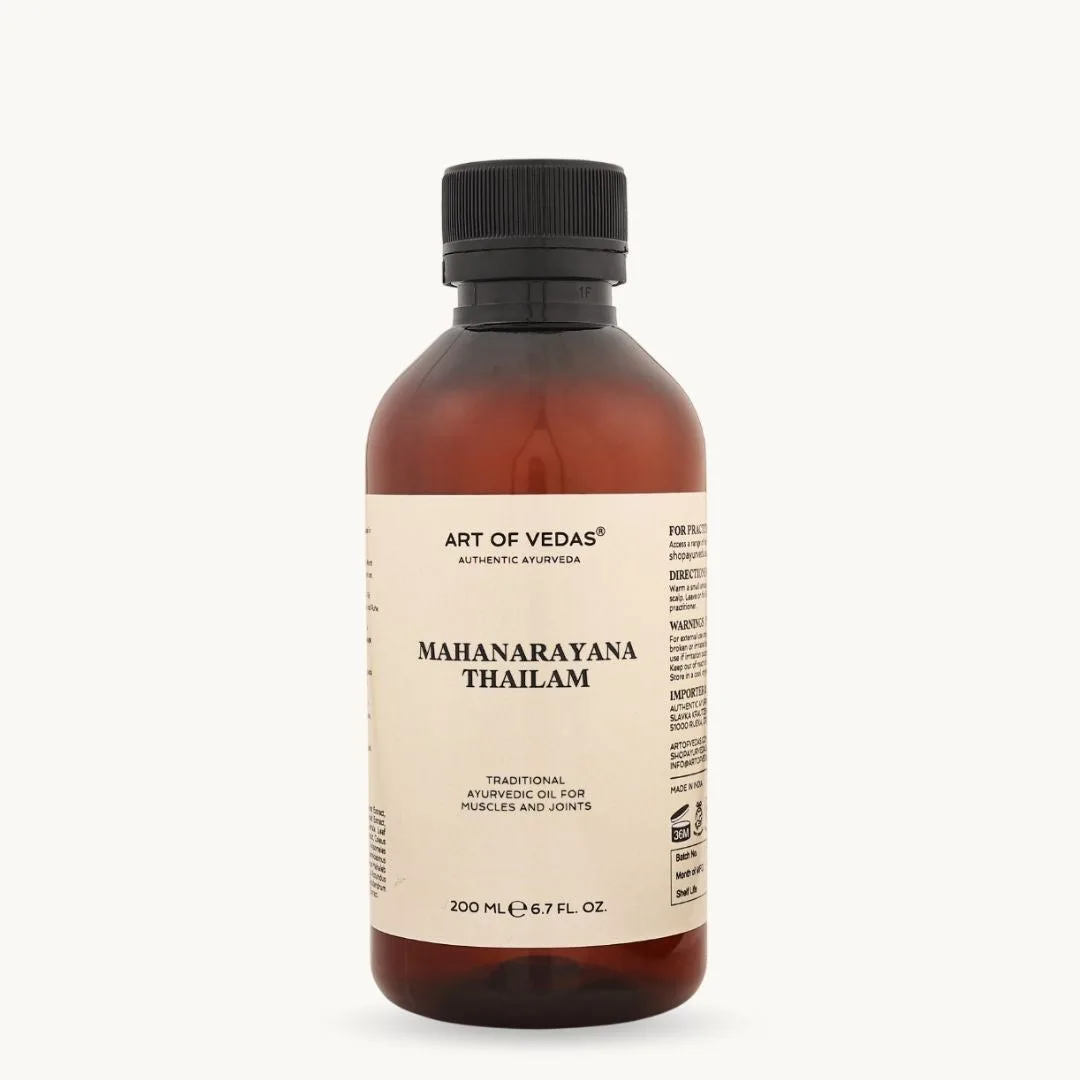
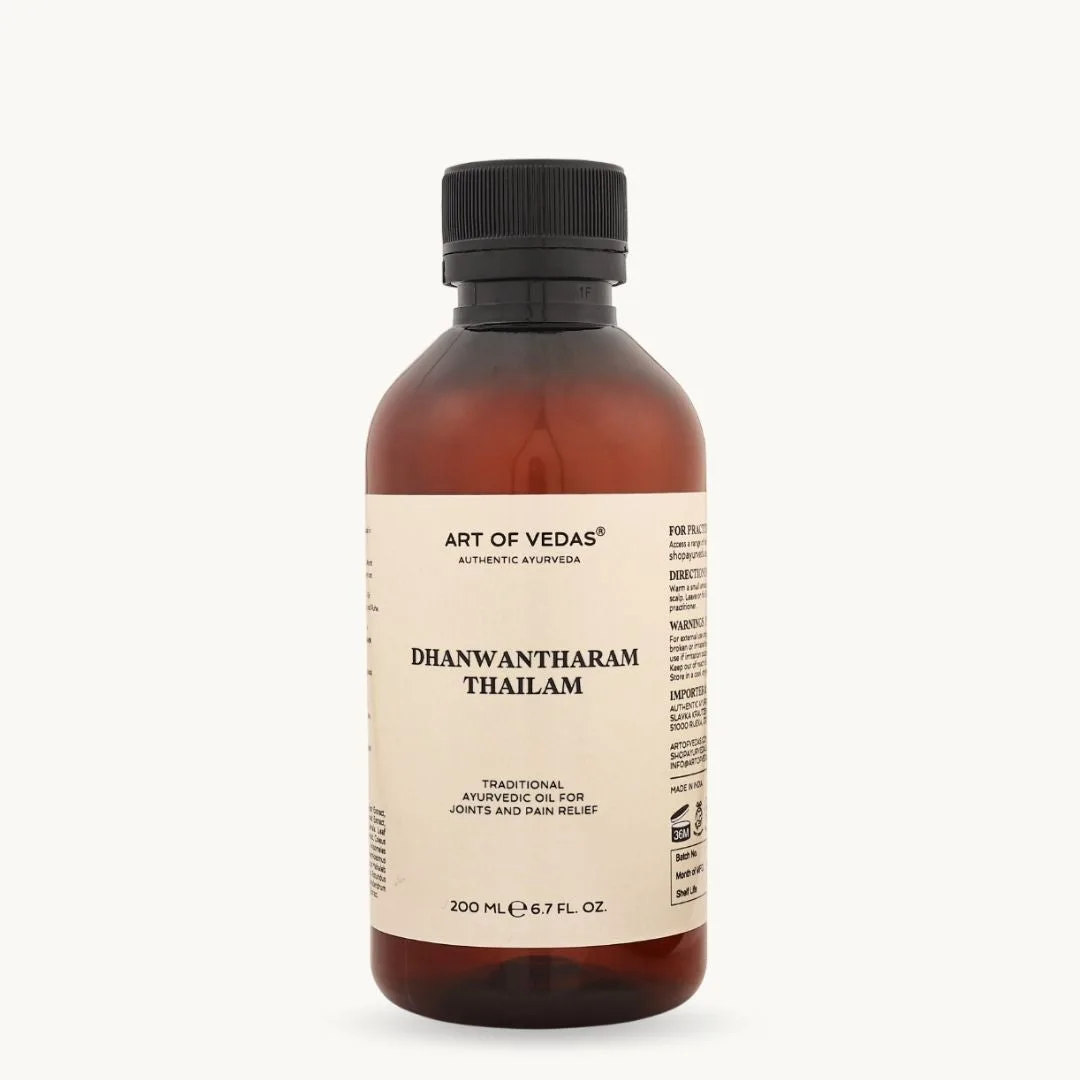
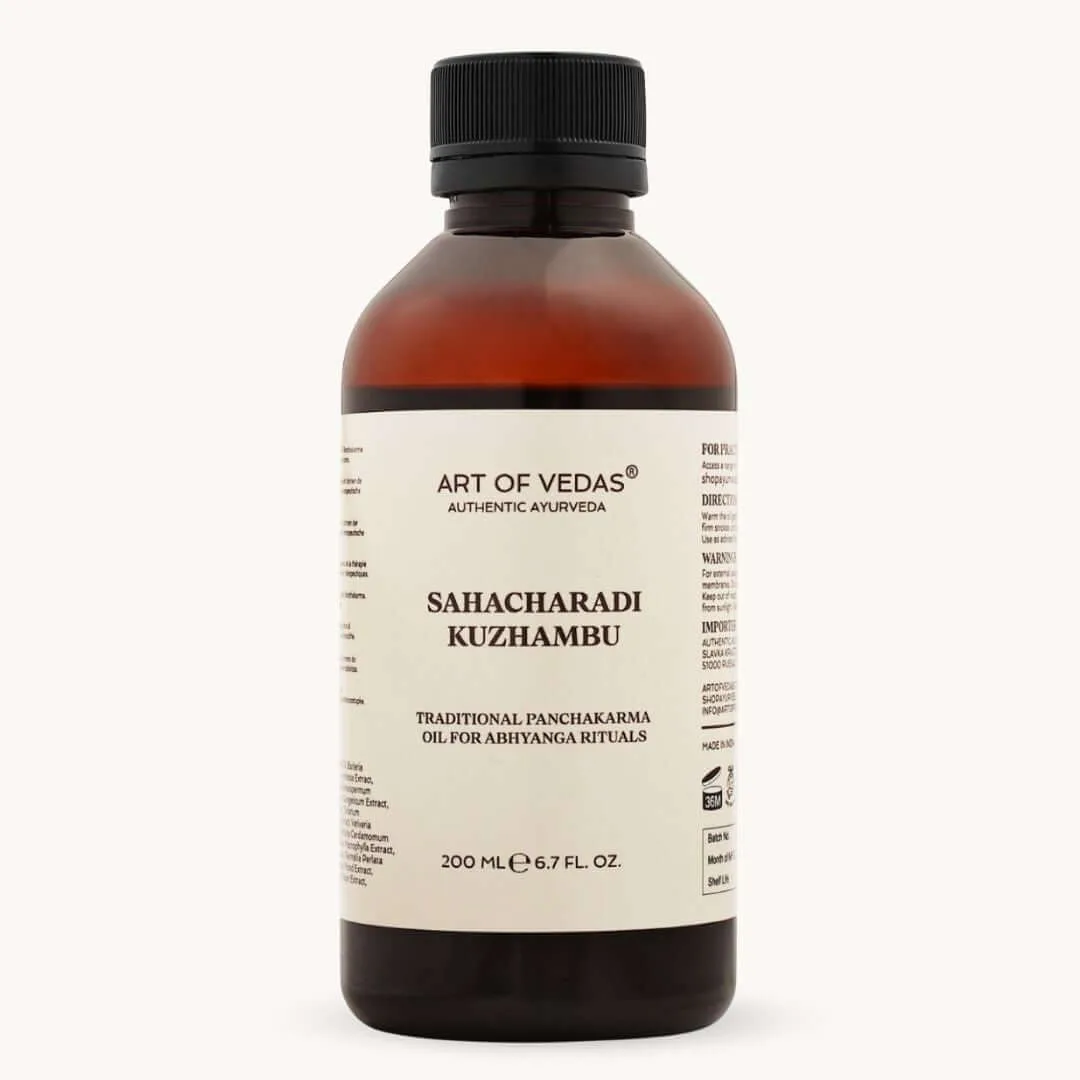
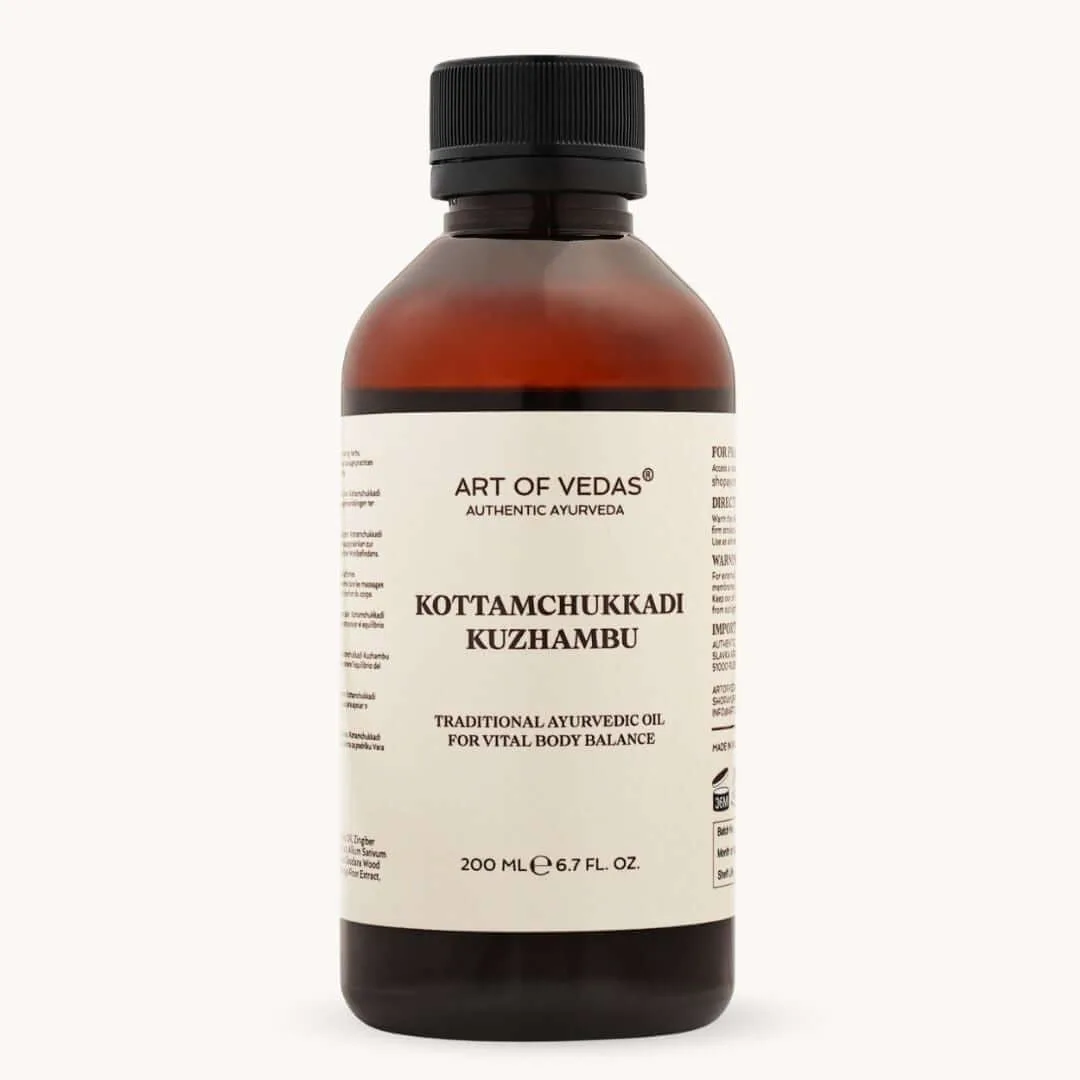
How to Store Thailam, Kuzhambu and Ghritham at Home
In short: Keep a Thailam, a Kuzhambu and a Ghritham closed, cool and dry, in a cupboard or on a shaded shelf, away from direct sunlight and the radiator, and touch them only with clean, dry hands or a clean, dry spoon. An oil that turns cloudy or thick in a cold room is behaving normally and clears again at room temperature.
How to store Thailam is one of the first questions people ask once the bottle has arrived, and the answer is short: closed, cool, dry and out of the sun. The same four words apply to a Kuzhambu and to a Ghritham. This guide takes each product in turn and explains what to do when an oil thickens in winter.
How do you store a Thailam at home?
Keep the bottle upright with the cap closed, in a cool and dry place away from direct sunlight. A bathroom cupboard or a shaded shelf is a good home for it, as long as it does not stand beside the radiator or on a sunny windowsill.
A Thailam is cooked until the water has left the oil, in the classical Sneha Paka process, and that is why a finished Thailam keeps well. Your part at home is simply not to put water back in. Three habits take care of that:
Close the cap after every use. A closed bottle keeps steam, splashes and dust out.
Pour, do not dip. Pour the oil into a dry palm or a small bowl instead of putting wet fingers to the neck of the bottle.
Choose shade. A cupboard is better than an open shelf in full light, and any place is better than the edge of the bath in the sun.
Is the bathroom a good place for an Ayurvedic oil?
Yes, provided the bottle stays closed and stands away from heat and direct sun. The bathroom is where most people use their oil, so it is the practical place to keep it.
A bathroom is steamy for a short while each day, and a closed cap is all the bottle needs during that time. The two places to avoid are the shelf directly above or beside the radiator, where the oil is warmed again and again, and the windowsill, where it stands in daylight for hours. If your bathroom has no shaded spot, a bedroom cupboard does the job equally well.
What should you do when a Thailam turns cloudy or thick?
Nothing needs to be done, because it is normal for an oil to thicken or turn cloudy in a cold room. Leave the closed bottle at room temperature and the oil becomes clear and fluid again.
This is something you notice in an unheated bathroom in winter or after a parcel has spent a cold night in a delivery van. The oil has not changed; it is only cold. Do not place the bottle on the radiator and do not heat the bottle in any other way.
Warming oil for Abhyanga
Many people like their oil warm for Abhyanga. Pour the amount you need into a small bowl and warm the bowl in warm water. Do not heat the bottle itself.
How do you store a Kuzhambu?
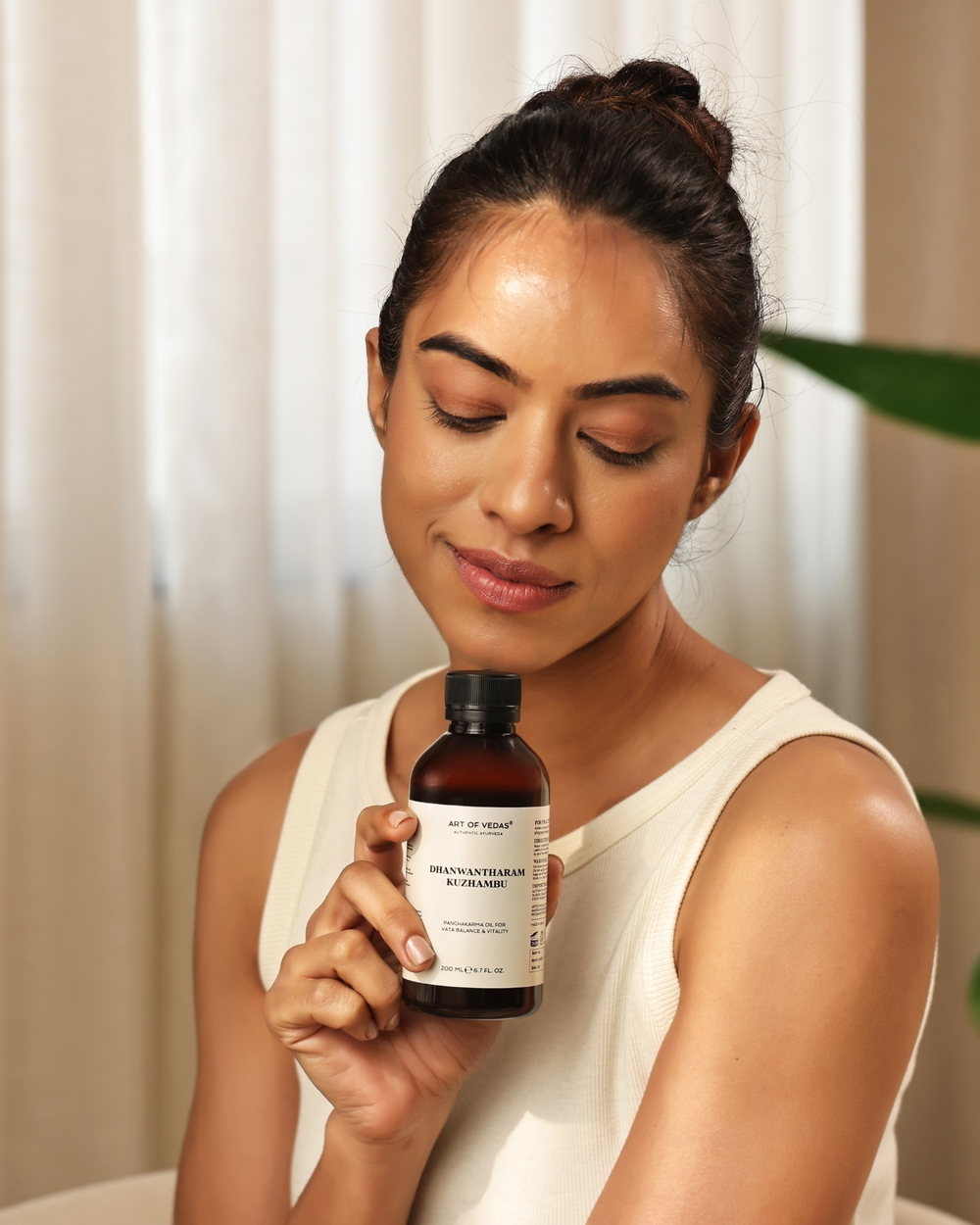
Store a Kuzhambu exactly as you store a Thailam: cap closed, cool, dry and away from direct sunlight. A cupboard or a shaded shelf is the right place.
Art of Vedas Kuzhambus come in 200 ml food-grade PET bottles. Like any oil, a Kuzhambu may thicken or look cloudy in a cold room, and it clears again at room temperature. Pour it into a dry palm or a small bowl, close the cap. You will find them all in the Kuzhambu collection.
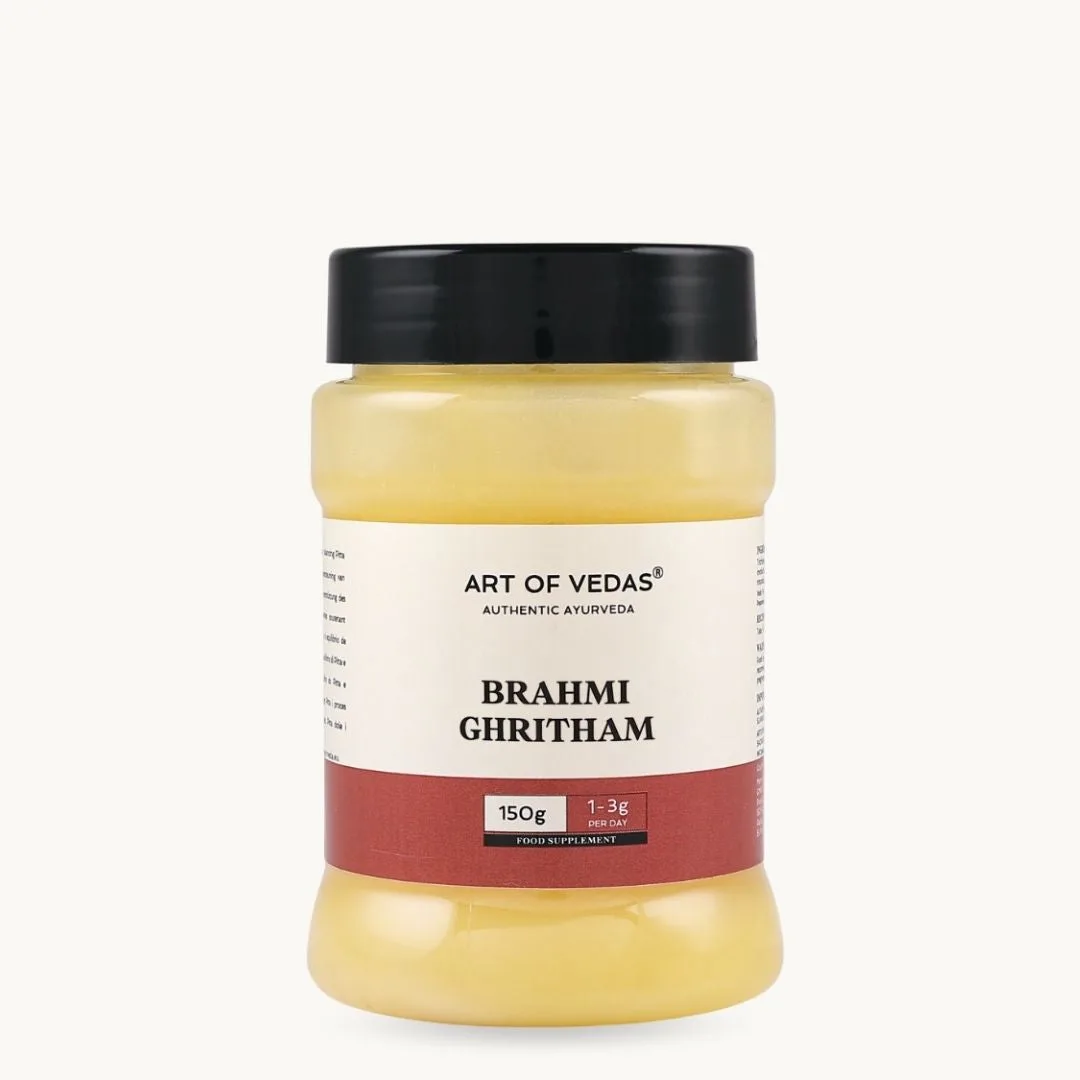
Keep the jar closed in a cool, dry kitchen cupboard away from direct sunlight, and always take the Ghritham out with a clean, dry spoon. Do not keep it next to the cooker or the kettle.
Art of Vedas Ghrithams come in 150 g food-grade PET jars. The spoon matters more than anything else here: a wet spoon, or one that has just been in a cup or a plate, brings water and crumbs into the jar. Close the lid straight after use. A Ghritham becomes firmer in a cool room and softer in a warm one, which is normal. See the Ghritham collection for the range, and the guide to the shelf life of Ayurvedic oils and Ghritham for how to read the date on the jar.
Storage at a glance
Product
Where to keep it
Avoid
Thailam
Bathroom cupboard or shaded shelf, cap closed
Sun, the radiator, wet fingers at the bottle neck
Kuzhambu
Cupboard or shaded shelf, cap closed
Sun, the radiator, heating the bottle
Ghritham
Cool, dry kitchen cupboard, lid closed
The cooker, sunlight, a wet or used spoon
Oil for Abhyanga
Today's portion in a small bowl, warmed in warm water
Warming the whole bottle
Why is a PET bottle practical for oil used in the bathroom?
A PET bottle is shatterproof and light, which matters in a room with a tiled floor, bare feet and oily hands. If it slips, you pick it up again.
PET is the clear, light plastic used for edible oils and drinks. It is not made with BPA and needs no plasticisers, and it is widely recycled under resin code 1. The quality team behind our oils confirms that the shelf life and quality of the oil are the same in PET as in glass, so nothing is given up for the convenience. Glass is fully inert and recyclable too; it is simply heavy and it breaks, which is less welcome beside the bath. The comparison is set out in PET or glass for Ayurvedic oils, and the practical side is covered in packaging weight and recycling.
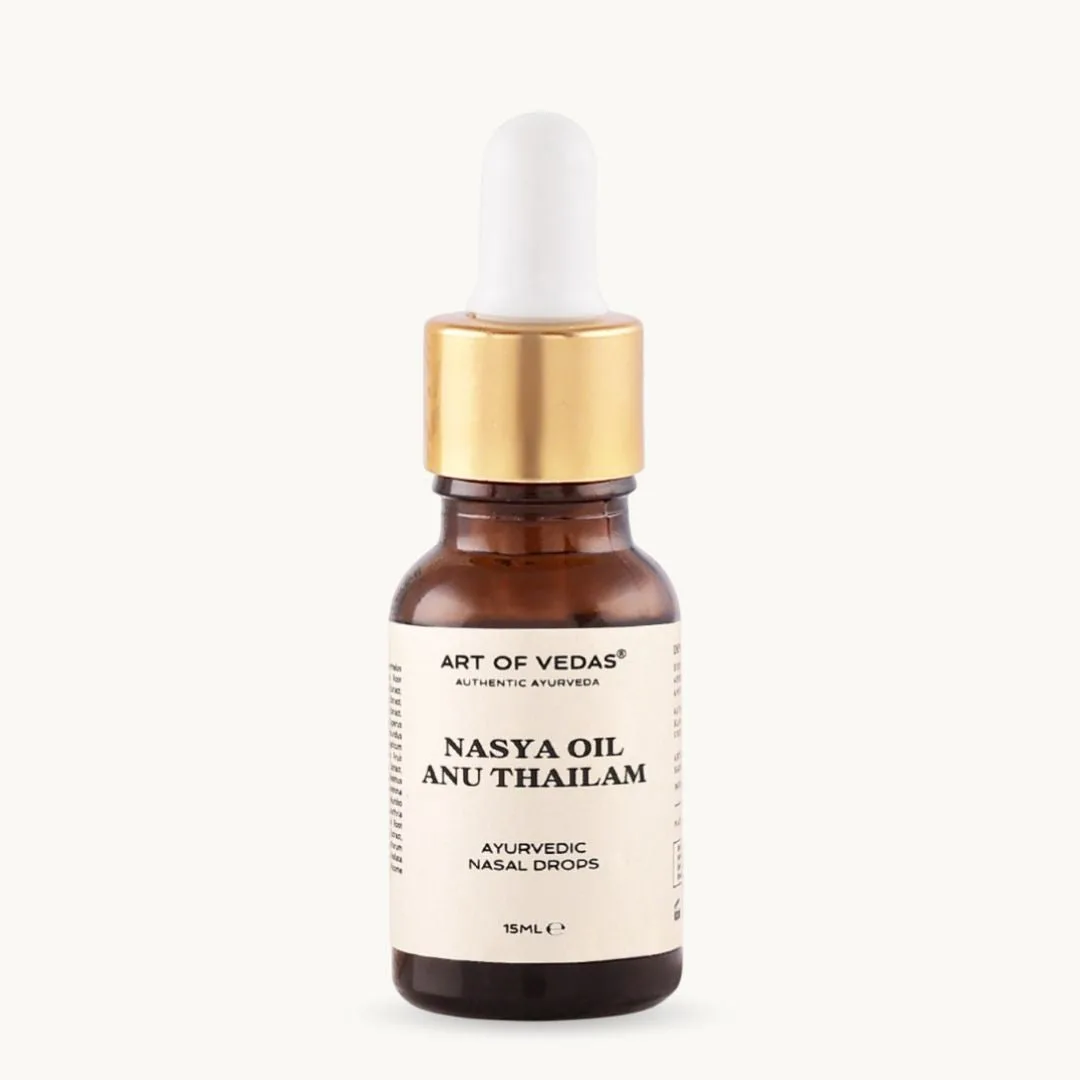
The small oils used by the drop are the exception. They are dosed with a dropper, and glass suits a dropper bottle, as explained in why Nasya oil is in glass. Store them in the same way: closed, cool, dry and out of the sun. The whole range can be found from the Art of Vedas home page.
Thailams and Kuzhambus are for external use only. Ghrithams are food supplements and do not replace a varied diet.
Join the list to be the first to know when Art of Vedas launches in India.
By subscribing you agree to receive marketing emails from Art of Vedas. You can unsubscribe at any time.
You are on the list. We will let you know when Art of Vedas launches in India.
------
Art of Vedas
Customer Care
Before we begin
Share your details so our team can reply by email within 24 hours if your question needs a personal answer.
We use your details only to reply to your enquiry. We never share them with third parties.
Leave your message here and the Art of Vedas team will reply by email. Please do not share sensitive personal or payment details.
Your privacy
We use essential cookies to run the shop: your cart, checkout and session. With your consent we also use privacy-friendly, anonymous analytics to understand how the site is used. We never sell your data. Privacy policy
Your privacy
Essential
Required for the shop to function: cart, checkout and security. Always active.
Always on
Analytics
Anonymous, cookieless statistics that help us improve the site. No personal data, no tracking across other websites.
Marketing
Cookies that measure our advertising and show more relevant ads, including via Google. None are set without your consent.