Namaskar India · Art of Vedas is coming to India
Art of Vedas

Shelf Life of Ayurvedic Oils and Ghritham: What the Date Means

In short: Every Art of Vedas Thailam, Kuzhambu and Ghritham carries its own best before date, printed on the bottle or jar, and that date applies to the container exactly as it is sold. A glass bottle would not make the oil keep longer; what matters after opening is that you keep it closed, cool, dry and out of direct sunlight.

The shelf life of Ayurvedic oils is usually asked in one of three forms: how long does the bottle keep, where is the date, and would it last longer in glass. This guide answers all three for the classical oils and Ghrithams sold by Art of Vedas. It gives no general figure, and that is deliberate: the date that counts is the one printed on the container in your hand.

How long does a Thailam, Kuzhambu or Ghritham keep?

It keeps until the best before date printed on its own bottle or jar. That date is set for the individual product and applies to the container as sold, so the reliable answer is always on the pack and never in a general rule.

There is a reason why a classical oil keeps well in the first place. A Thailam is cooked until the water has left the oil, a method known in the classical texts as Sneha Paka. What remains at the end of the cooking is oil that carries the herbs, without the water it started with. That is why a finished Thailam is a stable product by nature, and it is explained in more detail in what keeps a Thailam fresh.

Where do you find the date on the bottle or jar?

The best before date is printed on every bottle and every jar. Look at the container itself and not at the shipping box or the invoice, because the date belongs to that one container.

It is worth reading the date when the parcel arrives. If you keep several oils at home, a simple habit helps: place the bottle with the earliest date at the front and use it first.

Would the oil last longer in glass?

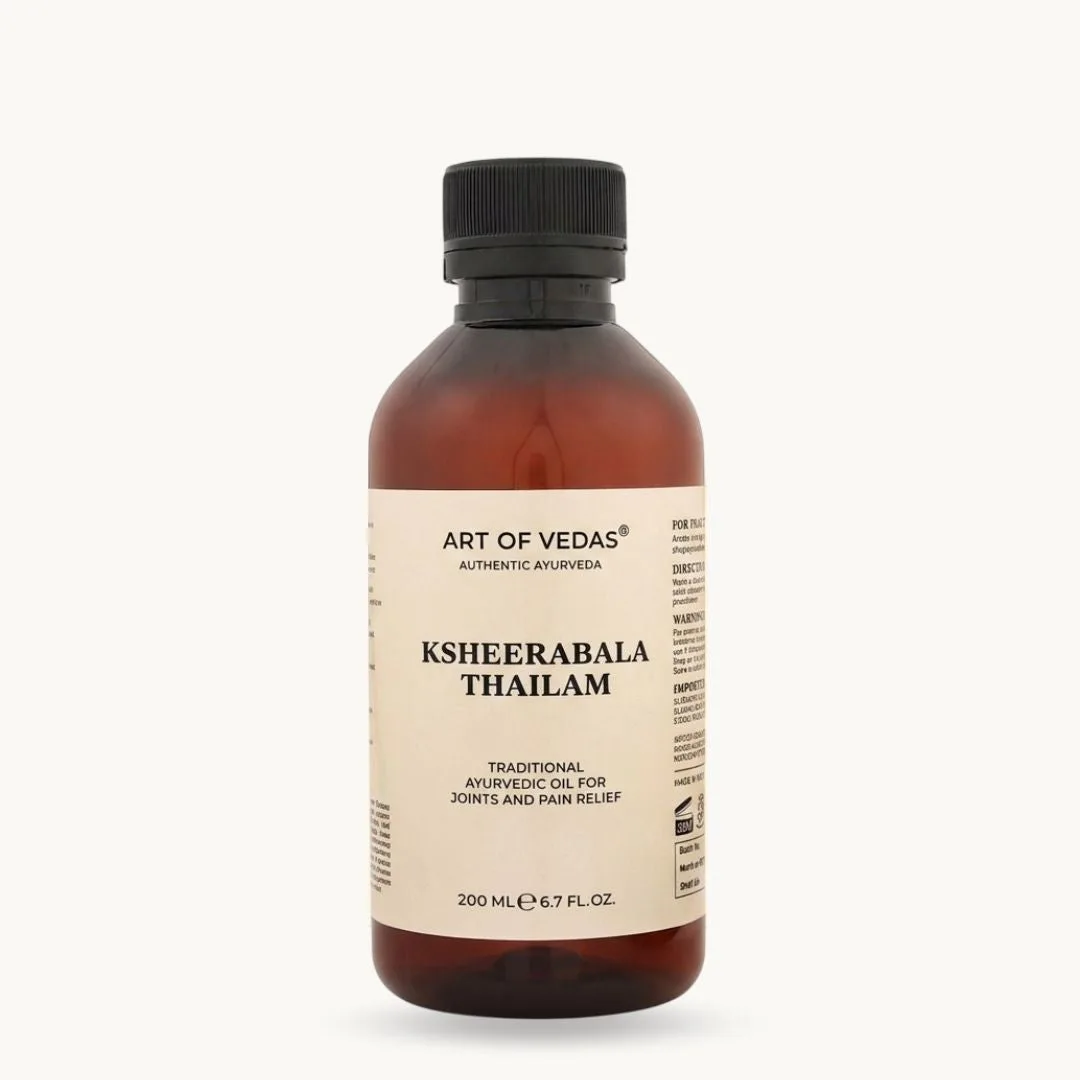
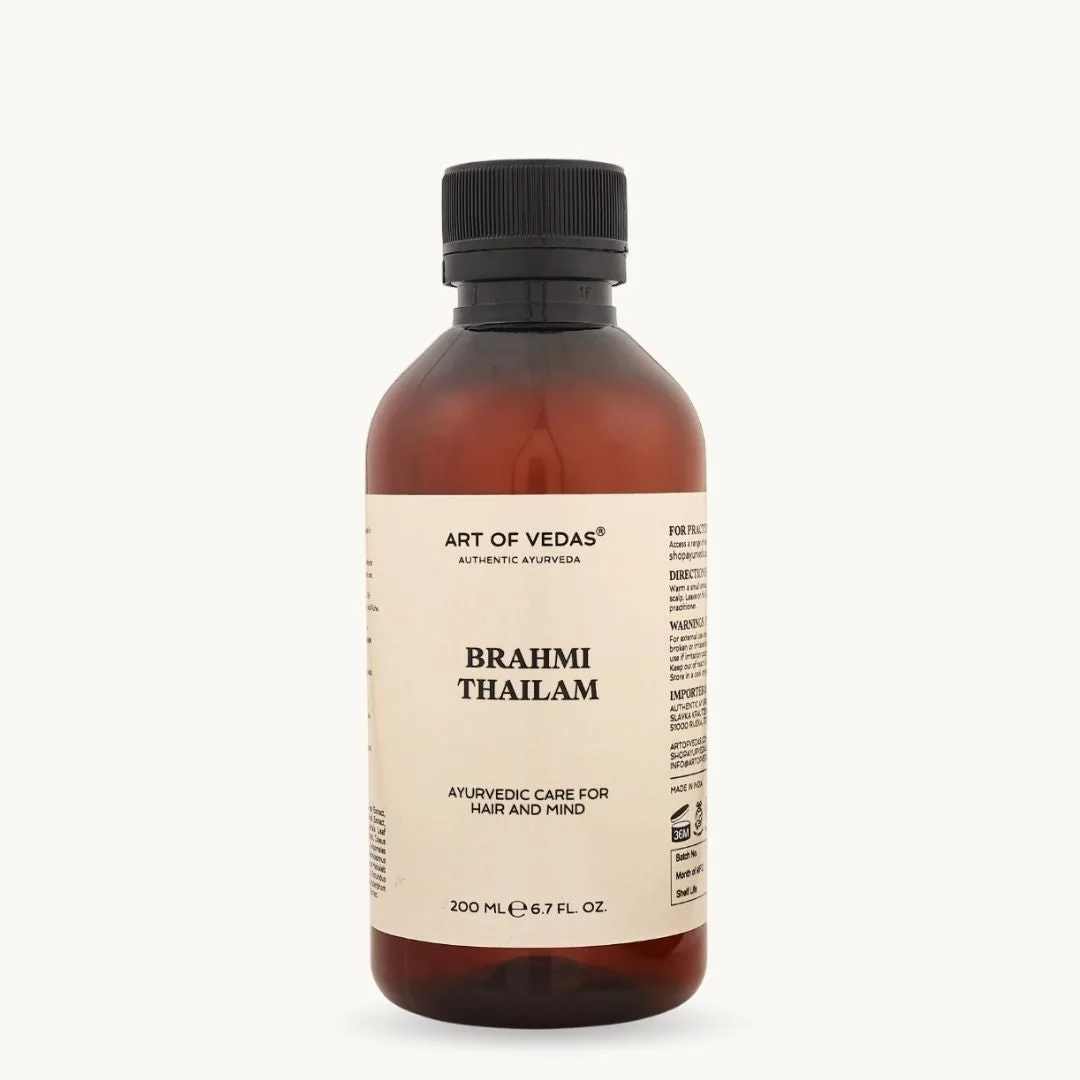
No. The quality team behind our oils confirms that the shelf life and the quality of the oil are the same in PET as in glass. The date printed on the bottle is the date for that bottle as sold, and a glass bottle would carry the same one.

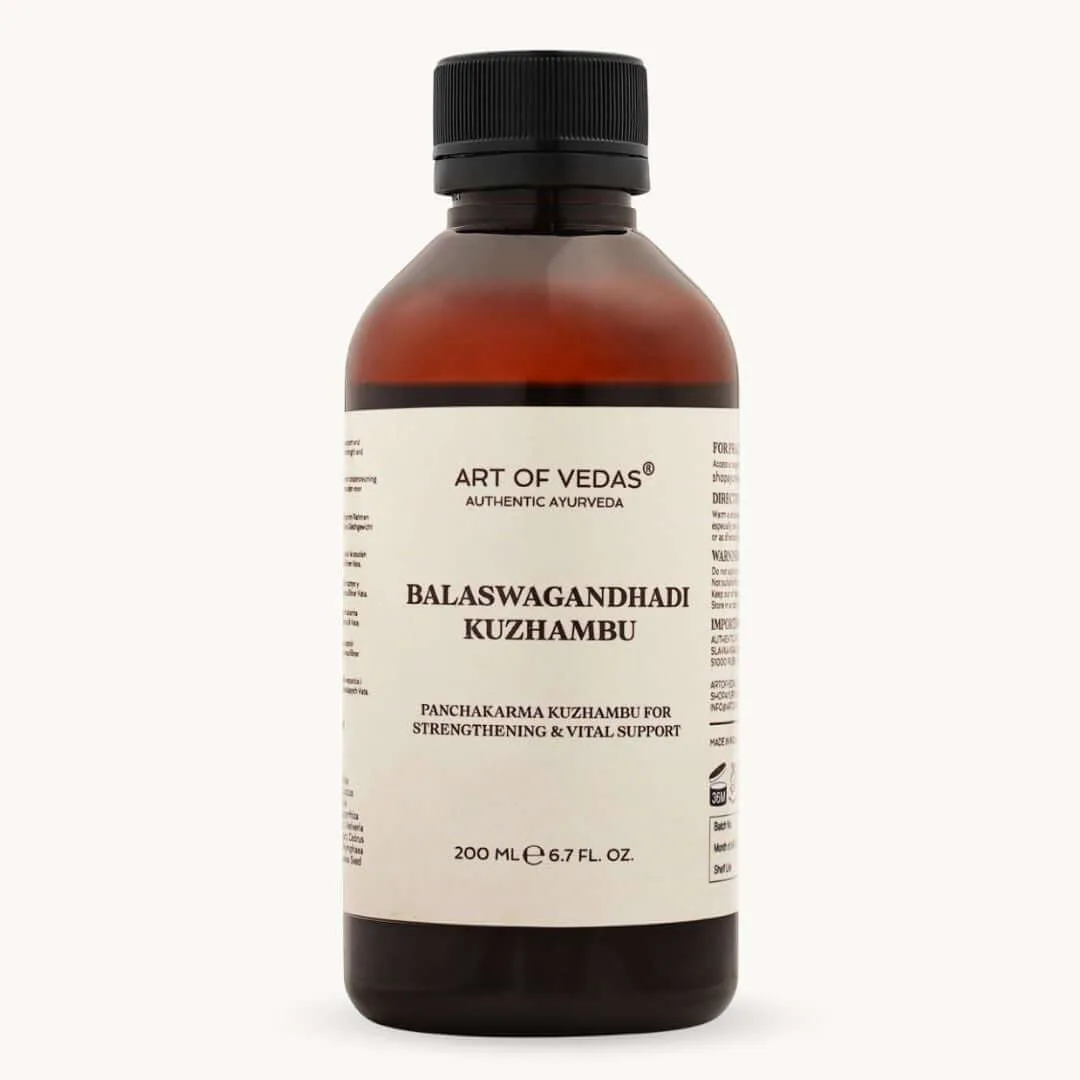
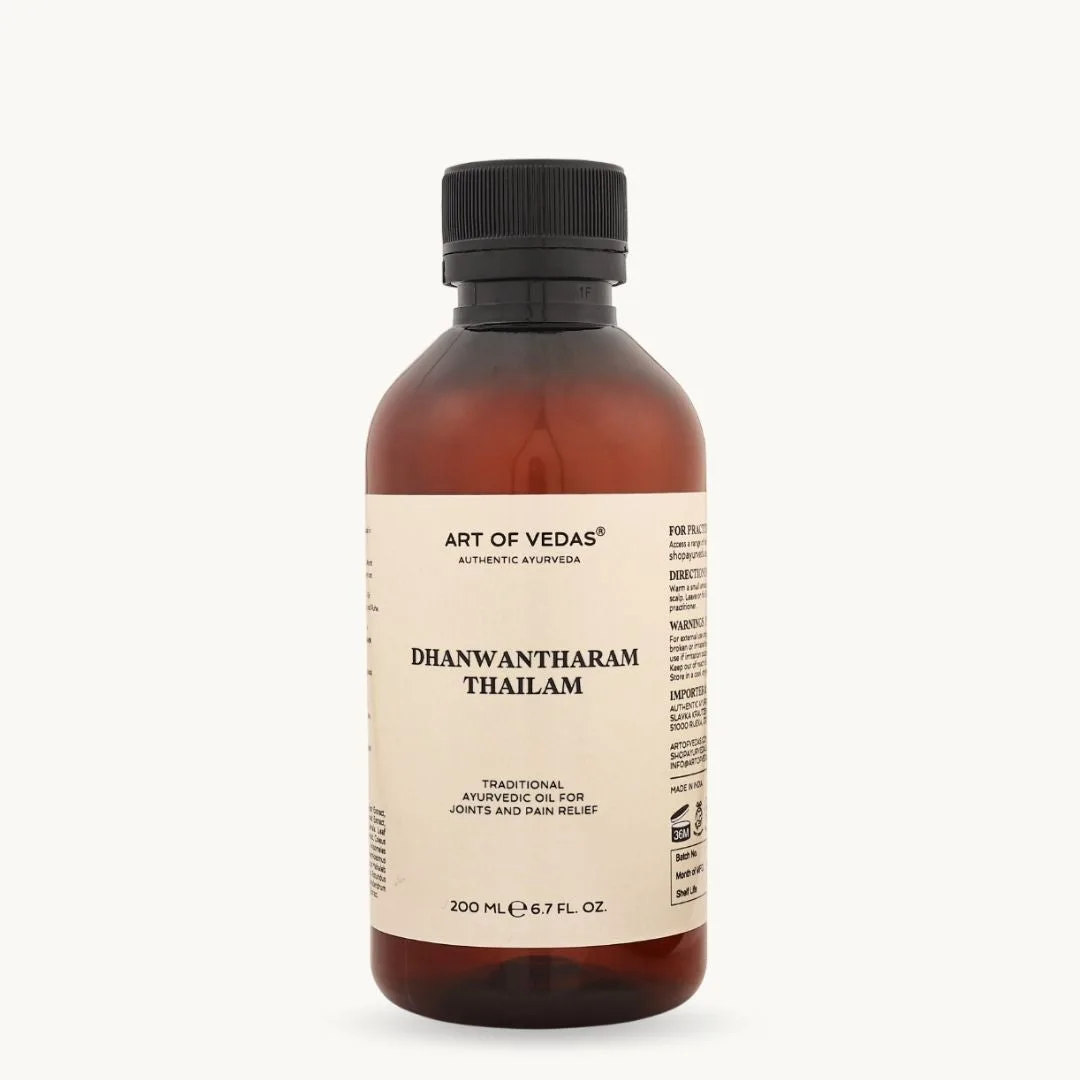
Art of Vedas bottles its Thailams in 200 ml and 450 ml, its Kuzhambus in 200 ml and its Dosha massage oils in food-grade PET. PET is the clear, light plastic used for edible oils and drinks. It is shatterproof, it is not made with BPA and it needs no plasticisers. In India, where classical Ayurvedic oils come from, PET has been normal practice for these oils for many years.

Glass deserves a fair word. It is fully inert, it is recyclable and many people like how it looks and feels. It is also heavy and it breaks. Glass is not required for the quality of an Ayurvedic oil and does not make the oil stronger; it mainly changes the appearance, the weight and the cost of shipping. The full comparison is in PET or glass for Ayurvedic oils, and the practical side of weight and recycling is covered in packaging weight and recycling.
What does "best before" mean once the bottle is open?

The best before date describes the container as sold, closed and stored as advised. Once you open it, the printed date remains the limit, and how you keep the bottle decides how well the oil holds its quality until then.

Opening a bottle changes one thing: from that moment its care is in your hands. Four habits are enough.

  • Keep it closed. Put the cap back on firmly after each use.
  • Keep it cool and dry. A cupboard is a better place than a windowsill or a shelf above a radiator.
  • Keep it away from direct sunlight. A clear bottle shows the oil well, and for the same reason it belongs in the shade.
  • Keep water out. The water was cooked out of the oil for a reason, so pour with dry hands and do not let water run into the bottle.

For an Abhyanga, pour the amount you need into a small bowl and warm that portion only. The bottle then stays closed and cool between uses. More detail for each product type is in how to store Thailam, Kuzhambu and Ghritham.

How do you keep a Ghritham jar in good condition?

Keep the jar closed, cool and dry, away from direct sunlight, and take the Ghritham out with a clean, dry spoon. The best before date is printed on the jar and applies to that jar as sold.

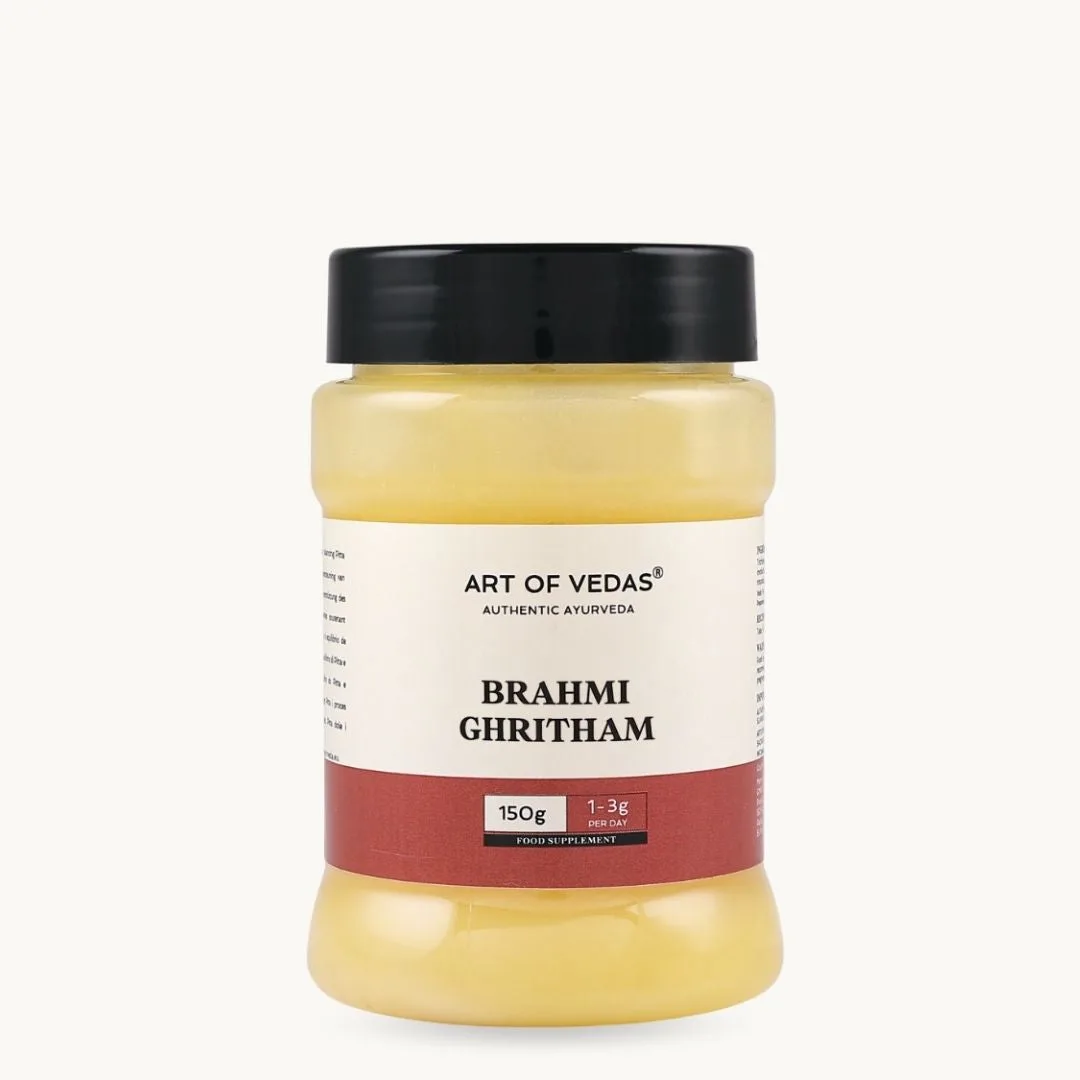
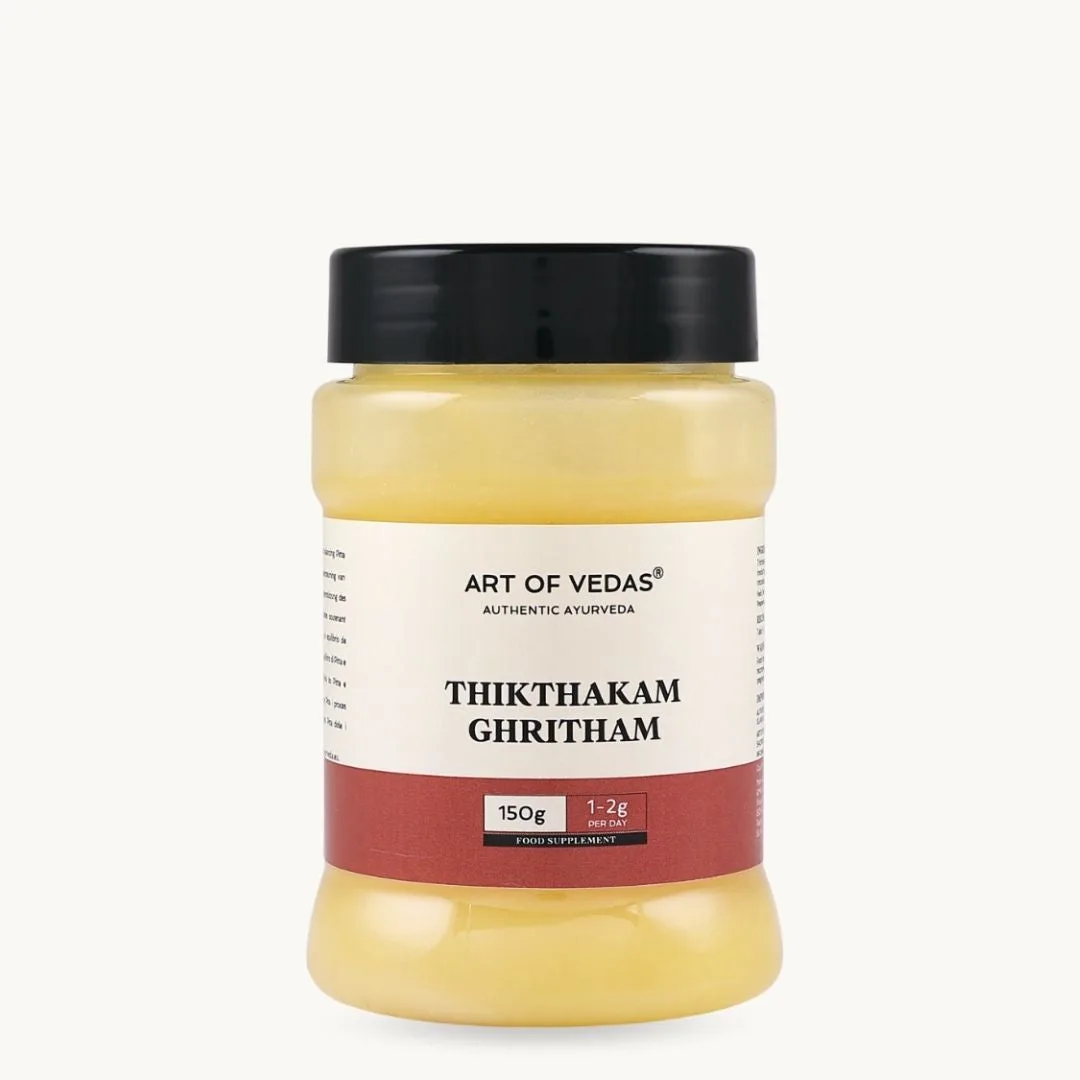
Art of Vedas Ghrithams come in food-grade PET jars of 150 g. A jar is opened more widely and more often than a bottle, which is why the spoon matters: a wet spoon or a spoon that has been used for something else brings into the jar exactly what the preparation was made without.

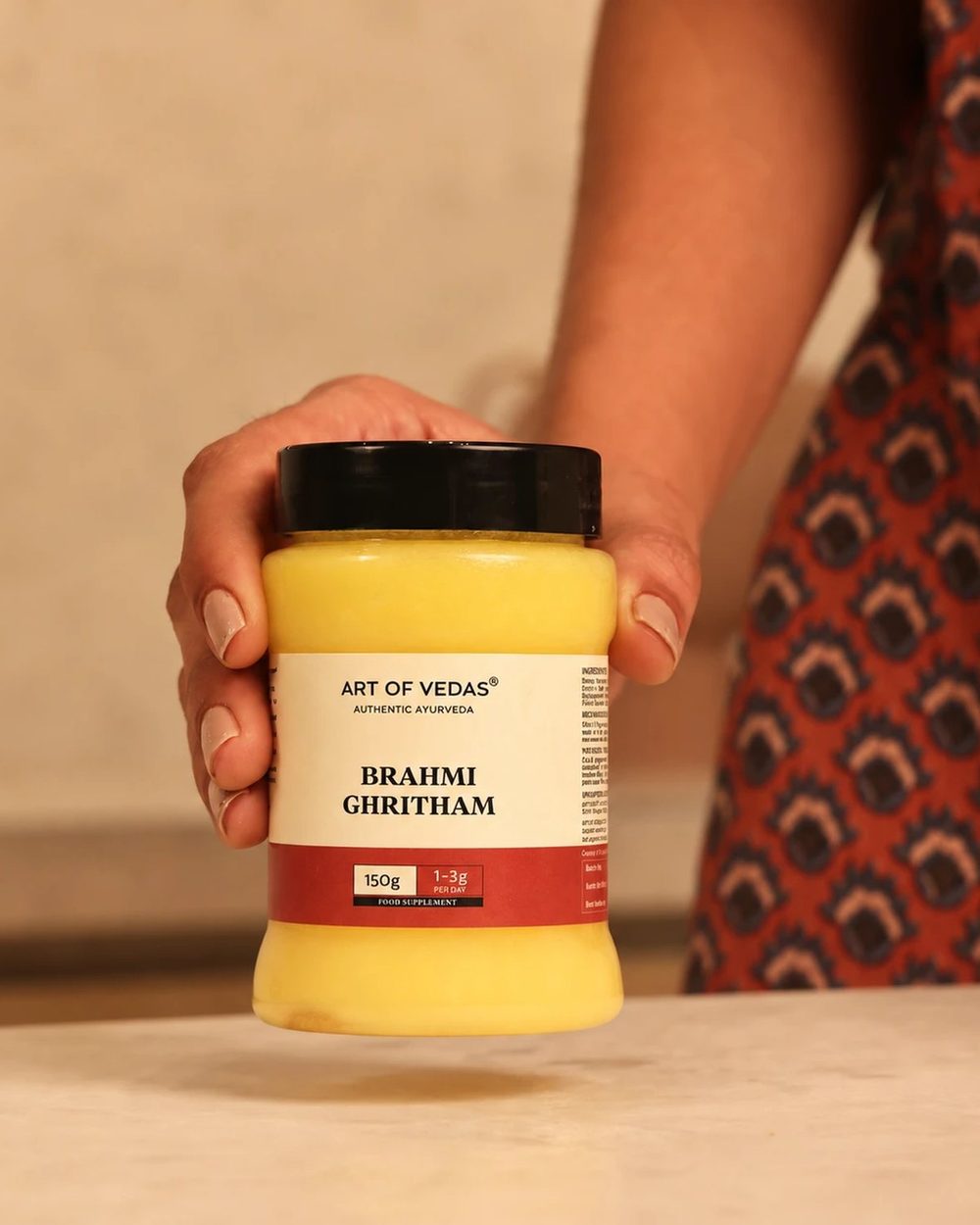
Art of Vedas Brahmi Ghritham in its food-grade PET jar, with the lid closed and the label facing forward

Where to find the date and how to keep it

The table below brings the four product types together. The small oils that are used by the drop are the one group in glass, and the reason is the dropper and not the shelf life.

ProductContainerWhere the date isKeep it like this
ThailamFood-grade PET bottle, 200 ml or 450 mlPrinted on the bottleClosed, cool, dry, out of direct sunlight
KuzhambuFood-grade PET bottle, 200 mlPrinted on the bottleClosed, cool, dry, out of direct sunlight
GhrithamFood-grade PET jar, 150 gPrinted on the jarLid closed, cool and dry, clean and dry spoon
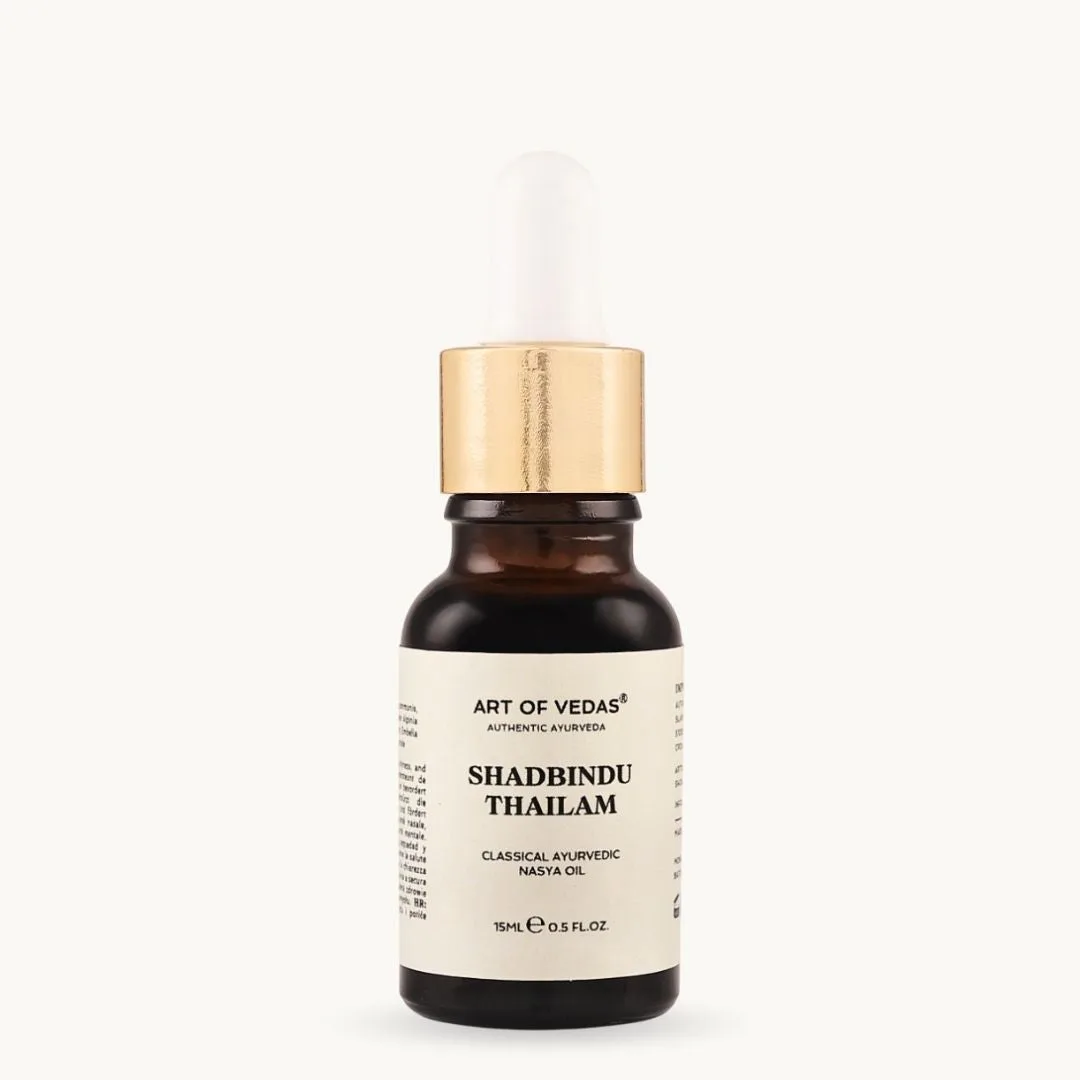
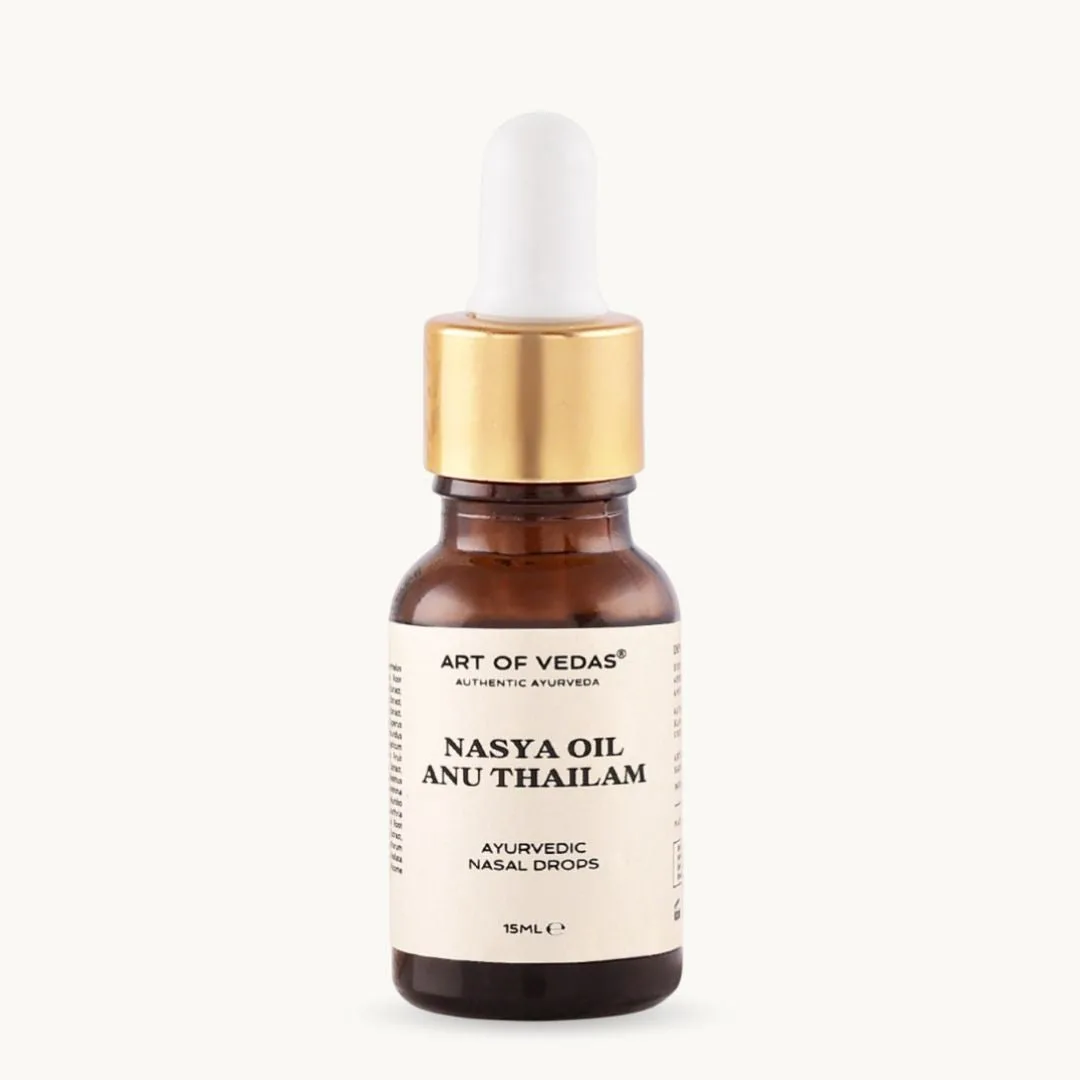
Small dropper oils (Nasya Oil, Shadbindu Thailam, Dhanwantharam 101 Avarthy)Glass dropper bottle, 15 ml to 50 mlPrinted on the bottleClosed, cool, dry, out of direct sunlight; keep the dropper clean

These small oils are tiny volumes of concentrated oil, dosed drop by drop, and glass suits a dropper bottle. It is a choice of format and not a ranking of quality, as described in why Nasya Oil is in glass.

Thailams and Kuzhambus are for external use only. Ghrithams are food supplements and do not replace a varied diet.

Shop the ritual

Related Art of Vedas products

Selected from the article theme to help continue the ritual in the shop.

View all: Ayurveda Thailams