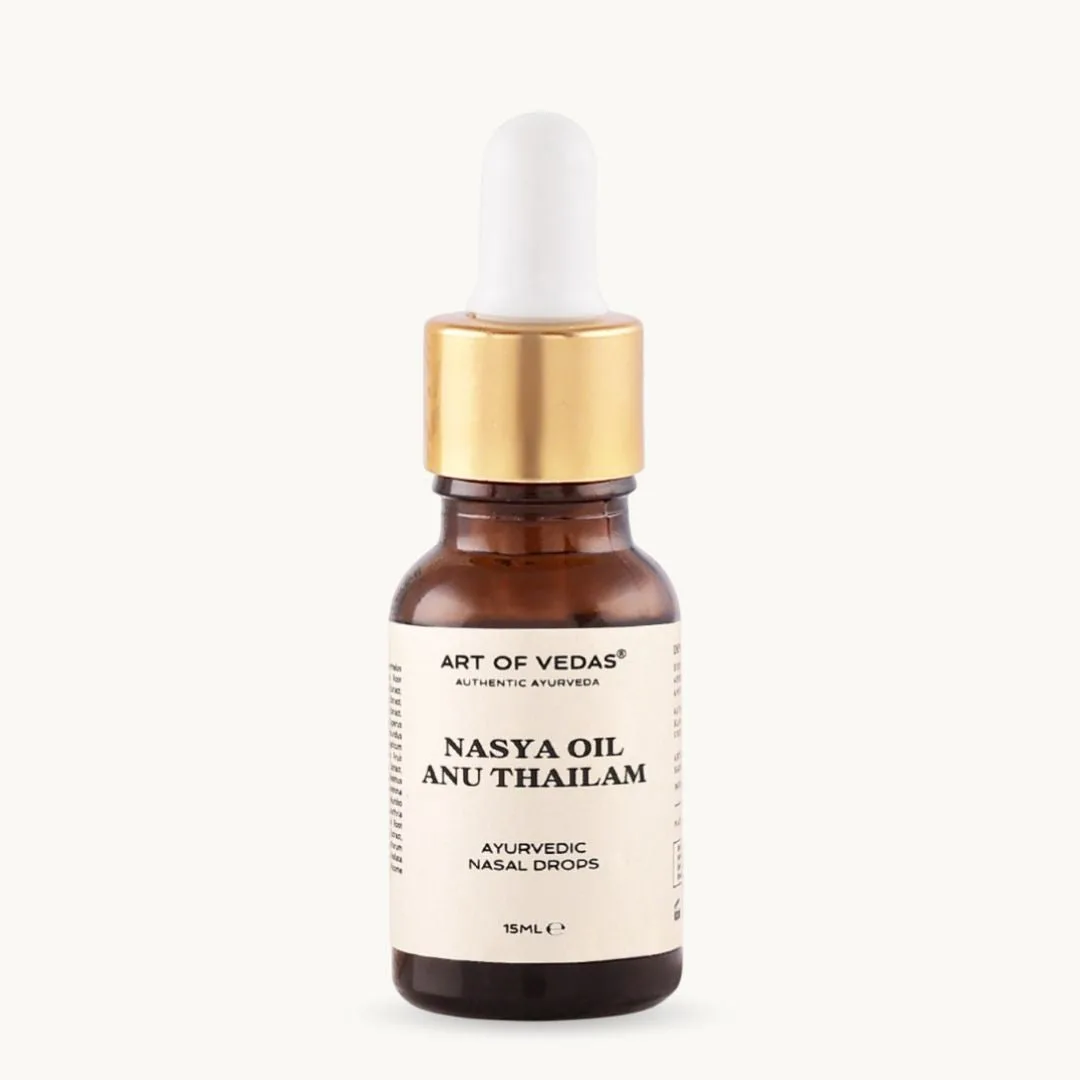
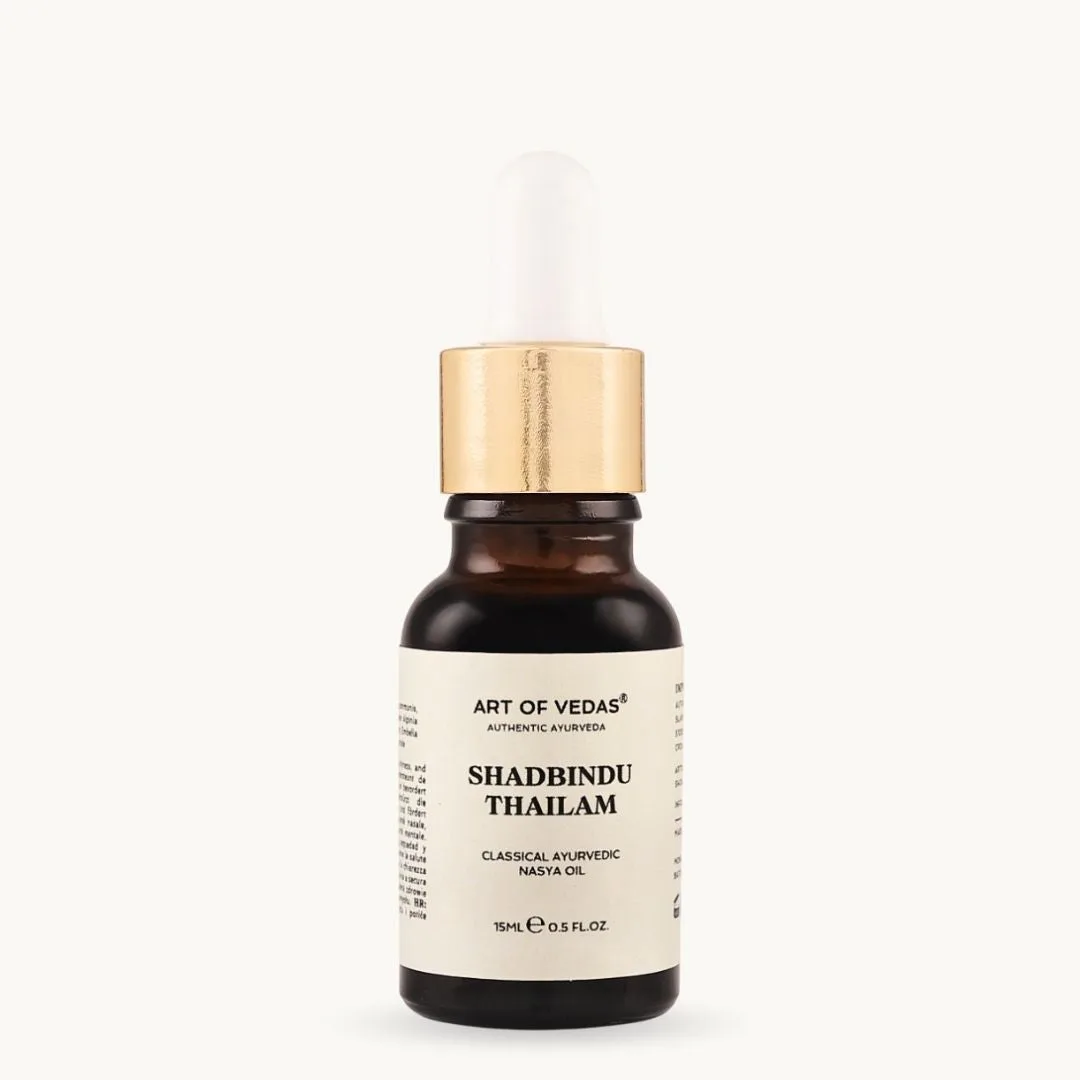
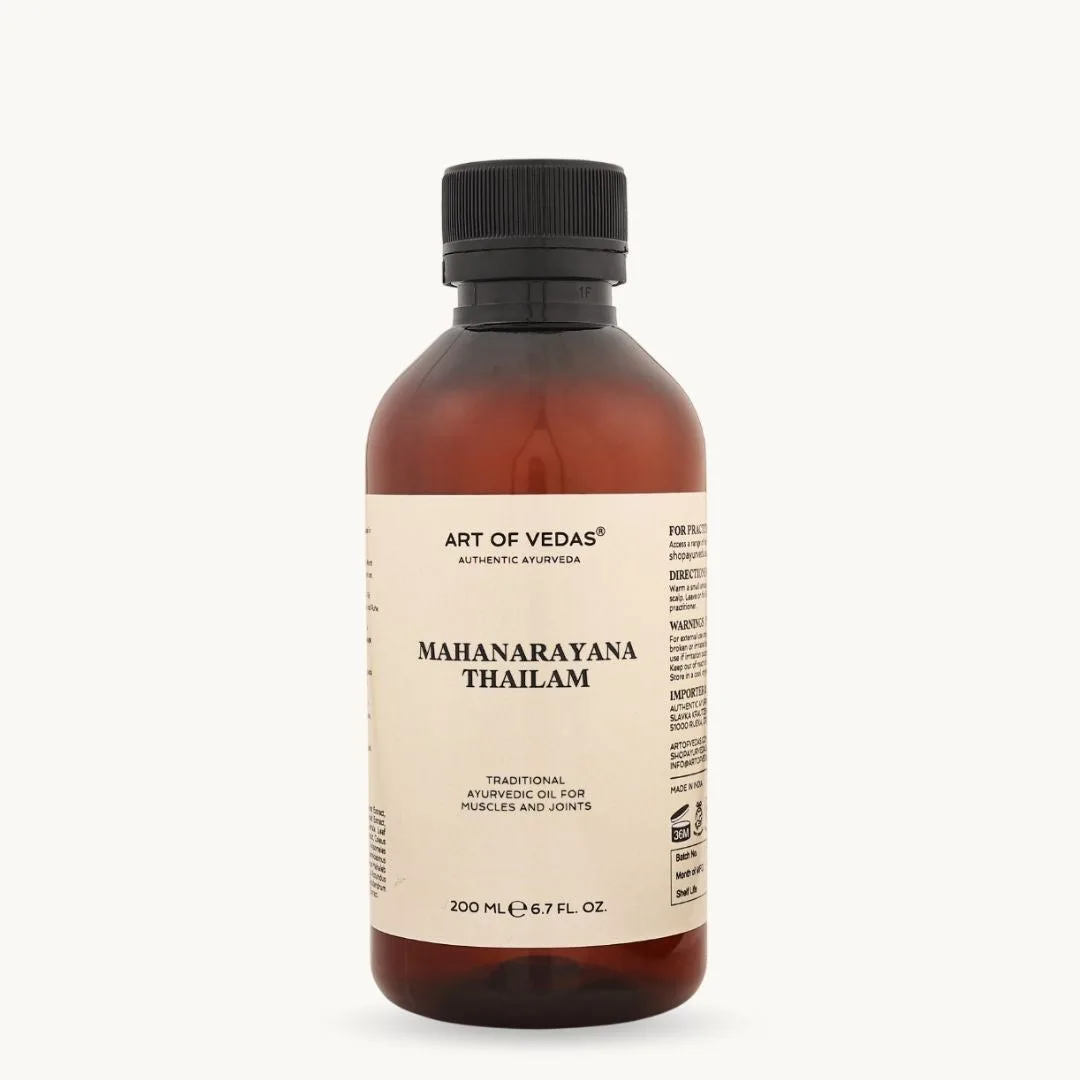
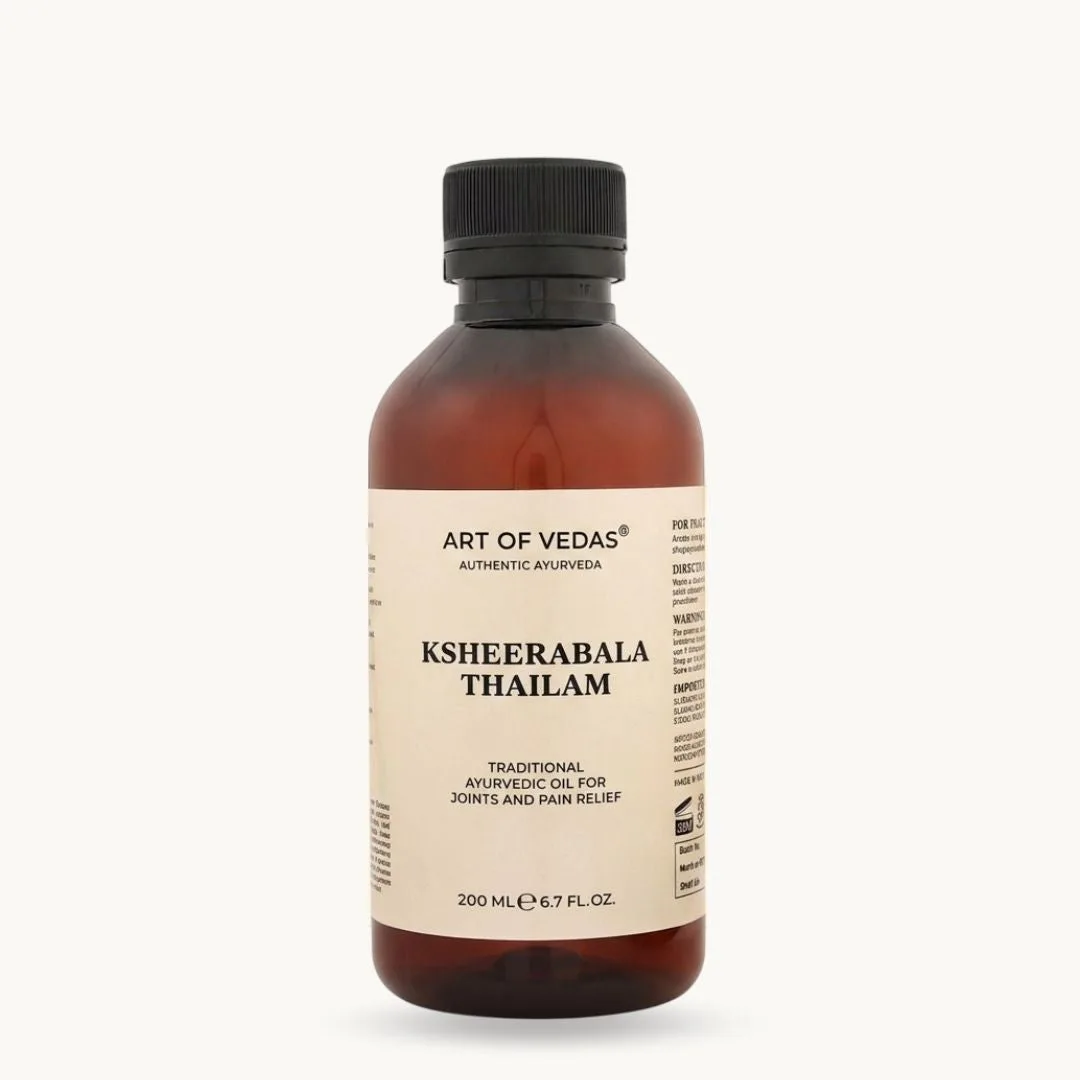
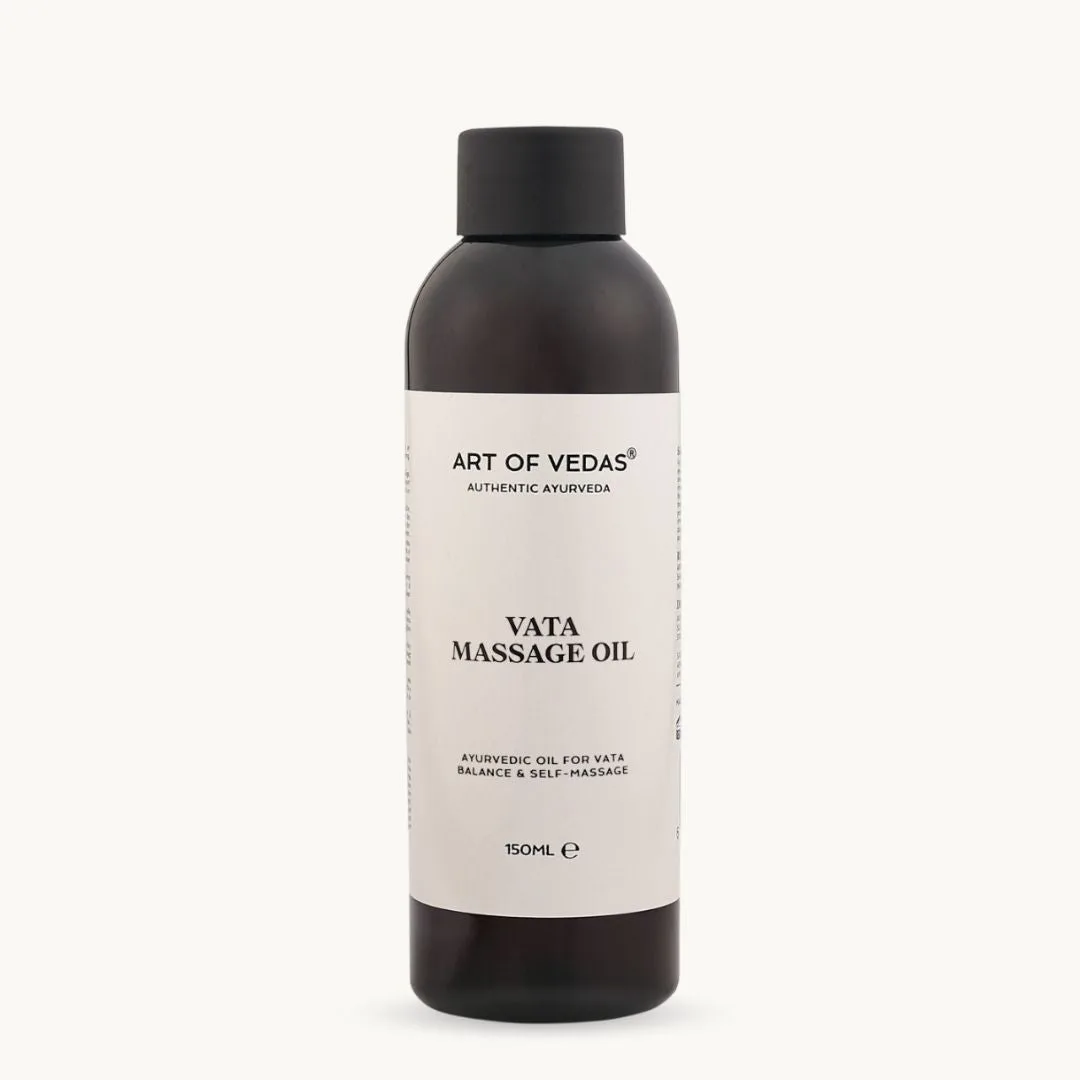
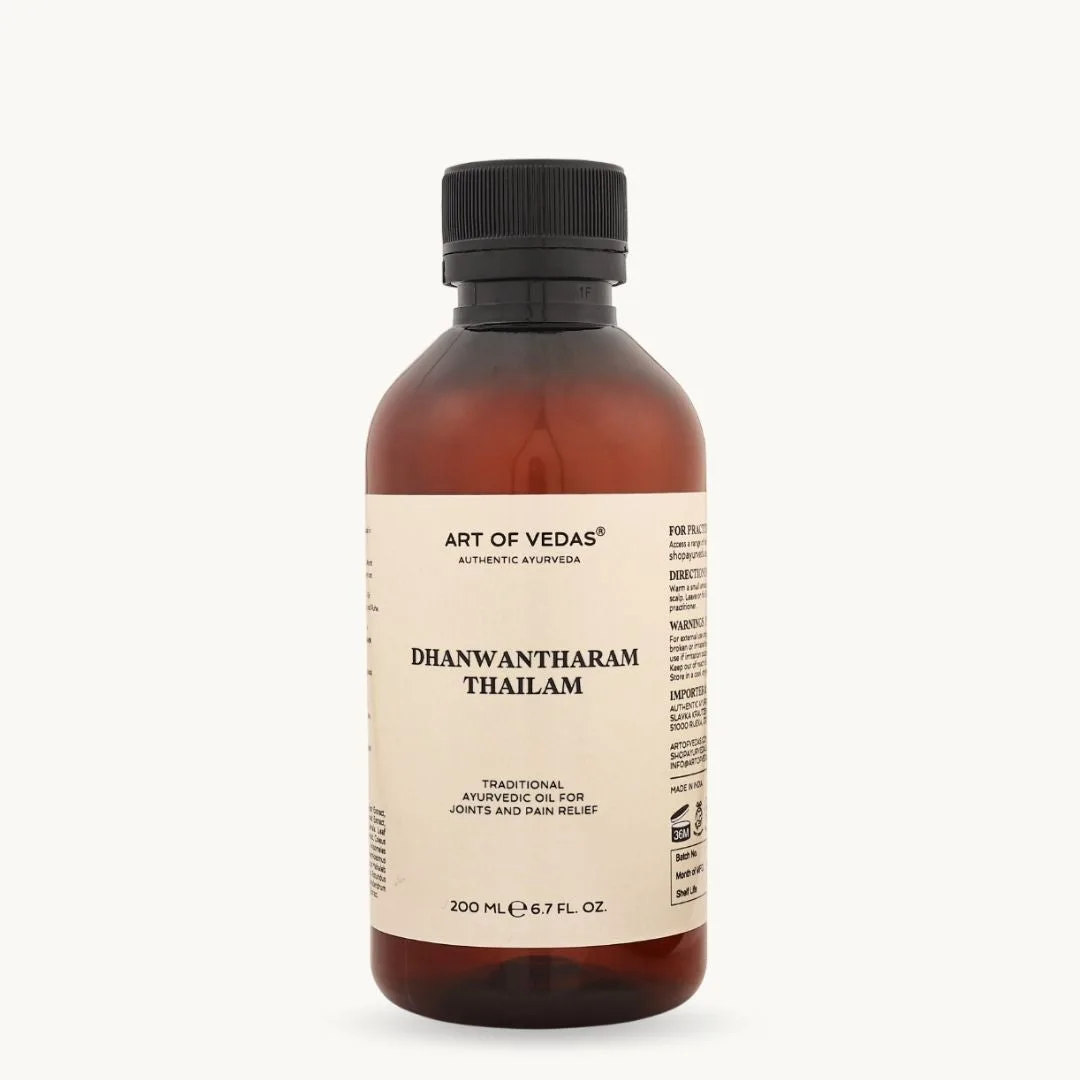
In short: Nasya Oil and the other small Art of Vedas oils come in glass because they are tiny volumes of concentrated oil dosed by the drop, and glass suits a dropper bottle. The 200 ml and 450 ml massage Thailams come in food-grade PET because they are poured by the palmful, and the container says nothing about the quality of the oil in either case.
Why is Nasya oil in a glass bottle when the large Thailam next to it on the shelf is in PET? It is a fair question, and the answer is simpler than many shoppers expect. At Art of Vedas the container follows the size of the product and the way it is used. It is a choice of format, not a ranking of quality.
Why is Nasya oil in a glass bottle?
Nasya Oil is a very small volume of concentrated oil that is used by the drop, so it needs a dropper bottle, and glass suits a dropper bottle. The glass is there for the format of the product, not because the oil would be any different in another container.
A 15 ml bottle holds very little, and the oil leaves it one drop at a time. Nasya is traditionally guided by a practitioner, so this page does not describe its use. What matters here is only the packaging logic: a dropper product calls for a dropper bottle.
Which Art of Vedas oils come in glass?
The small oils that are dosed with a dropper come in glass: Nasya Oil in 15 ml and 50 ml, Shadbindu Thailam in 15 ml and Dhanwantharam 101 Avarthy in 15 ml. Everything that is poured for massage comes in food-grade PET.
What these small products share is the way they leave the bottle. None of them is poured into the hand. You will find the two classical nasal oils together in the nasal care collection.
Why are the 200 ml and 450 ml Thailams in PET?
A massage Thailam is used by the palmful, often with oily hands and often in a bathroom, so the bottle has to be light, easy to pour from and safe if it slips. Food-grade PET does all three.
PET is the clear, light plastic used for edible oils and drinks. It is shatterproof and it weighs far less than glass, which matters with a 450 ml bottle held in a hand that is already coated in oil. A large glass bottle on a tiled floor during Abhyanga is a different proposition from a small glass dropper on a shelf.
The same reasoning applies to the Dosha massage oils for Vata, Pitta and Kapha, which are also bottled in PET. In India, where classical Ayurvedic oils come from, PET has been normal practice for these oils for many years. The full range is in the Thailam collection, and the general comparison of the two materials is set out in PET or glass for Ayurvedic oils.
Small dropper oils and large massage oils
The table below shows how each product type is packed and the reason behind it.
| Product type | Size | Container | Why |
|---|
| Nasya Oil | 15 ml and 50 ml | Glass with dropper | Used by the drop |
| Shadbindu Thailam | 15 ml | Glass with dropper | Used by the drop |
| Dhanwantharam 101 Avarthy | 15 ml | Glass with dropper | Concentrated, used by the drop |
| Massage Thailams | 200 ml and 450 ml | Food-grade PET | Poured by the palmful, light and shatterproof |
| Dosha massage oils | Massage size | Food-grade PET | Poured by the palmful, safe with oily hands |
Does glass mean the oil is of higher quality?
No. Glass is not required for the quality of an Ayurvedic oil and it does not make an oil stronger. Glass mainly changes how a bottle looks and feels, what it weighs and what it costs to ship.
It is easy to read the two materials as two grades. That is not how the Art of Vedas range is built. If the massage Thailams were sold in 15 ml dropper bottles they would be in glass as well, and the oil inside would be exactly the same oil.
Glass deserves a fair description. It is fully inert, it feels solid in the hand and it can be recycled. It is also heavy and it breaks. PET is light, shatterproof and widely recycled under resin code 1. It is not made with BPA and needs no plasticisers. Each material is suited to a different job.
Does a Thailam keep as long in PET as in glass?
Yes. The quality team behind our oils confirms that the shelf life and the quality of the oil are the same in PET as in glass. The shelf life printed on each bottle applies to that bottle as sold.
What makes a Thailam keep well is the way it is made, not the material around it. A Thailam is cooked until the water has left the oil, the classical Sneha Paka process, and that is why a finished Thailam is stable. You can read more in what keeps a Thailam fresh and in the overview of the shelf life of Ayurvedic oils and Ghritham.
How should glass and PET bottles be stored?
In the same way: closed, cool and dry, and away from direct sunlight. The material of the bottle does not change the storage advice.
- Close the cap or the dropper firmly after every use.
- Keep the bottle away from a sunny windowsill and from direct warmth.
- Handle the bottle and the dropper with clean, dry hands.
- Stand a small glass bottle where it cannot be knocked onto a hard floor.
More detail for each product family is in the guide on how to store Thailam, Kuzhambu and Ghritham.
What does the choice mean for weight and recycling?
A small glass dropper bottle adds little weight to a parcel, while a large glass bottle would add a great deal. Keeping glass for the small formats and PET for the large ones keeps parcels light, and both materials can be recycled.
The details are set out in the page on packaging weight and recycling. One range can use two materials without one being better than the other: drops go in glass and palmfuls go in PET.
For external use only. Not a substitute for professional medical advice.