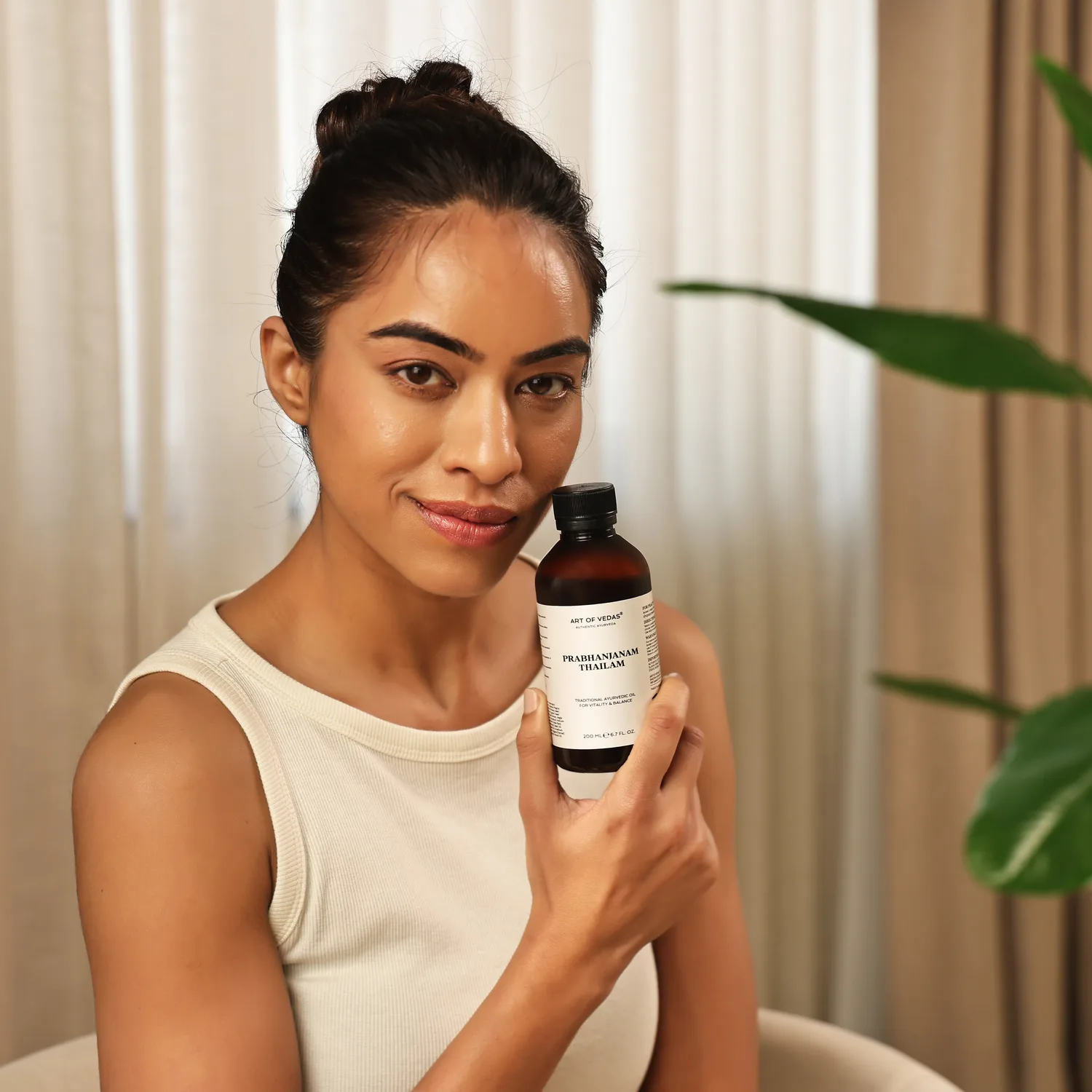
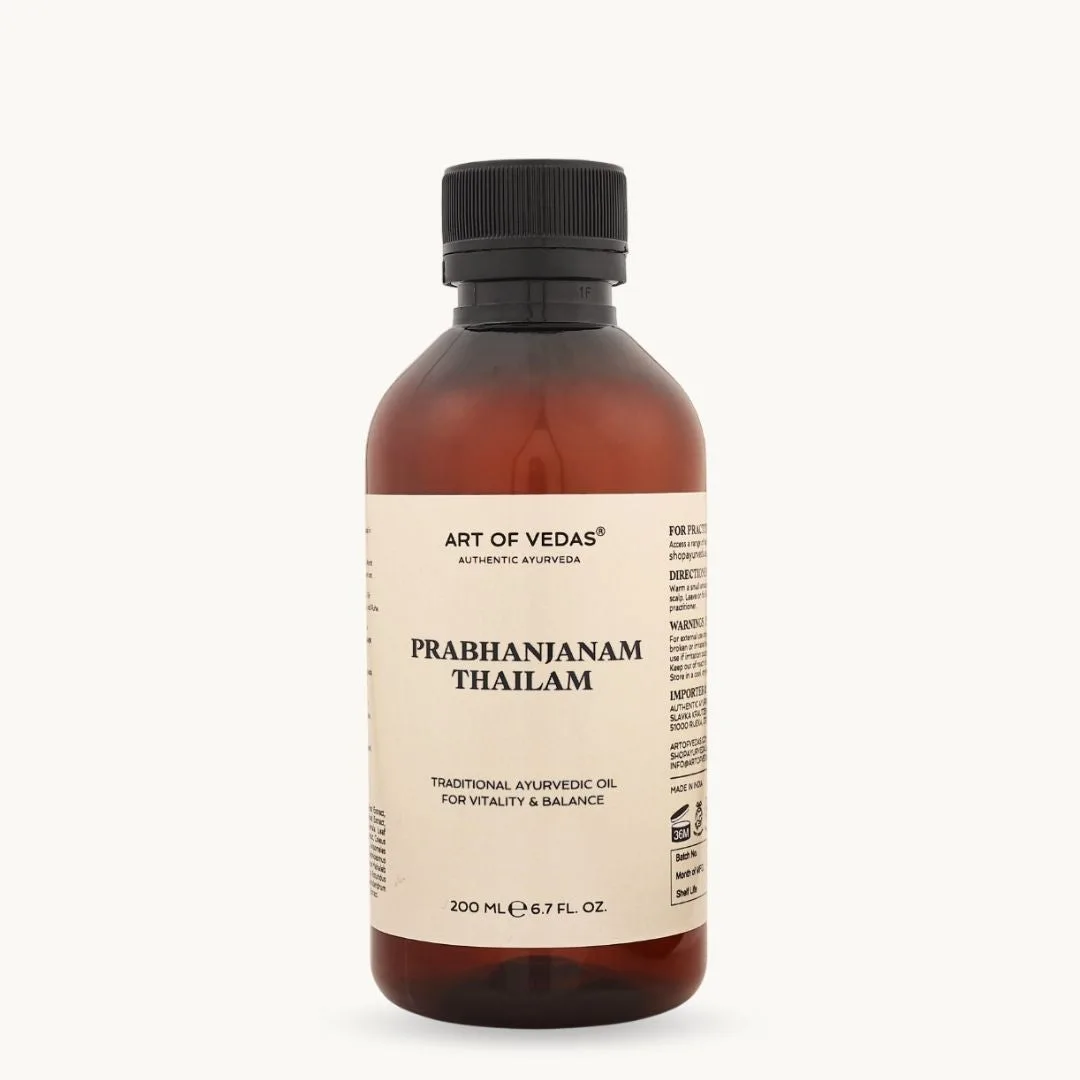
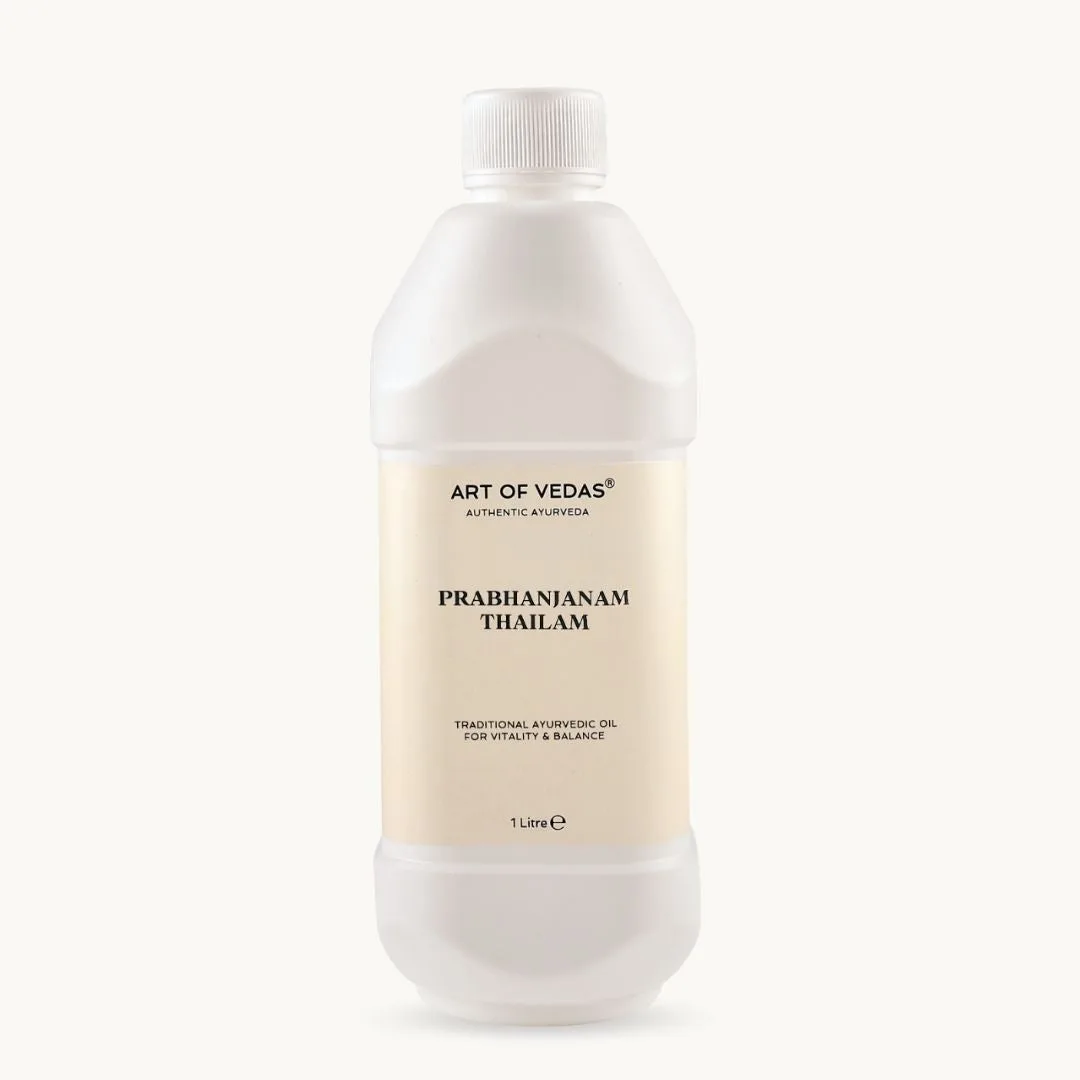
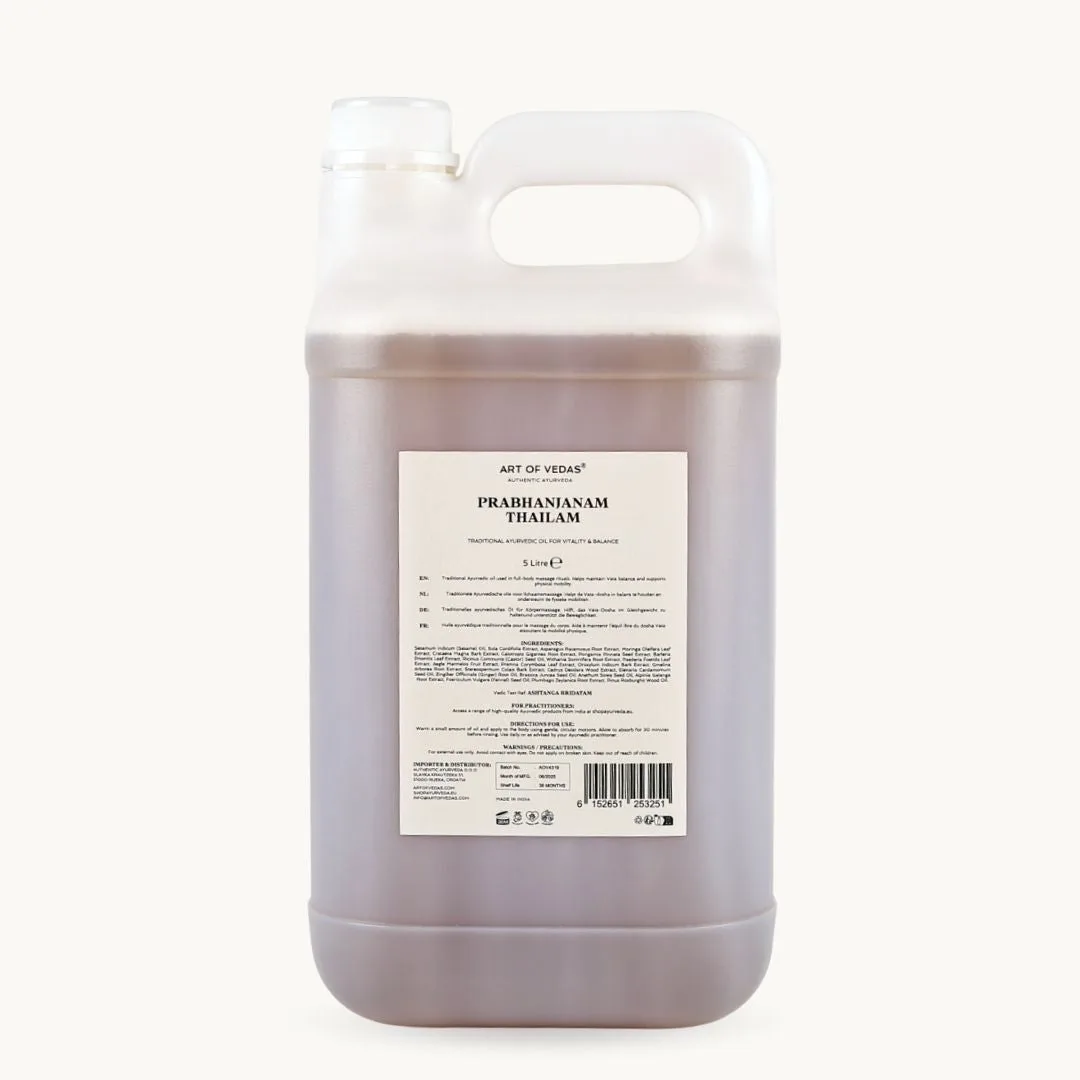
Prabhanjanam Thailam

(0)

Classical Ayurvedic Oil for Neuromuscular Support & Mobility

From Rs. 2,200.00

Prabhanjanam Thailam is a traditional Ayurvedic formula specifically designed for serious neuromuscular concerns, meaning it works on your nerves, muscles, and joints simultaneously. With 24 carefully selected herbs including powerful anti-inflammatory roots (Dashamoola), muscle-strengthening botanicals (Bala, Ashwagandha), and deeply penetrating warming oils (Ginger, Cardamom, Pine), this isn't just another joint oil. It's a complete nervine tonic that nourishes nerve tissue, rebuilds muscle strength, and restores comfortable mobility from the inside out.

Net Content

INGREDIENTS

Sesame Seed Oil, Sida Cordifolia Extract (Bala), Asparagus Root Extract (Shatavari), Moringa Leaf Extract, Crataeva Bark Extract (Varuna), Calotropis Root Extract (Arka), Pongamia Seed Extract (Karanja), Barleria Leaf Extract (Sahachara), Castor Seed Oil, Ashwagandha Root Extract, Plectra Leaf Extract (Prasarini), Aegle Fruit Extract (Bilva), Premna Leaf Extract (Agnimantha), Oroxylum Bark Extract (Shyonaka), Gmelina Root Extract (Gambhari), Stereospermum Bark Extract (Patala), Deodar Wood Extract (Devadaru), Cardamom Seed Oil, Ginger Root Oil, Mustard Seed Oil, Dill Seed Oil, Pine Seed Oil, Plumbago Root Extract (Chitrak), Pine Wood Oil

External Use Only
  • This oil is formulated for external massage application
  • Not for internal consumption unless specifically prescribed by a qualified Ayurvedic practitioner
  • Keep out of eyes, nose, mouth, and ears (unless directed by practitioner for specific Nasya treatment)
  • If accidental contact with eyes occurs, rinse thoroughly with cool water
Patch Test Recommended
  • Before first use, apply small amount to inner forearm
  • Wait 24 hours to check for any reaction
  • Mild warmth is normal; itching, burning, or rash indicates sensitivity
  • Particularly important for those with sensitive skin or multiple allergies
Skin Conditions to Avoid
  • Do not apply to broken, cut, or actively bleeding skin
  • Avoid areas with active rashes, eczema flare-ups, or dermatitis
  • Do not use on infected skin or open wounds
  • Wait until skin conditions heal before applying
Warming Sensation
  • Mild to moderate warmth from heating herbs is normal and therapeutic
  • This indicates the oil is increasing circulation and penetrating
Prabhanjanam Thailam

From Rs. 2,200.00

From Rs. 2,200.00

Benefits of Prabhanjanam Thailam

Supports Nerve & Muscle Function

Prabhanjanam Thailam is traditionally used as a nervine tonic to nourish the nervous system and support healthy muscle function. The combination of Bala (known for strengthening muscles and nerves), Ashwagandha (a powerful adaptogen), and Dashamoola creates a formula that supports the body's natural ability to maintain comfortable nerve and muscle activity.

Promotes Joint Comfort & Mobility

The oil's warming, anti-inflammatory herbs—including the complete Dashamoola group and Bala—help support comfortable joint movement and flexibility. Regular massage with this oil is part of traditional Ayurvedic practice for maintaining healthy joints, particularly for those experiencing stiffness or reduced mobility.

Balances Vata Dosha

Prabhanjanam Thailam is specifically formulated to pacify aggravated Vata, the dosha governing movement, circulation, and the nervous system. The grounding, nourishing nature of sesame oil combined with warming herbs helps restore balance when Vata becomes excessive—manifesting as dryness, stiffness, tension, or discomfort.

Deeply Penetrating & Warming Action

Unlike lighter oils, this classical formulation penetrates deeply into tissues. The warming essential oils (Ginger, Cardamom, Pine) combined with the Ushna Virya (heating potency) of key herbs ensure the therapeutic compounds reach deep tissue layers, supporting circulation and bringing warmth to areas of discomfort.

Comprehensive Herbal Synergy

With 24 herbs working in harmony, Prabhanjanam Thailam offers multi-system support. The Dashamoola roots support structural tissues, Bala strengthens, Shatavari nourishes, Ashwagandha adapts, and specialty herbs like Moringa and Plumbago provide additional targeted benefits—creating a complete formula for neuromuscular wellness.

How to use Prabhanjanam Thailam

For Daily Application
  1. Warm the oil: Gently warm a small amount (2-3 tablespoons) by placing the bottle in hot water for 2-3 minutes. The oil should be comfortably warm, not hot.
  2. Apply to affected areas: Massage gently but firmly into areas experiencing stiffness, reduced mobility, or discomfort—particularly spine, joints, muscles, or limbs.
  3. Massage technique: Use long, smooth strokes along the length of bones and circular motions around joints. Apply with consistent pressure for 10-15 minutes to ensure deep penetration.
  4. Leave on: Allow the oil to absorb for at least 30-60 minutes before bathing. For chronic concerns, leaving it on for 2-3 hours (or overnight if comfortable) can enhance benefits.
  5. Frequency:

    Acute concerns: 2 times daily (morning and evening)
    Chronic support: Once daily, preferably in the evening
    Maintenance: 3-4 times weekly
As Part of Full-Body Abhyanga

For comprehensive Vata balance and overall wellness:

  1. Warm the oil and apply to the entire body before bathing
  2. Begin with the head and scalp, moving down to feet
  3. Spend extra time on joints and areas of tension
  4. Massage for 15-20 minutes total
  5. Rest for 20-30 minutes, then bathe with warm water
  6. Practice 2-3 times weekly for maintenance, daily during Vata-aggravating seasons (autumn/winter)
For Recovery Support

If working with a practitioner for recovery from injury or neurological concerns:

  • Follow their specific application instructions
  • May be used as part of Panchakarma therapies
  • Can be combined with gentle heat (warm compress) after application
  • Consistency is key—daily application for 4-8 weeks often recommended
Important Notes
  • Patch test recommended before first use (small amount on inner forearm for 24 hours)
  • The oil has a warming quality—this is normal and therapeutic. If the warmth becomes uncomfortable, wipe off excess with a dry towel
  • External use only—not for internal consumption unless specifically prescribed by an Ayurvedic practitioner
  • Wash hands after application if you've been massaging yourself
  • Take care when walking after foot application—the oil can make surfaces slippery

Classical Ayurveda Reference

Prabhanjanam Thailam (also known as Prabhanjana Vimardanam Thailam) is documented in Sahasrayogam, a classical compilation of Ayurvedic formulations from traditional practice. This text, developed over centuries of clinical observation, contains thousands of time-tested remedies.

Traditional Indications

According to classical texts, this formulation is indicated for:

  • Sarvanga Vata (systemic Vata imbalance affecting the whole body)
  • Pakshavadha (hemiplegia, one-sided weakness)
  • Ardita (facial paralysis, Bell's palsy)
  • Gridhrasi (sciatica, nerve pain along the sciatic nerve)
  • Sandhivata (joint stiffness and discomfort)
  • Mamsa Shula (muscle pain and spasms)
  • Akshepaka (tremors, involuntary movements)
  • Vata Vyadhi (all disorders stemming from Vata imbalance)
Dosha Classification

Primary Action: Vata Shamaka (pacifies Vata dosha)

Secondary Action: Kapha Shamaka (reduces excess Kapha)

Nature: Tridosha balanced when used appropriately

Traditional Usage Context

Historically, this oil was used:

  • As a daily massage oil for individuals with Vata constitution or imbalance
  • As part of Panchakarma preparation (pre-treatment oleation)
  • For recovery support following neurological events
  • For chronic joint and muscle concerns requiring deep, sustained nourishment
  • In geriatric care for maintaining mobility and comfort

Learn More About Prabhanjanam Thailam

How is Prabhanjanam Thailam different from other joint oils?

Prabhanjanam Thailam is fundamentally different because it's a nervine tonic oil, not just a joint oil. While many oils focus on joints or muscles, this formulation recognizes that many mobility issues stem from nerve function. The 24-herb formula, anchored by Dashamoola and nervine tonics like Bala and Ashwagandha, addresses:

  • Nerve health and signal transmission
  • Muscle strength and coordination
  • Joint comfort and flexibility
  • Deep tissue nourishment and repair

This comprehensive approach makes it particularly valuable for chronic or complex neuromuscular concerns where simple joint oils may not provide adequate support.

Who should use Prabhanjanam Thailam?

This oil is traditionally used for:

  • Individuals with Vata-predominant constitution or Vata imbalance
  • Those experiencing chronic joint stiffness or reduced mobility
  • People managing long-term neuromuscular concerns
  • Recovery support following injury or neurological events (with practitioner guidance)
  • Elderly individuals seeking to maintain comfort and mobility
  • Anyone with cold, dry, stiff feelings in joints or muscles
  • Those with high stress or nervous system fatigue affecting physical comfort

Not recommended for: Acute inflammation with heat/redness, active infections, or Pitta-type inflammatory conditions without practitioner guidance.

How quickly will I notice results?

Results vary based on the nature and duration of the concern:

Short-term (Within 1-2 weeks):

  • Improved warmth and circulation in applied areas
  • Enhanced comfort during daily movement
  • Better sleep quality (when tension is reduced)

Medium-term (2-4 weeks):

  • Noticeable improvement in morning stiffness
  • Greater ease in joint movement
  • Reduced muscle tension and spasms
  • Better tolerance for physical activity

Long-term (8-12 weeks):

  • Sustained improvement in overall mobility
  • Better resilience to cold/damp weather changes
  • Enhanced tissue strength and flexibility
  • Nervous system feels more grounded and calm
Can I use Prabhanjanam oil with other treatments?

Generally yes, but with proper spacing:

With other topical treatments:

  • Space applications by 2-3 hours
  • Avoid applying multiple oils or creams to the same area simultaneously
  • If using prescription topical medications, consult your healthcare provider

With oral medications:

  • External oil use typically doesn't interfere with oral medications
  • However, if on blood thinners, immune suppressants, or other significant medications, inform your doctor about topical oil use

With physical therapy:

  • Excellent complement to physical therapy, yoga, or gentle exercise
  • Apply oil 1-2 hours before therapy sessions for best penetration
  • Or use as recovery support after sessions

With Panchakarma or Ayurvedic treatments:

  • Often prescribed as part of comprehensive treatment plans
  • Follow your Ayurvedic practitioner's specific instructions
Is this oil greasy? How long does it take to absorb?

Prabhanjanam Thailam has a moderate to heavy consistency due to its sesame oil base and rich herbal infusion. The absorption process:

  • Initial feel: Oily/slightly heavy upon application
  • 15-20 minutes: Begins penetrating deeper layers, surface feels less greasy
  • 30-45 minutes: Majority absorbed, though a slight oil presence remains
  • Full absorption: 60-90 minutes for complete absorption

To manage greasiness:

  • Use the minimum effective amount—more isn't always better
  • Warm the oil well before application (improves absorption)
  • Massage thoroughly to work oil into tissues
  • Wear old clothes during absorption period
  • Bathe 30-60 minutes after application using warm water and mild soap
  • A light oil residue on skin is actually beneficial for continued nourishment
Can I use this oil daily for long periods?

Yes, Prabhanjanam Thailam is designed for sustained use:

Acute Phase (Active concerns):

  • Daily application for 4-8 weeks is common
  • 1-2 times daily depending on severity
  • Follow practitioner guidance for specific concerns

Maintenance Phase:

  • 3-4 times weekly for ongoing support
  • Continue as long as beneficial
  • Many people use it indefinitely for Vata management

Seasonal Considerations:

  • Increase frequency during Vata seasons (autumn/winter)
  • Can reduce during Pitta seasons (late spring/summer) if heat sensitivity develops
  • Resume regular use as needed
What should I do if I experience skin irritation?

While generally well-tolerated, some sensitivity is possible:

Mild warmth/tingling:

  • This is normal due to warming herbs (Ginger, Mustard, Plumbago)
  • Should be comfortable, not painful
  • If too intense, wipe off excess with dry towel and use less oil next time

Redness without discomfort:

  • Slight skin reddening (rubefacient effect) is therapeutic—it shows increased circulation
  • Should fade within 30-60 minutes
  • If persistent beyond 2 hours, reduce amount or frequency

True irritation (itching, burning, rash):

  • Discontinue use immediately
  • Wash area thoroughly with mild soap and cool water
  • Apply plain coconut oil or aloe to soothe
  • Likely indicates sensitivity to one of the 24 herbs
  • Do not resume use without patch testing or practitioner consultation

Prevention:

  • Always patch test before first use (small amount on inner forearm for 24 hours)
  • Start with small amounts to assess tolerance
  • Avoid application on broken, irritated, or inflamed skin
  • Dilute with plain sesame oil if full strength is too strong
Can I use Prabhanjanam Thailam during pregnancy or on children?

Pregnancy & Nursing:

  • Not recommended during pregnancy without specific guidance from an Ayurvedic practitioner
  • Many warming, penetrating herbs can affect pregnancy
  • If already using before pregnancy, consult practitioner immediately
  • Generally avoided during first trimester
  • May be used postpartum for recovery support (after consulting practitioner)
  • Limit use while nursing as some herbs can transfer through skin absorption

Children:

  • Age 10+: Generally safe for external use with supervision
  • Use smaller amounts, gentler massage
  • Particularly helpful for growing pains or sports-related muscle discomfort
  • Under 10: Only with practitioner guidance
  • Infants: Not recommended—use gentler oils like plain sesame or Bala thailam